
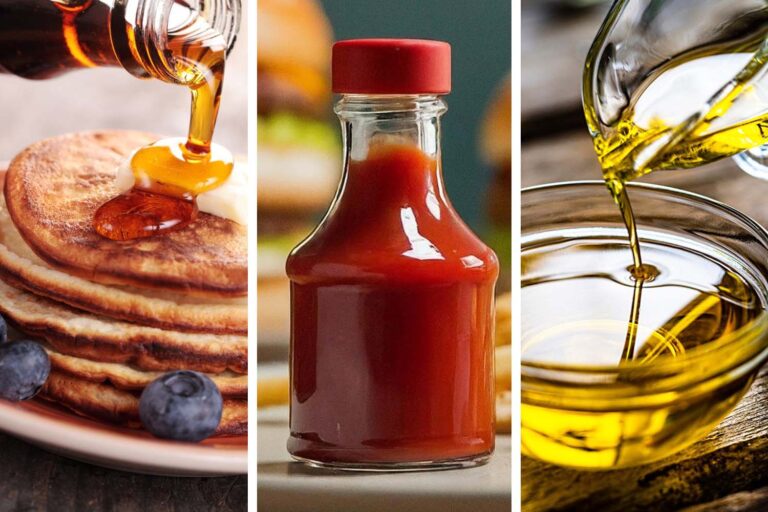
Ever stood at your refrigerator wondering if that opened jar of mustard has gone bad? Or questioned whether honey needs refrigeration at all? You are not alone.
We have spent years researching and testing proper food storage methods for pantry staples, condiments, dairy, deli meats, produce, and everyday ingredients. This comprehensive guide answers your most common questions: Does it go bad? Does it need refrigeration? How long does it last?
All recommendations are backed by science-based guidelines from the FDA and USDA to help you reduce food waste, prevent spoilage, and keep your kitchen safe.
What You Will Find in This Guide
- Quick reference chart for 120+ common foods
- Jump to any section: Dairy | Eggs | Deli Meats | Condiments | Asian Sauces | Oils | Sweeteners | Produce | Pantry | Coffee & Tea
- Spoilage signs, refrigeration rules, and shelf life for every category
Quick Reference: Food Storage and Refrigeration Chart
Use this table to instantly check whether common foods need refrigeration and how long they last. All recommendations follow USDA FoodKeeper guidelines.
| Food Item | Needs Refrigeration? | Shelf Life (Unopened) | Shelf Life (Opened) |
|---|---|---|---|
| A1 Steak Sauce | Recommended (after opening) | 2 to 3 years | Up to 2 years (fridge) / 6 to 12 months (pantry) |
| Anchovy Paste | Yes (after opening) | 2 years | 1 to 2 months |
| Apple Cider Vinegar | No | Indefinite | Indefinite |
| Arugula | Yes | N/A | 3 to 5 days |
| Avocado | Yes (ripe) / No (unripe) | N/A | 3 to 5 days (ripe, fridge) |
| Avocado Oil | No | 12 to 24 months | 3 to 6 months |
| Bacon (raw, opened) | Yes (always) | 2 weeks (fridge) | 1 week |
| BBQ Sauce | Recommended (after opening) | 1 year | 4 months |
| Berries (fresh) | Yes | N/A | 2 to 14 days (varies by type, unwashed) |
| Butter (salted) | Recommended | 1 to 3 months (fridge) | 1 to 2 days (counter) / 1 to 3 months (fridge) |
| Buttermilk | Yes (always) | Up to 2 weeks (fridge) | 1 to 2 weeks |
| Capers | Yes (after opening) | 1 to 2 years | 1 year (submerged in brine) |
| Caramel Sauce | Yes (after opening) | 1 to 2 years | 2 to 4 weeks (pantry) / 2 to 3 months (fridge) |
| Carrots (whole) | Recommended | 3 to 5 days (counter) | 3 to 4 weeks (fridge) / up to 1 month (submerged) |
| Cheddar Cheese | Yes (always) | Up to 6 months (fridge, unopened) | 3 to 4 weeks (opened, wrapped) |
| Chocolate Syrup | Yes (after opening) | 2 to 3 years | 1 to 2 months |
| Cocktail Sauce | Yes (after opening) | 1 year | 3 to 6 months |
| Coconut Milk (canned) | Yes (after opening) | 2 to 5 years | 4 to 7 days |
| Coconut Oil | No | 1 to 3 years | 1 to 3 years |
| Coffee (ground, dry) | No | 3 to 5 months (pantry) | 1 to 2 weeks (best quality) |
| Coffee Creamer (liquid) | Yes (dairy) / No (non-dairy, sealed) | Varies by type | 7 to 14 days |
| Coleslaw | Yes (always) | N/A | 3 to 5 days |
| Cooking Oil | No (pantry, away from heat) | 1 to 2 years | 6 to 12 months |
| Cooking Wine | Recommended (after opening) | 1 to 3 years | 1 to 2 months (pantry) / 3 to 6 months (fridge) |
| Cornmeal | Recommended (after opening) | 1 to 2 years | 6 to 12 months (pantry) / 1 to 2 years (fridge) |
| Cottage Cheese | Yes (always) | 1 to 2 weeks (fridge) | 5 to 7 days |
| Cream Cheese | Yes (always) | 3 to 4 weeks (fridge) | 10 to 14 days |
| Cucumbers | Yes | N/A | 1 to 2 weeks (fridge) |
| Deli Turkey (sliced) | Yes (always) | 2 weeks (sealed) | 3 to 5 days |
| Egg Whites | Yes (always) | 2 to 4 days (fridge) | 2 to 4 days |
| Eggs | Yes (in the US) | 3 to 5 weeks (fridge) | N/A |
| Fish Sauce | Recommended (after opening) | 3 to 4 years | 1 year (fridge) |
| Frosting (store-bought) | Yes (after opening) | 12 to 18 months | 3 to 4 weeks |
| Garlic (whole bulb) | No | 3 to 6 months (cool pantry) | 3 to 10 days (broken bulb) |
| Half and Half | Yes (always) | 30 to 90 days (ultra-pasteurized) | 7 to 10 days |
| Ham (cooked, opened) | Yes (cooked/deli) / No (whole country ham) | 7 days (fridge, sealed) | 3 to 5 days |
| Heavy Cream | Yes (always) | Until use-by date | 7 to 10 days |
| Hoisin Sauce | Yes (after opening) | 2 years | 3 to 6 months |
| Honey | No | Indefinite | Indefinite |
| Horseradish | Yes (after opening) | 1 to 2 years | 3 to 4 months |
| Hot Sauce | Optional (type-dependent) | 2 to 5 years | 6 months to 2 years |
| Jelly / Jam | Yes (after opening) | 1 to 2 years | 6 to 12 months |
| Ketchup | Optional | 1 year | 6 months (pantry) / 1 year (fridge) |
| Lettuce (whole head) | Yes | N/A | 1 to 3 weeks (fridge, unwashed) |
| Maple Syrup | Yes (after opening) | Indefinite | 1 year |
| Mayonnaise | Yes (after opening) | 3 to 4 months | 2 months |
| Miso Paste | Yes (after opening) | 1 year | 3 months to 1 year |
| Molasses | No | 1 to 2 years | 6 months to 1 year |
| Mozzarella (fresh) | Yes (always) | 1 to 3 weeks (fridge) | 3 to 5 days |
| Mustard | Optional | 1 to 2 years | 1 year (pantry) / 2 years (fridge) |
| Nacho Cheese Sauce | Yes (after opening) | 12 to 18 months | 3 to 5 days |
| Oatmeal (dry) | No | 1 to 2 years | 1 to 2 years (pantry) |
| Olive Oil | No | 18 to 24 months | 6 to 12 months |
| Onions (whole) | No | 1 to 3 months (cool pantry) | 7 to 10 days (cut, fridge) |
| Oyster Sauce | Yes (after opening) | 2 years | 3 to 6 months |
| Parmesan Cheese | Yes (always) | Up to 12 months (block, fridge) | 1 to 2 months (grated) |
| Pasta (dry) | No | 1 to 2 years | 1 to 2 years (pantry) |
| Pastrami (deli) | Yes (always) | 2 weeks (sealed) | 3 to 5 days |
| Peanut Butter | No (commercial) / Yes (natural) | 6 to 9 months | 2 to 3 months |
| Pepperoni (whole stick) | No (unopened) / Yes (after opening) | 6 weeks (pantry) | 3 weeks |
| Ponzu Sauce | Yes (after opening) | 1 to 2 years | 3 to 6 months |
| Potatoes | No | 3 to 5 weeks (cool pantry) | 3 to 4 days (cooked, fridge) |
| Prosciutto (sliced) | Yes (sliced) / No (whole uncut crudo) | 4 to 6 months (vacuum-sealed) | 3 to 5 days |
| Protein Powder | No | 1 to 2 years | 6 to 12 months (pantry, sealed) |
| Ranch Dressing | Yes (after opening) | 12 to 18 months | 1 to 3 months |
| Relish | Yes (after opening) | 1 to 2 years | 9 to 12 months |
| Rice (dry, white) | No | Up to 2 years (white) / 6 months (brown) | Up to 2 years (white) / 6 months (brown) |
| Ricotta | Yes (always) | Up to 2 weeks (fridge) | 1 week |
| Roast Beef (deli) | Yes (always) | 2 weeks (sealed) | 3 to 5 days |
| Salami (dry, whole) | No (unopened) / Yes (after cutting) | 6 weeks (pantry) | 3 weeks after cutting |
| Salsa (jarred) | Yes (after opening) | 1 to 2 years | 1 to 4 weeks |
| Sauerkraut | Yes (after opening) | 1 to 2 years | 4 to 6 months |
| Sesame Oil | Recommended (after opening) | 2 years | 6 months (pantry) / 1 year (fridge) |
| Shredded Cheese | Yes (always) | 1 to 2 months (fridge, sealed) | 5 to 7 days |
| Sour Cream | Yes (always) | 2 to 3 weeks (fridge) | 7 to 10 days |
| Soy Sauce | No | 2 to 3 years | 2 to 3 years |
| Sriracha | Optional | 2 years | 6 to 9 months (pantry) / 1 to 2 years (fridge) |
| Steak Sauce | Recommended (after opening) | 2 to 3 years | 6 to 12 months |
| Sun-Dried Tomatoes | Yes (after opening) | 1 to 2 years | 1 to 2 weeks (dry) / 1 to 2 months (oil-packed) |
| Tahini | Recommended (after opening) | 1 year | 1 month (pantry) / 6 months (fridge) |
| Tartar Sauce | Yes (after opening) | 12 to 18 months | Up to 6 months |
| Tea (dry) | No | 1 to 2 years | 6 to 12 months (best quality) |
| Tempeh | Yes (always) | 7 to 10 days (fridge, sealed) | 3 to 5 days (opened) |
| Teriyaki Sauce | Recommended (after opening) | 1 to 3 years | 1 to 3 months (pantry) / up to 1 year (fridge) |
| Tofu (firm) | Yes (always) | 3 to 5 days (fridge, sealed) | 3 to 5 days (submerged in water) |
| Tomatoes | No (unripe) / Optional (ripe) | N/A | 5 to 7 days (counter, ripe) |
| Vanilla Extract | No | Indefinite | Indefinite |
| Whipped Cream (homemade) | Yes (always) | N/A | 1 to 2 days |
| Worcestershire Sauce | No | 3 to 5 years | 1 to 2 years |
| Yogurt | Yes (always) | 1 to 3 weeks past sell-by (fridge) | 5 to 7 days |
Source: USDA Food Safety and Inspection Service
🧈 Dairy Storage Guide
Dairy products require continuous cold storage and are among the highest-risk categories for foodborne illness if left out. Most dairy items should never sit at room temperature for more than 2 hours. Unlike condiments, none of these products are shelf-stable after opening.
Butter
Butter is one of the more forgiving dairy products due to its high fat content (80%) and low moisture. Salted butter can sit on the counter in a covered dish for 1 to 2 days. Unsalted butter always belongs in the fridge. Clarified butter and ghee are shelf-stable at room temperature for 3 to 6 months in an airtight container. Does butter need to be refrigerated? It depends on the type. Does butter go bad? Yes. Rancid butter smells sour, soapy, or like old paint.
Half and Half
Half and half must be refrigerated at all times, even when labeled ultra-pasteurized. Ultra-pasteurized cartons last 30 to 90 days unopened. Once opened, use within 7 to 10 days. The one exception: individual UHT creamers in aseptic packaging (small diner cups) are shelf-stable before opening. Does half and half go bad? Yes. A sour smell, lumpy texture that will not shake out, or yellow discoloration are the signs.
Heavy Cream
Heavy cream must always be refrigerated. Store it on an interior shelf, not the door. Opened heavy cream keeps for 7 to 10 days. Does heavy cream go bad? Yes. A sour smell, slimy texture, or cream that has turned yellowish means discard.
Buttermilk
Buttermilk’s natural acidity gives it a longer shelf life than regular milk. Buttermilk must be refrigerated and lasts 1 to 2 weeks after opening. The sour, tangy smell is completely normal since buttermilk is a cultured product. Does buttermilk go bad? Yes. An intensely foul smell beyond its normal tang, gloppy texture that will not thin when shaken, or blue-green mold are the signs. Buttermilk freezes well in ice cube trays for baking.
Sour Cream
Sour cream must always be refrigerated and should never sit at room temperature for more than 2 hours. Use within 7 to 10 days of opening. Always use a clean spoon to avoid introducing bacteria. Does sour cream go bad? Yes. Discard it if you see mold, notice excessive liquid separation that will not stir back, or detect a sour smell beyond its natural tang.
Cream Cheese
Cream cheese must always be refrigerated and should never be left at room temperature for more than 2 hours. Use within 10 to 14 days of opening. Does cream cheese go bad? Yes. Watch for mold of any color, a sour or off smell, or a dry crumbly texture where it was previously smooth.
Cottage Cheese
Cottage cheese must always be refrigerated. Its high moisture content makes it an ideal environment for bacterial growth at room temperature. Use within 5 to 7 days of opening. Does cottage cheese go bad? Yes. Discard if you see mold, notice a sour smell beyond its mild tang, or find the texture has become overly watery or slimy.
Ricotta
Ricotta is one of the most perishable cheeses due to its very high moisture content. Ricotta must be refrigerated at all times. Left out more than 2 hours, discard it. Opened ricotta lasts 1 week per USDA FoodKeeper. Unlike hard cheeses, any mold means discard the entire container. Does ricotta go bad? Yes. Fresh ricotta has almost no smell, so any sour or off odor is an immediate red flag.
Yogurt
Yogurt must be refrigerated at all times. Unopened yogurt keeps 1 to 3 weeks past the sell-by date when properly refrigerated. Use within 5 to 7 days of opening. Does yogurt go bad? Yes. Mold of any color, a sharp rancid smell, or excessively watery texture that will not stir back means discard. The liquid whey that separates on top is normal and safe to stir back in.
Nacho Cheese Sauce
Canned nacho cheese is shelf-stable when sealed but highly perishable once opened. Nacho cheese sauce must be refrigerated after opening and used within 3 to 5 days. Never leave it out longer than 2 hours during serving. Does nacho cheese go bad? Yes. Look for mold, a sour smell, or separation that will not remix.
Whipped Cream
Whipped cream storage depends entirely on which type you have. Homemade: refrigerate immediately, use within 1 to 2 days. Aerosol cans (Reddi Wip): refrigerate at all times, use by the best-by date. Cool Whip: store in the freezer and move to the fridge 4 to 5 hours before use, then use within 1 to 2 weeks. Does whipped cream go bad? Yes. Sour smell, yellow discoloration, or mold on any type means discard.
Cheddar, Parmesan, Mozzarella and Shredded Cheese
Hard and semi-hard cheeses follow different rules from soft cheeses. On hard cheeses like cheddar and parmesan, you can safely cut away at least 1 inch around a moldy spot and use the rest since low moisture limits how deep mold penetrates. On soft cheeses (ricotta, mozzarella, cream cheese), any mold means discard the whole container. Does cheddar go bad? Yes. Does cheddar need to be refrigerated? Yes, always. Does parmesan go bad? Yes. Does parmesan need to be refrigerated? Yes. A rancid or ammonia smell means discard. Fresh mozzarella in water is among the most perishable dairy products. Use within 3 to 5 days of opening. Does mozzarella need to be refrigerated? Yes, always. Shredded cheese has a shorter window than block cheese due to increased surface area. Use within 5 to 7 days of opening. Does shredded cheese need to be refrigerated? Yes, always.
🥚 Eggs Storage Guide
Eggs
Do eggs need to be refrigerated? In the United States, yes, always. American commercial eggs are washed during processing, which removes the natural protective bloom that seals the shell. Without it, eggs must be refrigerated and stay fresh for 3 to 5 weeks past the pack date. Store them in their original carton toward the back of the refrigerator, not the door. Never wash eggs before storing. Do eggs go bad? Yes. Use the float test: fresh eggs sink and lie flat; floating eggs should always be discarded.
Egg Whites
Egg whites must be refrigerated at all times. Separated egg whites keep in the refrigerator for 2 to 4 days in a sealed container. For longer storage, freeze them in an ice cube tray (1 tablespoon per cube equals approximately 1 egg white) for up to 12 months. Do egg whites go bad? Yes. Discard if they smell off, look pink or iridescent, or have developed a slimy texture.
🥩 Deli Meats and Cured Meats Storage Guide
Deli meats are among the most time-sensitive foods in your refrigerator. The most important thing to understand: dry-cured products (salami, pepperoni, prosciutto crudo, country ham) follow completely different rules from cooked deli meats (turkey, ham slices, bologna). Getting them confused is the most common deli meat storage mistake.
Pepperoni
Does pepperoni need to be refrigerated? It depends on which type. A whole unopened pepperoni stick is shelf-stable and needs no refrigeration for up to 6 weeks per USDA. Vacuum-sealed sliced bags sold on unrefrigerated grocery aisles (Hormel, Signature) are also shelf-stable until opening, then refrigerate and use within 21 days. Refrigerated-section sliced pepperoni must always be cold and used within 7 days of opening. Does pepperoni go bad? Yes. Slimy texture, rancid smell, or gray-green discoloration mean discard.
Salami
Whole dry-cured salami does not need refrigeration before cutting. Store in the pantry for up to 6 weeks. Once cut, refrigerate and use within 3 weeks. Sliced deli salami and cooked salami (Mortadella) must always be refrigerated and used within 3 to 7 days. Does salami go bad? Yes. The white powdery coating on dry-cured salami is Penicillium mold. It is intentional, safe, and part of the curing process. Black, green, or brown fuzzy mold is not safe.
Prosciutto
Prosciutto crudo (paper-thin dry-cured) and prosciutto cotto (cooked pink) are two completely different products. A whole uncut prosciutto crudo leg does not require refrigeration. It can hang at 55 to 65 degrees Fahrenheit for 6 to 12 months, the traditional Italian storage method. Once cut, refrigerate and use within 2 to 3 months. Pre-packaged sliced prosciutto: use within 3 to 5 days of opening. Prosciutto cotto must always be refrigerated. Does prosciutto go bad? Yes. Slimy texture, rancid smell, or gray-green patches mean discard.
Deli Turkey
Deli turkey is the shortest-lived product at the deli counter. Deli turkey must always be refrigerated and used within 3 to 5 days of purchase or opening. Unlike cured meats, Listeria monocytogenes can grow on deli turkey in the refrigerator. The CDC advises pregnant women, adults 65 and older, and immunocompromised individuals to heat deli turkey to 165 degrees Fahrenheit before eating or avoid it entirely. Does deli turkey go bad? Yes. Sliminess is the most reliable sign.
Bacon
Most bacon must be refrigerated, with one exception: shelf-stable precooked bacon sold on unrefrigerated grocery shelves can be stored at room temperature until opening, per USDA. All other bacon must stay cold. Raw bacon: use within 1 week of opening. Cooked bacon: 4 to 5 days. Does bacon go bad? Yes. Sour or rancid smell, sliminess, or gray-green discoloration mean discard. Never cook bacon that smells sour.
Ham
Ham has the most complex storage rules of any deli product because it comes in five distinct types. Does ham need to be refrigerated? Cooked ham and deli-sliced ham: always, use within 3 to 5 days of opening. Shelf-stable canned ham (no “Keep Refrigerated” label): pantry-stable for up to 2 years. Refrigerated canned ham (“Keep Refrigerated” label): fridge at all times, 6 to 9 months. Whole uncut country ham: up to 1 year at room temperature per USDA. Once cut, refrigerate and use within 1 week. Does ham go bad? Yes. Surface mold on country ham is an exception: per USDA, wash with hot water and scrub off rather than discard.
Pastrami and Roast Beef
Pastrami must always be refrigerated and used within 3 to 5 days of opening. Like other cooked deli meats, it is susceptible to Listeria growth in the refrigerator. Unopened vacuum-sealed pastrami from the deli case lasts up to 2 weeks. Deli roast beef follows the same rules. Refrigerate always and use within 3 to 5 days of opening. Sliminess or a sour smell are the key spoilage signs for both.
🧂 Condiments and Sauces Storage Guide
Condiments are shelf-stable powerhouses thanks to high acidity, salt, or sugar. Storage needs vary significantly once opened.
Mustard
Should mustard be refrigerated? It is optional. Yellow mustard’s high acidity makes it shelf-stable even after opening, though refrigeration extends peak flavor. Does mustard go bad? Yes, though slowly. Dripped some on your shirt? See how to get mustard out of clothes.
Ketchup
Does ketchup go bad? Yes, but slowly. Refrigeration is optional but recommended after opening to maintain quality and that bright red color.
Mayonnaise
Mayonnaise needs refrigeration after opening without exception. Egg-based products are highly perishable. Unopened mayo can sit in the pantry for 3 to 4 months. Once opened, refrigerate and use within 2 months. Does mayo go bad? Yes.
BBQ Sauce
BBQ sauce should be refrigerated after opening for best quality. Unopened bottles last a year in the pantry. Refrigerate after opening for 4 to 6 months of peak flavor. Does BBQ sauce go bad? Yes. Splashed some on your shirt? See how to get BBQ sauce out of clothes.
Ranch Dressing
Ranch dressing must be refrigerated after opening due to its dairy and egg base. Refrigerate after opening and use within 1 to 3 months. Does ranch dressing go bad? Yes. Watch for a sour smell, separation that will not remix, or any visible mold.
Sriracha and Hot Sauce
Sriracha does not technically need refrigeration due to its high acidity, though refrigeration extends color and flavor. Sriracha does go bad. Hot sauce storage varies by type: vinegar-based sauces are shelf-stable after opening; green, fruit-based, and creamy hot sauces need refrigeration. See our detailed guide: does hot sauce go bad and does hot sauce need to be refrigerated. Splashed some? See how to get hot sauce out of clothes.
Salsa
Salsa shelf life depends entirely on which type you have. Jarred shelf-stable salsa: 1 to 2 years unopened, 1 to 4 weeks once opened and refrigerated. Refrigerated store-bought salsa: 5 to 7 days opened. Fresh homemade: 4 to 7 days. Does salsa need to be refrigerated? Once opened or homemade, always yes. Does salsa go bad? Yes.
Tartar Sauce and Cocktail Sauce
Tartar sauce must be refrigerated after opening and used within 6 months. Its mayonnaise base creates genuine food safety risk at room temperature. Does tartar sauce go bad? Yes. Cocktail sauce should be refrigerated after opening and used within 3 to 6 months. The horseradish component loses pungency over time. Does cocktail sauce go bad? Yes.
Steak Sauce, A1 Sauce and Horseradish
Steak sauce should be refrigerated after opening for best quality. Use within 6 to 12 months. Does steak sauce go bad? Yes. A1 sauce does not require refrigeration for safety after opening, but the label recommends it for quality. Refrigerated A1 stays at peak quality for up to 2 years. Does A1 sauce go bad? Yes. Horseradish does go bad and loses its characteristic heat over time. Refrigerate after opening and use within 3 to 4 months.
Relish, Jelly and Capers
Relish needs refrigeration after opening. Use within 9 to 12 months. Does relish go bad? Yes. Jelly needs refrigeration once opened to prevent mold. Use within 6 to 12 months. Does jelly go bad? Yes. See our ideas for using up extra jelly. Capers need refrigeration after opening. Always keep them submerged in brine for up to 1 year. Do capers go bad? Yes.
Cooking Wine
Cooking wine should be refrigerated after opening regardless of type. Shelf-stable cooking wine: 3 to 6 months refrigerated after opening. Regular wine used for cooking: use within 3 to 5 days. Does cooking wine go bad? Yes.
🥢 Asian and Specialty Sauces Storage Guide
Fermented and specialty sauces vary widely in their refrigeration needs. Knowing the difference prevents both unnecessary waste and real food safety mistakes.
Soy Sauce and Worcestershire
Soy sauce does not need refrigeration even after opening. Its high salt content prevents bacterial growth. It lasts 2 to 3 years at room temperature. Does soy sauce go bad? Yes, though slowly. Worcestershire sauce also does not need refrigeration after opening and lasts 1 to 2 years.
Fish Sauce, Oyster Sauce and Hoisin Sauce
Fish sauce should be refrigerated after opening for best quality. Does fish sauce go bad? Yes. Oyster sauce must be refrigerated after opening. It contains oyster extracts that deteriorate quickly at room temperature. Use within 3 to 6 months. Does oyster sauce go bad? Yes. Hoisin sauce needs refrigeration after opening to prevent fermentation and flavor loss. Does hoisin sauce go bad? Yes.
Teriyaki Sauce
Teriyaki sauce should be refrigerated after opening. Major brands including Kikkoman recommend refrigeration. Stays at peak quality for up to 1 year refrigerated. Does teriyaki sauce go bad? Yes.
Ponzu Sauce
Ponzu sauce should be refrigerated after opening. Its citrus and soy base makes it more perishable than plain soy sauce once opened. Use within 3 to 6 months. Does ponzu sauce go bad? Yes.
Tahini, Miso Paste and Anchovy Paste
Tahini should be refrigerated after opening to prevent the oils from going rancid. Use within 6 months refrigerated. Tahini does go bad. A bitter, paint-like smell is the telltale sign. Miso paste must be refrigerated after opening. It lasts 3 months to over 1 year depending on salt content. Press plastic wrap directly onto the surface to minimize oxidation. Miso paste can go bad. Anchovy paste needs refrigeration after opening. Use within 1 to 2 months. Anchovy paste does go bad.
🫒 Oils and Fats Storage Guide
Cooking oils do not require refrigeration but are vulnerable to rancidity from heat, light, and oxygen. Store all oils in cool, dark locations away from the stove.
Olive Oil
Olive oil does not need refrigeration. Cold temperatures cause it to solidify. Store in a cool, dark pantry. Opened bottles are best used within 6 to 12 months. Does olive oil go bad? Yes. Rancid olive oil smells like crayons or old nuts.
Coconut Oil
Coconut oil does not need refrigeration. Solidifying at cooler temperatures is completely normal. Virgin coconut oil lasts 2 to 3 years. Does coconut oil go bad? Yes. Rancid oil smells sour, stale, or musty. For culinary ideas, see our guide on coconut oil uses.
Avocado Oil
Avocado oil does not need refrigeration. Use opened bottles within 3 to 6 months. A 2020 UC Davis study found 82% of avocado oil samples were rancid or adulterated before their expiration dates, making brand quality and proper storage especially important. Does avocado oil go bad? Yes. Rancid avocado oil smells waxy or like old crayons.
Sesame Oil
Sesame oil should be refrigerated after opening. Its polyunsaturated fats oxidize faster than olive or coconut oil. Toasted sesame oil benefits most from refrigeration. Does sesame oil go bad? Yes. A sharp, paint-like, or stale smell is the clear sign.
Cooking Oil
Cooking oil does not need refrigeration but should be stored away from heat and light. Vegetable, canola, and other neutral oils last 1 to 2 years unopened and 6 to 12 months after opening. Does cooking oil go bad? Yes. Rancidity is the main spoilage concern, not bacterial growth.
🍯 Sweeteners and Dessert Toppings Storage Guide
Honey
Honey never needs refrigeration, and honey never goes bad. Archaeologists have found 3,000-year-old honey still edible. Store at room temperature in a sealed container. Crystallization is natural. Refrigeration actually speeds crystallization and makes honey harder to use.
Maple Syrup
Unopened pure maple syrup lasts indefinitely in the pantry. Maple syrup needs refrigeration after opening because it contains enough moisture to support mold. Refrigerated opened syrup lasts about 1 year. Does maple syrup go bad? Yes.
Molasses
Molasses does not require refrigeration due to its high sugar content. Opened lasts 6 months to 1 year in a cool pantry. Does molasses go bad? Yes.
Chocolate Syrup and Caramel Sauce
Chocolate syrup must be refrigerated after opening. Use within 1 to 2 months. Does chocolate syrup go bad? Yes. Caramel sauce should be refrigerated after opening. Dairy-based caramel must always be refrigerated. Does caramel sauce go bad? Yes.
Frosting
Frosting should be refrigerated after opening. Use within 3 to 4 weeks. Cream cheese and whipped cream frostings must always be refrigerated and used within 1 week. Does frosting go bad? Yes.
🥦 Produce Storage Guide
Fresh produce follows different rules from pantry staples. Many vegetables store better at room temperature than in the refrigerator, and most need to be kept dry to avoid early spoilage.
Garlic
Garlic does not need refrigeration and actually fares better stored in a cool, dry, well-ventilated spot at room temperature. A whole unbroken bulb lasts 3 to 6 months. Once the bulb is broken, individual cloves last 3 to 10 days. Peeled cloves last up to a week refrigerated in an airtight container. Does garlic go bad? Yes. Soft, shriveled, or moldy cloves with green shoots should be discarded. Can you freeze garlic? Yes. Freeze peeled cloves on a baking sheet, then transfer to a bag for up to 12 months.
Onions
Whole onions do not need refrigeration and should be stored in a cool, dry, dark spot with good airflow. They last 1 to 3 months at room temperature. Cut or peeled onions must be refrigerated and used within 7 to 10 days. Never store whole onions with potatoes. Do onions go bad? Yes. Soft, slimy, or moldy onions should be discarded.
Potatoes
Potatoes should not be refrigerated. Cold temperatures convert potato starches to sugar, resulting in a sweet, gritty texture and darkening when cooked. Store in a cool (45 to 55 degrees Fahrenheit), dark, well-ventilated place for 3 to 5 weeks. Keep away from onions and away from light to prevent sprouting and greening. Do potatoes go bad? Yes. Green-tinged skin indicates solanine and should be cut away generously. Heavily sprouted or completely soft potatoes should be discarded.
Tomatoes
Tomatoes should not be refrigerated unless they are fully ripe and you need to extend their life by a day or two. Cold temperatures halt the ripening process and destroy flavor compounds. Store unripe tomatoes stem-side down at room temperature. Ripe tomatoes kept on the counter last 5 to 7 days. Do tomatoes go bad? Yes. Mold, extreme softness, or off smell mean discard.
Avocados
Unripe avocados should not be refrigerated. Cold halts ripening. Once ripe, refrigerate to extend life by 2 to 3 days. Cut avocados should be refrigerated immediately with the pit in and covered in plastic wrap or lemon juice to slow browning. Do avocados go bad? Yes. Dark, stringy flesh or a rancid smell means discard. Can you freeze avocados? Yes, as a puree or slices with lemon juice for up to 6 months.
Berries
Storing berries properly comes down to one rule: do not wash until ready to eat. Moisture is the primary cause of mold. Store dry in the refrigerator on a middle shelf lined with a paper towel. Blueberries and vinegar-washed strawberries last up to 2 weeks. Raspberries and blackberries last 2 to 5 days. See also: how to get berry stains out of clothes.
Carrots
Storing carrots properly starts with two steps: cut the green tops off immediately (they pull moisture from the root) and do not wash before storing. Whole carrots last 3 to 4 weeks refrigerated in the crisper in a damp paper towel, or up to a month submerged in cold water with the water changed every 2 to 3 days. Limp carrots can be revived in an ice water bath.
Cucumbers and Lettuce
Cucumbers should be refrigerated and kept away from ethylene-producing fruits. Wrap in a paper towel and store in a loosely sealed bag for 1 to 2 weeks. Lettuce should always be refrigerated, stored unwashed, and wrapped loosely in paper towels inside a bag or container with airflow. Whole heads last 1 to 3 weeks; pre-cut leaves last 3 to 5 days.
🥫 Pantry Staples and Fermented Foods Storage Guide
Sauerkraut
Sauerkraut needs refrigeration after opening. Unopened jars last 1 to 2 years in the pantry. Once opened, refrigerate and use within 4 to 6 months. Want to make your own? Try our easy homemade sauerkraut recipe and explore sauerkraut’s health benefits. Does sauerkraut go bad? Yes.
Coleslaw
Coleslaw must be refrigerated at all times. Homemade and deli coleslaw keep 3 to 5 days in the refrigerator. Do not leave coleslaw out for more than 2 hours. Does coleslaw go bad? Yes.
Coconut Milk
Coconut milk must be refrigerated after opening and used within 4 to 7 days. Transfer to an airtight container. Never store in the open can. Does coconut milk go bad? Yes. Signs include a sour smell, curdled texture, or visible mold.
Sun-Dried Tomatoes
Sun-dried tomatoes need refrigeration after opening regardless of type. Dry-packed: 1 to 2 weeks refrigerated. Oil-packed: 1 to 2 months as long as tomatoes stay submerged. Do sun-dried tomatoes go bad? Yes.
Oatmeal and Cornmeal
Oatmeal does not need refrigeration in dry form. Store in an airtight container in a cool pantry for 1 to 2 years. Cooked oatmeal must be refrigerated and used within 4 to 5 days. Does oatmeal go bad? Yes. Cornmeal does not need refrigeration when stored dry and sealed. Stone-ground cornmeal lasts only 3 to 6 months at room temperature due to its higher oil content. Refrigerate or freeze for 1 to 2 years. Does cornmeal go bad? Yes.
Rice and Pasta
Dry rice does not need refrigeration. White rice stays fresh in a sealed container for up to 2 years. Brown rice has a shorter shelf life of about 6 months due to its higher oil content. Cooked rice must be refrigerated and used within 3 to 5 days. Does rice go bad? Yes. Dry pasta does not need refrigeration. Stored in a sealed container in a cool pantry, dry pasta lasts 1 to 2 years. Fresh pasta must always be refrigerated and used within 2 to 3 days or frozen for up to 2 months. Does pasta go bad? Yes.
Tofu and Tempeh
Tofu must always be refrigerated once opened. Keep it submerged in fresh cold water in a sealed container and change the water daily. Use within 3 to 5 days of opening. Does tofu go bad? Yes. A sour smell, slimy texture, or discoloration mean discard. Does tempeh go bad? Yes. Tempeh must be refrigerated and used within 3 to 5 days of opening. The white mycelium coating is normal. Black, pink, or green patches are not. Tempeh freezes well for up to 3 months.
Protein Powder
Protein powder does not need refrigeration in dry form. Store in a cool, dry pantry in a sealed container. Most protein powders last 1 to 2 years unopened and 6 to 12 months after opening. Moisture is the primary spoilage risk. Never use a wet spoon. Clumping, off smell, or rancid taste are signs the powder has degraded.
Peanut Butter
Commercial peanut butter with stabilizers does not need refrigeration. Use opened jars within 2 to 3 months. Natural peanut butter should be refrigerated after opening to prevent oil separation and rancidity. Does peanut butter go bad? Yes.
Apple Cider Vinegar and Vanilla Extract
Apple cider vinegar does not need refrigeration. Its high acidity creates an inhospitable environment for bacteria. Store in a cool pantry indefinitely. Vanilla extract does not need refrigeration. Pure vanilla extract is alcohol-based (35 to 40% alcohol) and shelf-stable indefinitely. The flavor actually improves with age.
Arugula
Storing arugula properly is key to extending its short shelf life. Always refrigerate arugula. Store unwashed and loosely wrapped in a dry paper towel inside an airtight bag in the crisper drawer. It stays fresh 3 to 5 days. Washing before storage accelerates wilting.
☕ Coffee, Tea and Beverages Storage Guide
Coffee and tea are shelf-stable in dry form but highly sensitive to moisture, heat, light, and air, all of which accelerate flavor loss.
Coffee
Coffee does not need refrigeration and is actually harmed by it. Refrigerators introduce moisture and absorb odors into coffee grounds and beans. Store in an airtight container in a cool, dark pantry away from the stove. Whole beans stay at peak flavor for 2 to 4 weeks after roasting. Ground coffee is best used within 1 to 2 weeks of opening. Does coffee go bad? It does not spoil in the traditional sense but loses flavor and aroma significantly over time. A stale, flat, or rancid smell means it is past its best.
Coffee Creamer
Coffee creamer storage depends entirely on the type. Dairy-based liquid creamers must be refrigerated at all times and used within 7 to 14 days of opening. Non-dairy liquid creamers (almond, oat, soy) must also be refrigerated after opening. Powdered creamer is shelf-stable in a cool, dry pantry. Individual UHT creamer cups are shelf-stable at room temperature until opening. Does coffee creamer go bad? Yes. A sour smell, curdled texture, or off taste are the signs.
Tea
Dry tea does not need refrigeration. Store loose leaf tea and tea bags in an airtight container away from heat, light, and strong odors. Most teas maintain best quality for 6 to 12 months, though they remain safe to drink for 1 to 2 years. Brewed tea must be refrigerated and used within 3 to 5 days. Does tea go bad? Dry tea does not spoil in a food safety sense but loses flavor over time. Brewed tea that smells sour or has visible growth should be discarded.
Yuzu
Yuzu is a Japanese citrus fruit with a unique tart, floral flavor used widely in Japanese cuisine. Fresh yuzu should be refrigerated and used within 1 to 2 weeks. Yuzu juice, yuzu kosho, and yuzu-based sauces should be refrigerated after opening. See also: does ponzu sauce go bad and does ponzu need to be refrigerated.
Understanding Food Storage Fundamentals
Why Refrigeration Matters
Refrigeration slows bacterial growth and chemical reactions that cause food spoilage. According to the CDC, keeping perishable foods below 40 degrees Fahrenheit significantly reduces the risk of foodborne illness.
Between 40 and 140 degrees Fahrenheit is the “danger zone” where bacteria multiply rapidly. Foods left in this range for more than 2 hours (or 1 hour above 90 degrees Fahrenheit) should be discarded according to FoodSafety.gov guidelines.
Salt, sugar, acid, and alcohol are natural preservatives that inhibit microbial growth. Foods high in these compounds (like mustard, soy sauce, honey, and vanilla extract) are more shelf-stable than low-acid, low-sugar foods like mayonnaise and fresh dairy.
Food Storage Best Practices
5 Rules for Proper Food Storage
1. Check Expiration Dates and Product Dating. Understand the difference: “Best By” indicates peak quality, not safety. “Use By” is the last date for peak quality. “Sell By” tells retailers when to rotate stock. Learn more from the USDA Food Product Dating guide.
2. Store Foods in Proper Containers. Transfer opened items to airtight containers to prevent oxidation, moisture loss, and cross-contamination. Label containers with contents and opening date.
3. Maintain Refrigerator Temperature. Keep your refrigerator at 40 degrees Fahrenheit or below and your freezer at 0 degrees Fahrenheit. Use a refrigerator thermometer to verify since built-in displays are not always accurate.
4. Practice FIFO (First In, First Out). Rotate stock by placing new items behind older ones. Use older products first to minimize waste.
5. Trust Your Senses. Dates are guidelines, not absolutes. If food looks, smells, or tastes off, throw it out even if it is within the date range.
Signs of Food Spoilage
When to Throw Food Away
Visual signs: Mold growth, separation or texture changes, discoloration, bulging containers or lids.
Smell indicators: Sour or fermented odor when it should not be fermented, rancid or off smell, any unnatural or chemical odor.
Texture changes: Sliminess or stickiness, excessive thickness or thinning, gas bubbles or fizzing in non-carbonated items.
Safety rule: When in doubt, throw it out. For a detailed breakdown of which expired condiments pose the most risk, see: These Expired Condiments Could Actually Make You Sick.
Frequently Asked Questions About Food Storage
How long can you keep food in the refrigerator?
It depends on the food type. According to USDA FoodKeeper: cooked meats (3 to 4 days), fresh fish (1 to 2 days), opened condiments (2 to 12 months), dairy products (1 week past date), and leftovers (3 to 4 days). Always store foods at 40 degrees Fahrenheit or below in airtight containers.
Can you eat expired food if it has been refrigerated?
“Expiration” dates are often quality indicators, not safety cutoffs (except for infant formula). If food has been properly refrigerated and shows no signs of spoilage, it may be safe past the date. The USDA notes that except for infant formula, product dating is not federally required and relates to product quality, not safety.
Should condiments be refrigerated after opening?
It depends on the condiment. High-acid or fermented condiments (mustard, soy sauce, sriracha, hot sauce) can stay in the pantry. Egg-based or dairy-containing condiments (mayo, ranch, tartar sauce) must be refrigerated. Oyster sauce, hoisin, teriyaki, miso paste, and anchovy paste all need refrigeration after opening. Tomato-based sauces benefit from refrigeration for quality and should always be refrigerated once opened. When in doubt, refrigerate.
What foods should never be refrigerated?
Some foods lose quality when refrigerated: bread (goes stale faster), tomatoes (lose flavor), potatoes (starches convert to sugar), onions (become soft), garlic (can sprout), honey (crystallizes faster), coffee (absorbs odors and moisture), olive oil (solidifies), and coconut oil (becomes very hard). Store these in a cool, dry pantry instead.
Do eggs need to be refrigerated?
In the United States, yes, always. US eggs are washed during commercial processing, which removes the natural protective bloom. Without it, eggs must be refrigerated. Store them in their original carton at the back of the fridge (not the door) and use within 3 to 5 weeks. See our full guide: do eggs need to be refrigerated?
How can I tell if oil has gone rancid?
Rancid oil smells like old crayons, putty, or stale nuts. It may also taste bitter or soapy. Rancid oil is not necessarily harmful in small amounts but tastes bad and loses nutritional benefits. Store oils in dark, cool places and use opened bottles within 6 to 12 months.
Related Guides for a Better Kitchen
- These Expired Condiments Could Actually Make You Sick
- Do Eggs Go Bad? The Float Test, Shelf Life and Carton Dates Explained
- Does Ham Go Bad? Shelf Life for Every Type of Ham
- Tips for Keeping Your Kitchen Smelling Fresh
- How to Use Apple Cider Vinegar to Clean Your Kitchen
- Foods You Should Never Put Down Your Garbage Disposal
- How to Get Ketchup Out of Clothes
- How to Get BBQ Sauce Out of Clothes
- How to Get Hot Sauce Out of Clothes
- How to Get Mustard Out of Clothes
Your Complete Food Storage Resource
This guide covers 120+ common pantry and refrigerator items, backed by USDA and FDA guidelines. Proper food storage is not just about preventing waste. It is about food safety, maintaining nutritional value, and getting the most from your grocery budget. Bookmark this page for quick reference, and check back as we continue adding new guides.
Information on this page is based on guidelines from the U.S. Food and Drug Administration, U.S. Department of Agriculture, and Centers for Disease Control and Prevention. Individual product storage recommendations may vary. Always check manufacturer instructions and use your best judgment.