
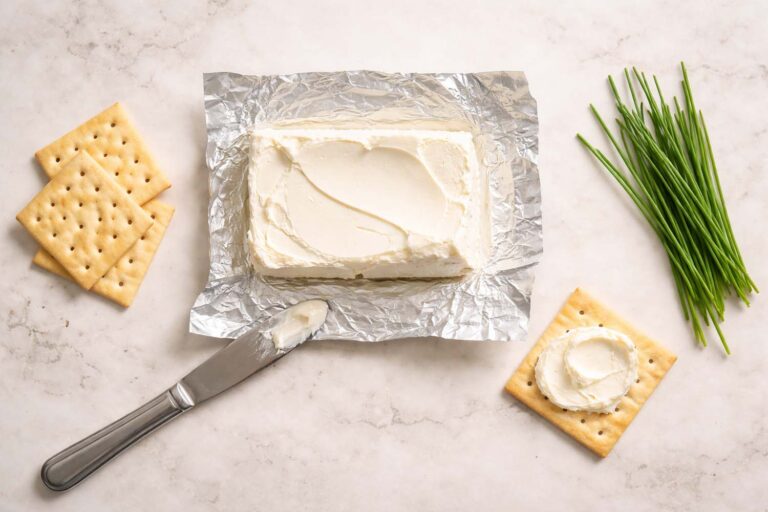
You find a half-open block of cream cheese in the back of the fridge. The date is borderline, or it has been sitting there for a couple of weeks and you are not sure whether to use it or toss it. Does cream cheese go bad?
The short answer: Yes, cream cheese goes bad, and it goes bad faster than most people expect once opened. As a fresh, high-moisture dairy product with no aging or curing, it has a short shelf life and clear spoilage signs you can check before using it.
For a full overview of how dairy products and pantry staples compare on shelf life, visit our Complete Food Storage Guide.
Key Takeaways
- Cream cheese does go bad. It is a fresh dairy product with a short shelf life.
- Unopened: use by the printed date, or up to 1 to 2 weeks past it if stored properly and showing no spoilage signs.
- Opened: use within 1 to 2 weeks. Quality is best in the first week.
- Room temperature limit: 2 hours maximum per FDA guidelines. Do not leave out overnight to soften.
- Freezing is possible but changes texture. Use frozen cream cheese only in cooked or baked dishes.
- Mold on cream cheese means discard the entire container. Do not scoop around it.
How Long Does Cream Cheese Last?
Cream cheese is a fresh, unaged cheese made from a blend of cream and milk that is acidified to form soft curds. Because it is not aged or cured, it has significantly less protection against spoilage than hard cheeses like cheddar or parmesan. Most commercial brands like Philadelphia use hot-pack processing, which extends the unopened shelf life considerably compared to cold-packed artisan varieties.
| Type | Refrigerator (Unopened) | Refrigerator (Opened) |
|---|---|---|
| Commercial block or tub (e.g. Philadelphia) | Use by printed date; up to 1 to 2 weeks past if properly stored | 1 to 2 weeks |
| Whipped cream cheese | Use by printed date | 1 week |
| Flavored cream cheese (chive, strawberry, etc.) | Use by printed date | 1 week |
| Artisan or cold-packed cream cheese | 2 to 3 weeks from purchase | Use within 1 week |
Estimates based on continuous refrigeration at or below 40°F. Per USDA FoodKeeper guidelines. Always check for spoilage signs before using regardless of date.
Signs That Cream Cheese Has Gone Bad
When to Throw It Out
Mold: Any fuzzy growth, whether green, blue, black, or white mold patches, means discard the entire container immediately. Unlike hard cheeses where you can safely cut away a moldy section, soft cheeses like cream cheese must be thrown out at the first sign of mold. Mold roots penetrate soft dairy and can spread invisible spores throughout the container.
Yellow or off-color surface: Fresh cream cheese is uniformly white or very pale cream. A yellowing surface, pink tinge, or any unusual discoloration indicates bacterial growth. Discard immediately.
Sour or unpleasant smell: Fresh cream cheese has a mild, slightly tangy, clean dairy smell. If it smells sharply sour, rancid, or otherwise off, discard it regardless of the date.
Slimy or excessively dry texture: Fresh cream cheese is smooth and spreadable. A slimy surface coating or an unusually dry, crumbly exterior that was not there before indicates spoilage. Normal cream cheese that dries slightly on the cut surface is fine; a slimy film is not.
Excessive watery separation that will not incorporate: A small amount of liquid whey on the surface is normal and stirs back in. Significant pooling that will not reincorporate, especially combined with other signs, indicates the product has deteriorated.
Off taste: Cream cheese tastes mildly tangy and dairy-fresh. A sharply sour, bitter, or otherwise unpleasant taste means discard it. Do not taste if mold is visible or the smell is clearly off.
The Baking Question: Can I Leave Cream Cheese Out to Soften?
The 2-Hour Softening Window
Many recipes call for softened cream cheese, and the instinct is to leave the block on the counter overnight. Do not do this. The FDA recommends that cream cheese spend no more than 2 hours at room temperature. Cream cheese has high moisture content and low acidity, creating conditions where bacteria multiply rapidly above 40°F. Unlike the slightly sour smell from normal fermentation, bacterial growth from improper softening produces no detectable odor, which makes this particularly dangerous.
The practical solution for bakers: use the cubing method. Cut the cream cheese into small cubes and spread them on a plate. At normal kitchen temperatures, cubed cream cheese softens fully in 20 to 30 minutes, well within the safe window. Alternatively, microwave in 10 to 15 second intervals on 50% power until soft, typically 15 to 20 seconds total for an 8-ounce block. Always use softened cream cheese immediately in your recipe rather than letting it sit further.
The cream cheese in the stuffed mushroom filling at your next party? Get it to room temp quickly with the cubing method and bake it promptly. Do not prep and leave it out.
Can You Freeze Cream Cheese?
Yes, but with significant caveats. Freezing cream cheese is safe but changes the texture considerably on thawing. The high moisture content means ice crystals form and disrupt the smooth emulsion, leaving the cream cheese crumbly, grainy, and sometimes slightly watery once thawed. This makes frozen and thawed cream cheese unsuitable for spreading on bagels, making frosting, or using as a dip where the smooth texture is essential.
Frozen cream cheese works well when incorporated into cooked or baked dishes where texture matters less: cheesecake fillings, cream cheese-stuffed recipes baked in the oven, soups, sauces, and casseroles. Freeze in an airtight container for up to 2 months and thaw slowly in the refrigerator overnight. Stir or beat well after thawing to recombine as much as possible before using.
How to Store Cream Cheese Properly
Storage Best Practices
Keep it refrigerated at all times. Cream cheese requires continuous cold storage at 40°F or below. There is no room-temperature storage option for cream cheese, opened or sealed.
Store toward the back of a main shelf, not the door. The back of a refrigerator shelf maintains the most consistent cold. The door fluctuates every time it opens, which accelerates spoilage.
Transfer foil-wrapped blocks to an airtight container after opening. Refolding the foil on a block cream cheese does not create an airtight seal. Once opened, move the unused portion to a sealed container or a zip-lock bag pressed free of excess air.
Press plastic wrap directly on the surface. For tub-style cream cheese, pressing plastic wrap onto the surface before replacing the lid reduces air exposure and slows drying.
Use clean utensils every time. Cross-contamination is one of the most common ways cream cheese spoils early. Always use a fresh knife or spoon, never double-dip.

Label the opening date. An 8-ounce block of cream cheese looks identical whether it was opened yesterday or ten days ago. Writing the date on the wrapper or lid removes the guesswork.
Do not return cream cheese from a serving dish to the container. Once cream cheese has been served and exposed to other foods or utensils, keep it in the serving dish and discard after the meal.
Recipes That Use Cream Cheese
These Better Living recipes are natural fits for fresh cream cheese:
- Gluten-Free Stuffed Mushrooms: cream cheese is the base of the filling, mixed with bacon, Parmesan, garlic, and green onion
- Sausage Stuffed Jalapeños: cream cheese softens the heat and binds the filling
- Chorizo Stuffed Baked Jalapeños: cream cheese is the cool, creamy counterpart to the spicy chorizo
- Gluten-Free Beer Cheese Dip: cream cheese gives this dip its smooth, rich base
Frequently Asked Questions
Can I use cream cheese past its use-by date?
For an unopened block that has been stored properly, yes, within a week or two. The printed date is a quality guideline, not an instant safety cutoff. Open it, check the smell, color, and texture, and use your senses. If it looks and smells like fresh cream cheese, it is almost certainly fine. If there is any mold, yellowing, or off smell, discard it regardless of whether it is past the date or not.
My cream cheese has a small amount of liquid on top. Is it bad?
A small amount of watery whey separating on the surface is normal, the same as with sour cream or yogurt. Stir or drain it and the cream cheese beneath should be smooth, white, and fresh-smelling. If the pooling is significant, or if the texture will not smooth out after stirring, or if it is accompanied by other spoilage signs, discard it.
I see a small spot of mold on my cream cheese. Can I cut it off?
No. The USDA is clear on this: mold on soft cheeses including cream cheese means discard the entire container. Unlike firm cheeses where you can safely remove a section with a 1-inch margin around the mold, soft cheeses have a high enough moisture content that mold roots can penetrate deep and spread invisible spores through the product. When in doubt, throw it out.
Can I use cream cheese that has been left out overnight?
No. Cream cheese left at room temperature overnight has far exceeded the 2-hour FDA safety window. The bacterial growth that occurs at room temperature is not reversible by refrigerating afterward. Discard it. Even if it looks and smells fine, bacterial contamination from overnight counter exposure produces no visible or detectable sign until it is too late.
Further Reading
- Does Cream Cheese Need to Be Refrigerated?
- Does Sour Cream Go Bad?
- Does Butter Go Bad?
- These Expired Condiments Could Make You Sick
- Complete Food Storage Guide

Better Living may earn commissions through affiliate links and may occasionally feature sponsored or partner content. If you make a purchase through our links, we may receive a small commission at no cost to you.