
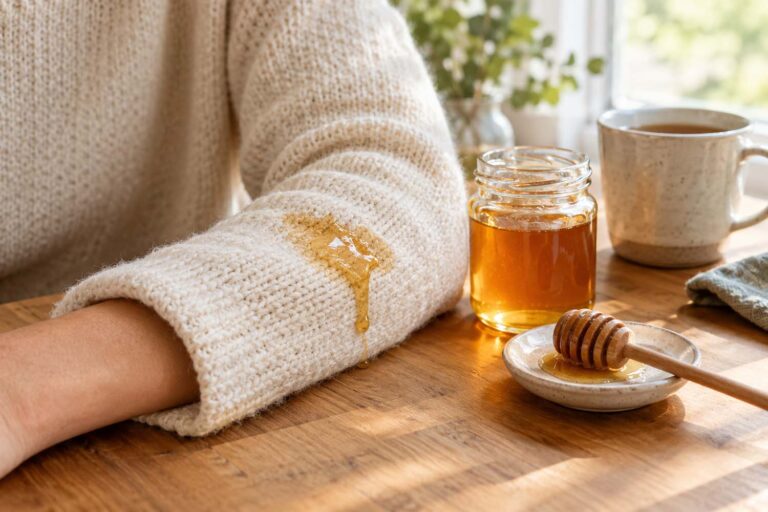
A spoonful of honey slid off my tea spoon and onto the sleeve of a cream sweater, and I did what everyone does: I wiped it. That turned one gold drop into a wide, tacky smear that collected every bit of lint in the room within the hour.
Honey stains feel scary because they are sticky, shiny, and often amber. But the chemistry is on your side. Honey is a sugar stain, not a dye or a grease stain, and sugar dissolves in water. The real skill is knowing when plain water is enough, what to do if some discoloration is left behind, and why the dryer should wait until the stain is gone.
Here is the full playbook for getting honey out of clothes, including what to do with dried, crystallized, and honeycomb messes.
Quick Answer: How to Get Honey Out of Clothes
Scrape off the excess with a dull knife or spoon (never wipe), then rinse the stain with lukewarm water until it no longer feels tacky. Soak it for 15 minutes in warm water with a little liquid dish detergent and white vinegar, rinse, and wash as the care label directs. If discoloration remains after the sugar is gone, an oxygen bleach treatment may help on fabrics that allow it – test a hidden spot first. Keep the garment out of the dryer until the stain is completely gone, because heat can make sugar stains harder to remove.
How I Researched This
Published textile guidance written specifically for honey stains is limited. So this guide applies established sugar and syrup stain-removal guidance, mainly from the University of Georgia Extension, to honey based on its composition. That is an extension of their advice, not something they say about honey itself. I did not run my own fabric tests, so there are no test results or success rates below. Always check the care label and test any treatment on a hidden spot first.
Why Honey Stains Are Different
Most kitchen stains fall into three camps: dye-like pigments such as red wine and turmeric, oils such as grease, and proteins. Honey is none of these. It is a concentrated sugar solution.
Honey is roughly 80 percent sugar and about 17 percent water on average, though measured water content typically falls somewhere between 15 and 20 percent. Fructose and glucose are the main sugars, which one peer-reviewed analysis of 21 honey samples found in every sample, alongside small amounts of other sugars, acids, minerals, and trace protein. Because honey holds more sugar than the water could normally keep dissolved, it is a supersaturated solution. That is why it crystallizes over time as glucose drops out of solution, and why a dried honey spill can turn into a stiff, shiny patch.
Honey also readily absorbs moisture from the air, which is called being hygroscopic. In practice, that means a honey residue can stay tacky, especially in humid conditions, and a tacky patch tends to pick up lint, dust, and pet hair.
This shapes the treatment. The sticky part is the easy part, because sugar dissolves in water and rinsing does most of the work. Once the sticky sugar is gone, any discoloration that remains is what may need additional treatment. Darker honeys contain more natural pigment, so they may leave more noticeable color on light fabrics.
Then there is heat. Fructose and glucose are reducing sugars, which brown more readily than table sugar when heated. I could not find textile guidance showing that a normal dryer cycle sets honey, but heat can make sugar stains harder to remove, and an iron is much hotter than a dryer. So keep both away until the stain is gone. The same rule applies to other sugary spills, such as soda stains and ice cream.
Not All Honey Stains Are the Same
Regular liquid honey: Runny and fast-spreading. It soaks in wide but rinses out well when fresh.
Raw and Manuka honey: Color and texture vary by variety, and darker types may leave more noticeable discoloration on light fabrics. Treat the stain based on what remains after the sugar is removed. If you are curious why these cost so much, see our Manuka honey buying guide and Manuka vs. raw honey.
Creamed or crystallized honey: Already partly solid, so it sits on top of the fabric longer and scrapes off more easily. Dried crystals need to be softened with water before treatment.
Honeycomb: Comb honey contains beeswax. After the honey is rinsed out, small bits of wax may remain. Scrape them off gently, then follow the care label and our guide to getting candle wax out of clothes for any waxy residue.
Honey mixed with other ingredients: DIY face masks and scrubs often contain oils, so treat any greasy residue with dish soap first, as in our grease stain guide. A spilled honey lemonade or hot toddy is diluted honey, so it usually rinses out more easily.
The Golden Rule: Act Fast, and Keep It Away From Heat
Fresh honey rinses out far more easily than honey that has dried into a crystallized patch, and a sticky patch that has collected lint is more work still. So deal with it as soon as you can, even if all you have time for is scraping and a quick rinse.
The second half of the rule is heat. If you only have time to do part of the job, do the scraping and rinsing and skip the dryer. A damp, slightly sticky shirt is easy to retreat. One that has been dried and ironed may need extra treatment.
Pro Tip for Lingering Color
Keep an oxygen bleach powder (affiliate link) on hand for leftover discoloration on whites and colorfast fabrics. I did not test it for this guide, so follow the product label for timing and fabric safety, and check the stain before drying.
Which Method for Which Situation
| Situation | Start with |
|---|---|
| Fresh honey spill | Scrape, then Method 1 |
| Dried, stiff, crystallized honey | Soften with a warm damp cloth, then Methods 1 and 2 |
| Sticky patch after washing | Method 2 again, then re-wash |
| Tan or yellow shadow on whites or colorfast fabric | Method 3, if the care label allows |
| Silk, wool, rayon, acetate, or dry clean only | Method 4: a commercial spot cleaner per its label, or a professional cleaner |
Fabric Matters More Than You Think
Whatever the fabric, check the care label before you start:
Cotton, linen, and polyester: Methods 1 and 2, then Method 3 for leftover discoloration on whites or colorfast items. Linen is very absorbent, so act quickly.
Denim and dark colors: Honey will not show as a stain on dark fabric, but it can leave a tacky, dust-collecting patch, so rinse it out fully. Test oxygen bleach on a hidden seam before using it.
Silk and wool: Use cool water only, blot instead of rubbing, and skip bleach and long soaks. Follow Method 4.
Rayon and acetate: Follow Method 4 and the care label.
Carpet: UGA’s carpet steps for syrup are to scrape up the excess, sponge with clear water, and blot. Then sponge with a solution of 1/2 teaspoon neutral detergent, 1 cup lukewarm water, and 1 tablespoon white vinegar, and blot. Finally, rinse with clear water and blot again. For cotton or linen carpet, UGA says to dilute the vinegar to 2 parts water to 1 part vinegar. To finish, lay a half-inch layer of dry cloths or paper towels over the area, weigh it down for several hours, and let it air dry. The same blotting approach is covered in our guide to getting red wine out of carpet.
Upholstery: Sponge the honey with clear water first. If a stain remains, UGA’s upholstery guidance calls for a wet spotter: 1 part glycerin, 1 part white dish detergent, and 8 parts water, with a few drops of white vinegar added. Apply it with a dropper or small syringe, cover with a pad dampened with the spotter, and change the pad as it picks up the stain. Then sponge with clear water, blot thoroughly, and air dry. Avoid overwetting, which can leave a ring on some upholstery finishes.
My Step-by-Step Emergency Protocol
Here is the order I would follow whenever honey meets clothing:
Step 1 – Scrape. Lift off the excess with a spoon or dull knife. Do not wipe.
Step 2 – Soften if dried. Hold a warm damp cloth on the stain for a few minutes until the crystallized honey turns tacky again.
Step 3 – Rinse. Run lukewarm water through the stain, from the back if practical, until the fabric stops feeling sticky.
Step 4 – Soak. Fifteen minutes in 1 quart warm water with 1/2 teaspoon liquid dish detergent and 1 tablespoon white vinegar, then rinse.
Step 5 – Treat any discoloration. If a tan mark remains and the fabric allows it, use oxygen bleach per the product label after a hidden-spot test.

Step 6 – Launder. Wash as the care label directs, then check the stain wet and in daylight.
Step 7 – Air dry. Only use the dryer once the stain is completely gone.
Warning: Never Do These Things
These common mistakes can make a honey stain harder to remove:
- Don’t wipe or rub the fresh spill – It spreads the sugar into a wider patch.
- Don’t use the dryer or iron before the stain is completely gone. Heat can make sugar stains harder to remove, and a dried garment may need extra treatment.
- Don’t leave it to dry sticky – A tacky patch tends to pick up lint and dirt, which can turn a clear stain into a gray one.
- Don’t use hot water or homemade mixes on silk or wool – Cool water and the care label are safer for delicate fibers.
What Doesn’t Help
Enzyme stain removers: Enzyme products break down proteins, starches, or fats, not the simple sugars in honey, so they are not the right tool for this stain.
Scrubbing it dry: Dry friction can grind crystallized sugar into the weave and leave a shiny patch.
Salt or baking soda to absorb it: Honey is a thick liquid that dissolves in water, so absorbing powders are unlikely to beat rinsing.
Beyond Clothes: Sticky Honey Elsewhere
The same logic works on tablecloths, bath mats, and kitchen towels: dissolve the sugar first, then deal with any color. For sticky containers, see how to get stains out of Tupperware. If honey has gotten onto your dishcloth, here is why your sponge smells and how sugary residue can make it worse.
And if you would like the honey to stay in the jar, we cover whether honey goes bad, whether honey should be refrigerated, and how to store Manuka honey.
Honey Stain FAQ
Does honey stain clothes permanently?
Honey rarely stains permanently, because it is mostly sugar and dissolves in water. The main risk is treating it with heat too soon, so check that the stain is completely gone before using a dryer or iron.
Should I use hot or cold water on honey stains?
Use lukewarm water for most fabrics, because sugar dissolves faster in warm water than in cold. Keep silk and wool cool, and avoid dryer heat until the stain is gone.
Can you remove dried or crystallized honey from fabric?
Yes, dried honey softens when you hold a warm damp cloth on it for a few minutes. After that, rinse and soak it like a fresh stain.
Why is my fabric still sticky after washing?
A sticky patch after washing means some sugar is still trapped in the fibers, often because the soak was too short or the rinse was incomplete. Repeat the warm detergent and vinegar soak, rinse well, and wash again before drying.
Does Manuka honey stain worse than regular honey?
Not necessarily. Honey color varies by variety, and darker honeys can leave more noticeable discoloration on light fabrics. Treat the stain based on what remains after the sugar is removed. See Manuka vs. regular honey for how they differ.
How do I get honey out of a sweater or other knit?
Scrape off the excess, then rinse lukewarm water through the back of the stain and soak briefly with a little dish detergent. For wool or delicate knits, use cool water, blot gently, and follow the care label. If it says dry clean only, take it to a professional.
Final Thoughts
Honey is one of the more forgiving stains in the laundry basket, as long as you remember the order: scrape, rinse, soak, deal with any leftover color, and keep it away from heat until it is truly clean. Do that, and the sweetest spill of the week usually disappears.
Have you rescued a favorite shirt from a honey disaster? I’d love to hear what worked for you – drop a comment below and share it.
Related Guides:
Looking for more cleaning tips and honey know-how? Check out these helpful resources:

Better Living may earn commissions through affiliate links and may occasionally feature sponsored or partner content. If you make a purchase through our links, we may receive a small commission at no cost to you.