
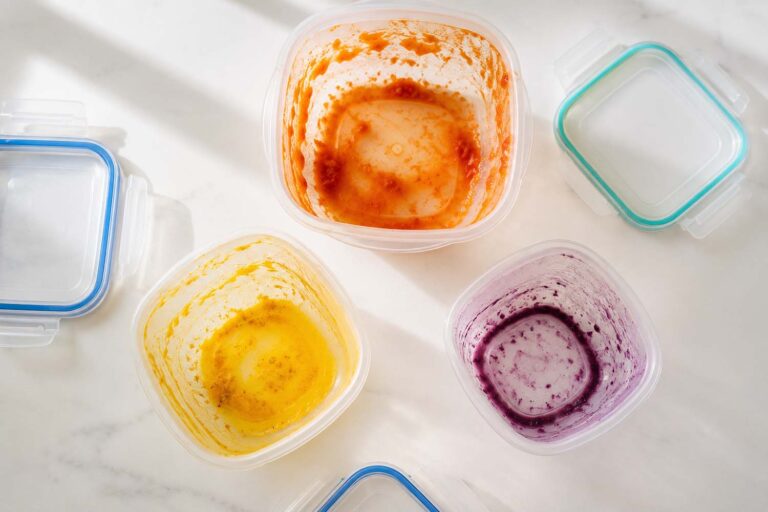
The orange container has been in the back of the cabinet for months. You know the one. It stained the first time you stored leftover marinara in it, and everything you’ve tried since has made no visible difference. If you’ve been wondering how to get stains out of Tupperware, you’re definitely not alone. Meanwhile, the yellow one from last week’s curry is already heading the same direction, and the purple one from the smoothie still has a faint ring around the bottom.
Here’s what took me too long to figure out: each of those Tupperware stains is a different chemical problem. The same baking soda paste that clears a berry stain in twenty minutes won’t touch a deep tomato stain. The soap and hot water that lifts a grease mark will set a turmeric stain harder. Treating every stain the same way is why most stained containers stay stained.
Once you know what you’re actually dealing with, the fix is straightforward. This is a quick-lookup guide organized by stain type. Find what stained your container and start there.
The Short Answer:
Tomato Tupperware stains: Baking soda paste (30–60 min), then direct sunlight. Never run through the dishwasher first.
Turmeric and curry Tupperware stains: White vinegar soak (30 minutes to an hour), then baking soda paste, then sunlight. Hardest stain to remove.
Berry Tupperware stains: Cold water immediately, then white vinegar soak overnight. Sunlight handles the residual tint.
Grease Tupperware stains: Dish soap and warm water. This is the one stain where standard washing works. The paper towel shake method is legitimate here.
Coffee and tea Tupperware stains: Baking soda paste, or denture tablets overnight.
➡ Universal rule: cool water before hot, never skip the soak, and sunlight finishes almost any job the paste starts.
Why Plastic Stains the Way It Does
Plastic food containers are microscopically porous. Pigmented, oily, or acidic foods don’t just sit on the surface; they penetrate those pores, which is why standard dish soap can’t reach them. Soap can emulsify surface grease, but it can’t pull pigment that has bonded chemically deep inside plastic’s pores. You can scrub for twenty minutes and remove essentially nothing because you’re fighting the wrong problem.
Heat makes every stain worse. Warm plastic expands, opening its pores wider and letting pigment molecules sink deeper. This is true for hot food poured in, for microwave use, and for dishwasher heat cycles. Every stain in this guide gets harder to remove if heat was involved before treatment began.
With that shared principle in mind, here’s what to do with each specific stain.
By Stain Type
Tomato Sauce, Marinara, Spaghetti Sauce, Chili
What you’re dealing with: Lycopene, the red pigment in tomatoes, is fat-soluble and has a natural chemical affinity for plastic. It doesn’t just sit in the pores; it bonds to the plastic surface at a molecular level. Soap can’t reach it. The dishwasher makes it worse by baking it deeper with heat.
What works: Make a paste of 2 tablespoons baking soda, 1 teaspoon water, and a small squirt of dish soap. Spread it across the stained surface and let it sit for 30 to 60 minutes without scrubbing. Then scrub gently with a soft sponge, rinse with cool water, and place the clean damp container in direct sunlight for two to four hours. The UV light breaks down lycopene’s chemical bonds through photodegradation. Deep microwaved stains may need two or three rounds.
Never do: Run it through the dishwasher before treating. The high heat drying cycle drives lycopene deeper and makes the stain significantly harder to remove, not easier.
For the full chemistry and stubborn-stain options including bleach: See the complete guide to removing tomato stains from plastic containers.
Turmeric, Curry, Golden Milk
What you’re dealing with: Curcumin, the pigment that gives turmeric its color, is oil-soluble and binds aggressively to porous surfaces, especially when fat is present, which it almost always is in curry. It’s one of the most tenacious food pigments you’ll encounter on plastic. Once heat has been involved, the bond goes deep and can be permanent. This is the hardest stain in this guide.
What works, in order:
- White vinegar soak first. Fill the container with undiluted white vinegar and let it soak for 30 minutes to an hour. Vinegar’s acidity disrupts curcumin’s bond with the plastic in a way that water and soap cannot.
- Drain and follow with baking soda paste: mix 2 tablespoons baking soda with a small amount of water and a squirt of dish soap. Apply, let sit 30 minutes, scrub gently, rinse.
- Sunlight. Place the clean damp container in direct outdoor sunlight for several hours. UV exposure breaks down curcumin’s conjugated double bonds, the molecular structure responsible for its intense color.
- For deep-set stains that survive the above: fill the container with 3% hydrogen peroxide (standard pharmacy strength) and place it in direct sunlight for two to four hours. UV light activates hydrogen peroxide’s oxidizing power, which cleaves curcumin’s pigment bonds. Rinse thoroughly. Repeat once if any yellow tint remains.
Important: Don’t mix the vinegar and baking soda steps without thoroughly rinsing between them. The acid-base reaction will neutralize both agents and accomplish nothing.
I learned this one the hard way after storing butter chicken in a clear container and reheating it twice. The yellow never fully left. Turmeric stains from dishes that were microwaved in plastic or stored hot can be permanent, and of all the stains in this guide, prevention matters most here. Use glass or silicone for curry storage and you’ll never need these steps at all.
Berries: Blueberry, Blackberry, Strawberry, Beet
What you’re dealing with: Berries contain anthocyanins, intensely pigmented compounds that are water-soluble but bond fast to porous plastic surfaces. They are the most forgiving stain in this guide if you act immediately, but once set, the deep purple-blue color can look permanent. Beet stains work similarly: betalain pigments, water-soluble and alarming in color, but actually more responsive to treatment than either lycopene or curcumin.
What works:
- Act fast and use cold water. Rinse immediately with cold water. Hot water sets anthocyanins into plastic far more quickly than cold. This is the step that determines whether the stain is easy or difficult.
- White vinegar soak. Fill the container with undiluted white vinegar or a 1:1 vinegar-water solution and soak for at least 30 minutes, up to overnight for set stains.
- Baking soda scrub. Drain the vinegar, sprinkle in baking soda, and scrub gently with a soft sponge. The mild abrasion lifts residual pigment.
- Sunlight. For any remaining purple tint, direct sunlight for a few hours completes the job.
Lemon juice shortcut for fresh stains: Rub the cut side of a lemon directly on a fresh berry stain and let it sit for 15 minutes before rinsing. The citric acid interacts with the anthocyanins and lightens them quickly. Follow with a wash. Works best on stains that haven’t set.
Grease, Oil, Butter
What you’re dealing with: Pure lipid stains: this is the one case in this guide where standard dish soap and warm water are genuinely the right tool. Dish soap is formulated specifically to emulsify fats: it surrounds lipid molecules and lifts them into the water. Unlike lycopene or curcumin, grease doesn’t form a chemical bond with plastic the same way. If you catch it fresh, soap handles it.
The paper towel shake method (it actually works for this): Squirt dish soap into the container, add warm water to cover the bottom, tear up a few pieces of paper towel and add them, put the lid on, and shake vigorously for 45 to 60 seconds. The paper towel acts as an agitator that also absorbs the dislodged grease. Those are the two jobs regular scrubbing does separately, done simultaneously. Pour it out and rinse. This is the viral TikTok method, and for fresh grease stains specifically, it’s legitimate.
What the shake method does not fix: Set tomato stains, deep turmeric stains, or any pigment that has bonded chemically to the plastic. It’s a fresh-grease tool, not a stain rescue method. If you’ve seen it recommended for your orange marinara container, that’s why it didn’t work.
For set grease: Baking soda paste works as a backup, or an enzyme-based cleaner specifically formulated to break down lipids.
Coffee, Tea
What you’re dealing with: Tannin-based stains. Tannins are water-soluble polyphenols that brown on contact with air and bond to porous surfaces, the same mechanism behind the ring around a coffee mug. These are among the milder stains in this guide and respond quickly to treatment.
What works:
Baking soda paste (2 tablespoons baking soda mixed with a small amount of water and a squirt of dish soap). Apply, wait 15 to 30 minutes, scrub, rinse. Handles most coffee and tea stains in one pass.
Denture tablets are the crowd-pleasing option. Drop one or two tablets in warm water inside the container, seal the lid, and let it sit overnight. The effervescent cleaning action lifts tannin stains without any scrubbing. Works on lids too. Rinse thoroughly in the morning.
For stubborn stains: A 30-minute soak in 3% hydrogen peroxide lightens tannin discoloration quickly. Rinse well before using the container for food.
Universal stain rule for all of the above: Sunlight is the finishing move that works across every stain type in this guide. After any method (baking soda paste, vinegar soak, denture tablets), if a faint tint remains, place the clean damp container in direct outdoor sunlight for two to four hours. UV radiation degrades the chemical bonds of lycopene, curcumin, anthocyanins, and tannins alike. Indoor windowsill exposure works but is slower, because glass filters some UV. Don’t leave containers in direct sun repeatedly for days on end, as extended UV exposure degrades plastic over time.
For any stain involving meat-based sauce (bolognese, chili with ground beef, butter chicken), add an enzyme-based stain remover to the surface before the baking soda step. Enzymes break down protein residue that sits on top of the pigment stain and prevents other cleaners from reaching it.
The Methods at a Glance
If you need to cross-reference, here’s how the universal methods rank across stain types:
Baking soda paste works on all stain types, especially strong on tomato, coffee, and tea. Best first move in most situations.
White vinegar soak is most effective on turmeric (disrupts curcumin’s acid-sensitive bond) and berries. Less impactful on pure grease or deep tomato stains.
Hydrogen peroxide (3%) is an oxidizing agent that works on pigments resistant to physical methods. Best on deep turmeric and residual coffee/tea discoloration. Rinse thoroughly before food use.
Sunlight works via UV photodegradation of pigment bonds across all stain types. Most effective as a finishing step after other methods, less effective as a standalone on deep-set stains.
Denture tablets are best on coffee and tea. Mild effervescent action that requires no scrubbing. Not strong enough for tomato or turmeric.
Dish soap and warm water (shake method) work best on fresh grease only. Does not interact meaningfully with lycopene, curcumin, or anthocyanins.
Isopropyl alcohol or hand sanitizer works specifically on turmeric. The alcohol dissolves curcumin’s oil-based bond with plastic without scrubbing. Pour enough hand sanitizer (or rubbing alcohol) to cover the stained surface, let it sit for 30 to 45 minutes, wipe clean with a damp cloth, then wash thoroughly with dish soap and warm water before using the container for food. The Kitchn tested this on a turmeric stain and found it removed the stain completely. High alcohol content can cause discoloration if left too long, so don’t exceed an hour.
Oxygen bleach powder is a stronger alternative to chlorine bleach, effective on set stains across most types. Oxygen bleach is gentler on plastic than chlorine bleach and leaves no chemical odor. Dissolve per package instructions, soak 1 to 2 hours, rinse thoroughly.

Things that make every stain worse:
- The dishwasher (before treating). The heat drying cycle sets nearly every stain deeper. Always treat stains by hand first.
- Microwaving staining foods in plastic. The leading cause of stains that never fully clear. Use glass or ceramic for reheating tomato and curry dishes.
- Pouring hot food directly into plastic. Heat expands plastic pores and accelerates pigment penetration. Cool to room temperature first.
- Hot water as a first step. For berry and coffee stains especially, hot water sets the stain before you’ve had a chance to treat it.
- Aggressive scrubbing without soaking. Scratches the plastic surface, increases porosity, and makes future staining worse. Always soak before scrubbing.
Prevention: Stop the Stain Before It Starts
Oil the container before adding staining foods. A thin coat of cooking spray or neutral oil on the inside of the container gives lycopene and curcumin something else to bond to besides the plastic itself. Wipe it out before washing and the container stays clean. A ten-second habit that prevents the most persistent stains entirely.
Use glass for the three big offenders. Tomato sauce, curry, and berry smoothies account for the vast majority of stubborn plastic stains. Glass is non-porous, has no chemical affinity for any food pigment, and won’t stain regardless of how long food sits or how many times it’s microwaved. Glass containers with BPA-free plastic lids are the practical middle ground if you don’t want to go fully glass.
Cool food before transferring. Whether the container is glass or plastic, letting hot food cool slightly before transferring reduces penetration significantly.
Wash immediately. The longer any stain sits, the deeper it penetrates. A quick rinse with cool water right after emptying the container prevents most stains from setting at all.
Never microwave tomato or curry in plastic. If there’s one habit to change from this guide, this is it. Use a glass or ceramic dish for reheating. Transfer back to plastic for storage after it cools.
When to Stop Trying and Replace It
A stain alone is cosmetic, not a safety issue. The safety issues are structural. Replace a container when:
It’s deeply scratched. Bacteria harbor in grooves and scratches and can’t be fully removed by washing. A scratched container that’s been storing raw meat or fish is a food safety risk regardless of how it looks.
It’s warped, cracked, or peeling. Warped lids don’t seal properly. Cracks create crevices for bacteria. Peeling plastic is degrading structurally.
It was made before 2010. Tupperware went BPA-free in the US in 2010. Pre-2010 containers may contain bisphenol-A, which has been linked to health concerns. If you don’t know how old a container is and can’t check the recycling code on the bottom, replace it. Safe recycling codes are #2, #4, and #5. Avoid #7, which can indicate BPA content.
It still smells after thorough cleaning. Persistent odor after baking soda treatment indicates bacteria or deeply embedded residue that surface cleaning can no longer reach.
The stain is permanent and it bothers you. Not a safety issue, just a quality-of-life call. Tupperware brand products carry a limited lifetime warranty. If a container cracks or breaks, contact a Tupperware representative about a replacement.
Frequently Asked Questions
Does vinegar remove stains from Tupperware?
It depends on the stain. White vinegar is most effective on turmeric and berry stains, where its acidity disrupts the pigment’s bond with plastic. It’s less effective on tomato stains (lycopene doesn’t respond to acidity the same way) and not the right tool for grease. For turmeric especially, a straight vinegar soak before baking soda paste is the most important first step.
How do you get turmeric stains out of plastic containers?
Start with a white vinegar soak (30 minutes to an hour), follow with baking soda paste, and finish with direct sunlight. For deep-set stains, fill with 3% hydrogen peroxide and leave in direct outdoor sunlight for two to four hours. UV activates the hydrogen peroxide’s oxidizing action and breaks down curcumin’s pigment bonds. Be prepared to repeat. Turmeric that was heated in plastic is sometimes permanent.
Does the dishwasher clean stained Tupperware?
Not effectively, and for tomato stains it actively makes things worse. The high heat from the dishwasher’s drying cycle drives pigment deeper into plastic rather than removing it. Always treat stains by hand before running anything through the dishwasher.
Does baking soda remove stains from Tupperware?
Yes, for most stain types. A paste of baking soda, a small amount of water, and a squirt of dish soap is the most reliable all-purpose stain treatment for plastic containers. It works through mild abrasion and mild alkalinity that disrupts surface pigment adhesion. It’s most effective when left to soak for 30 to 60 minutes before scrubbing, and works best as the first step before sunlight exposure.
What is the TikTok Tupperware cleaning hack?
Dish soap, warm water, and torn paper towels in the container: lid on, shake vigorously for 45 to 60 seconds. The paper towel acts as an agitator that also absorbs dislodged particles. It works well for fresh grease stains and light surface residue. It doesn’t work on set lycopene (tomato), curcumin (turmeric), or other pigments that have chemically bonded to the plastic. It’s a maintenance cleaning method, not a stain rescue method.
How do you get the smell out of Tupperware?
The baking soda paste step in this guide addresses both stains and odors simultaneously, since baking soda neutralizes acidic odor molecules. For odor without visible staining, fill the container with warm water and a tablespoon of baking soda, seal the lid, shake for 30 seconds, and let it sit overnight. Drain, wash, and dry completely before storing. Toothpaste also works as a standalone odor treatment: smear a small amount of non-gel toothpaste inside the container, leave it overnight, then rinse thoroughly. A container sealed while damp will develop odor even after thorough cleaning, so always dry completely before closing the lid.
When should you throw away stained Tupperware?
A stain alone isn’t a reason to throw a container away; it’s cosmetic. Replace containers when they’re deeply scratched (bacteria risk), warped or cracked, pre-2010 (potential BPA), or when they still smell after thorough cleaning. Tupperware brand products carry a limited lifetime warranty for cracking or breaking.
How do you get yellow curry stains out of plastic containers?
The yellow color is curcumin from turmeric. Vinegar soak, baking soda paste, then sunlight in that order, rinsing thoroughly between the vinegar and baking soda steps. For persistent yellow tint, 3% hydrogen peroxide in direct outdoor sunlight (not behind glass, which blocks UV) for two to four hours. Repeat once if needed.
Curry stains that were microwaved into the plastic may not fully clear. Hand sanitizer or rubbing alcohol left on the stain for 30 to 45 minutes, then washed off thoroughly, is also worth trying on set yellow stains before reaching for bleach.
Same stain, different surface:
- Tomato stains in plastic: full guide
- Tomato sauce out of clothes
- Curry and turmeric out of clothes
- Berry stains out of clothes
- Grease out of clothes
- Coffee stains out of clothes
- Soy sauce out of clothes
- Red wine out of clothes
- Hot sauce out of clothes
- Ketchup out of clothes
- Mustard out of clothes
- Complete stain removal guide
Better Living may earn commissions through affiliate links and may occasionally feature sponsored or partner content. If you make a purchase through our links, we may receive a small commission at no cost to you.