
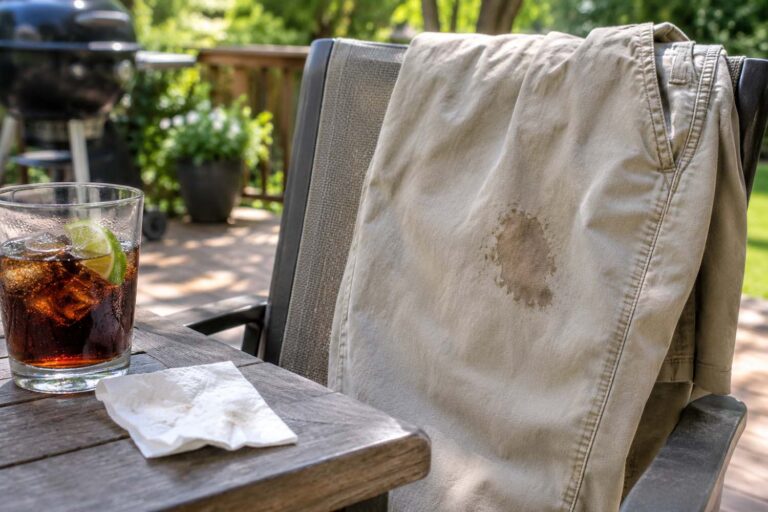
Someone bumped my arm at a backyard barbecue and half a rum and coke ended up down the front of my light khakis. I did what most people would do: blotted it with a napkin, rinsed it with cold water from the hose later that night, and figured the faint brown shadow left behind would come out in the next wash. It mostly did, color-wise. What I didn’t expect was that the same spot kept looking slightly dingy for weeks afterward, like it was attracting more dirt than the rest of the pants. It turns out I’d solved the wrong half of the problem.
Why a Soda Stain Is Actually Two Stains at Once
Most guides treat a soda stain as a color problem: get the brown or the red or the orange out, and you’re done. That misses half of what soda actually leaves behind. Every soda is mostly sugar and water, plus whatever gives it its color. The pigment is the part you can see, but the sugar is the part that keeps causing trouble after the color is gone. Sugar residue left in the fibers acts like a magnet for new dirt and grime, which is why a soda stain that looked fully treated can start looking dingy again weeks later, even though no new spill happened.
That’s exactly what happened with my khakis. The visible pigment came out in the wash. The sugar didn’t fully rinse away first, so that spot kept attracting more soil than the surrounding fabric.
The Golden Rule: Chase the Sugar, Not Just the Color
Here’s what separates a soda stain from a lot of other spills on this site. Clearing the visible color is only half the job. If you rinse and treat for color but don’t flush out the sugar underneath it, the stain can look completely gone the day you treat it and still cause problems down the road, since that residual sugar keeps drawing in dirt long after the pigment has faded. A thorough cold water flush before you do anything else is what actually addresses both halves of the problem at once.
Stain Variants: Clear, Colored, and Caramel
Clear sodas (club soda, tonic, lemon-lime, ginger ale): Minimal visible pigment, but the sugar residue is exactly the same problem as any other soda. Don’t skip the flush just because you can’t see a stain.
Bright, dye-based sodas (orange, grape, fruit punch, red cream soda): These get their color from synthetic dyes rather than caramel color. They aren’t necessarily easier to treat just because there’s no caramel color involved, since those dyes are formulated to be vivid and stable too.
Dark colas, root beer, and other caramel-colored sodas: The color in these comes from caramel color, which isn’t simply home-kitchen burnt sugar. The type used in most colas is made from heated carbohydrates but processed with ammonium and sulfite compounds under tightly controlled industrial conditions, which produces a more complex, stable pigment than sugar browned on its own. That’s part of why a set-in cola stain can be more stubborn than a same-colored stain from something that browned casually while cooking.
How to Get Soda Stains Out of Clothes: 4 Easy Methods
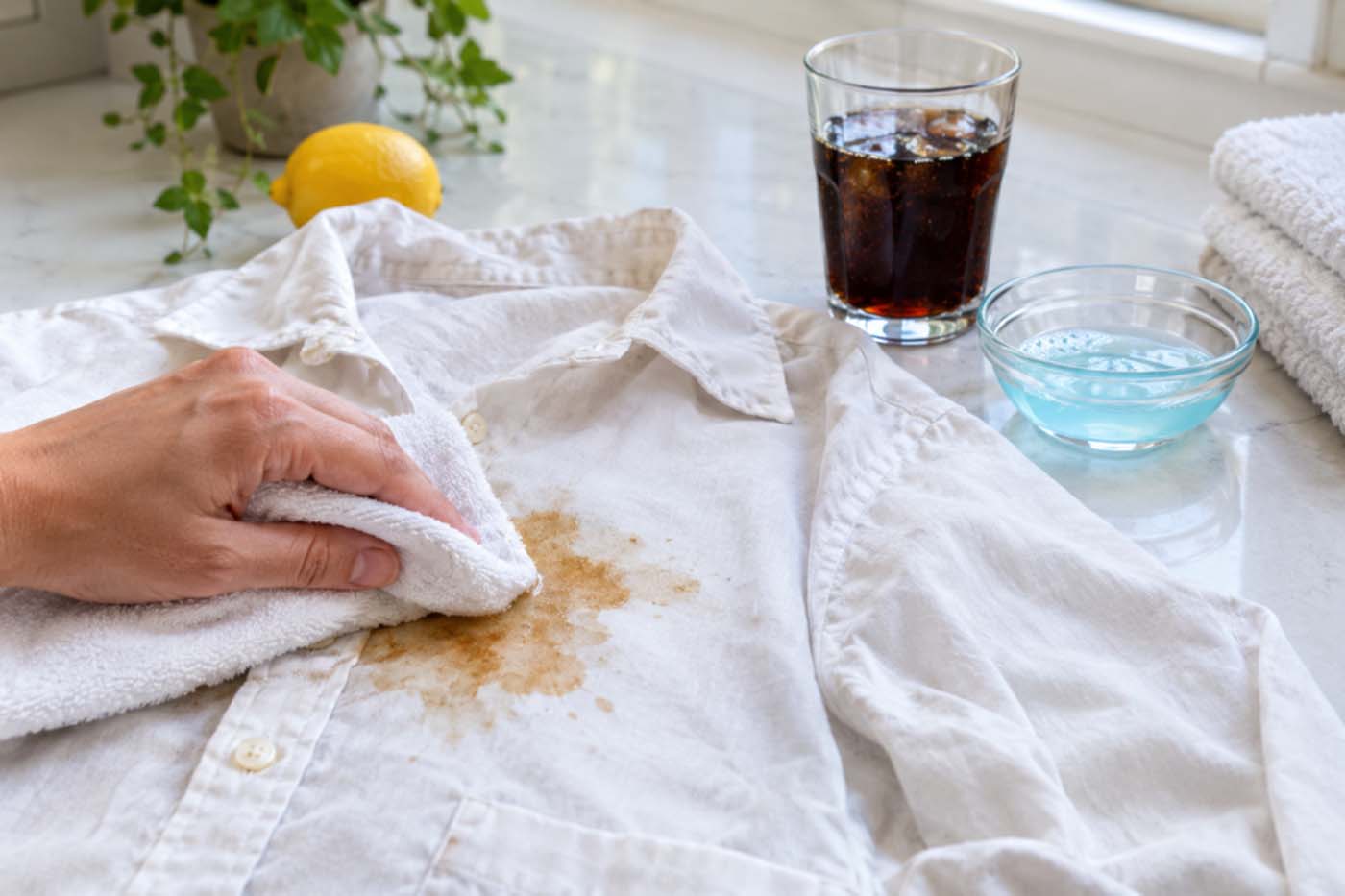
Blot and Cold Flush (every soda stain, every fabric)
Blot up as much liquid as possible with a clean cloth before it has a chance to spread. Turn the fabric inside out and flush the back of the stain with cold water until it runs clear. This step is doing more work than it looks like, since it’s clearing sugar as much as it’s clearing color. Verdict: never skip this step, even on a stain that looks minor.
Dish Soap Treatment (finishing the sugar residue)
Work a few drops of liquid dish soap into the stain and let it sit for 5 to 10 minutes before rinsing again. This finishes breaking down any sticky residue the cold flush didn’t fully clear. Verdict: the step most people skip because the stain already looks lighter, which is exactly why it’s worth doing anyway.
Vinegar or Lemon Juice (remaining color, especially dark colas)
Dab white vinegar or fresh lemon juice onto any color that’s still visible and let it sit for 10 to 15 minutes before rinsing. This is most useful on caramel-colored sodas, where the pigment behaves a bit like the tannin stains already covered on this site. Verdict: a solid second pass once the sugar is handled and only color remains.
The Overnight Oxygen Bleach Soak (dried or set stains)
Mix an oxygen bleach powder according to package directions in cool water and soak for at least 6 to 8 hours. This is your best option once a soda stain has dried, been through a wash cycle, or is simply older than a day or two. An oxygen bleach powder handles caramel-colored stains well without the fiber damage or unpredictable reactions chlorine bleach can cause. Verdict: the step that rescues a stain the earlier ones couldn’t fully clear.
By Fabric Type
White cotton: The most forgiving option. The full sequence, cold flush, dish soap, vinegar, then oxygen bleach if needed, clears nearly everything, and white cotton tolerates a longer soak than colored pieces.
Colored cotton and khakis: Treat the same way, but patch test any oxygen bleach on an inside seam first, especially on lighter colors where fading would be noticeable.
Polyester and synthetic activewear: Generally releases soda stains more easily than natural fibers, since synthetics don’t absorb the sugary liquid as deeply. The cold flush and dish soap alone often finish the job.
Silk and wool: Treat gently. Cold water flush, then a light dab with diluted vinegar rather than a full soak, and skip the oxygen bleach soak in favor of a professional cleaner for anything valuable.
Dry-clean-only fabrics: Blot gently with a cool, damp cloth to keep the stain from spreading, and get it to a professional promptly. Mention that the spill was soda specifically, since the sugar residue matters to how they treat it.
Step-by-Step Protocol
- Blot up as much liquid as possible before it spreads further.
- Turn the fabric inside out and flush the back of the stain under cold running water until it runs clear.
- Work in a few drops of liquid dish soap and let sit for 5 to 10 minutes, then rinse.
- If color remains, especially from a dark cola, dab with white vinegar or lemon juice and let sit for 10 to 15 minutes.
- Rinse thoroughly and check the area in good light.
- If the stain is dried, set, or has already been through a wash, move to an oxygen bleach soak rather than repeating the earlier steps.
- Soak in an oxygen bleach solution for at least 6 to 8 hours.
- Wash according to the care label.
- Check the spot again before drying, and run a finger over the area. Any lingering stiffness or tackiness means sugar residue is still there even if the color looks gone.
Never do this:
- Never use hot water on a fresh soda stain, especially a dark cola. Heat can set the caramel pigment the same way it does with other pigment stains on this site.
- Never put the item in the dryer until you’ve confirmed both the color and the stickiness are gone. Dryer heat can cook any leftover sugar residue directly into the fabric.
- Never assume a stain is finished just because the color has faded. Check for residual sugar by feel, not just by sight.
- Never let a soda stain sit for days before treating it. The longer sugar and any acid in the drink sit on the fabric, the more they contribute to fiber wear on top of the visible stain.
- Never use chlorine bleach on colored garments. Reserve it, if at all, for sturdy white fabrics only.
- Never rub a fresh stain hard. This pushes sugar and pigment deeper into the weave instead of lifting them out.
What Doesn’t Work
Treating the stain once, seeing the color disappear, and calling it done is the most common mistake, and it’s exactly what happened with my khakis. The color coming out doesn’t mean the sugar came out with it, and that leftover residue is why a “clean” spot can start looking grimy again within a few weeks.
Reaching for a generic stain stick and stopping there tends to underperform on dark colas specifically, since caramel color behaves more like the tannin stains already covered on this site than like a simple surface dye. A stain stick helps as a first pass, but a vinegar or oxygen bleach step usually finishes what it starts.

The One Thing I Wish I’d Known Sooner
I genuinely thought I’d handled that stain the night it happened, because the color was gone by the time I checked. What I didn’t realize was that rinsing away the visible pigment isn’t the same as rinsing away the sugar underneath it, and that leftover sugar is exactly why the spot kept looking a little dingier than the rest of the pants for weeks after. The lesson wasn’t about finding a better stain remover. It was about treating the stain I couldn’t see instead of stopping once the one I could see was gone.
Final Thoughts
A soda stain is really two problems layered on top of each other, a color you can see and a sugar residue you usually can’t, and treating only the first one is why so many “successful” soda stains come back looking worse a few weeks later. Flush thoroughly for the sugar, treat the color with vinegar or oxygen bleach depending on how set it is, and check by feel, not just by sight, before you call it done. If you’re curious about other pigments that come from a controlled heating reaction rather than a simple stain, our guides on hair dye and self-tanner cover a related idea, and our coffee and tea guide covers the closest pigment cousin to caramel color.
FAQ
Does soda stain come out of clothes completely? Usually, yes, especially if treated within the first day. The color often comes out with a simple flush and dish soap, but check for leftover sugar residue by feel before considering it finished.
Are dark sodas like cola harder to remove than clear sodas? The visible staining is generally worse, since caramel color adds a pigment clear sodas don’t have. But the sugar residue underneath is the same problem either way, so don’t skip treatment just because a clear soda didn’t leave a visible mark.
Will hot water make a soda stain worse? It can set the caramel pigment the same way heat sets other pigment stains, so stick with cold water for the initial flush. The bigger risk with heat is the dryer specifically, which can cook any leftover sugar residue directly into the fabric.
Does letting a soda stain dry make it harder to remove? Yes. As the liquid evaporates, the sugar becomes stickier and more concentrated, which is part of why a same-day stain is so much easier to fully clear than one that’s sat overnight.
Can you use chlorine bleach on soda stains? Only on sturdy white fabric. Oxygen bleach is the better first choice for colored garments and works well on caramel-colored stains without the fiber damage risk.
Do diet sodas stain less than regular sodas? They can leave less noticeable staining since there’s less sugar and often similar or identical coloring, but the artificial dyes and any acid content still mean treatment shouldn’t be skipped.
What’s different about cleaning up a mixed drink spill, like a rum and coke? Treat it as a soda stain first, then add an enzyme pretreatment step if the drink included cream, bitters, or a fruit garnish, since those add residue a straight soda treatment won’t fully address.
How do you get soda stains out of car seats or upholstery? Blot up as much as you can first, then work a mix of cold water and a little dish soap into the spot, blotting rather than rubbing. Follow with a vinegar solution for any remaining color, and always test on a hidden area first.
Related Stain Guides:

Better Living may earn commissions through affiliate links and may occasionally feature sponsored or partner content. If you make a purchase through our links, we may receive a small commission at no cost to you.