
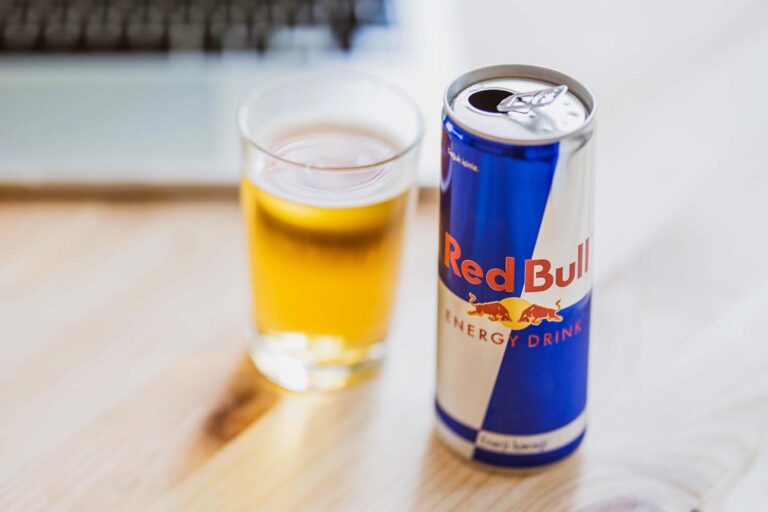
Red Bull is a sealed, shelf-stable canned drink, and that holds only while the can stays sealed and undamaged. Below: what official guidance says about dates, heat, freezing and opened cans, where the evidence gives no definite answer, and when to toss a can.
Does Red Bull go bad?
Slowly, yes. An unopened can may remain acceptable past its printed date if it is undamaged and has been stored properly, because USDA says dates are for quality, not safety. We found no Red Bull-specific guidance on how long that lasts, so we don’t give a month count. Keep cans cool, since heat can damage canned products. Once opened, it goes flat quickly, so finish it the same day. Discard any can that is bulging, leaking, heavily rusted or deeply dented.
For a complete pantry storage reference, see our Food Storage Guide. For another canned drink, see our guide on whether Coke goes bad.
📋 Does Red Bull Go Bad: At a Glance
| Unopened, undamaged, stored cool | USDA says dates are for quality, not safety. We found no Red Bull shelf-life figure |
| Past the date on the can | Not a safety date, per USDA. Check the can itself before you open it |
| Hot car, garage or sun | Avoid. USDA says below 85°F is best and over 100°F harms canned goods. After prolonged heat, a normal-looking can isn’t proof it’s fine |
| Opened can | Goes flat. We’d finish it the same day and refrigerate anything you save |
| Frozen | Don’t. Freezing can bulge or split a can. Discard any that bulges, leaks or bursts |
| Bulging, leaking, heavily rusted or deeply dented | Discard it |
| Caffeine | 80 mg in an 8.4 fl oz (250 ml) can, per Red Bull. FDA has cited 400 mg a day for most adults |
Key Takeaways
- Red Bull is a sealed, shelf-stable drink. USDA says product dates are for quality, not safety, and a product should still be safe if handled properly until spoilage is evident.
- We found no shelf-life figure published by Red Bull or by USDA or FDA for energy drinks, so we don’t give a month count.
- Heat is the storage factor to watch. USDA says below 85°F is best and over 100°F is harmful to canned goods, and Oregon State Extension says the risk of spoilage rises as temperatures rise.
- Don’t freeze a can. Discard any can that is bulging, leaking, heavily rusted or deeply dented.
- Once opened, Red Bull goes flat. We’d finish it the same day and refrigerate anything you save.
This guide covers sealed aluminum cans of Red Bull Energy Drink and its sugar-free and flavored versions. Sugar-free versions use non-sugar sweeteners in place of sugars, and Red Bull’s international Sugarfree ingredients page names sucralose and acesulfame K for its Sugarfree. Ingredients can vary by product and country, so check your own can’s ingredient panel. For colas, see our guide on whether Coke goes bad.
What Do the Sources Say About Red Bull and Dates?
These are USDA’s general rules plus what we could and couldn’t find from Red Bull.
| What Matters | What the Sources Say | Source |
|---|---|---|
| Date on the can | Dating is for quality, not safety | USDA |
| Is dating required? | Not by federal regulation, except for infant formula | USDA |
| Past-date product | Should still be safe and wholesome if handled properly until spoilage is evident | USDA |
| Storage temperature | Below 85°F is best. Over 100°F is harmful to canned goods | USDA and Oregon State Extension |
| Damaged cans | Don’t purchase bulging, rusted, leaking or deeply dented cans | USDA |
| Red Bull shelf-life figure | Not found in the Red Bull pages we reviewed | Our review (see How We Checked This) |
Does Red Bull Expire?
USDA’s food product dating page says product dating is not required by federal regulations, except for infant formula. It says a “best if used by” date marks when a product will be of best flavor or quality, and that dates are not an indicator of safety.
It also says a product should still be safe and wholesome if handled properly until the time spoilage is evident. That page covers food dating in general, not energy drinks by name. Check the date printed on your can.
How Long Does Red Bull Last Unopened?
We read Red Bull’s support hub and a Red Bull Q&A list and found no answer on shelf life or best-before dates in either. Some food sites give a firm range, such as 18 to 24 months. We couldn’t trace that figure to Red Bull, USDA or FDA, so we don’t use it.
What we can say is narrower. USDA’s general guidance treats a date as a quality marker, so for a sealed, undamaged can kept cool, we’d treat the date as a quality target, not a safety cutoff. That guidance isn’t about Red Bull by name. For other pantry items with dates, see our guide on dangerous expired pantry staples.
Can You Drink Red Bull After the Date?
An unopened can may remain acceptable after its printed date if it has been stored properly and is undamaged. USDA’s rule is that a product should still be safe if handled properly until spoilage is evident, and that the date is about quality. That is general food guidance, not a Red Bull-specific determination.
We found no source that gives a point where a sealed can becomes unsafe, and none on how quality changes over a year or two. So we’d check the can first. If it is bulging, leaking, heavily rusted or deeply dented, don’t open it. We don’t suggest tasting to test.
What Does Heat Do to Red Bull?
Heat is the storage factor to watch. USDA’s shelf-stable food page says temperatures below 85°F are best and that temperatures over 100°F are harmful to canned goods. Oregon State Extension’s Ask Extension answer on canned food in a heat wave answers a question about store-bought canned meat kept in a 115°F shop. It says the risk of spoilage rises as temperatures rise and that not all harmful organisms make a can bulge. Both are written for canned foods, and we found no energy-drink-specific heat data or time limit.
A hot car, a sunny porch or a garage in summer can pass 100°F. We’d keep cans out of those spots and store them somewhere cool. If a can went through a long stretch of extreme heat, we’d lean toward discarding it, since a normal look doesn’t prove it is fine. That is our own caution, not an agency rule. A warm can also tends to foam and spray more when opened, so we’d chill it first and open it slowly.
Does Sugar-Free Red Bull Go Bad Faster?
Sugar-free versions use non-sugar sweeteners where the regular drink uses sugars. Red Bull names sucralose and acesulfame K for its Sugarfree, and ingredients can vary by country, so check your own can’s ingredient panel.
We found no official data showing that sugar-free versions go bad faster, so we won’t claim they do. Either way, keep cans cool and discard any that are damaged.
Can You Freeze Red Bull?
Don’t freeze it. We found no Red Bull or federal guidance on freezing beverage cans. We know water expands as it freezes, so a frozen can can bulge, split or leak. That is our own reasoning, not a quoted rule. If you want a can cold fast, use the fridge or an ice bath and set a timer.
NDSU Extension’s column on canned food that froze advises inspecting cans that froze. If the seams are rusted or burst, throw the cans away and do not taste the contents. That column is written for canned food, not drinks. If a can has burst or is damaged, discard it.
We found no Red Bull-specific guidance on a can that froze but looks intact, so there is no official answer. Our own caution is to discard it if you see any bulge, leak or burst seam, and if you’re unsure, to discard it too. For a cleanup after a burst, see how to get soda stains out of clothes.
Does Red Bull Need to Be Refrigerated?
No source we found says Red Bull must be refrigerated. USDA says to store canned foods and other shelf-stable products in a cool, dry place. Many people chill Red Bull for taste, which is a preference, not a safety rule.
Once a can is open, the situation changes. We’d refrigerate leftovers, since the fizz fades fast and an open can can pick up dust or insects. That is our own caution.
How Long Does Red Bull Last Once Opened?
We found no Red Bull or government figure for how long an opened can lasts. Carbonation goes first, so the drink gets flat quickly. We’d finish it the same day.
If you want to save part of a can, we’d pour it into a clean container with a lid, refrigerate it, and drink it within a day. We’d discard an opened can that sat out overnight or outdoors. All of that is our own judgment, not an agency rule. For other open-container drinks, see whether orange juice goes bad and whether sparkling water goes bad.
How Can You Tell if Red Bull Is Bad?
USDA says not to purchase bulging, rusted, leaking or deeply dented cans. It says to discard heavily rusted cans, and that surface rust you can rub off is not serious. It also says spoiled foods develop an off odor, flavor or texture, and that food showing those characteristics should not be eaten.
Beyond that, our own list is short: a fermented, vinegary or musty smell when you open it, fuzz or floating particles in the liquid, and a can that sprays or oozes unusually. Treat any unusual appearance as a reason not to drink it.
A weak or missing hiss on its own is a quality change, not a reliable safety test. Check the can for leaks and damage instead. We don’t suggest tasting to test.
Why Does Red Bull Taste Flat or Different?
A flat or different taste is a quality issue, not a reliable safety test. An opened can loses its carbonation quickly, and we found no source that explains every taste change in a sealed can. We wouldn’t taste a drink to check it. We’d check the can for bulges, leaks and heavy rust, and treat an unusual smell when you open it as the signal to discard.
How Much Caffeine Is in Red Bull?
Red Bull’s US caffeine Q&A page lists the caffeine in Red Bull Energy Drink by can size. An 8.4 fl oz can has 80 mg, a 12 fl oz can has 114 mg, a 16 fl oz can has 151 mg and a 20 fl oz can has 198 mg. The first three are 250, 355 and 473 ml.
FDA’s page on how much caffeine is too much says that for most adults the FDA has cited 400 milligrams a day as an amount not generally associated with negative effects. It says to consider all sources of caffeine in your diet, and that how much is too much varies from person to person. It also says energy drinks generally have 54 to 328 milligrams of caffeine per 16 fluid ounces. It adds that the FDA has no regulation specific to energy drinks, and that medical experts advise against them for children and teens.
We found no source showing that caffeine drops as a sealed can ages, so we won’t claim it. For a coffee-based option, see our guide on whether coffee goes bad and our list of coffee alternatives.
Can Old Red Bull Make You Sick?
We found no source tying specific symptoms to old Red Bull, so we won’t list any. The risk we can point to is a damaged can, which USDA says not to buy. Discard any can that is bulging, leaking, heavily rusted or deeply dented, and don’t drink a can with a fermented or musty smell.
If you feel unwell after any drink, talk to a doctor or pharmacist. This article is general information, not medical advice.
What Else Can You Drink?
Want something to sip instead? Try our cold-brewed peach mint iced tea, manuka honey lavender lemonade or fresh minty mojito. For other fizzy drinks, see whether root beer goes bad, whether tonic water goes bad and whether club soda goes bad.
Signs Something Is Wrong
- A bulging, leaking, heavily rusted or deeply dented can. USDA says not to purchase bulging, rusted, leaking or deeply dented cans, and to discard heavily rusted ones.
- An off odor when you open it. USDA says food with an off odor, flavor or texture should not be eaten.
- An opened can that sat out overnight or outdoors. This is our own caution.
- A can that burst or split in the freezer. NDSU Extension says to throw away canned food with burst seams.
- A can that went through a long stretch of extreme heat. This is our own caution, built on USDA and Oregon State Extension guidance for canned goods. A normal look doesn’t prove it is fine.
- Fuzz or floating particles in the liquid. This is our own caution.
Items that say our own caution are not agency rules. We don’t suggest tasting to test.
Normal Things That Aren’t a Problem
- A date on the can that has passed, on an undamaged can stored cool. USDA says dates are for quality, not safety.
- A warm can that foams when opened. We’d chill it first and open it slowly.
- A weaker hiss than you expected. That is a quality change, not a reliable safety test, so check the can for leaks and damage.
None overrides the signs above.

Quick Storage Reference
- Unopened: Cool, dark, dry place. Below 85°F is best per USDA.
- Hot car or garage: Avoid. Over 100°F is harmful to canned goods per USDA and Oregon State Extension.
- Opened: Finish the same day. Refrigerate leftovers in a lidded container.
- Freezer: Don’t.
- Damaged cans: Discard bulging, leaking, heavily rusted or deeply dented cans.
| Situation | What to Do |
|---|---|
| Unopened can, a few months past the date, stored cool | Within USDA’s general rule that dates are for quality, not safety. Check the can for damage first. |
| Unopened can, 2 years past the date | Check the can closely. We found no Red Bull guidance on how far quality drops at that age, so we can’t promise how it will be. Discard it if the can is damaged. |
| Can left in a hot car | Check it for bulges and leaks. USDA and Oregon State Extension say heat over 100°F is harmful to canned goods. If it sat in extreme heat for a long stretch, we’d discard it even if it looks normal. |
| Can that froze overnight but looks intact | We found no Red Bull guidance for this, so there is no official answer. Our own caution is to discard it if you see a bulge, leak or burst seam, and if you’re unsure. |
| Can that split or burst in the freezer | Discard it. NDSU Extension says to throw away canned food with burst seams. |
| Bulging, leaking, heavily rusted or deeply dented can | Discard it. |
| Opened can left out overnight | Discard it. We found no official figure, so this is our own caution. |
| Opened can refrigerated for a day | Our own view is that it is fine to finish, but expect it to be flat. We found no official figure. |
In October 2026 we read USDA’s food product dating page and its shelf-stable food page. We read FDA’s page on how much caffeine is too much, which shows content current as of August 2024. We read NDSU Extension’s February 2021 column on canned food that froze and Oregon State Extension’s Ask Extension answer on canned food in a heat wave, reviewed in 2025. From Red Bull, we read its US caffeine Q&A page, its international Sugarfree ingredients page, its support hub and a regional Q&A list. The USDA pages show no date. We did not locate a Red Bull, USDA or FDA shelf-life figure for energy drinks, official guidance on opened energy drink cans or a source on freezing beverage cans in the sources reviewed. Food sites give firm numbers for these, but we couldn’t trace them to an official source. Our own suggestions say we’d or we suggest. This article is general information, not medical advice.
Does Red Bull Go Bad FAQ
Does Red Bull go bad?
Slowly. USDA says dates are for quality, not safety, and a product should still be safe if handled properly until spoilage is evident. We found no Red Bull shelf-life figure, and heat and damage are what to watch.
Does Red Bull expire?
Cans carry a date, but USDA says that kind of date marks quality, not safety. We found no Red Bull statement on what its date means.
How long does Red Bull last unopened?
We found no figure from Red Bull, USDA or FDA, so we don’t give one. Food sites cite 18 to 24 months, but we couldn’t trace that to an official source.
Can you drink Red Bull after the expiration date?
An unopened can may be acceptable if it is undamaged and has been stored properly. USDA’s general rule says the date is about quality, but we found no Red Bull-specific guidance on how long. Check the can first, and don’t open one that is bulging, leaking, heavily rusted or deeply dented.
How long does Red Bull last once opened?
We found no official figure. Carbonation fades quickly, so we’d finish it the same day and refrigerate any you save in a lidded container.
Does Red Bull need to be refrigerated?
No source we found says so. USDA says to store shelf-stable products in a cool, dry place. Chilling is a taste preference, and leftovers belong in the fridge in our view.
Can you freeze Red Bull?
We don’t suggest it. Water expands as it freezes, and a can can bulge, split or leak. NDSU Extension says to throw away canned food with burst seams. We found no Red Bull guidance on a can that froze but looks intact.
What happens if Red Bull gets hot?
USDA says over 100°F is harmful to canned goods, and Oregon State Extension says the risk of spoilage rises as temperatures rise. We found no Red Bull-specific limit, so we’d keep cans cool and discard any that bulge, leak or went through a long stretch of extreme heat.
Does sugar-free Red Bull go bad faster?
We found no official data showing that it does. Red Bull’s international Sugarfree page names sucralose and acesulfame K, and ingredients can vary by country, so check your can’s ingredient panel.
How can you tell if Red Bull is bad?
Discard bulging, leaking, heavily rusted or deeply dented cans, per USDA. We’d also discard one with a fermented or musty smell, or an unusual appearance such as fuzz or particles. A weak hiss alone is a quality change, not a safety test. We don’t suggest tasting to test.
Why does my Red Bull taste flat?
An opened can loses carbonation quickly. A flat taste is a quality issue, not a safety test, and we found no source that explains every taste change.
Does Red Bull lose caffeine over time?
We found no source showing that it does, so we won’t claim it. Red Bull says an 8.4 fl oz can has 80 mg of caffeine.
How much caffeine is in a can of Red Bull?
Red Bull’s US page says 80 mg in 8.4 fl oz, 114 mg in 12 fl oz, 151 mg in 16 fl oz and 198 mg in 20 fl oz. FDA has cited 400 mg a day for most adults, counting all sources.
Can expired Red Bull make you sick?
We found no source linking specific symptoms to old Red Bull. The risk we can point to is a damaged can, which USDA says not to buy.
What can you drink instead of Red Bull?
Try our cold-brewed peach mint iced tea or manuka honey lavender lemonade. For caffeine, see our list of coffee alternatives.
Further Reading

Better Living may earn commissions through affiliate links and may occasionally feature sponsored or partner content. If you make a purchase through our links, we may receive a small commission at no cost to you.