
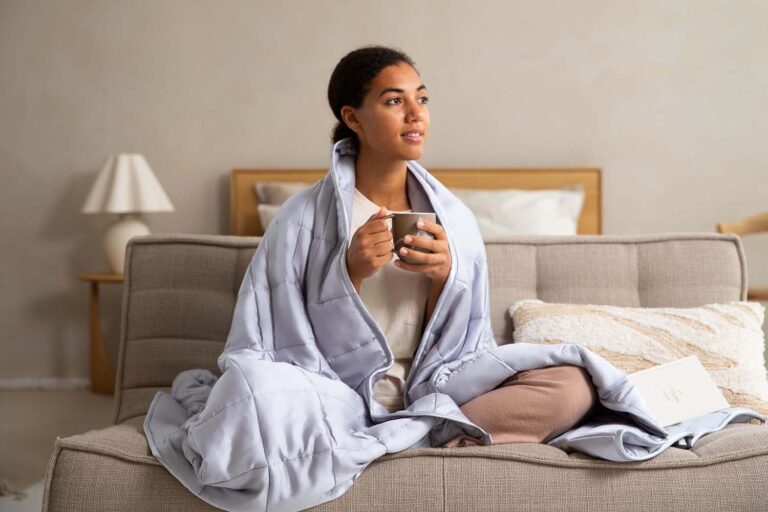
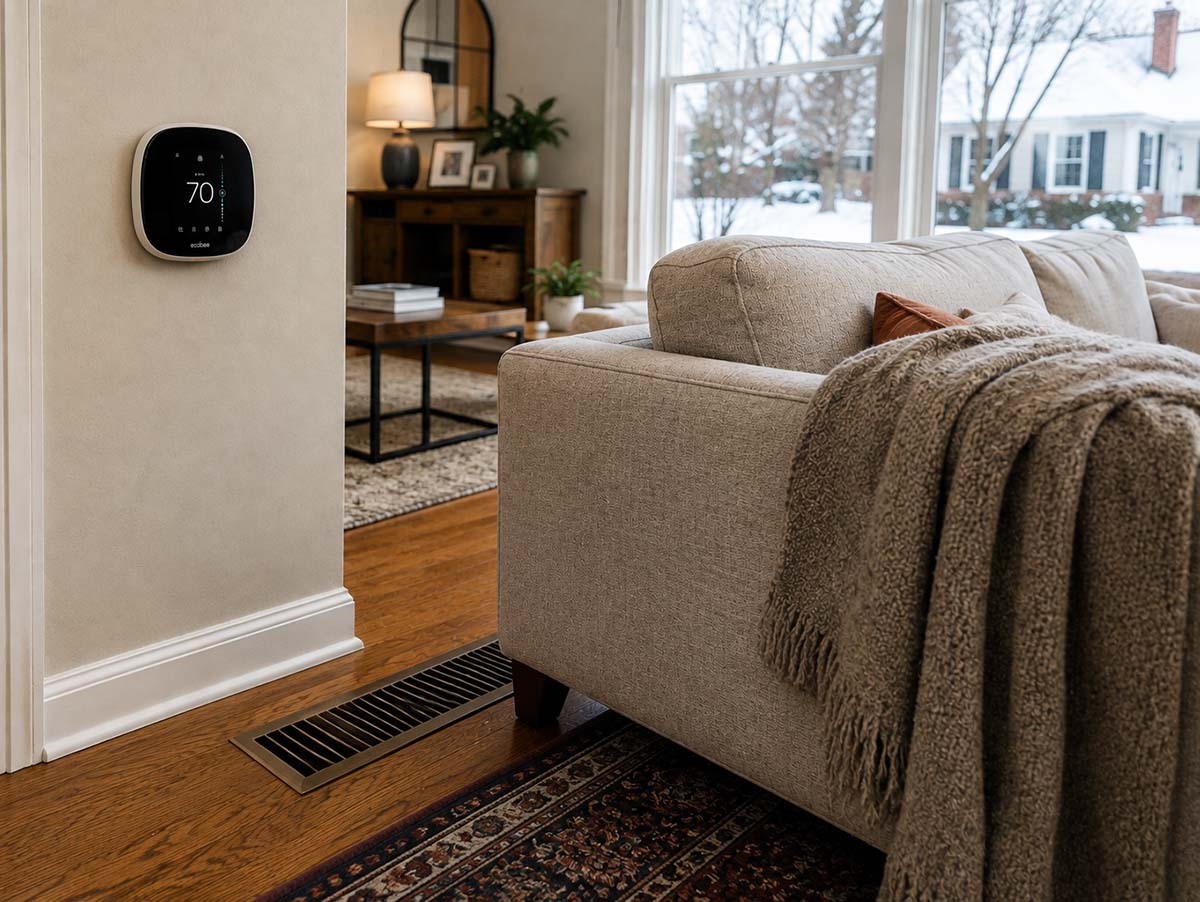
Your thermostat says 70, but the room still feels chilly. Before you turn up the heat, check the small things. The mistakes that make your house feel colder than it is include furniture on a vent, a ceiling fan spinning the wrong way, curtains open at night and cold air slipping in around outlets. Here are six checks to run before winter, drawn from federal energy resources, ASHRAE and university Extension programs.
Six things that can make your house feel colder
1Blocking vents with furniture or curtains
ASHRAE’s winter consumer tips says to make sure supply and return vents, radiators and baseboard heating units are not obstructed by furniture so warm air can spread through the room. Montana State University Extension’s home heating guide says not to block furnace supply and return vents, and warns that draperies and furniture blocking vents can create a fire hazard. A related habit is closing the vents in unused rooms. ASHRAE says you can turn down the thermostat in a room only if it is unoccupied, can be closed off and has its own heating zone, and not if it could affect the rest of the system or freeze water pipes. A trainer from the HVAC distributors’ group HARDI, quoted by Bob Vila, explains that a closed vent sends more air to the other vents but does not make the heater work less, and that the extra pressure can raise the risk of duct leaks. He calls closing vents counterproductive, with a different answer for systems that have separate zones.
Do this: pull sofas, beds and curtains back from every vent and return, and avoid closing registers in unused rooms. If your home has separate heating zones, adjust that zone’s thermostat instead of closing its registers, and ask an HVAC professional if you are unsure about your system.
2Running the ceiling fan the wrong way
Energy Star’s ceiling fan usage tips say to reverse the motor in winter and run the fan at low speed in the clockwise direction. It says this produces a gentle updraft that forces warm air near the ceiling down into the occupied space. In summer, it says to run the fan counterclockwise.
Energy Star also says to follow the manufacturer’s instructions.
Do this: use your fan’s reverse or winter setting, which is clockwise as seen from below, and set it to low. The goal is a gentle updraft, not a breeze directly under the blades. If it feels strong, lower the speed.
3Leaving curtains open at night and closed by day
The Minnesota Department of Commerce’s fall and winter energy tips say to open curtains on south-facing windows during the day so sunlight can naturally heat the home, close them at night to reduce the chill from cold windows and install tight-fitting, insulating drapes or shades. ASHRAE gives the same advice. If your windows are old or leaky, our guide to energy-efficient windows and comfort costs has more on windows.
Do this: open south-facing curtains when direct sun reaches the window, close all curtains at night and consider insulating drapes or shades for the coldest windows.
4Ignoring drafts around outlets and switches
The Department of Energy’s Building America Solution Center, with content from Pacific Northwest National Laboratory, says sealing electric outlets and switches helps prevent conditioned air from escaping through wall cavities. It describes foam plate gaskets as optional, saying they “may provide some air sealing” benefit, and gives the first step as turning off the breaker and confirming the power is off with a voltage tester. A University of Georgia Cooperative Extension article on stopping drafts also recommends foam gaskets behind switch plates, along with weatherstripping around windows and doors.
Do this: check for drafts around intact outlet and switch plates on cold, windy days. Before removing a plate, turn off the correct breaker and verify the power is off with a tester. If you cannot verify that, stop and hire an electrician. Gaskets may help, but they are only one part of fixing leaks.
5Living with cold, bare floors
The Department of Energy’s Building Science Education site says floors above unconditioned space can be a prime source of heat loss and result in uncomfortable cold floors, and that floors above unconditioned basements and crawl spaces can be insulated. A Montana State Extension floor insulation handout says that when your feet are cold, your whole body feels uncomfortable, and that adding insulation to the floor, basement walls or crawl space can warm up your floors.
Do this: for cold floors above an unheated basement or crawl space, ask a contractor where air sealing and insulation belong. Treat rugs and slippers as comfort measures, not substitutes for fixing the underlying problem.
6Putting off the furnace filter
ASHRAE says to clean or change furnace filters in forced hot air systems once a month or more often as needed, and Montana State says to replace or clean them once a month during the heating season. Energy Star’s homeowner guidance is a bit different: check the filter every month, especially in heavy-use months, change it if it looks dirty and, at a minimum, change it every 3 months. Our guide on how often to change your HVAC filter goes deeper on filters, and our HVAC tune-up guide covers system maintenance. If the heat gives off a strong or lingering smell, see our guide to a burning smell when turning on the heat.
Do this: check your filter every month during the heating season, and clean or replace it as the filter and equipment instructions direct.
When it is more than a habit
If you have cleared the vents and sealed the easy drafts and some rooms are still cold, look at the ducts and the building itself. Energy Star says about 20 to 30 percent of the air moving through a typical duct system is lost to leaks, holes and poorly connected ducts, and lists rooms that are hard to heat as a warning sign. It recommends sealing with mastic sealant or metal tape rather than standard duct tape, and a heating and cooling contractor for larger repairs. See Energy Star’s duct sealing guide. That figure is Energy Star’s estimate for typical duct systems, not a measure of your home or of total heating energy. If rooms still feel cold, consider a professional assessment of air leaks, insulation, ductwork and the heating system.
Cold-house checklist:
- Clear furniture and curtains from supply and return vents.
- Set the ceiling fan to clockwise on low.
- Open south-facing curtains by day, close all curtains at night.
- Check outlets, windows and doors for drafts.
- Add rugs for comfort and ask about insulation for cold floors.
- Check the furnace filter monthly and replace it as needed.

Cold house questions, answered
Why does my house feel cold even when the thermostat is set to 70?
Drafts, cold windows, cold floors and blocked or dirty heating equipment can all make a room feel colder than the thermostat says. If rooms still feel cold after the checks above, consider a professional assessment of air leaks, insulation, ductwork and the heating system.
Which way should a ceiling fan spin in winter?
Clockwise, at low speed. Energy Star says this produces a gentle updraft that forces warm air near the ceiling down into the room.
Should I close vents in rooms I do not use?
Usually not. A HARDI trainer quoted by Bob Vila calls closing vents counterproductive because it does not make the heater work less and can raise duct pressure and the risk of leaks. ASHRAE says to turn down heat only in unoccupied rooms that can be closed off and have their own heating zone, which means adjusting that zone’s thermostat.
Do outlet gaskets really stop drafts?
They may help a little. The Department of Energy’s Building America guide calls foam gaskets optional and says they may provide some air sealing benefit, so treat them as one small fix among several.
What temperature should I set the thermostat to in winter?
ASHRAE suggests 68°F when the house is occupied during the day and turning it down at night or when you are away. Montana State University Extension also calls 68°F an optimum winter setting and suggests setting it back four to six degrees when it is not needed. The Minnesota Department of Commerce says to set it as low as is comfortable while you are home and awake, and says turning it back while asleep or away can save as much as 10 percent a year. Choose a setting that keeps your household comfortable. With a heat pump, ASHRAE cautions against setbacks that would trigger auxiliary heat, and Minnesota suggests a thermostat designed for heat pumps.
Could leaky ducts be the reason some rooms stay cold?
Possibly. Energy Star says about 20 to 30 percent of the air that moves through a duct system is lost to leaks, holes and poorly connected ducts, and that rooms that are difficult to heat are a warning sign. A contractor can test and seal them.
Do closed curtains keep a house warmer?
At night, yes. The Minnesota Department of Commerce and ASHRAE both say to close curtains at night to reduce the chill from cold windows, and to open them on south-facing windows during the day.
The bottom line
Clear the vents, set the fan for winter, work the curtains, seal the obvious drafts, deal with cold floors and check the filter every month. If rooms are still cold, consider a professional look at air leaks, insulation and ductwork. These steps improve comfort and airflow, but results vary from home to home.

Better Living may earn commissions through affiliate links and may occasionally feature sponsored or partner content. If you make a purchase through our links, we may receive a small commission at no cost to you.