
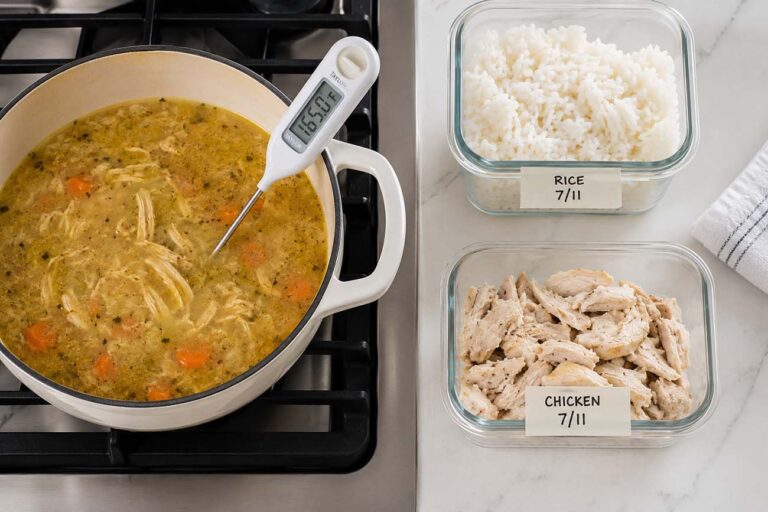
You have probably heard the rule: do not reheat food twice. Most people follow it without knowing why, or assume it has something to do with bacteria dying and coming back to life. It does not. The actual mechanism is more precise, more interesting, and more useful to understand because once you know it, you know exactly when the rule applies, when it does not, and why reheating cannot fix certain food safety mistakes no matter how hot you get the food.
Why is it bad to reheat food twice?
The short answer: Reheating food twice is not inherently dangerous if the food was handled correctly every step of the way. The real danger is what happens between reheatings: each time food cools through the temperature danger zone (40 to 140 degrees Fahrenheit), bacteria have a window to multiply. Some of those bacteria produce heat-stable toxins that survive reheating entirely, meaning a third or fourth reheat cannot undo the damage from improper cooling that happened earlier. The problem is the cooling, not the reheating.
For how long specific leftovers are safe to eat and how to store them correctly, see our full guide: how long do leftovers last.
📋 Reheating Food Twice: At a Glance
| The real danger | Each cooling cycle = new bacterial growth window |
| The critical temperature range | 40 to 140°F (the danger zone) |
| What reheating kills | Live bacteria present at that moment |
| What reheating does NOT kill | Heat-stable toxins already produced |
| Highest-risk foods | Rice, pasta, grains, cooked chicken |
| Safe reheat temperature | 165°F throughout (USDA FSIS) |
| Maximum time in danger zone | 2 hours total across all exposures |
🔑 Key Takeaways
- Reheating to 165 degrees Fahrenheit kills bacteria present at the time. It does not destroy heat-stable toxins that certain bacteria (particularly Bacillus cereus and Staphylococcus aureus) may have already produced during improper cooling.
- The danger zone is 40 to 140 degrees Fahrenheit. Every time food passes through this range during cooling, bacteria that survived previous reheating have an opportunity to multiply and potentially produce toxins.
- The USDA’s AskUSDA resource states that reheating leftovers only once is best practice, with NC State Extension and multiple cooperative extension programs citing this same guidance. The Hong Kong Centre for Food Safety, cited across peer-reviewed food safety literature, states the same recommendation explicitly.
- Rice and pasta are the highest-risk foods for this problem because Bacillus cereus spores survive normal cooking temperatures, germinate during the post-cooking cooling window, and produce a heat-stable toxin called cereulide that cannot be destroyed by any reheating method achievable in a home kitchen.
- If food was cooled quickly, stored correctly at 40 degrees Fahrenheit or below, and reheated to 165 degrees Fahrenheit each time, a second reheat is not automatically dangerous. The risk comes from improper cooling between reheating cycles, not the number of times the food is heated.
The Real Mechanism: It Is About Cooling, Not Reheating
The “never reheat twice” rule is a useful simplification of a more precise food safety principle. What the rule is really protecting against is cumulative time in the temperature danger zone across multiple cooling cycles.
Every time you cool food after cooking or reheating, it passes through the range of 40 to 140 degrees Fahrenheit. Within this range, bacteria that survived the previous heating can multiply. Most pathogenic bacteria double in population in as little as 20 minutes at optimal temperatures, according to USDA FSIS. If food passes through this range slowly (left on the counter rather than refrigerated promptly), bacterial counts can increase dramatically before the food is cold enough to slow growth.
Reheating then kills most of those bacteria. But two things happen that make each additional cooling cycle more dangerous than the last.
First, some bacteria survive reheating as dormant spores (Bacillus cereus is the most well-documented example). These spores are not killed by standard cooking or reheating temperatures. When food cools again, those spores germinate into active bacteria and begin multiplying once more. Second, and more critically, some bacteria produce toxins during their growth phase that are heat-stable. These toxins are not destroyed by boiling, microwaving, or any temperature achievable in a home kitchen. A peer-reviewed paper in the Journal of Food Protection found that some Staphylococcus aureus enterotoxins require 120 degrees Celsius (248 degrees Fahrenheit) for 60 minutes to be fully inactivated, a temperature and duration impossible to achieve in normal cooking. This is why the Hong Kong Centre for Food Safety states that food should not be reheated more than once: each cooling cycle after the first is another opportunity for these toxins to accumulate.
The Foods Where This Risk Is Highest
Rice and Other Cooked Grains
Rice is the food most associated with the reheat-twice danger, and for good reason. Bacillus cereus, a spore-forming bacterium naturally present in the environment, is frequently found on raw rice. Its spores survive the boiling process entirely. When cooked rice is left at room temperature, those spores germinate and the bacteria multiply rapidly. At sufficient counts, they produce cereulide, a heat-stable toxin that causes the rapid-onset vomiting form of Bacillus cereus food poisoning (sometimes called “fried rice syndrome”).
The critical point is that cereulide survives reheating. According to multiple food safety authorities including SDSU Extension, the temperatures required to destroy this toxin (120 degrees Celsius sustained for 60 or more minutes) are never reached in home cooking. This means that rice which was left at room temperature too long after the first cooking contains a toxin that no amount of reheating will neutralize. Reheating it a second time kills the bacteria but leaves the toxin fully active.
In February 2026, Chinese media reported a case where a person suffered multiple organ failure after eating leftover rice that was improperly stored and then reheated and made into fried rice. Doctors attributed this to the heat-stable emetic toxin produced by Bacillus cereus. While severe outcomes are rare, they illustrate why the cooling step matters far more than the reheating step for rice specifically. The toxin that causes this harm cannot be cooked away. Cool cooked rice within 1 hour, refrigerate immediately, and do not reheat more than once. See does rice go bad for full rice storage guidance.
The same logic applies to cooked pasta, quinoa, farro, and other grains. Bacillus cereus is not exclusive to rice. Any cooked starch left in the danger zone long enough creates the same toxin accumulation risk.
Cooked Chicken and Poultry
Cooked chicken is one of the most frequently reheated foods in most kitchens and one of the highest-risk proteins for a different reason. Staphylococcus aureus, carried on the skin and in the nose and throat of a significant portion of the population, can contaminate chicken during handling after cooking. If that chicken is then left at room temperature, Staph aureus multiplies and produces heat-stable enterotoxins. Like cereulide in rice, these toxins survive reheating to 165 degrees Fahrenheit.
The first reheat kills the bacteria. The toxins remain. A second cooling period allows any surviving bacteria (including spore-formers that survived the first reheat) to multiply and potentially produce more toxin. Food safety authorities including the USDA’s AskUSDA resource recommend that reheated chicken be eaten immediately and not cooled and reheated again. See our companion post how long do leftovers last for full chicken storage timelines. Our teriyaki pork bowls and steak tacos are both dishes where leftover protein is best eaten within the first reheat rather than cycled multiple times.
Cooked Meat and Mixed Dishes
Stews, casseroles, soups with meat, pasta dishes with protein, and any other mixed cooked dish carrying animal protein follow the same principles as chicken. The risk compounds with each cooling cycle and is highest in dishes that cool slowly due to their density or volume. A large pot of stew left on the counter while the family eats, then refrigerated, then reheated the next day, then partially eaten and refrigerated again has passed through the danger zone multiple times. Each passage creates a window for bacterial toxin production that subsequent reheating cannot close.
Our tortilla soup, red lentil soup, and clam corn chowder all freeze well in individual portions precisely to avoid this problem: freeze what you will not eat in one sitting rather than cycling it through repeated reheats. See our guide on foods you should never freeze for what does and does not hold up in the freezer.
Shellfish
Cooked shellfish is among the most perishable proteins in any kitchen and among the most dangerous to reheat multiple times. Shellfish naturally carry Vibrio bacteria, which are not spore-forming but multiply extremely rapidly at room temperature. More importantly, shellfish proteins denature quickly and completely during reheating, making the texture unpleasant and the proteins more susceptible to bacterial growth when cooled again. The USDA recommends consuming leftover cooked shellfish within 3 to 4 days of initial cooking and not reheating more than once. For storage guidance on cooked proteins more broadly, see our full guide on how long do leftovers last.

The Important Nuance: Correct Handling Changes Everything
It is worth being precise about what the risk actually is, because the simplified “never reheat twice” rule misses something important.
If food is cooled quickly after cooking (within 1 to 2 hours), stored at 40 degrees Fahrenheit or below, reheated to 165 degrees Fahrenheit, and then immediately refrigerated again within 1 to 2 hours, a second reheat of that food is not automatically dangerous. The risk is low because the food spent minimal time in the danger zone during each cooling cycle and bacteria did not have enough time to multiply to dangerous counts or produce significant toxin levels.
The danger comes from improper cooling, not from the number of reheats itself. SDSU Extension and The Conversation (citing food science research) both make this point explicitly. The one-reheat recommendation is practical guidance for typical home kitchens where cooling is often imperfect, not an absolute rule that applies equally regardless of how food was handled. The USDA FSIS leftovers guidance focuses on the 165 degree Fahrenheit reheat temperature and the 2-hour cooling rule rather than placing a hard limit on the number of reheats.
The 2-hour rule is more important than the one-reheat rule. For context on which foods can handle longer storage and which cannot, see foods that go bad faster than you think and foods that last longer than you think. Food should never spend more than 2 hours total at room temperature across all cooling sessions combined, according to USDA FSIS. If your food was cooled quickly each time, stored properly, and reheated correctly, a second reheat carries low risk. If your food sat on the counter, was left uncovered, or cooled slowly, no number of reheats will make it safe. The danger zone time is what matters, not how many times the stove was turned on.
How to Reheat Leftovers Safely
✅ Reheating Rules That Actually Matter
- Reheat to 165 degrees Fahrenheit throughout, verified with a food thermometer. For soups and gravies, bring to a full rolling boil.
- When using a microwave, stir or rotate food partway through heating. Let it stand for 2 minutes afterward: heat continues to distribute during standing time and eliminates cold spots where bacteria survive.
- Only reheat the portion you plan to eat. Return the rest to the refrigerator immediately. Do not reheat the entire batch if you will only eat half.
- Refrigerate leftovers within 2 hours of cooking or the previous reheating. At temperatures above 90 degrees Fahrenheit (a hot car, outdoor barbecue), the window is 1 hour.
- For rice and grains specifically: cool within 1 hour of cooking, refrigerate promptly, reheat once only, and discard rather than reheating again. Our Greek meze board and crustless veggie quiche are both dishes that reheat well once and are best eaten within that single reheat.
- Do not leave reheated food to cool on the counter. Once reheated, eat it immediately or refrigerate it within 2 hours in a shallow container.
Frequently Asked Questions
Reheating food twice is risky primarily because each cooling cycle between reheats gives bacteria a window to multiply in the temperature danger zone (40 to 140 degrees Fahrenheit). More critically, some bacteria including Bacillus cereus and Staphylococcus aureus produce heat-stable toxins during their growth phase that survive reheating to 165 degrees Fahrenheit and beyond. Reheating kills the bacteria but leaves the toxins intact. Each additional cooling cycle risks accumulating more toxin that subsequent reheating cannot remove.
Reheating to 165 degrees Fahrenheit kills most bacteria present at that moment. It does not kill bacterial spores (such as Bacillus cereus spores, which survive boiling), and it does not destroy heat-stable toxins that bacteria already produced during previous improper cooling. This is why reheating cannot make food safe that was left out too long: the toxins that cause illness are already present and are not affected by heat.
No. Rice should be reheated only once and eaten immediately. Bacillus cereus spores survive normal cooking temperatures, germinate when rice cools, and can produce cereulide, a heat-stable toxin that causes rapid-onset vomiting. This toxin cannot be destroyed by reheating. Rice that has been reheated once and then cooled again carries a higher risk of cereulide accumulation, and a second reheat will not make it safe. Discard rice rather than reheating it a second time. See does rice go bad for full rice storage guidance.
The USDA recommends reheating chicken only once and consuming it immediately afterward. Cooked chicken is susceptible to Staphylococcus aureus contamination during handling, and that bacterium produces heat-stable enterotoxins during its growth phase. A second cooling cycle after the first reheat gives surviving bacteria another opportunity to multiply and produce toxin. Reheat only the portion you plan to eat and refrigerate or freeze the rest immediately rather than reheating the entire batch. See how long do leftovers last for chicken storage timelines.
If food was cooled correctly and stored at 40 degrees Fahrenheit or below each time, a second reheat carries relatively low risk. The real danger is not the number of reheats but the cumulative time food spent in the temperature danger zone during cooling. If food was cooled improperly (left on the counter, cooled slowly, or stored above 40 degrees Fahrenheit), reheating it again cannot reverse the bacterial toxin accumulation that occurred. The food may look and smell normal while containing heat-stable toxins at levels that cause illness.
The USDA Food Safety and Inspection Service recommends reheating all leftovers to an internal temperature of 165 degrees Fahrenheit throughout, verified with a food thermometer. Soups, gravies, and sauces should be brought to a full rolling boil. When using a microwave, stir partway through and allow 2 minutes of standing time before checking temperature, as heat continues to distribute after the microwave stops.
Fried rice syndrome is a term for food poisoning caused by Bacillus cereus, most commonly associated with rice and pasta that has been left at room temperature too long after cooking. Bacillus cereus spores survive cooking, germinate as food cools, and can produce two types of toxins: an emetic toxin (causing rapid-onset nausea and vomiting within 1 to 6 hours) and a diarrheal toxin (causing abdominal cramps and diarrhea within 6 to 15 hours). The emetic toxin, cereulide, is heat-stable and survives reheating. The name comes from the common scenario of rice cooked ahead of time, cooled at room temperature, and then fried: the initial cooling window allows toxin production that persists through all subsequent cooking steps.
Soup that was cooled quickly in shallow containers, refrigerated properly, and reheated to a full boil can be reheated a second time with relatively low risk. The concern with large pots of soup is that they cool slowly, leaving the center in the danger zone for extended periods. Always divide soup into shallow containers (no more than 2 to 3 inches deep) before refrigerating to ensure rapid cooling throughout. Reheat only what you will eat and refrigerate the rest immediately. Our tortilla soup and red lentil soup are both good candidates for freezing in individual portions rather than repeated reheating.
Heat-stable toxins are proteins with unusually strong molecular structures that do not denature (break down) at cooking temperatures. Cereulide, the emetic toxin from Bacillus cereus, and the enterotoxins produced by Staphylococcus aureus both fall into this category. Research published in the Journal of Food Protection found that complete inactivation of some Staph aureus enterotoxins requires 120 degrees Celsius (248 degrees Fahrenheit) sustained for 60 minutes, temperatures and durations that are impossible to achieve in home cooking. Standard cooking and reheating to 165 degrees Fahrenheit (74 degrees Celsius) kills the bacteria that produced the toxin but leaves the toxin itself fully active.
You often cannot tell from appearance or smell alone. Many of the toxins and bacteria that cause food poisoning from reheated food produce no detectable odor, no visible change, and no change in texture. The safest approach is to track time in the danger zone rather than relying on sensory checks. If food was cooled within 2 hours of cooking, refrigerated properly, and is within the 3 to 4 day window, it is most likely safe to reheat once. If it has been reheated before, eat it immediately rather than cooling and reheating again. When in doubt, throw it out.
Rice and other cooked grains carry the highest risk due to Bacillus cereus and cereulide. Beyond that, any food that was left at room temperature for more than 2 hours before refrigerating should not be reheated regardless of type, because the toxin accumulation during that improper cooling cannot be reversed. Shellfish should not be reheated multiple times due to rapid quality degradation and vulnerability to Vibrio bacteria. Eggs should be eaten immediately after cooking and not reheated at all if possible, as they become rubbery and are prone to uneven heating that creates cold spots where bacteria survive. See do eggs go bad and does pasta go bad for storage guidance on two of the most commonly reheated foods.
Yes, reheating food the next day is safe provided the food was stored correctly. Refrigerate within 2 hours of cooking, store at 40 degrees Fahrenheit or below, and reheat to 165 degrees Fahrenheit throughout when ready to eat. Most cooked leftovers are safe for 3 to 4 days in the refrigerator, according to USDA FSIS. The next-day reheat is perfectly safe as long as the initial cooling and storage were done correctly. See how long do leftovers last for full guidance on specific foods.
Food safety best practice is to reheat food only once, according to USDA AskUSDA and multiple cooperative extension programs. This is practical guidance rather than an absolute safety rule: if food was cooled quickly and stored correctly after each heating, a second reheat carries low risk. The concern is that each additional cooling cycle creates another opportunity for bacterial growth and heat-stable toxin accumulation. For rice and grains specifically, once is the maximum recommended: the Bacillus cereus toxin risk makes a second reheat genuinely inadvisable regardless of how well the food was stored.
If food was refrigerated promptly (within 2 hours), stored at 40 degrees Fahrenheit or below, and is within the 3 to 4 day window, reheating it a second time is relatively low risk provided you reheat to 165 degrees Fahrenheit and eat it immediately afterward. The risk is not reheating itself but the total time food spent in the danger zone during cooling. Food that was cooled properly has less accumulated bacterial growth and toxin production than food that cooled slowly. For rice and grains, the recommendation remains reheat once only due to the heat-stable cereulide toxin from Bacillus cereus.
Further Reading
- How Long Do Leftovers Last?
- Foods You Should Never Microwave
- 15 Foods That Go Bad Faster Than You Think
- 20 Foods You Should Never Freeze
- 23 Foods You Should Never Refrigerate
- Does Rice Go Bad?
- Can Expired Condiments Make You Sick?
- Complete Food Storage Guide: 120+ Foods

Better Living may earn commissions through affiliate links and may occasionally feature sponsored or partner content. If you make a purchase through our links, we may receive a small commission at no cost to you.