
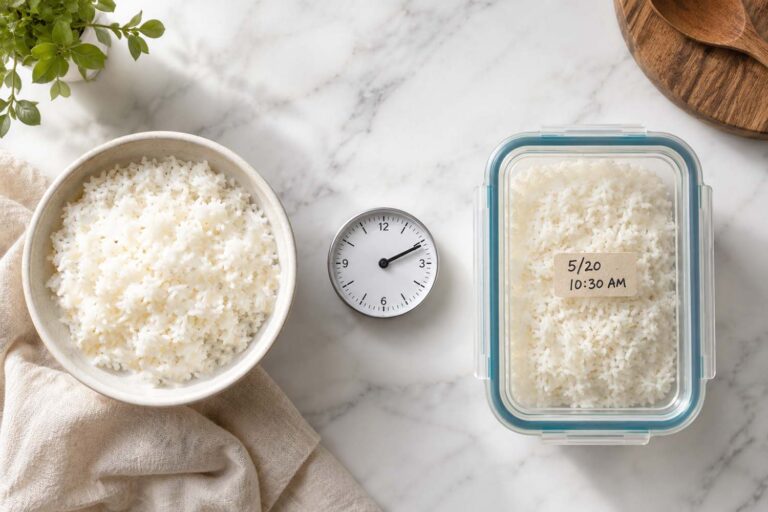
You made a big batch of rice on Sunday and left it on the counter to cool while you cleaned up. It has been sitting there for three hours. You put it in the fridge. On Tuesday you pull it out to make fried rice. Everything looks fine. It smells fine. You reheat it and eat it. A few hours later you are sick.
This is exactly how fried rice syndrome happens. And the reason most people do not understand the risk is that cooked rice breaks two of the most basic food safety assumptions people rely on: it does not look or smell bad when it is dangerous, and reheating it does not fix the problem.
Does rice go bad?
The short answer: Yes, and faster than most people expect. Cooked rice must be refrigerated within 2 hours of cooking (1 hour if the room is above 90 degrees Fahrenheit). In the refrigerator, use it within 3 to 4 days per USDA FoodKeeper. Uncooked rice is one of the most shelf-stable pantry staples you can store. The danger is entirely in cooked rice left at room temperature, where a bacterium called Bacillus cereus produces toxins that survive reheating.
For more on food storage and safety, see the Food Storage Guide.
Key Takeaways
- Cooked rice: refrigerate within 2 hours of cooking (1 hour above 90°F)
- Cooked rice in the fridge: 3 to 4 days maximum (USDA FoodKeeper)
- Cooked rice in the freezer: 1 to 2 months
- Reheating contaminated rice does NOT make it safe. The toxins survive heat.
- Uncooked white rice: 4 to 5 years in a cool, dry, sealed container
- Uncooked brown rice: 6 to 12 months due to higher oil content in the bran
Why Cooked Rice Is Different From Almost Every Other Leftover
Most foodborne illness works in a way people understand: bacteria grow, you smell or see something off, you toss the food. Rice does not work this way. The specific bacterium associated with cooked rice, Bacillus cereus, breaks all three of those assumptions.
Bacillus cereus is a spore-forming bacterium found naturally in soil and on the surface of grains including rice. When you cook rice, the heat kills the active bacteria. But the spores survive boiling. They are heat-resistant. Once the rice cools to room temperature, those spores germinate back into active bacteria and begin multiplying rapidly.
This is where it gets critical: as B. cereus multiplies in warm cooked rice, it produces two types of toxins. The diarrheal toxin causes gastrointestinal symptoms 6 to 15 hours after eating contaminated rice. The emetic toxin causes nausea and vomiting within 1 to 6 hours. The emetic toxin, called cereulide, is heat-stable. Reheating rice to 165 degrees Fahrenheit kills the bacteria themselves, but it does not neutralize the toxins already produced. If rice was left out long enough for B. cereus to produce toxins, reheating it will not make it safe to eat.
The Critical Point Most People Miss
Reheating rice that was improperly stored does not make it safe. The bacteria may be killed by heat. The toxins they already produced are not. This is why someone can eat hot, steaming fried rice and still get food poisoning from it. The rice was contaminated before it went back in the wok.
How Long Can Cooked Rice Sit Out?
The University of Maine Cooperative Extension, citing USDA and FDA guidance, states the rule clearly: store cooked rice in the refrigerator within 2 hours of cooking, or within 1 hour if the room temperature is above 90 degrees Fahrenheit.
This 1-hour guideline for rice is stricter than the standard 2-hour rule applied to most cooked foods. Rice is treated as a higher-risk food because B. cereus spore germination and toxin production happen faster in cooked rice than in most other leftovers.
After 2 hours at room temperature, the European Food Safety Authority reports that cooked rice has a significantly higher risk of containing dangerous toxin levels, regardless of whether it is subsequently refrigerated. Once the toxins are in the rice, cooling the rice does not remove them.
How Long Does Cooked Rice Last in the Fridge?
According to the USDA FoodKeeper app from FoodSafety.gov, cooked rice kept properly refrigerated at 40 degrees Fahrenheit or below is safe for 3 to 4 days. After 4 days, discard it even if it looks and smells completely normal. Refrigerator temperatures slow B. cereus growth significantly but do not stop it entirely. Given enough time, even properly refrigerated rice can accumulate enough bacterial activity for toxin production. The 3 to 4 day limit reflects this reality.
One note on apparent source conflicts: some resources cite 3 to 5 days for cooked rice. The USDA FoodKeeper is the most conservative and most authoritative figure. Use 3 to 4 days as your limit.
| Type | Pantry | Refrigerator | Freezer |
|---|---|---|---|
| Cooked rice (any variety) | 2 hours maximum | 3 to 4 days (USDA FoodKeeper) | 1 to 2 months |
| Uncooked white rice | 4 to 5 years (sealed, cool, dry) | Indefinitely | Indefinitely |
| Uncooked brown rice | 6 to 12 months | Up to 18 months | Indefinitely |
| Uncooked wild rice | Up to 4 years (sealed) | Indefinitely | Indefinitely |
How to Tell If Cooked Rice Has Gone Bad
This is where rice differs from most foods in a dangerous way. Cooked rice contaminated with B. cereus toxins often shows no visible or olfactory signs of spoilage. The rice can look normal, smell normal, and taste normal while containing toxin levels sufficient to cause illness. This is why the time rules matter more than the sensory checks for rice.
That said, there are signs of conventional spoilage to watch for that indicate the rice should also be discarded:
Signs of Spoilage
- Unusual smell: A sour, fermented, or off odor. Fresh cooked rice has a mild, neutral starchy smell.
- Slimy texture: A sticky or slimy coating on the rice grains that was not there when freshly cooked.
- Visible mold: Any fuzzy growth of any color means discard the entire container.
- Unusual color: Yellowing, grayish cast, or any discoloration beyond the normal white or brown of the rice variety.
- Past the time window: More than 2 hours at room temperature or more than 4 days in the refrigerator, regardless of appearance. This is the most important rule.
Fried Rice Syndrome: What It Actually Is
The term “fried rice syndrome” refers to B. cereus food poisoning associated specifically with fried rice dishes. The name comes from the traditional preparation: rice is cooked, then left to cool at room temperature before being stir-fried. During that cooling period, spores germinate and bacteria multiply. When the rice hits the hot wok, the bacteria are killed but the toxins remain. According to a peer-reviewed 2023 review of B. cereus outbreaks, rice was the highest-risk food category for B. cereus food poisoning in the incidents studied.
In the United States, B. cereus causes over 63,000 episodes of food poisoning annually per the Healthcare Communications Network citing CDC data. Most cases are mild and self-resolving within 24 hours. The severe and fatal cases are rare but documented and involve the emetic toxin cereulide affecting liver function, particularly in children, elderly people, and immunocompromised individuals. A well-documented 1993 CDC outbreak traced to fried rice at Virginia day care centers confirmed how quickly improperly cooled rice can become dangerous. More recently, a 2024 case of a 20-year-old who died after eating improperly stored leftover pasta drove widespread media attention to the B. cereus risk in starchy foods generally.
How to Store Cooked Rice Correctly
Storage Best Practices

- Cool quickly: Do not leave rice sitting in the pot. Spread it in a thin layer on a baking sheet or divide it into shallow containers to release heat faster. The goal is to get it below 70 degrees Fahrenheit within 2 hours and into the refrigerator immediately after.
- Refrigerate within 2 hours: 1 hour if the kitchen is above 90 degrees Fahrenheit. This is the single most important rule for rice safety.
- Use an airtight container: Reduces moisture loss and prevents the rice from absorbing refrigerator odors.
- Refrigerate at 40 degrees Fahrenheit or below: A warmer fridge significantly increases the rate of B. cereus growth.
- Use within 3 to 4 days: Do not push to 5 or 6 days even if it looks and smells fine.
- Reheat to 165 degrees Fahrenheit: This kills any B. cereus bacteria present, though it does not neutralize pre-formed toxins. If the rice was stored properly, reheating to 165°F makes it safe. If it was not stored properly, no amount of reheating helps.
- Do not reheat more than once: Each cooling cycle gives spores another opportunity to germinate and produce toxins.
How to Store Uncooked Rice
Uncooked rice carries no meaningful food safety risk. The moisture content is too low for bacteria to grow. White rice stored in a sealed container in a cool, dry pantry away from light and moisture lasts 4 to 5 years with no quality loss. Brown rice has a shorter shelf life of 6 to 12 months at room temperature because the bran layer retains natural oils that eventually go rancid. Refrigerating or freezing brown rice extends it significantly. Wild rice behaves more like white rice and stores for up to 4 years sealed.
The enemy of uncooked rice in long-term storage is moisture and pests, not bacteria. A tight-sealing container (glass, mylar, or BPA-free plastic) with an oxygen absorber keeps rice stable for years. For the USDA’s full leftover food safety guidance, see the USDA FSIS leftovers and food safety page. For the CDC’s foundational report on Bacillus cereus and fried rice, see the CDC MMWR fried rice outbreak report. NC State Extension also has a clear consumer guide on the safety of leftover rice. For a full clinical overview of Bacillus cereus including how the toxins work, see the NIH StatPearls Bacillus cereus review. The FDA’s Bad Bug Book also covers B. cereus in detail as part of its comprehensive foodborne pathogen reference.
Can You Freeze Cooked Rice?
Yes, and freezing is the safest option for large batches you will not finish within 3 to 4 days. Cool the rice quickly, portion it into freezer-safe bags or containers, label with the date, and freeze. Frozen cooked rice keeps for 1 to 2 months at best quality. Reheat directly from frozen in the microwave with a splash of water to restore moisture, or thaw overnight in the refrigerator and reheat the next day. Use within 24 hours of thawing. Do not refreeze once thawed.
Does Rice Go Bad FAQ
FAQ: Is It Safe to Eat Rice Left Out Overnight?
No. Rice left at room temperature overnight has been in the temperature danger zone (40 to 140 degrees Fahrenheit) for 8 or more hours. B. cereus spores will have germinated and the bacteria will have had ample time to produce heat-stable toxins. Even if you reheat the rice thoroughly, the toxins remain. Discard it. This applies whether the rice was covered or uncovered, plain or fried, in a bowl or in the pot.
FAQ: Can You Get Sick From Reheated Rice?
Yes. This is the most counterintuitive fact about rice food safety. If rice was left at room temperature long enough for B. cereus to produce its emetic toxin (cereulide), reheating the rice to any temperature will not destroy that toxin. The heat kills the bacteria but leaves the toxin intact. You will consume the toxin in what appears to be safely reheated rice. Proper storage before reheating is what determines safety, not the reheating itself.
FAQ: Does Uncooked Rice Go Bad?
White rice stored properly in a sealed container is essentially shelf-stable for 4 to 5 years. It does not go bad in any meaningful food safety sense. Quality does slowly decline as the grain dries further, but it remains safe and edible well beyond its best-by date. Brown rice is the exception: the bran oil goes rancid within 6 to 12 months at room temperature. A musty or paint-like smell from brown rice indicates rancidity. It will not make you sick in the way that cooked rice can, but the flavor is unpleasant and the nutritional value declines.
FAQ: Is Rice in a Rice Cooker Safe on the Keep-Warm Setting?
For a limited time, yes. High-quality rice cookers maintain keep-warm temperatures between 140 and 165 degrees Fahrenheit, which is above the temperature danger zone and inhibits bacterial growth. Rice held on a properly functioning keep-warm setting in a quality cooker is generally considered safe for several hours. Lower-quality cookers with less precise temperature control are less reliable for extended keep-warm storage. When in doubt, transfer to the refrigerator within 2 hours. For the USDA’s full leftover food safety guidance, see the USDA FSIS leftovers and food safety page.
FAQ: How Long Does Sushi Rice Last?
Sushi rice (vinegared rice) has a shorter safe window than plain cooked rice due to its moisture content and how it is typically held. Sushi restaurants hold sushi rice at room temperature for service, which is only safe for up to 4 hours maximum. At home, sushi rice should be refrigerated within 2 hours of preparation and used within 24 hours. The vinegar reduces pH and slows bacterial growth somewhat, but does not eliminate the B. cereus risk. Do not eat refrigerated sushi rice that has been stored for more than 24 hours.
Further Reading

Better Living may earn commissions through affiliate links and may occasionally feature sponsored or partner content. If you make a purchase through our links, we may receive a small commission at no cost to you.