
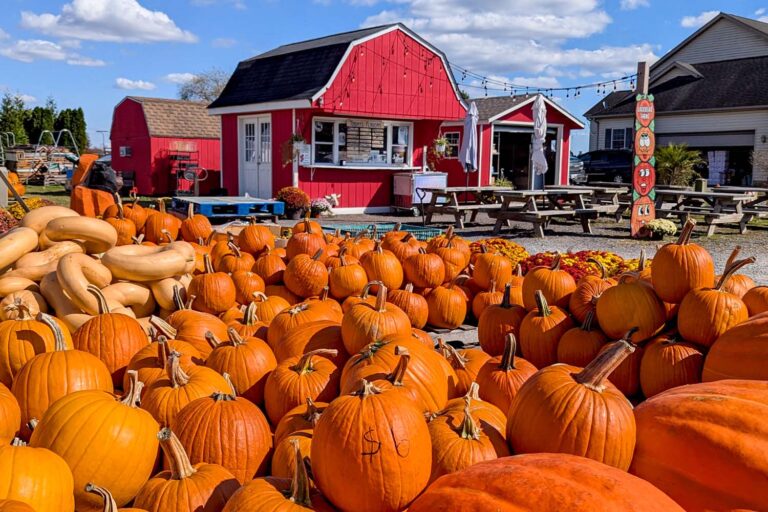
You grab the biggest, roundest pumpkin at the patch, and a week later it’s soft on the bottom. Or you carve one for the porch and roast the leftovers, only to end up with a stringy, watery mess. Knowing how to pick a pumpkin comes down to a few quick checks, and to remembering that the pumpkin you carve usually isn’t the best one to cook.
Five quick checks before you buy
1Check the stem
Pick one that still has an inch or two of stem, per Illinois Extension, and make sure it feels firm. A shriveled stem suggests the pumpkin has been sitting a while, and a rubbery one can signal disease. Don’t lift a pumpkin by its stem. If it snaps, rot has an easy way in, so support it from underneath instead.
2Feel the weight
Pick it up. A good pumpkin feels heavier than it looks, which points to dense, solid flesh. Iowa State notes that heavier pumpkins have thicker walls, which are sturdy but take more effort to carve.
3Give it a tap
Iowa State suggests knocking on a carving pumpkin and listening for a somewhat hollow sound. Treat it as a rough guide, not a guarantee, and pair it with the checks below.
4Test the rind
Push a fingernail lightly against the skin. Kansas State Extension says a mature pumpkin holds up to it, while one that dents easily was picked too early and is more likely to rot. Pass on any pumpkin with soft spots, cuts or cracks, since damage lets decay in.
5Check the shape and the bottom
Turn it over. Kansas State says to check the bottom for soft or sunken areas, where decay often starts. If you plan to carve, look for a flat base so it sits level and won’t tip with a light inside. The overall shape is mostly a matter of preference. Don’t worry too much about color. Illinois Extension says fading color over time doesn’t necessarily mean lower quality, and Kansas State notes that modern varieties range from bright orange to nearly white.
Carving pumpkin or cooking pumpkin?
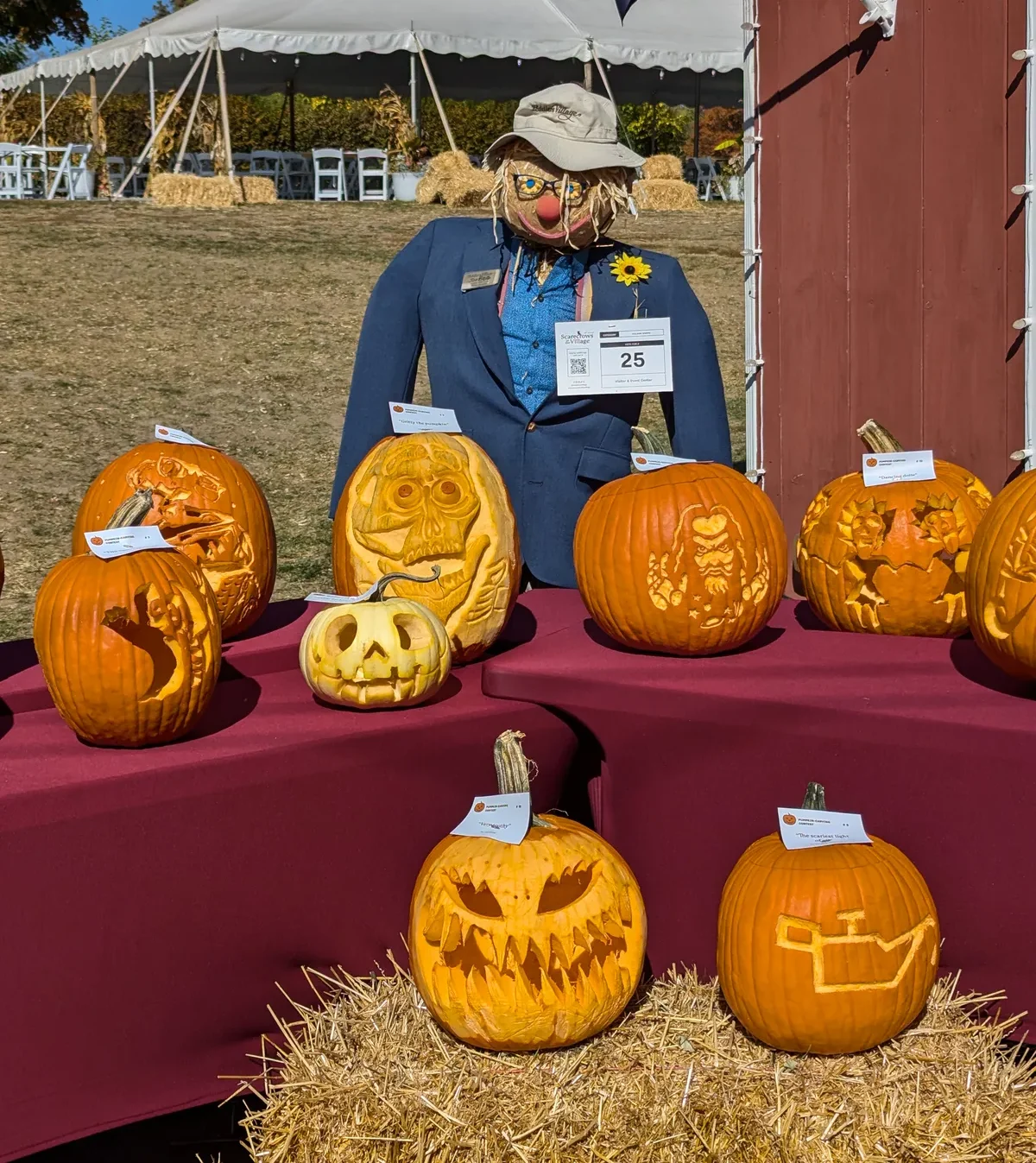 A few selections from the annual pumpkin carving contest at Peddler’s Village in PA
This is where most people go wrong. The two jobs need different pumpkins.
| For carving | For cooking | |
|---|---|---|
| Type | Field or jack-o’-lantern pumpkins | Pie or sugar pumpkins, plus butternut squash |
| Size | Medium to large | About 4 to 8 pounds |
| Flesh | Watery and stringy | Smoother, denser and sweeter |
| Best for | Jack-o’-lanterns and display | Roasting, baking and puree |
Other good cooking choices on Iowa State’s list include Long Island Cheese pumpkins and white Lumina pumpkins. Illinois Extension recommends pie pumpkins for baking because they run smaller and have a finer texture than carving types.
How to make a pumpkin last
A whole pumpkin
Whole, unblemished pumpkins last far longer than most people expect. Illinois Extension says they keep for two to six months, with the exact time varying by type, in a cool, dark, well-ventilated spot. It suggests setting them in a single row off the floor for air circulation and keeping them away from ripening fruit like apples and pears. To clean one, running water and a vegetable brush are enough, so skip the soap. If you like foods that keep, see more foods that last longer than you think.
A carved pumpkin
Carving changes the math. Once the flesh is exposed, South Dakota State Extension says a jack-o’-lantern can start to decay within just a few days. To slow it down, it suggests:
- Scrape it clean. Scoop out as much of the seeds and stringy pulp as you can.
- Disinfect it. Spray or wipe the finished carving with a properly diluted bleach solution or another appropriate disinfectant, following the product’s directions. Never mix bleach with other cleaners.
- Seal in moisture. Coat the cut surfaces with petroleum jelly to hold in moisture. Petroleum jelly is flammable, so light the pumpkin with a battery-powered light, not a candle.
- Keep it cool. Aim for 50 to 60°F. Warmer speeds decay, and freezing damages the pumpkin.
Prefer to skip the carving? A whole pumpkin keeps for months, and there are plenty of ways to dress one up. Here are 19 creative ways to decorate a pumpkin.
Cooking with it: freeze it, don’t can the puree
If you roast a pie pumpkin, freezing is the safe way to save extra. Illinois Extension says cooked pumpkin can be frozen in freezer-safe containers. Canning is a different story. Pumpkin is low in acid, and pureed pumpkin is too thick for a home pressure canner to heat safely, so canning puree isn’t considered safe. Cubed pumpkin can be pressure canned, and the extension recommends 1-inch cubes.
Ready to use it? Start with our easy pumpkin spice bread, pumpkin pecan muffins with cream cheese glaze or pumpkin spice scones with maple glaze. For dessert, try a maple vanilla pumpkin pie or mini cranberry pumpkin cheesecakes, or make ghostly pumpkin spice mousse cups for Halloween.
Pumpkin questions, answered
How can you tell if a pumpkin is ripe?
Look for a hard rind that resists a gentle press of your fingernail. Color alone isn’t a reliable sign, since modern varieties range from bright orange to nearly white.

What’s the difference between a carving pumpkin and a pie pumpkin?
Carving pumpkins are larger, with stringier, more watery flesh. Pie pumpkins are smaller, with denser, smoother and sweeter flesh that suits baking.
Can you eat a carving pumpkin?
A fresh, uncarved jack-o’-lantern pumpkin in good condition can be cooked, but expect a stringier, more watery result than you’d get from a pie pumpkin. A pumpkin that has been carved and left out for days is best not eaten.
How long does a whole pumpkin last?
Illinois Extension puts whole pumpkins at between two and six months, varying by type, if kept cool and dry. The Chicago Botanic Garden says a well-chosen carving pumpkin should hold up through Halloween.
How long does a carved pumpkin last?
Only a few days before it begins to decay, according to South Dakota State Extension. Cleaning it out, disinfecting it and keeping it cool can slow that down.
When should you buy a pumpkin?
Go early for the best selection. The Chicago Botanic Garden suggests visiting the patch early to find the best pumpkins and avoid frost-damaged ones. Because a carved pumpkin lasts only days, carve it close to when you want to display it.
The bottom line
Pick a pumpkin the way you’d pick a perfect watermelon: by weight, sound and a careful look for damage. Choose a big field pumpkin to carve, a small pie pumpkin to cook, and handle either one by the bottom, never the stem.

Better Living may earn commissions through affiliate links and may occasionally feature sponsored or partner content. If you make a purchase through our links, we may receive a small commission at no cost to you.