
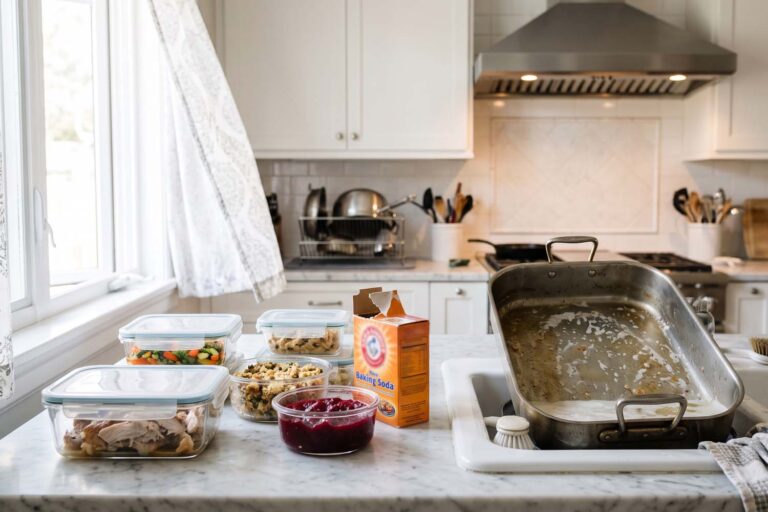
Thanksgiving cooking smells are part of the holiday. The less welcome part is finding that the kitchen still smells like dinner the next morning. Start with ventilation, food waste and leftover cooking residue, not another scented product. Some of the biggest culprits are easy-to-miss hosting mistakes, and many can be fixed with simple changes.
Quick overview: run a range hood that vents outdoors while you cook and for 10 to 20 minutes afterward, per the EPA. If you do not have one, or need extra ventilation, open windows when outdoor air quality and weather permit and it is safe to do so. Wipe out the oven, keep turkey fat out of the drain, refrigerate leftovers promptly and take out the trash. A short morning-after reset tackles the remaining odor sources.
7 Thanksgiving hosting mistakes that can leave your house smelling for days
1Not running the range hood or cracking a window
Cooking releases airborne pollutants as well as odors, so ventilation matters while the meal is cooking, not just afterward. The EPA says to turn the range hood on whenever you are cooking, to leave it on for 10 to 20 minutes after you finish, and to cook on the back burners when possible to capture more emissions. For homes without an outdoor-venting hood, it says to open doors and windows to bring in fresh air when outdoor air quality and weather permit and it is safe to do so.
Our practical tip: start the fan before you start cooking, not when the smell shows up, and check whether your hood vents outdoors.
2Skipping an oven clean, so old spills smoke
Before the holiday, check the cooled oven for food and grease residue and clean it according to the owner’s manual. Wolf lists spills and debris inside the oven as a cause of excessive smoke and says to wipe out any that may cause it.
Our practical tip: do this a few days before Thanksgiving so you are not scrambling on the day.
3Pouring turkey fat down the drain
Pouring turkey fat down the drain creates a plumbing problem, not a cleanup shortcut. Clemson Cooperative Extension says never to pour cooking oils or grease down the drain, warning that it can solidify in septic or sewer lines. It adds that hot water and soap do not eliminate grease because it will eventually reform and solidify in pipes. University of Florida IFAS Extension says to pour cooled fat into an old can or jar, wipe pots and pans before washing, and throw out the wipes and the sealed container.
See also our guide to foods you should never put down the garbage disposal.
4Leaving the carcass in the kitchen trash overnight
There are two separate issues here. For food safety, USDA Food Safety and Inspection Service says to refrigerate leftovers within 2 hours of cooking or of coming off a warming appliance, and to cut turkey into smaller pieces, slicing the breast while the legs and wings may stay whole. If you plan to make stock from the carcass, refrigerate it promptly too. See how long cooked turkey can sit out.
For odor, the National Center for Healthy Housing (NCHH) article lists taking the trash out regularly among the ways to prevent odors.
Our practical tip: once the meat is stored, bag the carcass and scraps securely and take them to the outdoor bin that night.
5Putting leftovers away uncovered
Open containers let food odors spread through the fridge. USDA Food Safety and Inspection Service says to cover leftovers, wrap them in airtight packaging or seal them in storage containers, then refrigerate or freeze them right away, and to bring food to 40 degrees F or below. It also recommends dividing large amounts into shallow containers so they cool quickly.
The National Center for Healthy Housing (NCHH) article notes that baking soda neutralizes odors in refrigerators. Treat it as an extra, not a substitute for sealing food or cleaning spills. Our practical tip: use a fresh, open box just for the fridge and keep it separate from the baking soda you cook with. Our guide covers baking soda storage and freshness.
6Masking odors with candles and plug-ins
Scented candles and fragranced plug-ins are not a substitute for removing food waste, cleaning residue and ventilating. The National Center for Healthy Housing (NCHH) article says air fresheners cover odors while the underlying problem remains. Colorado State University Extension adds that these products can release organic gases and recommends opening a window or using the exhaust fan instead.
7Forgetting the range hood’s grease filter
A hood only helps if it is clean. The EPA recommends routinely cleaning surfaces, cooking appliances and your range hood’s grease filter. Check your owner’s manual for how to remove and clean yours.
Our practical tip: add the filter to your pre-Thanksgiving cleaning list, next to the oven.
Your morning-after Thanksgiving kitchen reset
This is our own checklist, built from the advice above.

- Open windows for a few minutes when outdoor air quality and weather permit and it is safe to do so, and run the range hood or exhaust fan.
- Take out any remaining bagged food waste and the recycling.
- Check refrigerated leftovers and seal any open containers. Discard perishable food left at room temperature overnight. Do not refrigerate it now to save it.
- Wipe the stovetop, counters and sink, and clear the drain strainer.
- Put a fresh, open box of baking soda in the fridge if you like.
- Put used dish towels and washable table linens in the laundry.
For more, see how to remove odors from your home and tips for keeping your kitchen smelling fresh. Our Thanksgiving home cleaning checklist covers the rest of the house.
Thanksgiving cooking smells: your questions, answered
How do you get Thanksgiving cooking smells out of your house?
Start with ventilation. The EPA recommends running a range hood that vents outdoors while you cook and for 10 to 20 minutes afterward, and opening windows when outdoor air quality and weather permit. Then remove the sources: trash, uncovered leftovers and kitchen residue.
Can turkey fat go down the drain?
No. Clemson Extension says never to pour cooking oils or grease down the drain because they can cool and solidify in pipes. Put cooled grease in a suitable container, seal it and follow local disposal guidance.
Do candles and air fresheners get rid of cooking odors?
They are not a substitute for removing the source. The National Center for Healthy Housing says air fresheners cover odors while the underlying problem remains.
How long should you run the range hood after cooking?
The EPA says to leave a range hood that vents outdoors on for 10 to 20 minutes after you finish cooking.
The bottom line
Thanksgiving cooking smells tend to linger because of leftover residue, trash and open food, not just the meal itself. Ventilate, clean up the sources and skip the cover-ups, and the house should smell like itself again much sooner.

Better Living may earn commissions through affiliate links and may occasionally feature sponsored or partner content. If you make a purchase through our links, we may receive a small commission at no cost to you.