
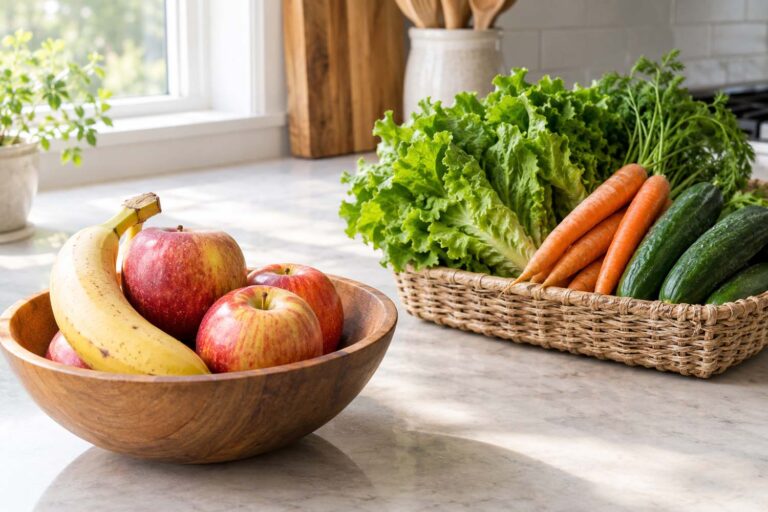
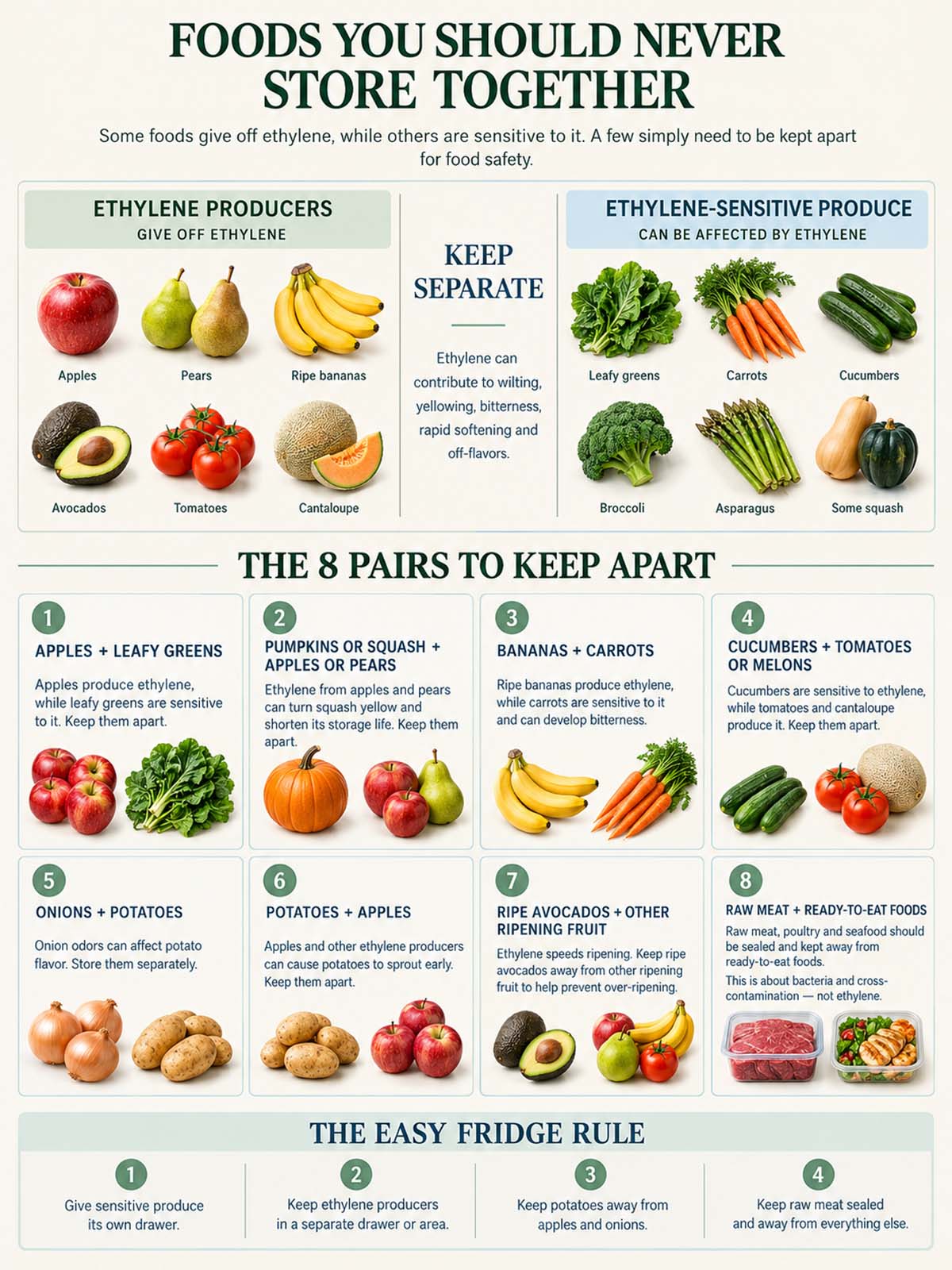
That bag of apples in the crisper drawer may be the reason your lettuce is going limp. Here are the foods you should never store together, and what to do instead. For most of these pairs, the culprit is a natural gas called ethylene, which some fruit gives off and some produce reacts badly to. The last pair is about food safety instead.
Eight pairs to keep apart
1Apples and leafy greens
Verdict: keep them apart. The Penn State College of Agricultural Sciences explains that most fruits and some vegetables release ethylene, a gas with no color or smell, and that it can cause produce to wilt, spot or go bad even in the refrigerator. It lists apples and pears among the biggest producers, and lettuce, spinach and broccoli among the sensitive produce. Utah State University Extension says ethylene damage can include yellowing, loss of green color, bitterness, rapid softening and off-flavors.
Give your greens their own drawer, as our guide to how to store lettuce recommends.
2Pumpkins or squash and apples or pears
Verdict: keep them apart. Oregon State University Extension says not to store pumpkin or squash near apples, pears or other ripening fruit, because the ethylene can turn the squash yellow and shorten its storage life. If you have just brought one home from the pumpkin patch, our guide to how to pick a pumpkin covers choosing a good one, and a spot away from the fruit bowl will help it last.
3Bananas and carrots
Verdict: keep them apart. Penn State says bananas produce ethylene, but only once they are fully ripe, and it lists carrots and parsnips among the sensitive root vegetables. Utah State advises against storing ethylene-sensitive crops with producers such as apples, cantaloupe, bananas and tomatoes, and bitterness is one of the damage signs it lists. That fits our carrot storage guide, which warns that ethylene can turn carrots bitter.
Bananas often get blamed for spoiling everything in the kitchen, but the ripeness detail points to a narrower risk. In our reading, the problem is ripe bananas and other producers sitting near the sensitive group, not near every food you own.
4Cucumbers and tomatoes or melons
Verdict: keep them apart. Penn State lists cucumbers among the sensitive produce, while Utah State names tomatoes and cantaloupe among the fruit that produces ethylene. Our cucumber storage guide says to keep cucumbers away from tomatoes, apples, bananas, melons and pears, and our tomato storage guide makes the same point from the other side, advising that tomatoes stay away from greens and other ethylene-sensitive produce.
5Onions and potatoes
Verdict: keep them apart, mainly for flavor. The European Food Information Council says to store potatoes away from onions and garlic, because their odors can affect the potatoes’ flavor. Whole onions do best in a cool, dark spot, which our guide to whether onions need to be refrigerated covers.
You may have read that onions make potatoes rot faster. The guidance cited here focuses on flavor and sprouting and does not measure spoilage speed, so treat that claim with some caution. Separate storage costs nothing, though, so it is an easy habit to adopt.
6Potatoes and apples
Verdict: keep them apart. The same European Food Information Council guidance says to keep potatoes away from ethylene producers such as apples, bananas and tomatoes, since they can cause early sprouting. Utah State also notes that ethylene can trigger sprouting in potatoes. Potatoes have their own rules about the fridge too, which our guide to whether potatoes need to be refrigerated explains.
7Ripe avocados and other ripening fruit
Verdict: keep ripe ones apart. Penn State lists avocados among ethylene-producing fruit, and ethylene is a ripening agent. Our avocado storage guide advises keeping ripe avocados away from tomatoes, bananas and apples, since ethylene speeds up over-ripening even in the fridge. In our reading, the same gas that helps a hard avocado soften will push a ripe one past its best.
8Raw meat and ready-to-eat foods
Verdict: never let them touch. This pair is about bacteria, not ripening. USDA says raw meat, poultry and seafood should sit in a container, on a plate or in a sealed bag, so juices can’t drip onto other food. FoodSafety.gov adds that raw meat, poultry and seafood belong in leakproof containers or sealed bags, and that produce, meat, poultry, seafood and eggs each need their own cutting board and plate.
Raw ground meat keeps only a day or two in the fridge, as our guide to foods that spoil faster than you think notes, and cooked leftovers have their own timeline, covered in our leftovers guide.

How to keep them apart
- Use two drawers. Penn State suggests bagging sensitive produce in paper, folding the tops over and keeping it in one drawer, with the heavy producers bagged in a drawer of their own.
- Don’t mix the two groups. University of Georgia Extension advises against storing ethylene-sensitive vegetables with fruit and vegetables that give off ethylene. Its guide is written with storage rooms in mind, but the same rule works in a home fridge.
- Check which foods belong in the fridge at all. Some produce does better on the counter, as our list of foods you should never refrigerate explains.
- Give berries their own container. Our berry storage guide covers keeping them dry and unwashed until you eat them.
Food storage questions, answered
Which fruits give off the most ethylene?
Penn State says tree fruits top the list, especially apples and pears, with apricots, avocados, cantaloupes, nectarines, papayas and peaches also producing a lot. Bananas, peppers and tomatoes produce ethylene too, but only when they are fully ripe.
Which produce is most sensitive to ethylene?
Penn State lists leafy greens, broccoli, carrots, parsnips, cucumbers, asparagus and some squash, along with herbs such as parsley and mint.
Can you store apples and potatoes together?
It is best not to. The European Food Information Council says apples and other ethylene producers can cause potatoes to sprout early.
Where should raw meat go in the fridge?
In a container, on a plate or in a sealed bag, so its juices can’t reach other food. USDA gives that as the way to keep raw meat, poultry and seafood from dripping onto anything else.
The bottom line
Think of produce in two groups: the fruit that gives off ethylene and the vegetables that react to it. Keep those groups in separate drawers, keep potatoes away from onions and apples, and keep raw meat sealed away from everything else. The greens, carrots and cucumbers in your fridge should last noticeably longer.

Better Living may earn commissions through affiliate links and may occasionally feature sponsored or partner content. If you make a purchase through our links, we may receive a small commission at no cost to you.