
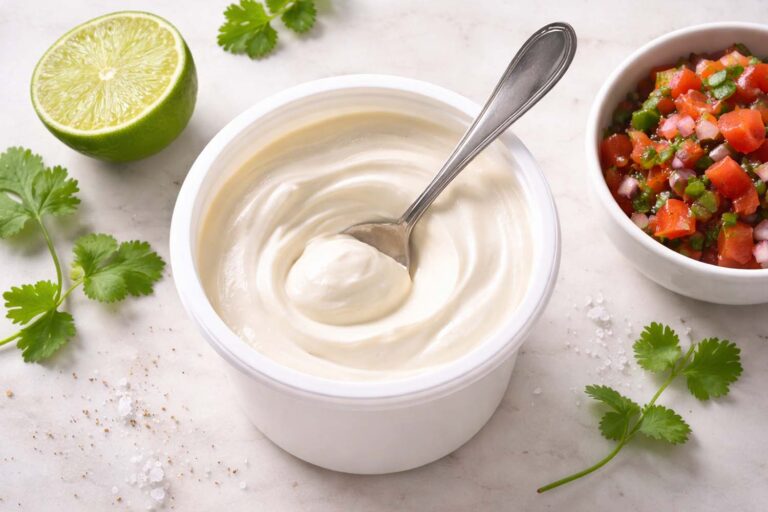
You open the fridge and spot the sour cream container. The date looks borderline, or maybe there is a little liquid sitting on top and you are not sure if that means it has gone bad. Does sour cream go bad?
The short answer: Yes, sour cream does go bad, and as a fresh dairy product it goes bad faster than most condiments. But two things confuse people: the watery liquid that appears on top is normal and not a spoilage sign, and the printed date is more conservative than the actual safe window if it has been stored properly.
For a full overview of how dairy products and pantry staples compare on shelf life, visit our Complete Food Storage Guide.
Key Takeaways
- Sour cream does go bad. It is a fresh dairy product and requires consistent refrigeration.
- Unopened: safe to use 1 to 3 weeks past the sell-by date if continuously refrigerated.
- Opened: use within 1 to 2 weeks for best quality and safety.
- Watery liquid on top is normal: it is whey separation, not spoilage. Stir it back in.
- Room temperature limit: 2 hours maximum per USDA guidelines. Discard if left out longer.
- Freezing is not recommended for use as a topping or dip, but works for cooked dishes.
How Long Does Sour Cream Last?
Sour cream is a fermented dairy product made by introducing lactic acid bacteria to cream. The fermentation process gives it its characteristic tang and thicker texture, and also provides some natural preservation through acidity. But it is still a fresh dairy product that needs consistent refrigeration and has a significantly shorter shelf life than condiments.
| Type | Refrigerator (Unopened) | Refrigerator (Opened) |
|---|---|---|
| Commercial sour cream (full-fat) | 1 to 3 weeks past sell-by date | 1 to 2 weeks |
| Reduced-fat or light sour cream | 1 to 2 weeks past sell-by date | 1 week |
| Fat-free sour cream | 1 week past sell-by date | Up to 1 week |
| Homemade sour cream | Not applicable | Up to 1 week |
Quality and safety estimates based on continuous refrigeration at or below 40 degrees F. Per USDA FoodKeeper guidelines. Always check for spoilage signs before using regardless of date. Full-fat sour cream lasts longest due to higher fat content providing more natural protection.
The Watery Liquid on Top Is Normal
This is the question that drives more sour cream searches than almost any other: you open the container and find a pool of thin, watery liquid sitting on the surface. Is it bad?
No. That liquid is whey, the water-based portion of the dairy that naturally separates from the cream over time. The same thing happens with yogurt. It is a completely normal part of how fermented dairy behaves in the fridge and is not a sign of spoilage. Simply stir it back in with a clean spoon and the sour cream will return to its normal consistency.
What is NOT normal: if the liquid will not stir back in, if the texture has become permanently curdled or lumpy, or if the separation is accompanied by an off smell or mold. Those are spoilage signs. Stirrable whey on the surface is just physics.
Signs That Sour Cream Has Gone Bad
When to Throw It Out
Mold: Any visible mold growth, whether fuzzy white, green, blue, or black spots on the surface or around the lid, means discard the entire container immediately. Do not scoop around it. Mold on soft dairy products can spread throughout the container even when not visible on the surface.
Discoloration: Fresh sour cream is uniformly white or very pale cream. Yellow, pink, or gray tints on the surface or throughout the container indicate bacterial or fungal growth. Discard immediately.
Off smell: Fresh sour cream smells tangy and mildly dairy-fresh. A smell that has turned sharp, rancid, intensely sour beyond its normal tang, or otherwise unpleasant means discard it. Trust your nose.
Permanent curdling or lumpy texture: Some whey separation is normal and stirs back in. If the texture has become permanently curdled, chunky, grainy, or slimy and will not return to a smooth consistency when stirred, the sour cream has spoiled.
Off taste: If the smell and appearance seem borderline, a very small taste will confirm it. Spoiled sour cream tastes sharply sour, bitter, or otherwise unpleasant. Do not taste if mold is present or the smell is clearly off.
Swollen or bulging container: Gas buildup inside the container, indicated by a bloated or bulging lid, means fermentation from bacterial activity has occurred. Discard without opening.
The 2-Hour Room Temperature Rule
Sour cream is a perishable dairy product and the FDA danger zone applies directly: bacteria multiply rapidly between 40 degrees F and 140 degrees F. The USDA 2-hour rule applies to sour cream, with the window dropping to 1 hour when temperatures are above 90 degrees F (such as an outdoor summer cookout).
Sour cream left on the table during a meal for under 2 hours can go back in the fridge. Sour cream left out overnight should be discarded regardless of how it looks or smells. Unlike vinegar-based condiments, there is no acid protection here to extend the safe window.
Can You Freeze Sour Cream?
Freezing: Only for Cooked Dishes
Freezing sour cream is technically safe but changes the texture significantly on thawing. The ice crystals that form during freezing break down the emulsion, causing the fat and liquid to separate. Thawed sour cream becomes grainy, watery, and lumpy. It is fine for cooked dishes like stroganoff, soups, or casseroles where it will be incorporated into heat, but not suitable as a topping for tacos, nachos, or baked potatoes where the smooth, creamy texture is the point.
If you need to freeze sour cream, store it in an airtight container, freeze for up to 2 months, and thaw slowly in the refrigerator. Stir well after thawing and use only in cooked applications.
How to Store Sour Cream Properly
Storage Best Practices
Keep it in the back of the fridge, not the door. The refrigerator door fluctuates in temperature every time it opens. The back of a middle shelf maintains the most consistent cold. Sour cream belongs there.
Always seal tightly after use. If the original container does not reseal well, transfer the sour cream to an airtight container. Exposure to air accelerates spoilage and allows the sour cream to absorb refrigerator odors.
Use clean, dry utensils every time. Cross-contamination from used spoons is one of the primary ways sour cream spoils early. Always use a fresh spoon, never double-dip, and never return sour cream from a serving bowl back to the container.

Press plastic wrap directly onto the surface. For containers that will sit in the fridge for more than a few days, pressing plastic wrap directly onto the sour cream surface before replacing the lid reduces air exposure and slows whey separation.
Label the opening date. Write the date on the lid with a marker when you first open it. Sour cream containers look identical after a week and the guesswork about how long it has been open is how people end up using spoiled dairy.
Get it into the fridge quickly after purchase. Do not leave sour cream in a hot car or at room temperature for extended periods after buying it. Temperature abuse before you even get it home shortens the effective shelf life.
Recipes That Use Sour Cream
These Better Living recipes are natural fits for fresh sour cream:
- 7-Layer Burritos: sour cream is one of the essential seven layers, adding a cool creaminess that balances the spice
- Chicken Enchilada Boats: a dollop of sour cream on top ties the whole dish together
- Jerk Chicken Nachos: sour cream cools the heat of the jerk seasoning perfectly
- Tortilla Soup: a swirl of sour cream stirred in at the table adds richness and rounds out the acidity
Frequently Asked Questions
Can I use sour cream past its sell-by date?
Yes, within reason. Sell-by dates on sour cream indicate when the store should remove it from shelves, not when it becomes unsafe. Unopened sour cream stored continuously at or below 40 degrees F is generally safe for 1 to 3 weeks past the sell-by date. Once opened, follow the 1 to 2 week window and use your senses. If it smells, looks, and tastes normal, it is almost certainly fine. If you have any doubt, discard it.
There is liquid on top of my sour cream. Is it bad?
Almost certainly not. That liquid is whey, which naturally separates from the cream over time. It is the same thing that happens with yogurt. Stir it back in with a clean spoon and the sour cream will return to its normal smooth texture. The only time to be concerned is if the liquid will not stir back in, if the texture has curdled permanently, or if there are other spoilage signs like mold or an off smell.
I left sour cream out overnight. Can I still use it?
No. The USDA 2-hour rule for perishable dairy applies here. Sour cream left at room temperature overnight has been in the bacterial danger zone for many hours. Discard it regardless of how it looks or smells. The cost of a new container is always less than the risk of foodborne illness from spoiled dairy.
Does reduced-fat sour cream last as long as full-fat?
No, not quite. Full-fat sour cream lasts the longest because the higher fat content provides more natural protection. Reduced-fat and light versions have a slightly shorter window, and fat-free sour cream is the most perishable of the three. If you regularly leave sour cream in the fridge for extended periods, full-fat is the most forgiving option.
Further Reading
- Does Sour Cream Need to Be Refrigerated?
- Does Butter Go Bad?
- These Expired Condiments Could Make You Sick
- Complete Food Storage Guide
Better Living may earn commissions through affiliate links and may occasionally feature sponsored or partner content. If you make a purchase through our links, we may receive a small commission at no cost to you.