
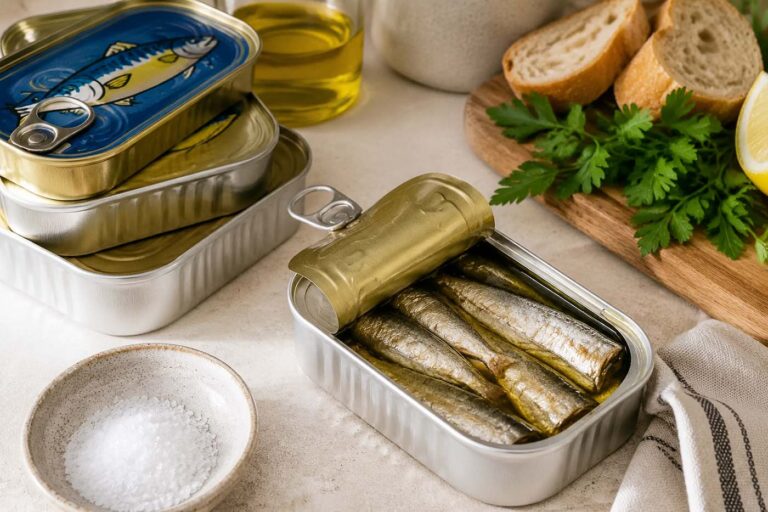
That can of sardines in the pantry, bought for a snack board or a quick protein hit, is one of the longer-lived items in the cabinet. Once the can is open, though, the timeline is shorter and more specific than most advice online suggests. It actually depends on what the sardines are packed in.
Do sardines go bad?
The short answer: Unopened canned sardines are shelf-stable for 2 to 5 years in a cool pantry, per USDA guidance for low-acid canned goods. They remain safe well past that if the can is intact. Once opened, the safe window is shorter than the generic “3 to 4 days” rule many sites repeat. Peer-reviewed research on canned sardines found that sardines in brine or vegetable oil are best eaten within 1 day, while sardines in tomato sauce hold up for about 3 days. Fresh, never-canned sardines are far more perishable and should be used within 1 to 2 days refrigerated, following general fresh fish guidance.
For general pantry and refrigerator rules, check the food storage guide. If you’re storing other canned or oil-packed foods, the olive oil and expired condiments guides cover related ground.
📋 Do Sardines Go Bad: At a Glance
| Canned, unopened | 2 to 5 years in the pantry |
| Canned, opened, in brine or oil | Best eaten within 1 day, refrigerated |
| Canned, opened, in tomato sauce | Best within about 3 days, refrigerated |
| Fresh sardines, never canned | 1 to 2 days refrigerated |
| Biggest safety flag | Bulging, leaking, or badly dented cans |
| Unique risk for this fish | Histamine (scombrotoxin) buildup, undetectable by smell |
| Normal, not spoiled | A little surface rust you can rub off the can |
Key Takeaways
- Unopened canned sardines are shelf-stable for 2 to 5 years per USDA guidance for low-acid canned goods, and often safe well beyond that if the can is intact.
- Once opened, the packing sauce matters more than most advice suggests. A 2022 peer-reviewed study found sardines in brine or oil hold peak quality for about 1 day refrigerated, while tomato-sauced sardines hold up for about 3 days.
- Sardines are on the FDA’s list of fish prone to histamine (scombrotoxin) formation, a toxin that forms from delayed chilling after catch and cannot be removed by cooking, freezing, or washing.
- Never buy or use bulging, leaking, or badly dented cans. These are classic botulism warning signs per USDA.
- Light surface rust that rubs off with a finger is cosmetic. Rust inside the can, or a can that hisses forcefully or spurts liquid when opened, is not.
- Fresh, never-canned sardines are highly perishable and should be treated like any other fresh oily fish: used within 1 to 2 days refrigerated.
Why Sardines Need a Little Extra Caution
The science: histamine, not just bacteria, is the real concern
Most fish spoilage comes down to ordinary bacterial growth, the kind that produces an obvious off smell. Sardines carry an additional, less intuitive risk. According to the FDA, sardines are among the fish species prone to scombrotoxin poisoning, more commonly called histamine poisoning. This happens when certain bacteria naturally present on the fish convert an amino acid in the flesh into histamine after the fish dies. The process can start within 6 to 12 hours if the catch isn’t chilled quickly. Properly caught and handled fish, including the sardines used in commercial canning, have little to no detectable histamine.
The part worth remembering is that once histamine has formed, it cannot be removed by washing, freezing, or cooking, per the FDA. It also doesn’t always come with an obvious warning sign; fish can look and smell reasonably normal while still carrying unsafe histamine levels. As of a finalized November 2024 update, the FDA considers fish decomposed and potentially mishandled at 35 parts per million (ppm) of histamine, and a health hazard at 200 ppm, both lowered from the previous 50 ppm and 500 ppm thresholds to reflect current science. This is why “it smells fine” isn’t a complete test for any sardine product, and why proper chilling from catch through storage matters more than it does for many other foods on this site.
How Long Canned Sardines Actually Last
Unopened
An unopened can is genuinely shelf-stable. USDA guidance places low-acid canned goods, the category canned fish falls into, at 2 to 5 years in a cool pantry below 85°F, on par with other long-lived pantry staples like honey and rice. Some longtime sardine eaters believe the flavor actually deepens with age in the can, though that’s a matter of taste rather than a food safety claim. Store cans away from the stove, in a dry spot, and check them periodically for the warning signs covered below.
Tip: the date on the can is about quality, not a safety cutoff
Per USDA, dating on shelf-stable products reflects peak quality rather than a hard expiration. A can past its best-by date is generally still safe if it shows none of the warning signs below, similar to how many foods last well past their printed date.
Opened, and why the sauce matters
This is where most advice oversimplifies. A 2022 study from the University of Porto, published in the peer-reviewed journal Foods, opened cans of sardines packed in light brine, vegetable oil, and tomato sauce. Researchers tracked microbiological, chemical, and sensory quality daily for a week at refrigerator temperature, a level of specific testing most protein storage advice, including guidance on tofu or bacon, doesn’t have. The results split clearly by sauce type. Sardines in brine or vegetable oil held their full quality for only about 1 day after opening. They broke down faster due to protein degradation in the brine and oxidation-related sensory defects in the oil. Sardines in tomato sauce held up notably longer, staying stable for about 3 days, likely helped by the sauce’s lower pH and natural antioxidant content.
One caveat worth knowing: the study used Sardina pilchardus, the European pilchard common in Portuguese and Spanish canning. “Sardine” isn’t one species; the FDA’s Seafood List recognizes 16 different species that can legally be sold under that name in the US, including the Pacific sardine (Sardinops sagax) used by many American and some Asian brands. The sauce-driven pattern (oil and brine breaking down faster than tomato sauce) reflects the chemistry of the packing medium more than the specific fish, so it’s a reasonable guide across brands, but the exact numbers were established on one species from one processor.
None of the samples in the study were judged unsafe to eat through the full 7-day test window. That said, the researchers handled the cans under sterile lab conditions that aren’t realistic for a home kitchen. They were explicit that their results may not fully reflect ordinary domestic handling. The safer, more conservative approach for home use is to treat the study’s quality windows, 1 day for brine and oil, 3 days for tomato sauce, as the real target. That’s a better bet than stretching toward the general USDA guidance of 3 to 4 days that applies to canned goods broadly.
Warning: never use a bulging, leaking, or badly dented can
Per USDA, watch for a bulging or leaking can, a can with a deep dent (one you can lay a finger into, especially along a seam), or a can that hisses forcefully or spurts liquid when opened. All three are classic warning signs of botulism risk, the same family of risk covered in the dangerous expired pantry staples guide. Don’t taste the food to check. Discard the unopened can, double-bagged, in household trash rather than recycling.

Tip: light surface rust isn’t a reason to toss the can
Per USDA, surface rust you can rub off with a finger or paper towel doesn’t make a can unsafe. Heavier rust that’s pitted the metal, or any rust visible inside the can once opened, is different and means the contents should be discarded.
Transferring and refrigerating opened sardines
Move unused sardines out of the can and into a glass or plastic container before refrigerating, the same habit that helps with salami, pepperoni, and other opened proteins. The can itself isn’t the problem once opened, but a proper container seals better and makes it easier to track how long they’ve been sitting. Keep them cold, ideally at or below 40°F, and use a clean utensil each time.
Fresh (Never-Canned) Sardines
Fresh sardines are a different product entirely and far more perishable than the canned version. Treat them like any other fresh, oily fish: refrigerate immediately at or below 40°F and use within 1 to 2 days, the same tight window recommended for quickly perishable cooked seafood. If you won’t cook them within that window, freezing is the better option. The histamine risk described above applies most directly here, since fresh sardines that sit too long unrefrigerated after catch are exactly the scenario that allows histamine to form. When in doubt about how long a fresh catch has been out of the cold chain, err toward not eating it.
At the fish counter or in your own fridge, look for clear, bright eyes rather than cloudy or sunken ones, bright red or pink gills rather than dull brown or gray, and firm flesh that springs back when pressed rather than flesh that stays dented. Smell matters too: fresh sardines should smell mild and briny, like the ocean, not sharply fishy or ammonia-like. Any of those latter signs means the fish is past its window, regardless of how many days it’s technically been in the fridge.
| Sardine Type | Shelf Life |
|---|---|
| Canned, unopened | 2 to 5 years, pantry |
| Canned, opened, in brine | About 1 day, refrigerated |
| Canned, opened, in vegetable oil | About 1 day, refrigerated |
| Canned, opened, in tomato sauce | About 3 days, refrigerated |
| Fresh, never canned | 1 to 2 days, refrigerated |
| Frozen (fresh or leftover canned) | 2 to 3 months for best quality |
Frequently Asked Questions
It depends on the packing sauce. Peer-reviewed research found sardines in brine or vegetable oil are best eaten within 1 day of opening, while sardines in tomato sauce hold up for about 3 days. General USDA guidance for canned fish gives a broader 3 to 4 day window, but the sauce-specific numbers are more conservative and better supported for sardines in particular.
Typically 2 to 5 years in a cool pantry, per USDA guidance for low-acid canned goods, and often safe well beyond the printed date if the can shows no signs of damage. The date reflects quality, not a safety cutoff.
Yes, though it’s uncommon with properly canned or handled fish. The specific risk to know about is scombrotoxin (histamine) poisoning, which the FDA associates with sardines and similar species when the fish isn’t chilled quickly after catch. Symptoms include flushing, headache, and a peppery or metallic taste, usually appearing within a few hours of eating, distinct from the slower-developing symptoms covered in the expired condiments guide.
No. Once histamine has formed in the fish, the FDA is explicit that it cannot be removed by washing, freezing, or cooking. Prevention through fast chilling after catch, not heat at the table, is what actually controls the risk.
Usually, yes, if the can is intact with no bulging, leaking, deep dents, or internal rust. USDA guidance treats the date on shelf-stable canned goods as a quality marker rather than a safety deadline.
Researchers found tomato sauce showed the lowest lipid oxidation of the three packing types tested, likely due to its lower pH and antioxidant compounds from the tomato. Sardines in oil developed sensory defects fastest, and those in brine showed the most protein breakdown, which is why both are recommended for same-day use after opening.
Bulging or swollen ends, any leaking or spurting liquid, a badly dented can (especially along a seam), or a can that hisses forcefully when opened. Any of these means the can should be discarded unopened, not tasted to check.
Light surface rust that comes off when you rub it is cosmetic and not a safety issue. Heavier rust that’s pitted through the metal, or any rust you find inside the can once opened, means the contents should not be eaten.
Yes, whether the whole can’s contents or leftovers after opening. Transfer them to a freezer-safe container, ideally covered in their own packing liquid to limit freezer burn, and use within 2 to 3 months for the best quality. Thaw in the refrigerator rather than at room temperature.
About 1 to 2 days, in line with general guidance for fresh oily fish. Fresh sardines are far more perishable than the canned product, and because they’re a histamine-risk species, prompt refrigeration matters more here than with most fish.
Not meaningfully. The 1-day versus 3-day difference is specific to the post-opening window under refrigeration. An unopened can, regardless of whether it’s packed in oil, brine, or tomato sauce, follows the same 2 to 5 year pantry guidance as long as the seal is intact.
Check the eyes, gills, and smell. Fresh sardines have clear, bright eyes, red or pink gills, and firm flesh that springs back when pressed. They should smell mild and oceanic, not sharply fishy or like ammonia. Cloudy eyes, dull gray gills, mushy flesh, or a strong fishy or ammonia smell all mean the fish is past its window.
Further Reading
- Can Expired Condiments Make You Sick?
- Dangerous Expired Pantry Staples
- Does Olive Oil Go Bad?
- Does Tofu Go Bad?
- Does Bacon Go Bad?
- How Long Do Leftovers Last?
- Foods That Last Longer Than You Think
- B12-Rich Foods
- Complete Food Storage Guide
Sardines are a natural fit well beyond straight off the fork. Work them into New Orleans seafood gumbo or clam corn chowder, mash them into a spread for a Greek meze board or a Mediterranean food basket spread, pile them onto a po’boy, fold them into scungilli salad, or serve them alongside gluten-free crab cakes or tuna tostadas for a seafood-forward spread.

Better Living may earn commissions through affiliate links and may occasionally feature sponsored or partner content. If you make a purchase through our links, we may receive a small commission at no cost to you.