
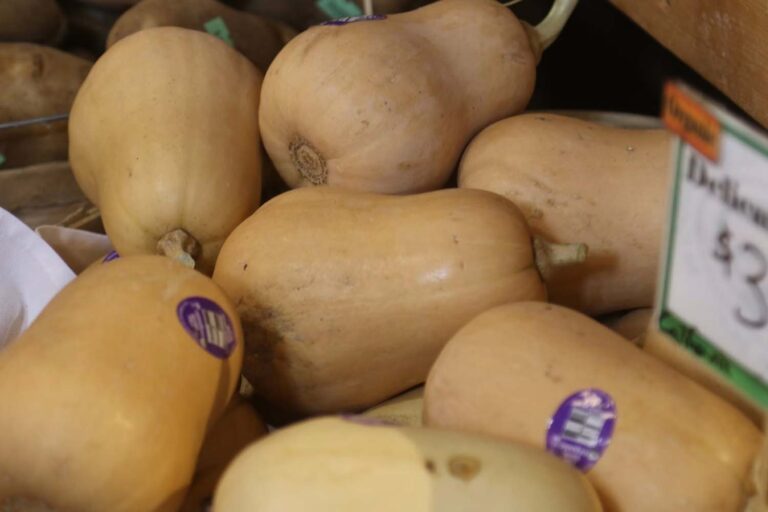
Butternut squash looks the same on every grocery shelf, which makes it tricky to know which one is mature and in good condition. Here is how to pick a good butternut squash: choose one that feels heavy, has a hard rind and has no soft or sunken spots. Below are the signs to check at the store, with guidance from university Extension programs, plus how to store it and cut it safely once you get it home.
How to pick a good butternut squash
1Pick one that feels heavy for its size
Texas A&M AgriLife Extension’s Dinner Tonight winter squash page says to choose “a firm, well-shaped squash that is heavy for its size and has hard, tough skin.” The Colorado State University Extension squash handout gives the same cues, “heavy for their size” and “full sized, hard shell.” Pick up two or three squash of similar size and take the heavier one.
Do this: compare a few by hand, and put back any that feel light or hollow for their size.
2Check that the rind is hard
North Carolina Cooperative Extension’s winter squash storage article says mature butternut squash have very hard skins that cannot be punctured with your thumbnail. Utah State University Extension’s winter squash guide says to choose squash with hard, tough skins, and that soft, thin skin suggests an immature fruit.
Do this: press lightly with a fingernail in an inconspicuous spot. It should not break the skin. Avoid pressing hard, since you can bruise the squash for the next shopper.
3Look for deep, even color and a dull finish
NDSU Extension’s “Field to Fork Winter Squash” bulletin says to select full-colored mature squash with fine texture. Washington State University Extension’s winter squash guide says the skin color should be deep and vibrant, matte rather than shiny, and that the underside should be deeply colored, not green. Iowa State Extension’s butternut guide recommends smooth, even tan skin free of blemishes, cracks or soft spots. Texas A&M adds that slight variations in skin color do not affect flavor.
Do this: choose a mature-looking squash with a hard rind and no damage. Butternut typically has smooth, even tan skin, and some color variation is normal, so don’t reject an otherwise sound squash for a small one.
4Check the stem, and carry it by the body
Washington State Extension says to check that the stem is present, dry and not corky. The USDA’s WIC Works page recommends a tan, dry stem, and Iowa State describes a brownish, woody-looking stem. North Carolina Extension notes that a stem can separate and open a path for rot-causing organisms, so it says not to pick up fruit by the stem.
Do this: pick a squash with a dry, intact stem, and support the squash from underneath.
5Skip soft, sunken, cut or moldy spots
Texas A&M’s page says not to choose squash with sunken or moldy spots. North Carolina Extension warns that cuts, scratches and bruises let rot-causing organisms in, and says not to handle fruit that is wet. The University of Maine Extension says to discard any squash that shows decay.
Do this: turn each squash over and check the bottom and neck for soft spots, cuts or mold before you buy.
6Store it right once you get it home
Texas A&M, NDSU and the University of Maine all give the same range: store winter squash at 50 to 55°F. NDSU gives 50 to 70 percent relative humidity and a shelf life of 2 to 3 months for butternut when properly stored, and says to keep squash on a shelf instead of a concrete floor, with the surface dry. The University of Maine says not to store squash near apples, pears or other ripening fruit. North Carolina Extension says to protect squash from temperatures below 50°F. Washington State says to refrigerate cut pieces but not whole squash. Colorado State’s handout says to discard cut portions not used within one to two days, Utah State says to wrap cut squash in plastic and refrigerate it, and Iowa State says cut or cooked butternut keeps up to four days in the refrigerator.
Do this: keep it whole in a cool, dry, ventilated spot, such as a pantry or cellar, rather than the fridge. A store-bought squash may have less storage life left than these figures, so check it regularly. If your kitchen is much warmer than 55°F, plan to use it sooner, which is practical guidance on our part, not a sourced time limit.
Butternut shopping checklist:
- Heavy for its size.
- Hard rind that resists a fingernail.
- Deep, even tan color. Some variation is normal.
- Dry, intact stem.
- No soft, sunken, cut or moldy spots.
- Store whole at 50 to 55°F, away from apples and pears.
Cutting butternut squash safely
A whole butternut is hard, rounded and potentially slippery, so stabilize it before cutting. Utah State Extension says to scrub winter squash in cool running water before cutting, and not to use soap or dish detergent. Colorado State recommends trimming about ¼ inch from the bottom and stem end to create a stable base. Utah State’s steps then cut off the neck, peel the neck and base with a peeler or knife, halve them lengthwise and scrape out the seeds. Work on a sturdy cutting board that won’t slide, use a sharp, sturdy knife, keep your fingers clear of the blade’s path and never force a knife that has become stuck. If you are making soup, our guides on common soup mistakes and thickening soup without cream pair well with a pot of butternut. Choosing a pumpkin instead? See our guide to picking a pumpkin.
What to make with butternut squash
We do not have a butternut-specific recipe on the site yet, but these Better Living recipes round out a fall table around it. This pairing list is our own suggestion, not a tested substitution.
- Soup night: try our red lentil soup or cauliflower soup with scallops alongside a pot of roasted butternut soup.
- Another roasted side: roasted Brussels sprouts with balsamic and bacon makes a natural partner on a fall dinner plate.
- A sheet-pan dinner: roasted Italian sausage, peppers and onions is a good main to serve with roasted squash.
- For the holiday table: fresh cranberry sauce with orange and cinnamon and maple pumpkin pie round out a Thanksgiving menu.
Butternut squash questions, answered
How long does a butternut squash last?
About 2 to 3 months when properly stored whole at 50 to 55°F, according to NDSU Extension and Texas A&M. Other sources give somewhat longer figures, such as 2 to 4 months from the USDA, and a store-bought squash may have less time left, so check it regularly and discard any that develops decay.
How do you tell if a butternut squash has gone bad?
Look for soft or sunken spots, mold or other decay. The University of Maine says to discard squash showing decay. A squash that leaks or smells off should also go, which is our own caution.

Should you refrigerate a whole butternut squash?
A cool, dry place around 50 to 55°F is ideal for keeping whole butternut longer, and Washington State says to refrigerate cut pieces but not whole squash. North Carolina Extension warns against temperatures below 50°F. If you have no cool spot, check the squash often and use it sooner.
How long does cut butternut squash last in the fridge?
Extension guidance varies. Colorado State says to discard cut portions not used within one to two days, while Iowa State says cut or cooked butternut keeps up to four days in the refrigerator. Wrap it and refrigerate it promptly, as Utah State advises.
Can you freeze butternut squash?
Yes. NDSU suggests packing cooked squash pulp into freezer-safe containers or bags, leaving a half-inch gap at the top, and labeling with the contents and date. Utah State says to use frozen squash within 8 to 12 months for best quality.
Can you eat butternut squash skin?
Yes, but it is tough. The USDA says the skin of all winter squashes is edible, although it can be tough depending on the type. Utah State’s butternut instructions peel it and say the skins of fully ripe squash are inedible, so peeling is the usual choice, especially for soups and roasted cubes.
Will a green or pale butternut squash ripen at home?
Do not count on it. Utah State says soft, thin skin suggests an immature fruit, and Texas A&M says a tender rind indicates immaturity. Choose a mature squash with a hard rind at the store.
When is butternut squash in season?
It depends on where you live. Utah State lists a local fresh season from mid-August through November and notes that most grocery stores carry winter squash year-round. Illinois Extension’s broad winter squash listing shows availability between May and November, which covers several squash types, not just butternut.
Does the size or shape of a butternut squash matter?
Shape can affect how much seed-free flesh you get. Iowa State Extension recommends the longest, fattest necks because the neck is the meaty part, and the seeds are in the bulb. Iowa State also suggests squash weighing between 1½ and 5 pounds.
The bottom line
Look for a butternut that feels heavy for its size, has a firm, hard rind and shows no soft spots, mold or damage. Carry it by its body, store it whole in a cool, dry spot and refrigerate what you cut.

Better Living may earn commissions through affiliate links and may occasionally feature sponsored or partner content. If you make a purchase through our links, we may receive a small commission at no cost to you.