
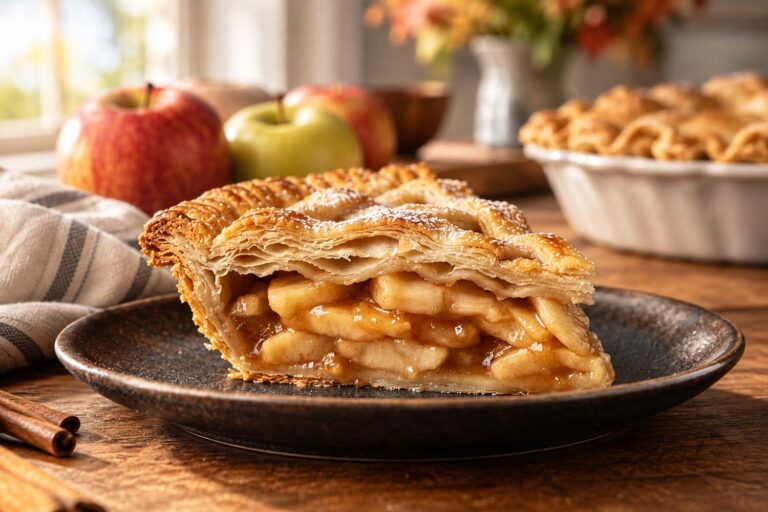
An apple that tastes great straight from the fridge may turn soft in a pie. The best apples for baking, such as Granny Smith, Braeburn, Honeycrisp and Pink Lady, hold their texture in the oven, while McIntosh and Red Delicious soften much faster. Which you want depends on whether you prefer distinct slices or a softer filling, and mixing varieties can give you some of both. Here is how to choose, based on university Extension programs and America’s Test Kitchen.
Holds its shape vs. softens (our summary of the sources below):
- Holds up best in America’s Test Kitchen testing: Granny Smith, Pink Lady, Braeburn, Honeycrisp.
- In the middle: Gala, Jonagold, Empire.
- Softens rapidly: McIntosh, Red Delicious, Golden Delicious. Useful when you want a softer filling or sauce.
- Baked whole apples (Utah State): Braeburn, Fuji or Golden Delicious.
How to pick the best apples for baking
1Start with a firm variety known to hold its shape
Kansas State University’s “You Asked It!” column says tart, firm-fleshed apples are best for baking, and names Braeburn, Cortland, Honeycrisp, Jonathan, Fuji, Gala, Granny Smith, Haralson and Newtown Pippin. America’s Test Kitchen explains why in an excerpt published by Science Friday: pectin holds the cell walls together, acid slows it from dissolving in the heat, and the air spaces between cells expand with steam, which can make some apples collapse. Acidic apples such as Granny Smith are therefore more likely to hold their shape, although variety, ripeness and cooking time also matter.
Do this: choose a firm baking variety with the sweetness and tartness your recipe needs, and handle it gently, since apples bruise easily.
2Mix varieties for balance, or use one suitable apple
Kansas State recommends mixing varieties for a well-rounded flavor and texture. An Ohio State University Extension garden post explains the balance: you want enough tartness to offset the apple’s sugars, and slices that stay firm in the oven. Its author’s own pie blend uses Granny Smith for tart, firm slices, Honeycrisp for sweetness and a smaller amount of a softer apple such as Golden Delicious, Ginger Gold or Jonagold, which breaks down more and fills the gaps. That is one cook’s preferred blend, not a university formula, and none of the sources gives exact ratios.
Do this: for more complex flavor, mix two or three varieties with a firm one as the base. A single suitable variety, such as Granny Smith, also works.
3Match the apple to what you are baking
Pies, tarts and crisps with distinct slices need the firm group above. For baked whole apples, a Utah State University Extension apple guide suggests varieties suited to baking such as Braeburn, Fuji or Golden Delicious, and its recipe uses 4 to 6 apples in one dish. Quick breads, muffins and cakes are more forgiving, because the apple is meant to blend in. A Utah State variety list describes Gala as excellent for eating and baking, Empire as excellent for baking and Gravenstein as especially good for baking and cooking. If you want a crisp, our nectarine crisp is a useful template for the topping, and our apple dessert collection has ideas for every kind of bake.
Do this: firm apples for anything cut into slices, softer apples when you want a looser, sauce-like filling.
4Know when Red Delicious and McIntosh make sense
Clemson Cooperative Extension agent Christine Patrick wrote in a 2023 post that Red Delicious is “a downright poor choice for baking,” that McIntosh also performs poorly when baked but makes a good sauce, and that Rome, Golden Delicious, Jonagold, Jonathan, Winesap, Gala and Pippin are better choices. For a pie with distinct slices, skip Red Delicious and use McIntosh sparingly. Sources do disagree: America’s Test Kitchen groups McIntosh with the apples that break down rapidly, while the Utah State variety list calls it well suited for applesauce, cider and pies, so choose according to the texture you want. Gala, Jonagold and Empire fall between America’s Test Kitchen’s fastest-softening and firmest groups, so they can still be useful baking apples, but do not expect the same texture as Granny Smith, Braeburn or Honeycrisp.
Do this: use McIntosh when you want a softer filling or applesauce, and keep Red Delicious for snacking.
5Check freshness and store apples cold
America’s Test Kitchen notes that a mealy, soft apple turns to mush quickly whatever the variety. The University of Missouri Extension’s guide to picking apples says to look for smooth-skinned, crisp, juicy fruit with color suited to the variety, and to handle apples gently to avoid bruising. Background color can hint at maturity, but yellow skin alone does not mean an apple is overripe, since color varies by variety. Utah State says apples keep best in the refrigerator, preferably in a crisper drawer or unsealed plastic bag, and can sit at room temperature for several days, though they lose crispness the longer they do. It also says to store them away from other produce because apples release ethylene gas, which can be damaging to other fruits and vegetables. Clemson adds that warm temperatures cause apples to lose crispness and flavor quickly.
Do this: choose firm fruit without bruises or soft spots, and refrigerate it until you are ready to bake.
6Consider precooking for a double-crust pie
Kansas State recommends slightly precooking fresh apples for a double-crust pie, which helps them cook through and reduces the gap that can form between the filling and the top crust as the apples shrink. It is a technique to consider, not a requirement, and plenty of recipes work without it.

Do this: for a double-crust pie, look for a recipe that calls for precooking the filling, and cut the slices to an even thickness so they cook at the same rate. The even-slicing tip is our own practical advice.
Before you bake: check that your cinnamon and other spices still have flavor. Our guide on whether spices go bad explains how.
Baking apple questions, answered
Can I make a pie with just one apple variety?
Yes. Mixing is one way to balance sweetness, tartness and texture, and Kansas State recommends it, but a single suitable variety can also work. Granny Smith is the benchmark for holding its shape, according to America’s Test Kitchen, though it is tart.
Can you use eating apples for baking?
Yes, if they are firm. Honeycrisp, Fuji and Gala appear on Extension baking lists, but soft or mealy apples will collapse.
Is Golden Delicious good for baking?
Several Extension sources recommend it, and Utah State suggests it for baked whole apples. America’s Test Kitchen found it softens rapidly, so it works best alone when you want a softer filling, or as the softer part of a blend.
The bottom line
Start with a variety known to hold its shape, then choose firm, fresh fruit rather than soft or mealy apples, and keep it in the refrigerator until you bake.

Better Living may earn commissions through affiliate links and may occasionally feature sponsored or partner content. If you make a purchase through our links, we may receive a small commission at no cost to you.