
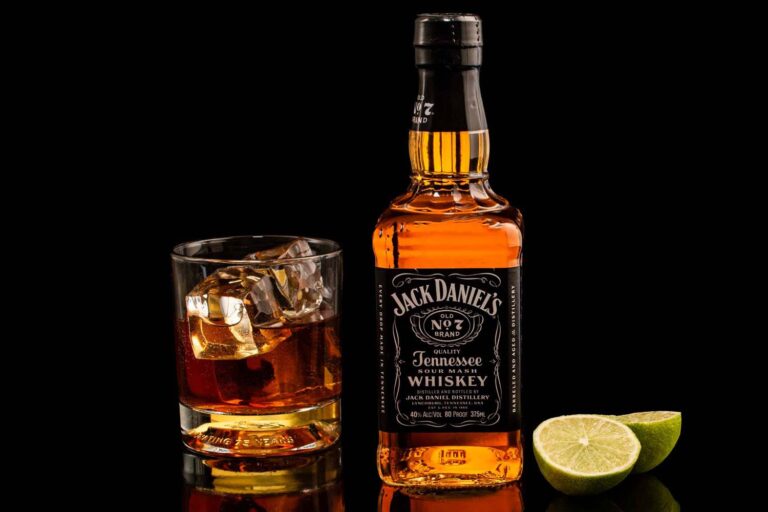
You find a bottle of Jack Daniel’s in the back of the cabinet, maybe a gift from a few holidays ago, maybe something you picked up and never quite finished. Does Jack Daniel’s go bad?
The short answer: No, not in any meaningful sense, and the reasons are the same ones that apply to whiskey generally, which we’ve covered in detail in our guide to whether whiskey goes bad. Unopened, a bottle of Jack Daniel’s is good indefinitely. Opened, it holds its quality for a wide range, commonly a year or two before oxidation starts to soften the flavor, though a mostly-full, well-sealed bottle can last considerably longer than that. What’s worth covering here specifically is what actually makes Jack Daniel’s a Tennessee whiskey rather than a bourbon, since that production difference is a real, interesting story in its own right, and it has nothing to do with how long the bottle lasts.
For more shelf-life guides across the rest of your bar cart, check out our full Bar & Spirits Guide.
Key Takeaways
- Unopened Jack Daniel’s: Indefinite shelf life, the same as any whiskey, as long as it’s stored upright and away from heat and direct light.
- Opened Jack Daniel’s: No single number here. A mostly-full, tightly-capped bottle can hold its character for years, while a nearly-empty one will show change sooner, generally within a year or two.
- What makes it Tennessee whiskey rather than bourbon is the Lincoln County Process, a step where the freshly distilled spirit is filtered drop by drop through roughly 10 feet of sugar maple charcoal before it ever touches a barrel.
- Jack Daniel’s own site is explicit that a whiskey’s readiness has nothing to do with a date on a calendar; barrels are tasted individually and bottled only when the master tasting team decides the flavor is right, regardless of how long that takes.
- Jack Daniel’s Tennessee Honey and other flavored variants are the exception. Like flavored whiskey generally, the added honey liqueur has more to lose to oxidation than the standard Old No. 7, so it’s worth using within roughly 6 to 12 months of opening.
- Standard Old No. 7 is 80 proof (40% ABV). Other expressions like Gentleman Jack, Single Barrel, and Bonded vary in proof, but the same production process and general shelf-life logic applies across the lineup.
What Actually Makes This a Tennessee Whiskey
The Charcoal Step Bourbon Doesn’t Have
Bourbon and Tennessee whiskey share a lot of DNA: both are made primarily from corn, aged in new charred oak barrels, and produced in the United States. What separates Jack Daniel’s, and Tennessee whiskey as a category, is an extra step called the Lincoln County Process, named for the Tennessee county where Jack Daniel’s distillery originally stood. Before the freshly distilled spirit ever goes into a barrel, it’s filtered, or steeped, through a thick bed of sugar maple charcoal, roughly 10 feet of it at the Jack Daniel Distillery, dripping through drop by drop. That charcoal is made on-site, burned from stacks of sugar maple timber that are primed with high-proof Jack Daniel’s whiskey itself before being ignited.
This charcoal mellowing is what gives Jack Daniel’s its characteristic smoothness before the whiskey even starts its years in the barrel. The distilling knowledge behind this process has a documented history tied to Nathan “Nearest” Green, an enslaved and later freed master distiller who taught a young Jack Daniel the trade, including the charcoal filtering method that would go on to define the entire Tennessee whiskey category. None of this affects how long a bottle lasts once it’s on your shelf, but it’s the real answer to what makes Jack Daniel’s a genuinely different product from a bourbon, not just a different label on the same thing.
How Long Jack Daniel’s Actually Lasts
The full mechanics of whiskey shelf life, why it stops aging the moment it’s bottled, why headspace matters more than a fixed number of years, and how to spot real oxidation versus harmless cold-weather cloudiness, are covered thoroughly in our guide to does whiskey go bad, and all of it applies directly to Jack Daniel’s. The short version specific to this bottle: unopened is indefinite, and Jack Daniel’s own site reinforces that maturity is judged by taste, not by a date, which is exactly why nothing changes for the better once the bottle is sealed and sitting in your cabinet. Opened, expect gradual softening over a year or two for a bottle that’s been mostly finished, and considerably longer for one that’s still mostly full.
| Type | Unopened | Opened |
|---|---|---|
| Old No. 7 and other standard expressions | Indefinite | 1-2 years for a mostly-used bottle; years longer if mostly full |
| Tennessee Honey and other flavored variants | 1-2 years | 6-12 months |
As with whiskey generally, these are quality benchmarks, not safety cutoffs. The real driver is how much air is in the bottle, not the calendar.
Can You Freeze Jack Daniel’s?
Yes, safely, though it won’t freeze solid. At 40% ABV, Old No. 7’s freezing point is well below what a standard home freezer reaches, so it stays liquid, just thicker and colder. Higher-proof expressions like Bonded (50% ABV) are even further from freezing. As with any whiskey, very cold temperatures mute the aroma and flavor, so if you want to actually taste what the charcoal mellowing and barrel aging contributed, a large ice cube added just before serving is gentler on the flavor than a stint in the freezer.
Keeping a Bottle on Hand for Guests
Since a mostly-full bottle holds up for years, Jack Daniel’s is a reasonable thing to keep stocked rather than buy fresh for every gathering, and it’s also one of the most common bottles to find in a Father’s Day gift basket, so it’s worth knowing it’ll keep well if Dad doesn’t finish it right away. If you’re planning ahead for a get-together, our general summer entertaining tips and holiday pizza party guides cover the broader hosting side of things, whether or not whiskey ends up on the bar cart that night.

Frequently Asked Questions
Is Jack Daniel’s a bourbon or a Tennessee whiskey?
Tennessee whiskey, specifically. It meets every legal requirement of a bourbon, made from a corn-majority mash bill, aged in new charred oak barrels, distilled and bottled in the United States, but the extra Lincoln County Process step, filtering the spirit through sugar maple charcoal before barreling, is what puts it in its own category. Jack Daniel’s itself doesn’t market Old No. 7 as a bourbon, even though it technically could.
Does Jack Daniel’s get better with age once it’s in the bottle?
No. All of the aging that shapes Jack Daniel’s flavor happens in the barrel, before bottling. Jack Daniel’s own site is explicit about this philosophy: whiskey is only bottled once the master tasting team decides it’s ready, based on flavor, not a fixed number of years. Once it’s sealed in the bottle, that process stops completely; sitting on a shelf for another five or ten years won’t add anything, and an opened bottle can only slowly lose character through oxidation from that point on.
Does Jack Daniel’s Tennessee Honey go bad faster than regular Jack Daniel’s?
Yes. Tennessee Honey and other flavored Jack Daniel’s variants have honey liqueur or other flavoring blended in after the base whiskey is made, and those additions are more vulnerable to oxidation than the whiskey alone. Where a standard bottle of Old No. 7 can sit opened for a year or more without much change, Tennessee Honey is best used within roughly 6 to 12 months of opening for the best flavor, the same pattern that applies to flavored whiskey generally.
Further Reading

Better Living may earn commissions through affiliate links and may occasionally feature sponsored or partner content. If you make a purchase through our links, we may receive a small commission at no cost to you.