
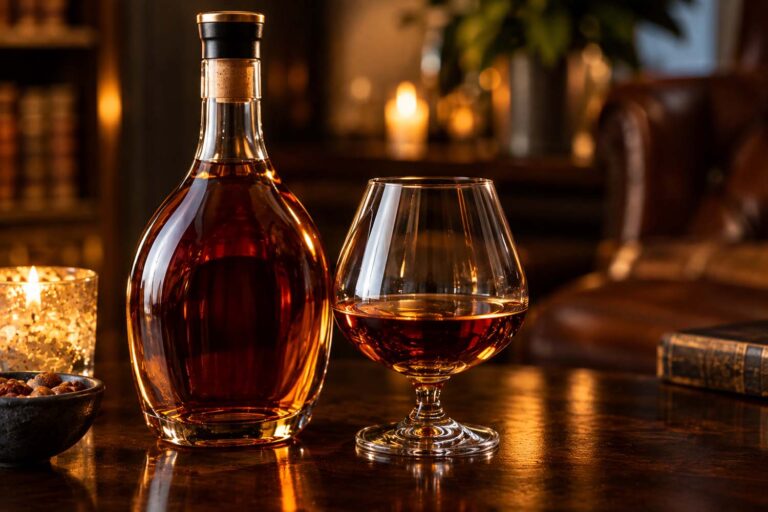
You find a bottle of brandy or cognac in the back of the cabinet, maybe a gift that’s been sitting untouched for years. Does brandy go bad?
The short answer: Unopened brandy and cognac have an indefinite shelf life. Hennessy’s own FAQ confirms that an old, untouched bottle will likely taste the same as the day it was bottled, as long as it’s been stored upright. Once opened, you’ll commonly see a 6 month to 2 year window cited for peak flavor, but that’s a conservative benchmark, not a decline point. What actually matters is how much air gets into the bottle and how well it’s sealed; a well-kept bottle can taste great for years past that window. It never becomes unsafe to drink either way.
For more shelf-life guides across the rest of your bar cart, check out our full Bar & Spirits Guide.
Key Takeaways
- Unopened brandy or cognac: Indefinite shelf life. Hennessy’s guidance says a bottle stored properly for decades will taste essentially the same as the day it was bottled.
- Opened: A 6 month to 2 year window is commonly cited for peak flavor, but that’s a benchmark, not a cutoff. Fill level and seal quality matter far more than the calendar.
- Older cognac (VSOP, XO) has more to lose than younger VS. More time in oak means more delicate, complex compounds that fade faster once air gets into an opened bottle.
- “Expired” brandy won’t make you sick. Its 35% to 60% alcohol content prevents bacterial or mold growth, so a bottle that’s lost quality is still safe to drink.
- Sediment in older, aged brandy can be completely normal. It’s usually just tannin compounds settling out over time, not a sign of spoilage.
- Cognac doesn’t improve in the bottle, even though it’s made from grapes. The aging that shapes its character happens entirely in oak barrels before bottling, the same as whiskey; it doesn’t continue like wine does.
Brandy vs. Cognac: Are They the Same Thing?
Not quite, and the distinction matters for how you read the rest of this article. Brandy is the broad category: any spirit made by distilling fermented fruit, usually grapes, though apple, pear, and other fruits work too. Anyone, anywhere, can legally call a grape-based distilled spirit “brandy” as long as it meets basic proof requirements.
Cognac is a specific, legally protected type of brandy. To use the name, a spirit has to be made from specific grape varieties grown in the Cognac region of France, double-distilled in copper pot stills, and aged at least two years in French oak. It’s the same relationship Champagne has to sparkling wine: every Cognac is a brandy, but most brandy isn’t Cognac. Armagnac (also French, from the Gascony region) and Calvados (French apple brandy from Normandy) are two other well-known, similarly protected styles. American and Spanish brandies, along with fruit brandies like eaux-de-vie, follow their own, generally less restrictive rules.
For shelf life purposes, none of this changes the fundamentals. Cognac, Armagnac, Calvados, and generic brandy all share the same roughly 35-60% alcohol content and the same basic behavior: indefinite unopened, gradual flavor change once opened, never unsafe. The naming distinction matters more for understanding what you’re drinking and how much oak-derived complexity it’s likely to have than for how long it lasts.
Why Grape Origins Don’t Make Brandy Age Like Wine
Distilled From Wine, But It Doesn’t Behave Like Wine
That grape origin leads a lot of people to assume brandy ages in the bottle the way wine does. It doesn’t. Once brandy is distilled and bottled, its alcohol content, generally 35% to 60% ABV, puts it well into the same territory as any other spirit: too high for bacteria or mold to survive, and no longer capable of the kind of aging that happens in a wine bottle.
The barrel time is where all the character comes from, and it varies a lot by classification. Cognac labeled VS spends a minimum of two years in oak, VSOP a minimum of four, and XO a minimum of ten. Longer barrel time means more of the vanilla, dried fruit, and spice notes that oak imparts, and also more delicate complexity to lose once a bottle is opened and oxygen gets in.
This is the same mechanism that affects whiskey and aged rum, just applied to a spirit that starts life as wine instead of grain or cane. An opened bottle of XO cognac has more to lose than an opened VS, the same way an opened añejo tequila has more to lose than an opened blanco.
How Long Brandy and Cognac Actually Last
| Type | Unopened | Opened |
|---|---|---|
| VS brandy/cognac (younger) | Indefinite | ~6 months-2 years for peak flavor; often fine well beyond that |
| VSOP / XO (more oak time) | Indefinite | ~6 months-2 years for peak flavor; delicate notes fade first |
| Flavored brandy (cherry, apple, etc.) | 1 to 2 years | 6 months to 1 year |
The 6 month to 2 year figure for opened brandy is a widely cited benchmark for peak flavor, not a regulated standard or a point of decline. A mostly-full bottle with a tight cap commonly tastes fine well past that window, while a nearly-empty, loosely-capped bottle will show change sooner.
Signs Your Brandy Has Lost Quality
When It’s Past Its Best
A flat or muted aroma in place of the rich dried fruit, vanilla, and spice notes brandy is known for. This is oxidation breaking down the volatile compounds that carry most of the character.
Darkening color in a bottle stored in the light. Brandy is naturally amber to begin with, so this is subtler than in clear spirits, but noticeable darkening beyond the original color usually points to light or heat exposure.
A sharp vinegar smell is a genuine sign of contamination, not just normal aging, and is a real reason to discard the bottle rather than a flavor complaint.
Sediment on its own isn’t necessarily a bad sign. Aged brandy can naturally throw a small amount of sediment from tannin compounds settling out over time, similar to what happens in aged red wine. It’s only worth worrying about alongside other signs like an off smell or cloudiness in a bottle that used to be clear.
A Note on Very Old Bottles and Crumbling Corks
If you’re dealing with a bottle that’s been sitting unopened for several decades, there’s a separate issue worth knowing about: natural cork can dry out and start to crumble even in a bottle that’s been stored upright exactly as recommended. Small bits of cork floating in the liquid when you finally open a very old bottle usually means this has happened, not that the brandy itself has gone bad. It’s harmless; just strain it through a coffee filter or fine mesh before drinking. For a bottle you know will sit unopened for many years, some collectors periodically tip it briefly to keep the cork from drying out completely, though this is a long-term collector’s concern rather than something that matters for a bottle you’ll open within a normal timeframe.
How to Store Brandy So It Lasts
Storage Best Practices
Store the bottle upright, not on its side, whether it’s opened or unopened. Hennessy specifically advises against side storage, since prolonged contact between the spirit and a natural cork can affect the cognac, the opposite of what side storage does for wine.
Keep it in a dark place at room temperature, avoiding extremes of heat and cold. UV light and temperature swings both degrade the color and delicate aromatics over time.

Reseal tightly after every pour, and be careful when opening a bottle for the first time so you don’t damage the cork in the process.
Transfer a mostly-empty bottle to a smaller container if you’re not going to finish it soon. Less headspace means less air in contact with the remaining brandy, which slows oxidation.
What to Do With a Bottle You Don’t Want Anymore
There’s rarely a real disposal question with brandy, since even a bottle that’s lost quality is still safe to drink or cook with. If you genuinely need to pour some out, a small amount diluted with plenty of water down the drain is fine; ethanol at typical drinking concentrations isn’t classified as hazardous waste. An emptied bottle is just glass for your regular recycling.
Frequently Asked Questions
Does brandy expire?
Not in the way food does. Unopened brandy and cognac last indefinitely, and Hennessy’s own guidance says a properly stored bottle can sit for many years without any change in quality. Opened bottles commonly hold close to their original flavor for 6 months to 2 years, though that’s a benchmark for peak quality, not an expiration point, and a well-sealed, mostly-full bottle can taste fine for considerably longer.
Does cognac get better with age in the bottle, since it’s made from grapes?
No, and this is a common mix-up precisely because cognac starts as wine. Once cognac is distilled and bottled, it stops aging completely; Hennessy is explicit that the aging process ends the moment the spirit leaves the wooden casks. Unlike a bottle of wine, which can continue to develop for years after bottling, cognac in glass just sits there. A 20-year-old bottle you open today will taste like the 20-year-old cognac it was when bottled, not something that’s continued to mature since.
Is sediment in my old brandy a bad sign?
Not necessarily. Aged brandy can naturally develop a small amount of sediment from tannin compounds precipitating out over long periods, similar to sediment in an old bottle of red wine. On its own, this isn’t a sign the brandy has gone bad. It’s worth paying more attention if that sediment shows up alongside other signs, like a sour or vinegar-like smell, cloudiness in a normally clear spirit, or a compromised cork.
Further Reading

Better Living may earn commissions through affiliate links and may occasionally feature sponsored or partner content. If you make a purchase through our links, we may receive a small commission at no cost to you.