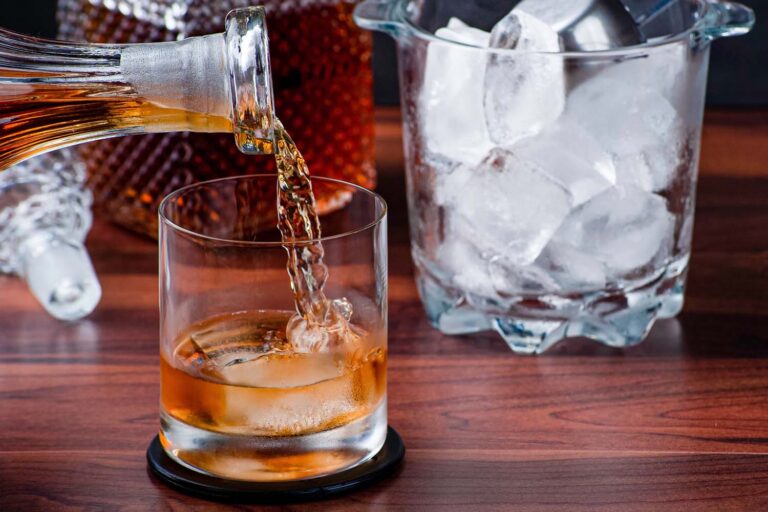
You find a bottle of whiskey tucked in the back of the cabinet, maybe a gift from a few holidays ago, maybe something you picked up on a trip and never quite finished. Does whiskey go bad?
The short answer: Unopened whiskey has an indefinite shelf life. Jameson states plainly that there’s no official “use by” timeline on a bottle, sealed or not. Once opened, quality starts to shift gradually through oxidation. A bottle kept mostly full and well-sealed can stay close to its original character for 5 years or more; one that’s down to its last quarter with a loose seal can show noticeable change within months. Either way, it never becomes unsafe to drink, just less like it tasted on day one.
If you’re working through a bottle before it loses its edge, our healthy hot toddy, Irish coffee, and Scottish coffee are all good ways to use it up, and our guide to the finest Scotch whiskeys is worth a look if you’re building out a collection rather than just finishing what’s open. Bourbon drinkers should also check our bourbon-baked ham for a food-pairing use of an older bottle, and our St. Patrick’s Day cocktail roundup if you’re after Irish whiskey drink ideas specifically.
For more shelf-life guides across the rest of your bar cart, check out our full Bar & Spirits Guide.
Key Takeaways
- Unopened whiskey: Indefinite shelf life. Jameson’s own guidance confirms there’s no expiration timeline for a sealed bottle.
- Opened whiskey: There’s no single number here, real range across industry sources spans 1 to 2 years for noticeable change to begin, up to 5 to 10 years for a well-sealed, mostly-full bottle. Fill level and seal quality matter far more than the calendar date.
- Flavored whiskey is the exception. Honey, cinnamon, and fruit-infused whiskeys are typically bottled at a lower proof with added sugar, so they’re more vulnerable to flavor breakdown, commonly lasting 1 to 2 years unopened and only 6 to 12 months once opened.
- Whiskey stops aging the moment it’s bottled. The barrel-aging that gives it color and complexity only happens in oak, not in glass, so a bottle labeled “12 years” stays a 12-year whiskey no matter how long it sits on your shelf afterward.
- Heat is a specific risk, not just a general one. Jameson notes that warm storage temperatures can actually cause whiskey to turn cloudy, which is a visible sign that quality has been compromised.
- “Expired” whiskey won’t make you sick. Its roughly 40% alcohol content prevents bacterial or mold growth, so a bottle that’s lost quality is still safe to drink.
- Store it upright, not on its side. Unlike wine, prolonged contact between whiskey and a natural cork corrodes and breaks down the cork rather than keeping it in good condition, which is the opposite of what side storage does for wine.
Why Whiskey Changes More Than Vodka Once It’s Opened
Barrel Aging Gives Whiskey More to Lose
Whiskey’s roughly 40% alcohol content works the same way it does in any spirit: it’s inhospitable to the bacteria and mold that spoil food, which is why a sealed bottle doesn’t need refrigeration or a use-by date. What sets whiskey apart from something like vodka is everything it picks up before bottling.
Every whiskey, regardless of style, spends time in oak barrels absorbing color, vanilla and caramel notes, tannins, and other wood-derived compounds. That’s a lot of flavor complexity compared to a neutral spirit, and it’s exactly the kind of complexity that reacts with oxygen once a bottle is opened and air gets in.
This is why an opened bottle of whiskey changes faster than an opened bottle of vodka, even though both are roughly the same proof. There’s simply more in the liquid to oxidize. The aging itself stops completely once the whiskey leaves the barrel and goes into glass; nothing that happens afterward in the bottle is “aging” in the way collectors mean it, it’s just oxidation, and oxidation only takes away, it doesn’t add character the way barrel time does.
Flavored whiskeys add another layer to this. Honey, cinnamon, and fruit-infused whiskeys are usually standard whiskey with flavoring and sugar added after aging, often at a lower proof than the base spirit. Those additives introduce exactly the kind of organic compounds that break down faster than whiskey alone, which is why flavored bottles carry a real shelf life where plain whiskey doesn’t.
How Long Whiskey Actually Lasts
| Type | Unopened | Opened |
|---|---|---|
| Standard whiskey, bottle more than half full | Indefinite | Close to original for 5 years or more |
| Standard whiskey, bottle a quarter full or less | Indefinite | Noticeable change within months |
| Flavored whiskey (honey, cinnamon, fruit) | 1 to 2 years | 6 to 12 months |
These figures reflect general industry guidance rather than a regulated standard. The core driver is the ratio of liquid to air in the bottle, not a fixed calendar date, so a nearly-full bottle opened years ago can outlast a mostly-empty bottle opened just last month.
Signs Your Whiskey Has Lost Quality
When It’s Past Its Best
Cloudiness from heat exposure. Jameson specifically flags cloudiness caused by warm storage as a sign that quality has been compromised. Worth knowing the difference, though: some unfiltered or non-chill-filtered whiskeys turn naturally hazy when they get cold, as leftover oils and fats bind together at low temperatures. That kind of cloudiness clears up once the whiskey warms back to room temperature and isn’t a defect, it’s just a byproduct of skipping chill filtration during production.
A flat, muted, or papery smell in place of the sharper, more complex aroma the whiskey started with. This is oxidation breaking down the volatile compounds that carry most of the character.
A one-note, harsh alcohol taste where the wood-derived sweetness and spice used to be. Once those delicate notes fade, what’s left is mostly just the burn.
Sediment or visible particles in the bottle. This isn’t normal aging and usually points to contamination or a compromised seal rather than simple time passing.
None of these signs make whiskey unsafe. They just mean it’s better used in a mixed drink, where other ingredients can cover a dulled flavor, than sipped on its own.
How to Store Whiskey So It Lasts
Storage Best Practices
Store the bottle upright, not on its side. Whiskey’s high alcohol content will corrode and gradually break down a natural cork with prolonged contact, which can taint the flavor or eventually let the bottle leak. That’s the opposite of wine, where side storage and a moist cork are actually beneficial because wine’s lower alcohol content isn’t strong enough to damage the cork.
Keep it out of direct sunlight and away from heat sources. UV light fades both the liquid’s color and the label, and Jameson notes that warm temperatures specifically can cause cloudiness.

Keep the cap or cork sealed tightly between pours, and consider transferring a mostly-empty bottle to a smaller container to reduce how much air is in contact with the remaining whiskey.
Skip the freezer for sipping whiskey. Very cold temperatures mute the aromatics that make whiskey worth drinking neat or on the rocks. If you like it cold, a large ice cube added right before serving does less damage to the flavor than a stint in the freezer.
What to Do With a Bottle You Don’t Want Anymore
There’s rarely a real disposal question with whiskey, since even a bottle that’s lost quality is still safe to drink or cook with. If you genuinely need to pour some out, a small amount diluted with plenty of water down the drain is fine; ethanol at typical drinking concentrations isn’t classified as hazardous waste. An emptied bottle is just glass for your regular recycling.
Frequently Asked Questions
Does whiskey expire?
Not in the way food does. Unopened whiskey lasts indefinitely, and Jameson’s own guidance confirms there’s no official use-by timeline on a bottle. Opened whiskey loses quality gradually rather than on a fixed schedule: a mostly-full, well-sealed bottle can taste close to original for 5 years or more, while a bottle down to its last quarter with a loose cap can noticeably change within months. It never becomes unsafe to drink either way.
Does whiskey get better with age once it’s in the bottle?
No. The aging that gives whiskey its color and complexity happens entirely in the oak barrel, before bottling. A whiskey labeled 12 years old will still be a 12-year-old whiskey whether you open it the week you buy it or twenty years later, since bottled whiskey doesn’t interact with wood anymore. Sitting in glass doesn’t add anything; at best it stays the same, and once opened it can only slowly lose quality through oxidation.
Why did my whiskey turn cloudy?
It depends on the temperature it’s been at. Warm storage causing cloudiness is a real quality issue, flagged directly by Jameson as a heat-related problem. But if your whiskey got cold, whether from the fridge, freezer, or a cold garage, and it’s an unfiltered or non-chill-filtered style, that haziness is usually harmless: it’s caused by natural oils and fats binding together at low temperatures, and it clears back up once the whiskey returns to room temperature. Storing bottles in a cool, consistent spot away from radiators, direct sun, and extreme heat is the best way to avoid the version that’s actually a problem.
Further Reading
- Does Vodka Go Bad?
- Does Tequila Go Bad?
- The Finest Scotch Whiskeys
- Healthy Hot Toddy
- Buenavista Irish Coffee
- Scottish Coffee
- Bourbon-Baked Ham
- St. Patrick’s Day Cocktails
- Easy Scottish Cranachan

Better Living may earn commissions through affiliate links and may occasionally feature sponsored or partner content. If you make a purchase through our links, we may receive a small commission at no cost to you.