
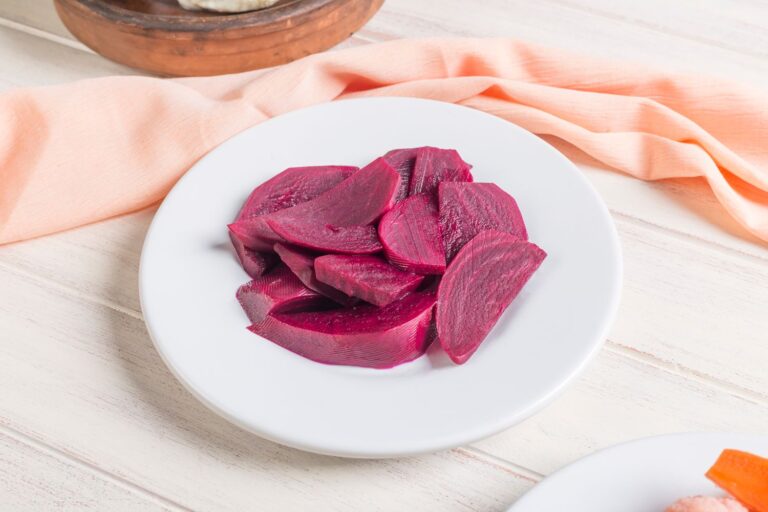
Pickled beets have two very different lifespans depending on one simple fact: whether the lid has been opened. Sealed, they’re one of the longer-lasting jarred foods in the pantry, at home in everything from a relish tray to a side salad. Cracked open, that vinegar brine buys far less time than most people assume.
Do pickled beets go bad?
The short answer: Not for a long time if the jar is still sealed. Store-bought pickled beets are a high-acid, shelf-stable food, and an unopened jar keeps for 12 to 18 months in the pantry. Once you break the seal, treat it like any other opened pickle. Refrigerate it and plan to use it within 5 to 7 days for best quality and safety, per USDA guidance. Home-canned pickled beets follow a similar pattern: about a year unopened in a cool, dark spot, then 3 to 4 days once the jar is opened.
That opened-versus-unopened split is the same logic that applies to fresh beets, just on a different timeline. If raw beets are more your speed, our guide to how long fresh beets last covers trimming and storage for the whole root. Vinegar-based preservation isn’t unique to beets, either. Our guide to pickle shelf life and sauerkraut storage guide both dig into how acid keeps other jarred vegetables safe far past a typical produce timeline.
At a Glance
| Store-bought, unopened | 12 to 18 months, pantry |
| Store-bought, opened | 5 to 7 days, refrigerated |
| Home-canned, unopened, sealed | About 1 year, cool and dark |
| Home-canned, opened | 3 to 4 days, refrigerated |
Key Takeaways
- An unopened jar of commercial pickled beets is shelf-stable for 12 to 18 months at room temperature, per USDA guidance on high-acid canned foods.
- Once opened, refrigerate the jar right away. USDA guidance puts opened pickles at about 5 to 7 days for best quality and safety.
- Beets themselves are low-acid. NCHFP’s tested pickled beet recipe uses twice as much 5% vinegar as water, and that ratio isn’t something to adjust to taste.
- Plain canned beets in water and salt are a different product entirely. They’re low-acid and require pressure canning, not the boiling-water method used for pickled beets.
- A bulging lid, mold, fizzing brine, or cloudy brine with an off smell are signs to toss the jar. Beets bleeding color into the brine, or slight softening over time, is normal.
- Because beets are low-acid on their own, an improperly acidified home-canned jar can support Clostridium botulinum without any obvious warning sign. A tested recipe and a verified seal both matter.
Why the Jar Seal Changes Everything
A sealed jar of pickled beets is an airtight, acidic environment that most spoilage organisms can’t get a foothold in. That’s the whole point of pickling: enough vinegar drops the pH low enough to make the product shelf-stable at room temperature for well over a year. The moment you open the jar, that protection changes. Air, bacteria, and whatever utensil touches the brine all get introduced, and refrigeration becomes the only thing slowing things down from there. It’s the same reason a sealed jar of regular pickles and an opened one live on completely different clocks.The acid requirement is also a genuine safety issue, not just a shelf-life one. Beets on their own are a low-acid food, in the same category as green beans or carrots. The CDC says home-canned vegetables, which are low-acid foods, are the most common cause of botulism outbreaks in the U.S. Pressure canning is the only recommended method for canning low-acid foods on their own. You cannot see, smell, or taste the toxin that causes botulism. Pickling sidesteps that requirement by adding enough acid to make the boiling-water method safe instead. NCHFP’s tested pickled beets recipe calls for 4 cups of 5% vinegar to 2 cups of water, twice as much vinegar as water, and that ratio isn’t something to change. Following a tested recipe exactly, not adjusting the vinegar to taste, is what keeps a home-canned jar of pickled beets safe.
How Long Do Pickled Beets Actually Last?
Store-Bought, Unopened
A sealed jar of commercial pickled beets sits in the same category as other shelf-stable, high-acid canned goods. USDA guidance puts that window at 12 to 18 months in a cool, dry pantry below 85°F. The printed date is a manufacturer’s quality estimate, not a safety cutoff, so a jar that’s a few months past date and still sealed is generally fine to use.
Store-Bought, Opened
Once the seal is broken, move the jar straight to the refrigerator. USDA guidance for opened high-acid canned foods, including pickles, is 5 to 7 days for best quality and food safety. Keep the beets fully submerged in their brine, and use a clean utensil each time you take some out. Introducing bacteria from a dirty fork or fingers shortens that window.
You’ll find a much wider range of numbers elsewhere online, anywhere from a few days to a few months. That spread mostly comes down to what’s being measured. A high-vinegar, high-sugar product like pickled beets can often still taste fine well past a week in the fridge, which is likely where the longer estimates come from. USDA’s 5 to 7 day figure is the official food-safety guidance for opened high-acid canned goods as a category. It’s the number we’d stand behind if you’re asking what’s actually recommended, rather than what might still be edible.
Home-Canned, Unopened
Properly processed and sealed jars of home-canned pickled beets keep for about a year, stored at 50 to 70°F in a cool, dark cabinet. Both figures come from NCHFP’s general guidance on storing home-canned foods. That 1-year mark is a quality recommendation rather than a hard safety line. A properly sealed jar doesn’t spoil the day it turns a year old, it just may start losing texture and color.
Home-Canned, Opened
The same rule applies here as with a store-bought jar: USDA’s opened-shelf-stable-food guidance gives home-canned foods 3 to 4 days refrigerated once opened. Home-canned pickled beets don’t have any added preservatives beyond vinegar, salt, and sugar. There’s no reason to expect them to outlast a commercial jar once air gets in.
Signs Something Is Actually Wrong
- A bulging, dented, or leaking lid, or one that doesn’t stay sealed when the jar is unopened.
- Cloudy brine that wasn’t cloudy before, rather than the clear or lightly tinted liquid a good jar starts with.
- Visible mold, including cotton-like growth on the underside of the lid.
- A sharply sour, yeasty, or otherwise off smell, distinct from the normal vinegar tang.
- Spurting or fizzing brine, or rising bubbles, when the jar is opened, which points to unwanted fermentation.
- Unnatural color in the beets themselves, beyond the normal darkening of the brine described below.
NCHFP lists spurting liquid, cotton-like mold, rising bubbles, and unnatural color as its spoilage signs for home-canned jars generally.
Normal Changes That Don’t Mean It’s Bad
- Beets bleeding more color into the brine over time. The liquid gets darker; that’s just pigment, not spoilage.
- Slight softening of the beets themselves the longer the jar sits, opened or not.
- A little separation or settling in the brine after the jar has been sitting still.
How to Store Pickled Beets Properly
- Keep unopened store-bought jars in a cool, dry pantry below 85°F, per USDA; keep home-canned jars at 50 to 70°F, per NCHFP.
- Refrigerate immediately after opening, and keep the lid on tight between uses.
- Make sure the beets stay submerged in the brine, not sitting exposed above the liquid line.
- Use a clean utensil every time, never fingers, to avoid introducing bacteria into the jar.
- Don’t return beets you’ve already served back into the jar.
- If making your own, follow a tested NCHFP recipe with the full vinegar amount, twice as much vinegar as water. Cutting it to make beets less tangy also removes the acidity that makes them safe to store at room temperature.
- After home canning, check the seal before storing, per NCHFP’s seal-testing guidance. The lid should look slightly concave, not flat or bulging, stay down when you press the center, and give a ringing rather than dull sound when tapped.
- If a jar doesn’t pass that check, NCHFP gives three options: refrigerate it and use it within several days, reprocess it with a new lid within 24 hours, or freeze it instead (with extra headspace). Don’t store an unsealed jar at room temperature.
Pickled Beet Storage: Practical Guidance
| Form | Where | How Long / Notes |
|---|---|---|
| Store-bought, unopened | Pantry | 12-18 months, per USDA guidance |
| Store-bought, opened | Refrigerator | 5-7 days for best quality and safety |
| Home-canned, sealed | Cool, dark cabinet, 50-70°F | About 1 year, per NCHFP |
| Home-canned, opened | Refrigerator | 3 to 4 days, per USDA |
Figures reflect USDA guidance on shelf-stable, high-acid canned foods and NCHFP guidance on home canning.

Do Pickled Beets Go Bad FAQ
Do pickled beets need to be refrigerated?
Only after opening. A sealed jar is shelf-stable at room temperature. Once you break the seal, refrigeration is what keeps the beets safe and good to eat for the following several days.
Can I still eat pickled beets past the date on the jar?
Usually, yes, if the jar is still sealed and shows no signs of damage. The printed date is a quality estimate from the manufacturer, not a safety deadline, and a shelf-stable pickled product often stays fine well beyond it.
Are homemade pickled beets less safe than store-bought?
Not if you follow a tested recipe. The safety comes from having enough vinegar to reach a low enough pH, which is exactly what research-tested recipes from sources like NCHFP are built around. Cutting the vinegar or improvising the ratio is where risk comes in, not the fact that it’s homemade.
Why is the brine cloudy?
Per NC State Extension, occasional cloudiness usually comes from hard water minerals or from using table salt instead of pickling salt, since table salt’s anti-caking ingredients cause clouding. It can also signal unwanted bacterial growth. If the brine looks cloudy in a way it didn’t before, and especially if it comes with an off smell or fizzing, it’s safer to discard the jar.
Can I freeze pickled beets?
No tested recipe calls for it, and in our experience the beets turn soft and watery once thawed, so it isn’t worth it. Refrigeration, not freezing, is the right move for extending an opened jar.
Are plain canned beets in water and salt stored the same way as pickled beets?
No. Plain canned beets are a low-acid vegetable, similar to canned green beans or carrots, and rely on pressure canning and the can’s seal for safety rather than vinegar. Pickled beets use added acid, which is what allows the boiling-water method and gives them a different safety profile.
How long do pickled beets and eggs last?
Once you’ve used up the beets, that leftover brine is the classic way to make pickled beet eggs, but the storage rules get stricter, not looser. Oklahoma State University Extension recommends refrigerating pickled beet eggs at all times and using them within 3 to 4 months. They should never sit at room temperature except for up to 2 hours during serving, and there are no home-canning directions for pickled eggs at all. That isn’t a theoretical warning: a 1997 CDC-documented case in Illinois involved eggs pickled with commercially prepared beets, hot peppers, and vinegar, then stored at room temperature rather than refrigerated.
Are pickled beets keto-friendly?
Not especially. A 1-cup serving of pickled beets runs about 37 grams of carbohydrate, per USDA data, much of it from the sweetened brine rather than the beet itself. That’s a meaningfully higher carb count than most other pickled vegetables, so portion size is worth watching on a low-carb diet.
Further Reading
- Do Beets Go Bad? How Long Fresh Beets Actually Last
- Do Pickles Go Bad or Expire?
- Does Sauerkraut Need to Be Refrigerated?
- Does Apple Cider Vinegar Need to Be Refrigerated?
- 6 Amazing Benefits of Beets + A Chocolate Cupcake & Beet Crystal Recipe
- Immune-Boosting Beet-Turmeric Refresher
- How to Get Beet Stains Out of Clothes
- Complete Food Storage Guide: 120+ Foods

Better Living may earn commissions through affiliate links and may occasionally feature sponsored or partner content. If you make a purchase through our links, we may receive a small commission at no cost to you.