
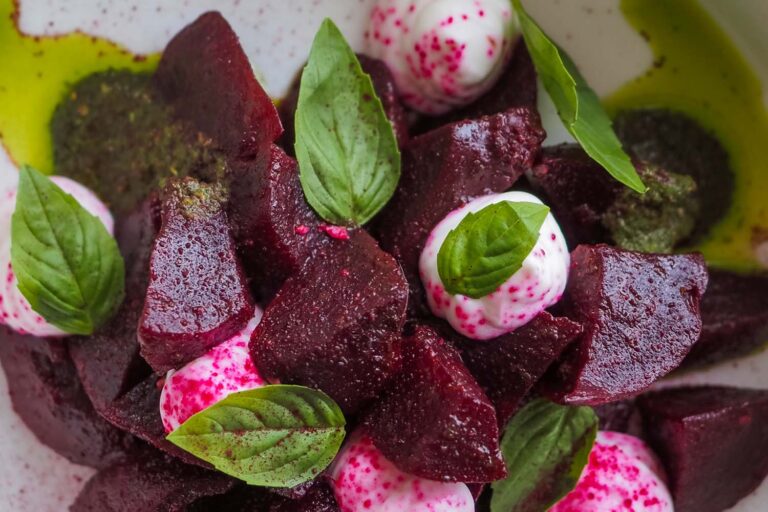
Beets are one of the sturdier vegetables in the produce drawer. That’s exactly why people tend to forget about them until they turn up soft, wrinkled, or worse. The good news is that beets are forgiving, as long as you handle one specific part of the plant correctly from the start.
Do beets go bad?
The short answer: Yes, eventually, but fresh beets last far longer than most vegetables if you store them right. The single biggest factor is the greens. Left attached, the leafy tops pull moisture out of the root, causing it to soften and shrivel much faster. Trim the greens to about 1 to 2 inches above the beet before refrigerating, and whole beets can keep for about 2 to 3 weeks in a cold, humid crisper drawer. Cooked beets are a different clock entirely, generally good for 3 to 4 days refrigerated.
That greens-versus-root distinction matters just as much if you’re dealing with a jar instead of a bunch. If pickled beets are more your speed, our guide to pickled beet shelf life covers how vinegar changes that timeline entirely. Beets show up in more than just borscht. If you want to actually cook with them, our beet benefits guide gets into why they’re worth the counter space, staining and all. Speaking of which, if a beet has already left its mark, our guide to getting beet stains out of clothes is worth bookmarking. Save it before you cut your first one.
At a Glance
| Fresh, whole, greens trimmed | About 2 to 3 weeks, refrigerated |
| Fresh, with greens still attached | Days, not weeks; greens draw out moisture |
| Beet greens on their own | 2 to 3 days refrigerated |
| Cooked beets | 3 to 4 days refrigerated |
| Fresh, in a true root cellar | 2 to 4 months, per Ohio State Extension |
Key Takeaways
- South Dakota State University and Ohio State Extension recommend trimming beet tops to about 1 to 2 inches above the root before storage. Doing so meaningfully extends how long the beet itself keeps.
- Properly stored at 32 to 40°F with high humidity, whole trimmed beets keep for about 2 to 3 weeks, per SDSU, Ohio State, and UMaine Extension. Beet greens are far more perishable and hold up for only a couple of days on their own.
- Cooked beets follow the same general rule as most cooked vegetables: the USDA recommends eating refrigerated leftovers within 3 to 4 days.
- Beets “bleeding” a deep red juice when cut, or a cutting board and your hands staining, is completely normal and has nothing to do with spoilage. It’s just betalain, the pigment that gives beets their color.
- Real spoilage looks and smells different from normal aging. Soft, slimy patches, visible mold, or a sour, fermented smell are the signs to actually watch for, not a little surface wrinkling.
- Picking a good beet at the store matters too: Ohio State University Extension recommends firm, smooth, round beets, and skipping anything wilted, flabby, or shriveled.
Why Beets Last So Much Longer Than Their Greens
How to Pick Good Beets at the Store
Shelf life starts with what you buy. Ohio State University Extension recommends choosing firm, round beets with a smooth surface and a slender tap root, and skipping anything wilted, flabby, rough, or shriveled. SDSU Extension adds a size guideline: beets are ready at golf-ball size, 1 to 3 inches across. The smaller end of that range, 1 to 2 inches, is best if you plan to pickle or can them whole, since larger beets get tougher and more fibrous. If the greens are still attached, badly wilted or yellowed leaves are a sign the beet has been sitting around, even if the root itself still looks fine.
How Long Do Beets Actually Last?
Fresh, Whole Beets (Greens Trimmed)
Store trimmed beets loose or in a perforated bag in the crisper drawer, ideally in the 32 to 40°F range with high humidity. SDSU puts that figure at 98 to 100 percent for bunched beets in cool storage, and puts the realistic refrigerator shelf life at around 2 weeks. UMaine Extension says up to 3 weeks in a perforated bag, kept separate from the greens. Figure on about 2 to 3 weeks overall. A true root cellar goes further. Ohio State University Extension says beets held at 32 to 40°F and 90 to 95 percent humidity in a cold, humid cellar or pit can last 2 to 4 months. That’s the traditional reason beets have a reputation as a good keeper.
Fresh Beets With Greens Still Attached
If you haven’t trimmed the tops yet, treat the clock as running much faster. The greens will wilt within a couple of days regardless, and they’ll take some of the root’s moisture and quality down with them the longer they stay attached. Trim them as soon as you get the beets home, even if you don’t plan to cook right away.
Beet Greens
Beet greens are a vegetable in their own right, closer to chard in how they behave than to the root they came from. Store them separately, ideally wrapped loosely and refrigerated, and plan to use them within 2 to 3 days for the best texture and flavor, per UMaine and SDSU Extension.
Cooked Beets
Once beets are roasted, boiled, or steamed, they move onto the same timeline as most other cooked vegetables. The USDA recommends eating refrigerated leftovers within 3 to 4 days, and cooked beets fit comfortably in that window. That applies whether you’re storing them plain or in a salad. Leftover borscht falls under the same 3 to 4 day refrigerated rule, or 3 to 4 months frozen, since it’s a cooked leftover rather than a plain vegetable. For longer storage, plain cooked beets freeze well. University of Nebraska–Lincoln Extension puts frozen vegetables at 8 to 12 months of high quality at 0°F, and that’s a reasonable figure for plain cooked beets too.
Freezing Raw Beets
Skip the quick blanch you’d use for most vegetables. The National Center for Home Food Preservation specifically calls for cooking beets through before freezing them, not a brief dip in boiling water. Trim the tops first, leaving about 1/2 inch of stem and the tap root attached so the color doesn’t bleed out during cooking. Boil small beets 25 to 30 minutes or medium beets 45 to 50 minutes, then cool promptly in cold water. Only then peel and remove the stem and tap root, cut into slices or cubes, and pack with 1/2 inch of headspace before freezing. NCHFP’s method fully cooks the beets before freezing rather than using a quick blanch. Skipping that step leaves more raw enzyme activity behind, which is part of why freezing truly raw, uncooked beets isn’t a method NCHFP recommends.
Signs Something Is Actually Wrong
- Soft, slimy, or mushy patches on the root, rather than the firm texture a good beet should have throughout.
- Visible mold, especially fuzzy white, gray, or black growth on the skin or at the cut ends.
- A sour, fermented, or otherwise off odor, distinct from beets’ normal earthy smell.
- Deep, dark discoloration or a wrinkled, deflated look throughout the whole root, not just at the surface. This points to significant moisture loss and decline rather than normal aging.
Normal Changes That Don’t Mean It’s Bad
- Deep red juice or staining when you cut into a beet, on your hands, a cutting board, or your countertop. That’s betalain pigment, not a sign of decay.
- A little surface wrinkling on the skin after a week or two, especially if the greens weren’t trimmed right away.
- Slightly duller color on the outside after storage, while the interior still looks firm and vivid when cut.
How to Store Beets Properly
- Trim the greens to about 1 to 2 inches above the root as soon as you get beets home. Do this even if you’re not cooking them right away.
- Store trimmed beets in the crisper drawer, loose or in a perforated bag, to hold in humidity without trapping too much moisture.
- Keep beet greens separate from the roots, and use them within a couple of days for the best quality.
- Don’t wash beets before storing them. Ohio State and UMaine Extension both say to store them unwashed; excess surface moisture speeds up softening and mold, so wash them right before you cook.
- Refrigerate cooked beets within 2 hours of cooking, per USDA guidance, and use them within 3 to 4 days.
- Freeze cooked beets if you want to hold onto them longer, for about 8 to 12 months of good quality. Peel and slice or dice first for easier use later.
Beet Storage: Practical Guidance
| Form | Where | How Long / Notes |
|---|---|---|
| Fresh, greens trimmed | Refrigerator crisper | About 2 to 3 weeks, per SDSU, Ohio State, and UMaine |
| Fresh, greens attached | Refrigerator crisper | Trim promptly; greens wilt within days |
| Beet greens | Refrigerator | 2-3 days for best quality |
| Cooked beets | Refrigerator | 3-4 days per USDA leftover guidance |
| Plain cooked beets | Freezer | 8-12 months good quality, per UNL Extension |
| Plain canned beets, unopened | Pantry | 2-5 years per USDA |
| Plain canned beets, opened | Refrigerator | 3-4 days per USDA |
Figures reflect SDSU, Ohio State, and UMaine Extension guidance on table beet storage, alongside USDA guidance on cooked leftovers and canned goods.

Do Beets Go Bad FAQ
Should I remove the greens before storing beets?
Yes, and promptly. SDSU and Ohio State Extension recommend trimming the tops to about 1 to 2 inches above the root. Leaving them attached pulls moisture out of the beet and shortens its shelf life considerably.
Why did my beet turn my hands and cutting board red?
That’s betalain, the natural pigment that gives beets their color. It stains easily but isn’t a sign of spoilage. If it ends up on fabric, see our guide to getting beet stains out of clothes for what actually works.
Is it safe to eat a beet that’s gone soft or wrinkled?
A little surface wrinkling after a couple of weeks is normal moisture loss and usually still fine to cook with. Soft, slimy, or mushy patches, especially combined with an off smell, are a different story and mean it’s time to toss it.
Do beets need to be refrigerated?
For most kitchens, yes. A cold, humid environment like a crisper drawer or root cellar is what gives beets their long shelf life. Left at room temperature, they’ll soften and lose quality considerably faster.
Can you freeze fresh, raw beets?
Not without cooking them first. See “Freezing Raw Beets” above for NCHFP’s exact method, boiling small beets 25 to 30 minutes or medium beets 45 to 50 minutes before cooling, peeling, and packing. Skipping that step is why plain raw freezing isn’t a method NCHFP recommends.
How long do beet greens last compared to the root?
Much less time. Beet greens are best used within 2 to 3 days, while a properly trimmed root can hold up for about 2 to 3 weeks. Treat them as two separate ingredients with two separate clocks.
How long do plain canned beets in water and salt last?
Longer than either fresh or pickled beets, but the storage rules change once you open the can. USDA’s shelf-stable food chart lists beets by name among low-acid canned goods, alongside carrots and green beans. That puts them at about 2 to 5 years unopened in a cool pantry, then 3 to 4 days refrigerated once the can is open. That’s a different product from pickled beets, which use added vinegar to reach a much longer opened shelf life through acidity rather than the can’s seal alone.
What about beet powder or beet crystals?
That’s a different product entirely, made by dehydrating and grinding beets into a concentrated powder rather than storing the whole root. Properly sealed, it behaves like other dried powders and holds up for a long time at room temperature in a cool, dry pantry. It’s a common way to work beet nutrition into recipes without dealing with fresh-beet prep or staining. Our beet-turmeric refresher, beet and pineapple granita, and pre-workout smoothie all use beet crystals from Flora Health. Our Flora Health guide rounds up more ways the brand uses them.
Further Reading
- Do Pickled Beets Go Bad? Shelf Life for Jars, Cans, and Homemade
- 6 Amazing Benefits of Beets + A Chocolate Cupcake & Beet Crystal Recipe
- Immune-Boosting Beet-Turmeric Refresher
- Beet and Pineapple Granita
- Pre-Workout Power Smoothie Recipe
- Flora Health Products: Uses, Benefits, Recipes & Wellness Guides
- How to Get Beet Stains Out of Clothes
- 27 Foods That Help Lower Blood Pressure
- Does Sauerkraut Need to Be Refrigerated?
- Do Pickles Go Bad or Expire?
- Complete Food Storage Guide: 120+ Foods

Better Living may earn commissions through affiliate links and may occasionally feature sponsored or partner content. If you make a purchase through our links, we may receive a small commission at no cost to you.