
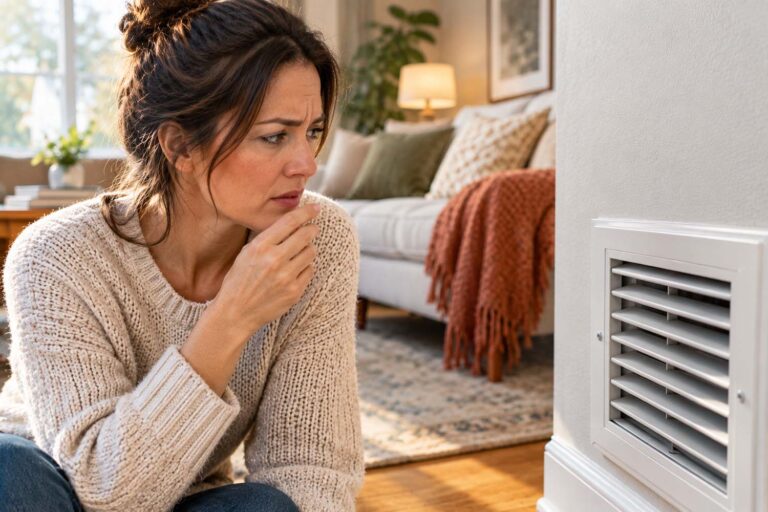
It’s the first cold night of the season. You switch the thermostat to heat, and within a few minutes the whole house smells like something is scorching. A burning smell when you turn on the heat can be alarming, but a temporary dusty odor during the first heating cycle of the season is often normal.
Here’s what’s actually burning, how long the smell should last, how to clear it faster, and the handful of smells that mean you should turn the heat off and call for help. It applies whether you have a gas furnace, an electric furnace, a heat pump, radiators or a plug-in space heater.
What that burning smell actually is
While your heating system sat unused, dust may have settled on components that become hot during operation. In furnaces and electric heaters, that dust can produce a temporary burning odor when those components heat up. Baseboard heaters, radiators and space heaters can also collect dust on their hot surfaces.
The first time those parts heat up, the dust burns off. If you have central heating, the blower then pushes that smell through every vent in the house, which is why it seems to come from everywhere at once. It smells dry and a little smoky, like a toaster that needs cleaning, and it’s strongest in the first few minutes.
How long the smell should last
According to Carrier, the burning-dust smell usually lasts from about 30 minutes to a few hours the first time the heat runs for the season. It should get weaker over that time, not stronger.
It can also come back briefly after a long stretch of mild weather, or after a renovation that kicked up a lot of dust. If the smell is still going strong after a few hours, or it’s getting worse, something other than dust is going on. Skip to the warning signs below.
How to clear the smell faster
- Open a few windows. Crack windows on opposite sides of the house while the heat runs its first cycle. The cross-breeze carries the smell out instead of letting it settle into curtains and furniture.
- Change the air filter. A clogged filter restricts airflow and allows more dust to accumulate in the system. If you can’t remember the last time you changed it, this is a good time to replace it. Here’s how often to change your HVAC filter.
- Vacuum the vents. Lift off floor and wall register covers, vacuum inside the opening as far as your hose reaches, and wipe the covers before putting them back.
- Dust space heaters and baseboard heaters before you use them. Unplug them, let them cool completely, and go over the fins and grille with a vacuum brush attachment.
- Do the first run on a mild day. Turn the heat on for the first time on a cool afternoon when you can leave the windows open, rather than waiting for the first freezing night when you’ll want everything shut.
To keep the smell from coming back as strongly next year, book a heating tune-up in early fall. A technician can inspect the parts specific to your heating system and check for problems that cause unusual odors.
Smells that mean you should turn the heat off
Burning dust fades on its own. These smells don’t, and each one needs a different response.
Rotten eggs or sulfur
Burning plastic or rubber
This can mean an overheating blower motor or damaged wiring. It can also mean something has fallen onto a heating element or into a vent, like a toy or plastic object. Turn the heat off. If the source isn’t immediately obvious and safe to identify, don’t investigate further. Have the system inspected by a qualified professional.
Hot metal or an electrical smell
A sharp electrical smell usually points to an overheating motor or a wiring problem. Turn the system off at the thermostat and have a professional look at it before you run it again.

Oil or fuel
If you have an oil furnace, a strong oily smell can mean a leak or a burner problem. That’s a job for a technician.
A musty smell that won’t go away
A damp, musty smell that lasts days rather than hours can indicate excess moisture or another problem in or around the HVAC system. Have the source investigated rather than simply masking the odor, and use these tips to remove lingering odors from your home once the source is fixed.
Visible smoke
A quick safety check while you’re at it
- Test your smoke and carbon monoxide alarms. Any heating appliance that burns fuel can produce carbon monoxide if it’s not operating or venting properly, and CO has no smell at all. Your nose can’t warn you about it, but an alarm can. The U.S. Consumer Product Safety Commission recommends CO alarms on every level of the home and outside sleeping areas.
- Clear the space around heaters. Keep anything that can burn, like curtains, bedding, paper and laundry, at least three feet from portable space heaters, per the CPSC’s 3-foot rule. Keep the area around your furnace and other heating equipment clear of combustible materials, and follow the clearance requirements in the manufacturer’s instructions.
- Plug space heaters into the wall. Use a wall outlet, never a power strip, and never run the cord under a rug.
- Don’t store things on or against the furnace. Boxes, cleaning supplies and paint cans don’t belong in the furnace closet. More fire prevention tips here.
The bottom line
A temporary burning-dust smell during the first heating cycle of the season is usually normal. Open a few windows if needed, check the filter, vacuum accessible vents and let the odor dissipate. If the smell lasts more than a few hours, gets stronger, or smells like gas, burning plastic or electrical wiring, turn the heat off and have the system inspected.

Better Living may earn commissions through affiliate links and may occasionally feature sponsored or partner content. If you make a purchase through our links, we may receive a small commission at no cost to you.