
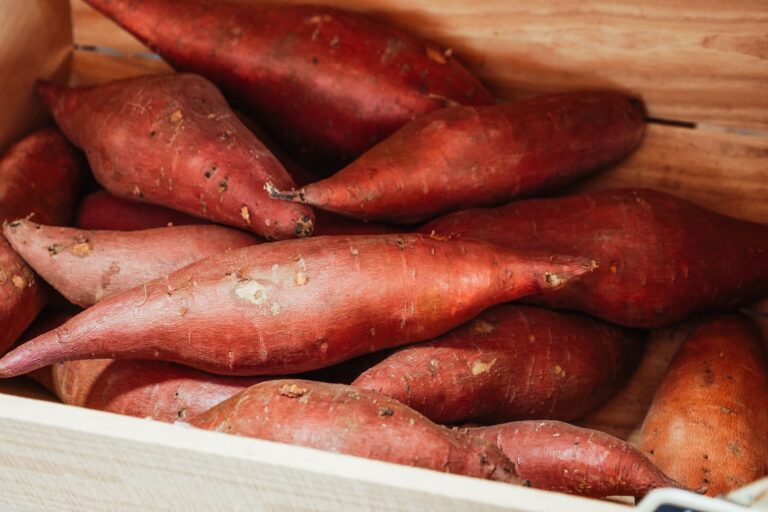
Sweet potatoes may look alike in the bin, but texture and flavor can vary a lot by type. Knowing how to pick a good sweet potato comes down to a few checks you can make in seconds: how it feels, how the skin looks and which type suits your recipe. Here is what Extension programs at Clemson, UMass, Iowa State, Minnesota, South Dakota State and other universities say to look for, plus how to store them once you get home.
What to look for at the store
1Firm, with no soft spots
Clemson Cooperative Extension’s sweet potato factsheet says to look for firm, well-shaped sweet potatoes with clean, smooth skins and to avoid any with soft spots or bruises. The University of Minnesota Extension’s Real Life, Good Food guide also says to choose firm ones without cracks, bruises or soft spots.
Do this: press along the whole length, including the ends. That is our own tip, not an Extension rule. Put back any that feel soft or mushy.
2Smooth, clean, evenly colored skin
South Dakota State University Extension’s grocery store guide says to choose firm, smooth roots with bright, evenly colored skins and to avoid holes or cuts, which are a source of decay. UMass Extension’s produce spotlight says to choose firm, dry, smooth sweet potatoes without cuts, sprouts, soft spots or bruises. Minnesota adds cracks to the list.
Do this: turn each one over and check the underside for bruises and cuts. Skin color varies by variety, so look for even color that is normal for that type.
3No sprouts, and few eyes or dents
UMass lists sprouts among the things to avoid, and Iowa State University Extension’s SpendSmart guide says to choose sweet potatoes that are firm and smooth with few eyes (dents), and to avoid any that are cracked or have soft spots or sprouts. Sprouts are a reason to choose another sweet potato at the store.
Do this: choose firm, smooth roots with few dents, and skip those with sprouts, cracks or soft spots.
4The right type for your recipe
A useful starting point is the difference between drier and moister types. South Dakota State says pale yellow types have drier flesh than the orange varieties, while dark orange types are moist, plump and sweeter. These are broad types, and individual varieties differ. UMass names four common varieties: Beauregard, the most common all-purpose type, with orange flesh and skin; Jewel, with light orange skin and orange flesh and less sweet than Beauregard; Japanese Satsuma, with dark purple skin, pale yellow flesh and a slightly nutty flavor; and Garnet, with dark reddish-purple skin and very moist flesh.
Do this: for mashed sweet potatoes or pie, reach for a dark orange type. Sources describe the drier, paler types as a different texture, so choose by how you plan to cook.
5Know what “yam” means on the label
In U.S. grocery stores, the soft orange sweet potatoes often sold as yams are still sweet potatoes. The University of Illinois Extension’s sweet potato and yam explainer says true yams are a different plant family and are mainly found at ethnic markets, and that the USDA requires the label “sweet potato” when the word “yam” is used for sweet potatoes. Mississippi State University Extension’s sweet potatoes vs. yams article says true yams are less common in mainstream U.S. grocery stores, and notes that canned “yams” list sweet potatoes as the first ingredient.
Do this: if a bin says “yams,” look for the words “sweet potato” on the sign or bag.
How to store sweet potatoes after you buy them
Clemson, UMass and South Dakota State all say to keep raw sweet potatoes out of the refrigerator. Clemson says cold can cause dark spots and off flavors, UMass says refrigeration can make the center hard, and South Dakota State says it causes a hard core and an undesirable taste. Keep them in a cool, dark, well-ventilated place such as a pantry, in an open bag or container that allows airflow. UMass says to store them unwashed.
These are quality guidelines, not guarantees. A warm kitchen shortens them, so check your sweet potatoes often:
How long do sweet potatoes keep?
- At room temperature: 5 to 7 days per Iowa State, up to 10 days in a cool, dark, ventilated space per the University of Minnesota, and best used within two weeks per UMass.
- In a cool, dark spot at 50°F to 60°F: about a month, per Iowa State.
- Cooked: refrigerate within 2 hours and use within 3 to 4 days, per USDA. UMass suggests freezing cooked sweet potatoes and using them within 10 to 12 months for best quality.
For growers storing a harvest, Washington State University Extension’s curing and storage guide says curing, a warm, humid rest after harvest, heals wounds, extends storage life and improves flavor as starch converts to sugar. It also says cured sweet potatoes should be stored at 55°F to 60°F, that chilling injury occurs below 55°F and that sprouting occurs above 60°F. That explains why a cool pantry works better than either a fridge or a warm kitchen counter. For cooked leftovers, USDA’s leftovers guidance says to refrigerate within 2 hours, or within 1 hour if it is above 90°F, keep them at 40°F or below and use them within 3 to 4 days. Frozen leftovers stay safe indefinitely, USDA says, though quality declines over time. See also our guide to how long leftovers last. Regular potatoes have their own rules, covered in our guide on whether potatoes need to be refrigerated.
Planning a Thanksgiving menu?
Sweet potatoes are a staple of the holiday table, and buying them early gives you time to store them properly. Round out the menu with our roasted Brussels sprouts with balsamic and bacon and fresh cranberry sauce with orange and cinnamon, then finish with maple pumpkin pie or maple pecan pie bars. Choosing a main course? See how to pick a turkey, and plan your drinks with our Thanksgiving wine pairing guide. Hosting this year? Our Thanksgiving home cleaning checklist covers the prep.
Sweet potato questions, answered
How do you pick a good sweet potato at the store?
Choose firm, smooth sweet potatoes with clean, evenly colored skin and no soft spots, bruises, cracks, cuts or sprouts, according to Clemson, UMass, Iowa State and South Dakota State Extension.
Are yams and sweet potatoes the same thing?
No, but what U.S. stores sell as yams are almost always sweet potatoes. University of Illinois Extension says true yams are a different plant family, and the USDA requires the label “sweet potato” when the word “yam” is used for sweet potatoes.

What does a bad sweet potato look like?
Throw out sweet potatoes that are mushy, moldy or smell sour. At the store, Clemson says to avoid soft spots and bruises, and South Dakota State says holes and cuts are a source of decay. A small blemish does not necessarily make a sweet potato unusable, but a soft or moldy one should go.
Should I buy small or large sweet potatoes?
The Extension sources we read do not set a size rule. The Extension sources we read do not set a size rule, so choose a size that suits your recipe. South Dakota State notes that about three medium sweet potatoes make 2 cups cooked and mashed.
Should sweet potatoes go in the refrigerator?
Not whole and raw. Clemson, UMass and South Dakota State all say to keep whole, raw sweet potatoes out of the fridge, because cold can cause dark spots, a hard center and off flavors. Cooked sweet potatoes can go in the fridge and should be used within 3 to 4 days, per USDA.
Can you eat sweet potato skin?
Yes. South Dakota State describes the skin as thin and edible, and the University of Minnesota says it can be left intact or peeled depending on the recipe. Rinse them under running water first and pat dry.
Can you eat a sweet potato that has sprouted?
Iowa State and UMass both say to avoid sprouts when choosing sweet potatoes, so buy unsprouted ones for better quality. We did not find Extension guidance on eating one that sprouts at home, so we cannot give a rule. Discard any sweet potato that is soft, shriveled or moldy.
How long does it take to bake a sweet potato?
How long should you bake a sweet potato? Sources differ by size. Clemson says to prick the skin and bake at 400°F for 40 to 50 minutes until soft, and Iowa State says 45 minutes to 1 hour at 400°F. Clemson gives 4 to 6 minutes on high in the microwave for one 8-ounce sweet potato, and Iowa State gives 5 to 8 minutes, turning halfway. Bake until tender in the center.
Are sweet potatoes healthy?
UMass calls sweet potatoes an excellent source of vitamins A and C and a good source of fiber, potassium and vitamin B6.
The bottom line
Look for firm, smooth, evenly colored sweet potatoes with no soft spots, cracks, cuts or sprouts, pick the type that suits your recipe and store them cool, dark and out of the fridge. Store whole raw sweet potatoes unwashed in a cool, dark place with airflow, and plan to use them within about a week at room temperature. They can keep longer in a genuinely cool spot.

Better Living may earn commissions through affiliate links and may occasionally feature sponsored or partner content. If you make a purchase through our links, we may receive a small commission at no cost to you.