
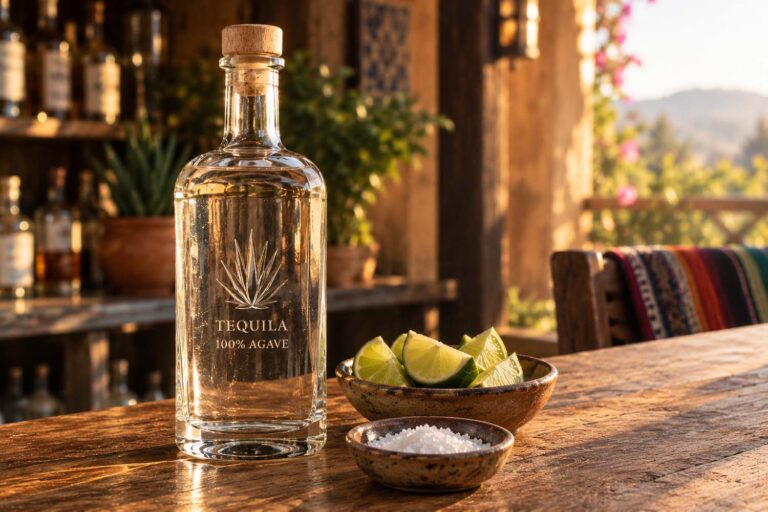
You find a bottle of tequila in the back of the cabinet, maybe left over from a party or a trip to Mexico years ago. The seal might already be broken, or it might still be factory-tight. Does tequila go bad?
The short answer: Unopened tequila has an indefinite shelf life, full stop. Once opened, Patrón cites about a year as the window for peak flavor, but that’s a conservative “tastes exactly like it should” benchmark, not a point where the bottle turns. A well-sealed bottle with decent fill left can stay perfectly enjoyable for 5, 10, even 15-plus years; it just won’t taste quite as sharp as it did the day it was opened. It never becomes unsafe to drink either way.
If you’re mostly reaching for tequila for cocktails, our spicy jalapeño margarita and deep-fried tequila shots are both good ways to use up a bottle before it loses its edge. And since tequila and Mexican food are a natural pairing, a bottle that’s a little past its peak is still perfectly good served alongside authentic Mexican steak tacos or chicken enchilada boats, where the meal does most of the talking.
For more shelf-life guides across the rest of your bar cart, check out our full Bar & Spirits Guide.
Key Takeaways
- Unopened tequila: Indefinite shelf life. Sealed and stored properly, it doesn’t expire.
- Opened tequila: Patrón’s own guidance cites about a year for peak flavor, but that’s a conservative benchmark, not a cutoff. A mostly-full, well-sealed bottle commonly stays enjoyable for 5 years or more; some drinkers report bottles well past a decade that still taste fine.
- Aged tequilas (reposado, añejo) have more to lose than blanco. They pick up vanilla, caramel, and spice notes from oak barrels, and those delicate compounds fade faster with air exposure than blanco’s simpler profile.
- “Expired” tequila won’t make you sick. Its roughly 40% alcohol content prevents bacterial or mold growth, so a bottle that’s lost quality is still safe to drink.
- Skip the fridge and freezer. Patrón specifically advises against both, since cold temperatures mute tequila’s aroma and can make its texture thick and syrupy.
- There’s no federal expiration-date requirement. Like other distilled spirits, tequila isn’t required to carry a shelf-life or expiration date under TTB labeling rules.
Why Aging Type Matters More for Tequila Than for Vodka
Blanco, Reposado, and Añejo Aren’t Interchangeable Once Opened
Tequila’s roughly 40% alcohol content works the same way it does in any spirit: it’s inhospitable to the bacteria and mold that spoil food, which is why a sealed bottle doesn’t need refrigeration or a use-by date. What changes the picture is that tequila comes in several distinct styles with very different amounts of flavor complexity to begin with.
Blanco (or plata) tequila is unaged, bottled shortly after distillation, and closest to vodka in how little there is to oxidize. Reposado spends roughly 2 to 11 months in oak barrels, and añejo spends 1 to 3 years, picking up wood-derived compounds like vanilla and caramel along the way, the same way whiskey does.
That barrel-derived complexity is exactly what oxidizes fastest once a bottle is opened. The delicate aromatics reposado and añejo develop in the barrel are more fragile than blanco’s simpler agave-forward profile, so an opened bottle of aged tequila has more to lose, and may show it sooner, than an opened bottle of blanco.
How Long Tequila Actually Lasts
| Type | Unopened | Opened |
|---|---|---|
| Blanco / Plata | Indefinite | ~1 year for peak flavor; often good well beyond that |
| Reposado | Indefinite | ~1 year for peak flavor; aromatics fade first after that |
| Añejo / Extra Añejo | Indefinite | ~1 year for peak flavor; most delicate notes fade first after that |
The 1-year figure reflects Patrón’s own guidance for peak flavor, not a regulated standard or a hard cutoff. Fill level and seal quality matter more than the calendar: a bottle that’s mostly full and tightly capped commonly stays good for years past that window, while a nearly-empty, loosely-sealed bottle will show change sooner. Aged tequilas tend to lose their delicate oak notes first within either timeframe, since they have more complexity to begin with.
Signs Your Tequila Has Lost Quality
When It’s Past Its Best
A flat or muted smell. Fresh tequila should have a bright, distinct aroma of agave, and citrus or spice depending on the style. If it smells like flat cardboard or barely smells at all, oxidation has taken hold.
Color changes in blanco. Blanco tequila should stay perfectly clear. Any yellow or brown tint usually means it’s been exposed to too much light or heat, not a sign of normal aging.
Cloudiness or sediment in any style. This isn’t normal for tequila and suggests contamination or a compromised seal, not just age.
A harsh, one-note alcohol burn replacing what used to be a smoother, more balanced sip. This is common in aged tequilas once the oak-derived notes have faded, leaving mostly the alcohol behind.
None of these signs make tequila unsafe. They just mean it’s better suited for a margarita or another mixed drink, where other ingredients can cover a dulled flavor, than for sipping straight.
How to Store Tequila So It Lasts
Storage Best Practices
Keep the bottle sealed tightly between pours, and store it upright rather than on its side. Patrón notes that upright storage avoids prolonged contact between the spirit and the cork, unlike wine, which actually benefits from that contact.
Store in a cool, dark place away from direct sunlight and heat, ideally around 59 to 68°F. A cabinet or pantry shelf works better than an open bar cart near a window.

Skip the fridge and freezer for long-term storage. Cold temperatures mute the aromatics that make tequila worth drinking in the first place, and freezing can make the texture thick and syrupy. If you like it cold, chill it briefly right before serving instead.
Transfer a mostly-empty bottle to a smaller container if you’re not going to finish it soon. Less headspace means less oxygen in contact with the remaining tequila, which slows the oxidation that dulls its flavor.
What to Do With a Bottle You Don’t Want Anymore
There’s rarely a real disposal question with tequila, since even a bottle that’s lost quality is still safe to drink or use in cooking. If you genuinely need to pour some out, a small amount diluted with plenty of water down the drain is fine; ethanol at typical drinking concentrations isn’t classified as hazardous waste. An emptied bottle is just glass for your regular recycling.
Frequently Asked Questions
Does tequila expire?
Not in the way food does. Unopened tequila lasts indefinitely, and Patrón cites about a year as the window for peak flavor once opened. That’s a conservative “tastes exactly as intended” benchmark rather than an expiration point, though; a mostly-full, well-sealed bottle commonly stays perfectly good well beyond that, sometimes for a decade or more. It doesn’t become unsafe after that, it just loses some of the sharpness it had on day one.
Does tequila get better with age once it’s bottled?
No. The aging that gives reposado and añejo their character happens in oak barrels before bottling. Once tequila is bottled, that process is finished, and sitting in glass, whether sealed for one year or twenty, doesn’t add flavor or complexity. Opened tequila can only slowly lose quality from oxidation, not gain it.
Is it bad to put tequila in the freezer?
It won’t ruin it, but it’s not recommended for quality reasons. Patrón notes that most home freezers aren’t even cold enough to freeze tequila, since its freezing point is around -10°F, but the cold does mute its aroma and can make the texture thick and syrupy. If you like tequila cold, a brief chill in the refrigerator right before serving is the better call.
Further Reading
- Does Vodka Go Bad?
- Spicy Jalapeño Margarita
- Deep-Fried Tequila Shots
- Authentic Mexican Steak Tacos
- Chicken Enchilada Boats
- St. Patrick’s Day Cocktails

Better Living may earn commissions through affiliate links and may occasionally feature sponsored or partner content. If you make a purchase through our links, we may receive a small commission at no cost to you.