
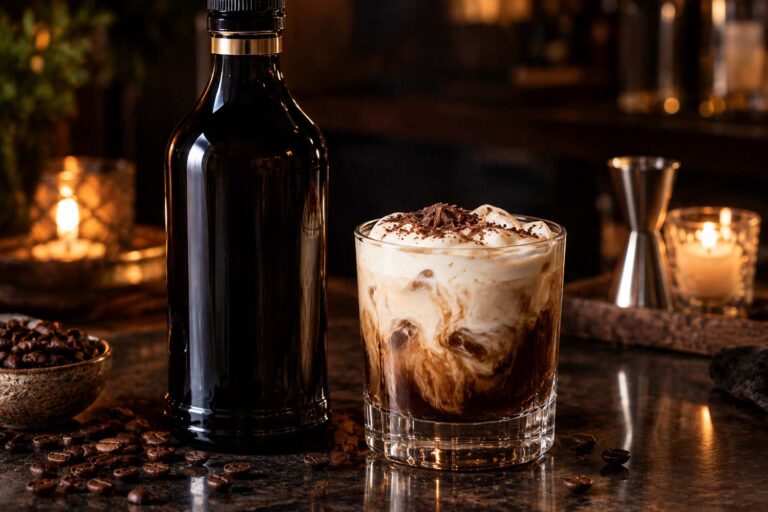
You find a bottle of Kahlúa in the back of the cabinet, maybe left over from a batch of espresso martinis months ago. Does Kahlúa go bad?
The short answer: Eventually, yes, but it’s far more durable than you’d guess from a coffee-and-sugar liqueur. Kahlúa’s own FAQ recommends a 4-year shelf life for the Original, unopened, and even beyond that it says the product remains good for years more, just with the coffee flavor gradually fading. It doesn’t need refrigeration, opened or not. What actually changes over time is the intensity of the coffee taste, not the safety of the bottle.
For more shelf-life guides across the rest of your bar cart, check out our full Bar & Spirits Guide.
Key Takeaways
- Kahlúa Original: Kahlúa’s own guidance recommends a 4-year shelf life, and says the product stays good well beyond that, just with less coffee punch.
- Flavored and ready-to-drink versions are shorter-lived, for different reasons. Flavored variants are commonly cited at around 2 years since they have more delicate flavor compounds to lose. Ready-to-drink Kahlúa cocktails, like the premixed Mudslide or White Russian, are shorter still, around 1 year, because most of them actually contain real dairy cream, unlike the base liqueur.
- Refrigeration isn’t required, according to Kahlúa itself, either before or after opening. A cool, dark place out of direct sunlight is what actually matters.
- Don’t put it in the freezer. At roughly 20% ABV, Kahlúa is well below the alcohol content that keeps vodka or gin liquid in a home freezer, so it will turn into a slushy, hard-to-pour mess instead.
- “Expired” Kahlúa won’t make you sick. Its alcohol and sugar content keep it inhospitable to the bacteria that cause food poisoning, so the worst outcome is a duller coffee flavor.
- Some settling or separation is normal over a long time, especially in a bottle that’s been sitting a while; it’s usually the sugar and coffee solids, not spoilage.
Why Kahlúa Fades Instead of Failing
A Rum-Based Liqueur With Real Coffee to Lose
Kahlúa is a rum-based liqueur flavored with coffee and sweetened with sugar, typically bottled around 20% ABV, well below the roughly 40% of a base spirit like vodka or rum on its own. That’s still comfortably above the concentration where bacteria or mold can take hold, which is why Kahlúa isn’t a food-safety concern the way a dairy-based liqueur like Baileys can be. What it doesn’t have is the same resistance to flavor loss.
Real coffee extract contains delicate aromatic compounds that fade with time and air exposure, the same way brewed coffee itself goes stale on a counter, just on a much slower timeline thanks to the sugar and alcohol acting as a partial preservative. This is why Kahlúa’s own guidance draws a distinction between “safe to drink” and “still has its full coffee punch”: the bottle doesn’t fail, it just gradually mellows.
This is only true for the base liqueur, though. Kahlúa’s ready-to-drink cocktails, like the premixed Mudslide, White Russian, and Espresso Martini, most often contain real dairy cream as part of the finished drink. That changes the calculation entirely: those bottles carry a real spoilage risk closer to a dairy-based liqueur like Baileys than to Kahlúa Original, which is exactly why they’re rated for a much shorter shelf life.
How Long Kahlúa Actually Lasts
| Type | Shelf Life |
|---|---|
| Kahlúa Original | 4 years per Kahlúa’s own guidance; good well beyond that with fading coffee flavor |
| Flavored Kahlúa variants | Commonly cited around 2 years |
| Ready-to-drink Kahlúa cocktails | Commonly cited around 1 year |
These figures reflect general guidance for the product line, not a hard safety cutoff for the base liqueur. Kahlúa’s own FAQ specifically frames its 4-year figure as a recommendation for best flavor, not an expiration date, and notes the product remains safe well past it. Ready-to-drink Kahlúa cocktails are the exception, since most contain real dairy and should be treated more like a perishable product.
Signs Your Kahlúa Has Lost Quality
When It’s Past Its Best
A muted or weak coffee smell and taste. This is the main thing that changes with time. Fresh Kahlúa has a strong, distinct coffee aroma; an old bottle can taste more like sweet syrup with only a faint coffee note left.
Sediment, cloudiness, or uneven coloring in a bottle that’s been sitting a long time. This is usually just the sugar, coffee solids, or other ingredients settling or separating, not a sign the liqueur is dangerous, though it’s worth a smell check before using.
Crystallized sugar around the cap or inside the bottle, especially if it’s been through temperature swings. This affects texture more than safety and is a sign the bottle has seen some rough handling.
A sour or genuinely off smell is rare but is the one sign worth taking seriously and discarding the bottle over, as opposed to the more common, harmless flavor fading.
How to Store Kahlúa So It Lasts
Storage Best Practices
Store in a cool, dark place away from direct sunlight and heat, whether the bottle is open or not. This is Kahlúa’s own top recommendation for getting the longest life out of a bottle.
Refrigeration is optional, not required. It won’t meaningfully extend shelf life, but it’s fine to chill Kahlúa if you prefer to serve it cold.
Keep the original cap tightly sealed between pours to limit air exposure, which is what speeds up the coffee flavor fading.
Skip the freezer. At around 20% ABV, Kahlúa doesn’t have the alcohol content to stay fully liquid at typical freezer temperatures, so it turns into a slushy, difficult-to-pour mess instead of just getting cold.

A Faded Bottle Still Has a Use
Kahlúa that’s lost its sharp coffee punch is still perfectly good for cooking and baking, where a mellower flavor is often welcome anyway. It works well stirred into brownie or cake batter, drizzled over ice cream, or added to a marinade or barbecue sauce for a subtle depth of flavor. This is a good way to use up an older bottle that’s not quite exciting enough for an espresso martini anymore, rather than pouring it out.
Frequently Asked Questions
Does Kahlúa need to be refrigerated?
No. Kahlúa’s own FAQ states plainly that the product doesn’t need refrigeration, whether the bottle has been opened or not. A cool, dark place out of direct sunlight is what actually preserves its quality; the fridge is optional and mostly a matter of personal serving preference.
Is it safe to drink old Kahlúa?
Yes, in almost every case. Kahlúa’s alcohol and sugar content keep it resistant to the kind of bacterial growth that would make a food or drink unsafe. An old bottle is far more likely to simply taste weaker and less coffee-forward than it used to, rather than pose any health risk. A genuinely sour or off smell is rare and would be the one reason to discard a bottle rather than just accept a milder flavor.
Can you use expired Kahlúa in baking?
Yes, and it’s one of the best uses for a bottle that’s lost some of its punch. A milder, less intense coffee flavor often works fine in baked goods, desserts, or sauces, where the Kahlúa is one ingredient among several rather than the star of the drink. As long as it doesn’t smell sour or off, an older bottle is generally a good candidate for cooking rather than sipping.
Do the ready-to-drink Kahlúa cocktails follow the same rules?
No, and this is worth knowing before you assume a bottle of premixed Kahlúa Mudslide or White Russian behaves like the base liqueur. Most ready-to-drink Kahlúa cocktails contain real dairy cream as part of the finished drink, which means they carry a genuine spoilage risk closer to a dairy liqueur like Baileys than to plain Kahlúa. Refrigerate these after opening, watch for curdling, separation, or a sour smell, and don’t assume the “it basically never goes bad” logic that applies to Kahlúa Original applies here too.
Further Reading

Better Living may earn commissions through affiliate links and may occasionally feature sponsored or partner content. If you make a purchase through our links, we may receive a small commission at no cost to you.