
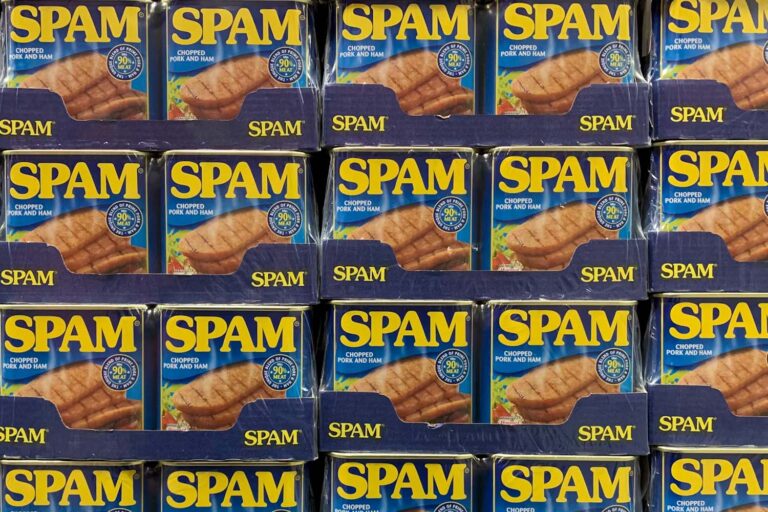
There’s a can of SPAM in your pantry that’s been there long enough you genuinely can’t remember buying it. That’s sort of the point of SPAM. It’s built to sit for years, which is exactly why it became a wartime ration staple and, decades later, a prepper pantry classic. But “built to last” isn’t the same as “lasts forever,” and once you actually open the can, the rules change fast.
Does SPAM go bad?
The short answer: Yes, eventually, but an unopened can of SPAM is a shelf-stable canned meat designed for long-term pantry storage. Hormel prints a best-by date on the bottom of every can rather than an expiration date; go by that date. USDA gives unopened canned meat generally 2 to 5 years, which is a reasonable ballpark here. Past the printed date, an intact, undamaged can is still generally safe; quality is what declines. Once opened, treat it like any other opened canned meat: refrigerate it and use it within 3 to 4 days, per USDA guidance for canned meat products. Damaged cans are the real concern. A bulging lid, a dented seam, a leak, or a can that hisses or spurts when opened are signs of spoilage that mean the whole can should be thrown out unopened.
For the refrigeration side of this question, see our companion post: does SPAM need to be refrigerated. For a complete pantry and canned goods storage reference, see our Food Storage Guide, and for another shelf-stable canned food with its own set of spoilage signs, see does canned pumpkin go bad.
📋 Does SPAM Go Bad: At a Glance
| Unopened, pantry | Go by Hormel’s best-by date; USDA gives canned meat generally 2 to 5 years |
| Opened, refrigerated | About 3 to 4 days, per USDA guidance for opened canned meat |
| Freezing (opened) | Fine in a freezer-safe container; don’t freeze in the metal can |
| Real spoilage signs | Bulging lid, seam dent, leak, hissing or spurting on opening |
| Not spoilage | A little gelatin/liquid around the meat, minor surface color change |
🔑 Key Takeaways
- Hormel’s own guidance describes the date on a SPAM can as a “best by” date, not an expiration date, and doesn’t attach a specific number of years to it. An intact, undamaged can past that date is generally still safe; it’s the flavor and texture that decline.
- USDA’s general guidance for low-acid canned meat gives unopened cans 2 to 5 years in the pantry, a reasonable reference point since Hormel doesn’t publish its own year figure.
- SPAM’s six ingredients, pork with ham, salt, water, potato starch, sugar, and sodium nitrite, work together with the canning process to make it shelf-stable, with sodium nitrite specifically helping guard against botulism-causing bacteria.
- Once opened, it’s no longer shelf-stable. Refrigerate it and use it within about 3 to 4 days, per USDA guidance for opened canned meat.
- A bulging lid, a dent along the seam, a leaking can, or hissing or spurting when you open it are signs of spoilage and mean the can should be discarded without tasting it.
Why SPAM Lasts So Long Unopened
SPAM launched in 1937 as a shelf-stable way to get meat to people without refrigeration, and it became a defining part of military rations during World War II for exactly that reason. Hormel says more than 100 million pounds of SPAM were shipped abroad to feed Allied troops. Hormel says the ingredient list has stayed simple: pork with ham, salt, water, potato starch, sugar, and sodium nitrite. The raw mixture goes into vacuum-sealed cans, which are then cooked and cooled for about three hours. It’s the same basic commercial canning process used for other shelf-stable canned goods, and it’s what makes an unopened can resistant to the bacteria that spoil fresh meat.
The sealed commercial canning process is what makes an unopened can shelf-stable. It uses a controlled heat treatment designed to destroy microorganisms of public-health significance, including Clostridium botulinum, the bacteria responsible for botulism, while the hermetic seal prevents the outside environment from contaminating the food afterward. Sodium nitrite, one of SPAM’s six ingredients, is also a curing agent used in other cured meats. By the same general cured-meat chemistry, it adds a supporting layer of protection against that same bacteria, along with giving SPAM its characteristic pink color; Hormel itself describes it only as “a preservative to help retain freshness.” Together, that’s why a properly sealed, undamaged can is shelf-stable for years without refrigeration, and why a damaged seal is the one thing that actually matters for safety.
Hormel’s own consumer FAQ describes this directly: the date on the bottom of a SPAM can is a “best by” date, the date Hormel recommends using the product by, not a hard cutoff at which the can becomes unsafe.
How Long Does SPAM Last
Unopened
An unopened, undamaged can is a shelf-stable canned meat well suited to long-term pantry storage. Hormel’s own guidance treats the printed best-by date as a quality marker rather than a safety cliff, and doesn’t publish a specific number of years. The USDA’s shelf-stable food chart gives low-acid canned meat generally 2 to 5 years unopened, which is a reasonable reference point. Store it in a cool, dry spot, and check the can itself, not just the date, before you open it.
Opened
Once the can is open, SPAM stops being a shelf-stable food and starts behaving like any other cooked, sliced meat. USDA guidance for opened canned meat puts the window at about 3 to 4 days, and that’s a reasonable default here. You can refrigerate leftover SPAM in the opened can itself. USDA notes, though, that transferring unused canned food to a glass or plastic container tends to give better quality and flavor than leaving it in the metal can. Either way, keep it refrigerated rather than on the counter. It works well in a breakfast omelette or alongside eggs in dishes like ham and egg chilaquiles, so working through a can within a few days isn’t usually a stretch.
Flavor Varieties
Hormel sells SPAM in other US flavor varieties beyond Classic, including Lite, Less Sodium, Hot & Spicy, Teriyaki, Hickory Smoke, Jalapeño, and one with Real Hormel Bacon, among others. These follow the same general canning and preservation approach, but ingredient details and sodium or fat content vary by variety, which can influence exactly how it behaves in storage. Check the specific can’s label if you’re working with anything other than Classic.
Licensed and International Versions
SPAM sold outside the US is sometimes produced under license rather than directly by Hormel, and both the recipe and the printed storage instructions can differ. The UK’s licensed “Chopped Pork and Ham” version, for example, is a different recipe: about 89% pork with only 2% ham, plus a stabiliser, flavourings, and sodium ascorbate. A UK retail listing specifies refrigerating and using it within 2 days of opening, a notably shorter window than the general US guidance. If you’re working from a can that isn’t the standard US product, follow the specific instructions printed on that can rather than the figures in this article.
How to Tell If SPAM Has Actually Gone Bad
⚠️ Signs Something Is Actually Wrong
- A bulging or swollen lid: A can that’s puffed out on either end, or feels spongy when pressed, is showing signs of gas production from bacterial activity inside. Don’t open it; discard the entire can.
- A dent along the seam: A small dent on the body of the can that doesn’t affect the seam is usually cosmetic. FSIS describes a deep dent as one you can lay your finger into; a deep dent on or near the seam can damage the seal and let bacteria in, and is worth treating as a real risk.
- Leaking, heavy rust, or a damaged seal: Light surface rust that wipes off is generally fine, but FSIS says to discard a heavily rusted can, since rust can eventually create tiny holes. Any leak or damaged seal means the can’s protective barrier may have failed. Don’t use it.
- Hissing, spurting, or an off smell when you open it: A can that hisses or sprays liquid when opened can indicate a problem with the contents or container, even if you can’t pinpoint the exact cause. The same goes for a smell that’s sour, rancid, or otherwise wrong instead of its normal salty, savory smell. Don’t taste it; discard it.
If a can shows any of these signs, don’t taste the contents to check. These are the same warning signs used across canned goods generally because they can indicate Clostridium botulinum contamination, and botulism is dangerous even in small amounts.
✅ Normal Changes That Are Not Spoilage
- A layer of gelatin or liquid around the meat: This is normal and comes from the meat’s own juices and the canning process, not spoilage.
- Minor color changes near the edges: Some slight discoloration can occur during normal storage without being a sign of spoilage. Pair it with your other senses, though: discoloration alongside an off smell or texture shouldn’t be ignored, even if the can itself looks undamaged.
- A milder flavor in an old can: SPAM well past its best-by date, but from an undamaged can, may simply taste less vibrant than a fresh one.
How to Store SPAM
✅ Storage Rules That Make a Difference
- Store unopened cans in a cool, dry pantry. Extreme heat and repeated temperature swings can shorten how long a can holds up, even though it doesn’t need refrigeration.
- Refrigerate promptly after opening. See our full explanation in does SPAM need to be refrigerated for what that’s based on.
- Move leftovers out of the can. An airtight container, or the can tightly covered with plastic wrap or foil, works better than leaving it loosely covered.
- Freeze opened SPAM only after removing it from the can. Package it in an airtight, freezer-safe container or bag first. If you’re freezing a portion, slicing it and separating the slices with wax paper makes it easier to thaw only what you need.
- Inspect every can before opening it, regardless of the date. A bulging lid or seam dent matters more than how long you’ve had it.

SPAM Shelf Life: Practical Guidance
| Stage | Practical guidance |
|---|---|
| Unopened, pantry | Go by Hormel’s best-by date; USDA gives canned meat generally 2 to 5 years. Inspect the can before opening regardless of the date. |
| Opened, refrigerated | About 3 to 4 days, per USDA guidance for opened canned meat. |
| Opened, frozen | Fine in an airtight, freezer-safe container; don’t freeze it in the metal can. |
| Licensed/international versions | Can differ from US guidance; follow the specific can’s printed instructions. |
Frequently Asked Questions
Does SPAM go bad?
Yes, eventually, but an unopened, undamaged can is a shelf-stable canned meat designed for long-term pantry storage. Hormel’s own guidance frames the printed date as a best-by date rather than an expiration date. Once opened, it behaves like any other cooked canned meat and should be refrigerated and used within about 3 to 4 days.
Can you eat SPAM after the best-by date?
Generally, yes, as long as the can is undamaged, with no bulging, dents along the seam, or leaks. The best-by date reflects Hormel’s estimate of peak quality, not a safety cutoff. Flavor and texture may decline the further past that date you go, but an intact can that passes visual inspection is typically still safe.
How do you know if SPAM has gone bad?
The signs that actually matter are on the can itself before you even open it: a bulging or swollen lid, a dent along the seam, rust that doesn’t wipe off, or any leaking. Once opened, hissing or spurting liquid, an off or sour smell, or a slimy texture are reasons to discard it rather than taste it. Minor gelatin around the meat or slight color variation near the edges of an undamaged can are normal.
Why does SPAM last so much longer than fresh meat?
See “What’s Actually Protecting the Can” above: it comes down to the sealed commercial canning process, with sodium nitrite adding a supporting layer of protection. As long as the seal stays intact, those protections hold for years.
Can you freeze SPAM?
Yes, but remove it from the original can first. Transfer opened SPAM to an airtight, freezer-safe container or bag. If you plan to use it in portions, slicing it and layering wax paper between the slices before freezing makes it easier to thaw just what you need.
What does a bad can of SPAM look or sound like?
A can that’s swollen or feels spongy when you squeeze it is the clearest warning sign, along with a dent along the seam or any leaking. Hissing or spurting liquid when you open a can can indicate a problem with the contents or container, even if the can looked fine from the outside. Don’t taste it to find out; discard it.
Further Reading
- Does SPAM Need to Be Refrigerated?
- Foods You Should Never Freeze
- Foods That Spoil Faster Than You Think
- Dangerous Expired Pantry Staples
- Does Bacon Go Bad?
- Does Ham Go Bad?
- Complete Food Storage Guide: 120+ Foods

Better Living may earn commissions through affiliate links and may occasionally feature sponsored or partner content. If you make a purchase through our links, we may receive a small commission at no cost to you.