
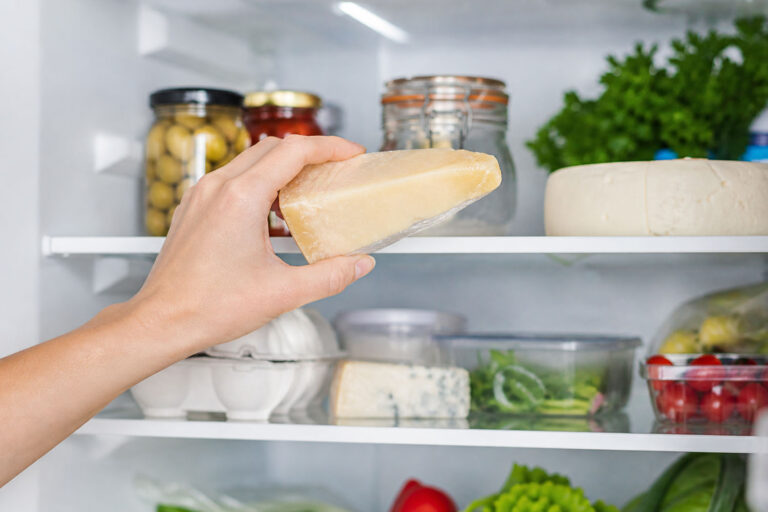
You just bought a wedge of parmesan and are not sure whether it goes in the fridge or back in the pantry alongside the Kraft can. Or you are at a party with parmesan on a cheese board and are wondering how long it can safely sit out. Does parmesan cheese need to be refrigerated?
The short answer: Block and pre-grated refrigerated parmesan cheese must always be refrigerated. The shelf-stable green can does not need refrigeration before opening, but refrigerating after opening extends its best quality significantly and most labels recommend it. Parmesan is one of the most shelf-stable cheeses you can buy, but that does not mean it never needs the fridge.
For a full overview of how dairy and perishable foods compare on shelf life, visit our Complete Food Storage Guide.
Key Takeaways
- Block parmesan: refrigerate always. Opened lasts 4 to 6 weeks. Wrap in parchment, not plastic.
- Pre-grated refrigerated parmesan: refrigerate always. Best within 3 to 5 days after opening; 7 days maximum.
- Green can (shelf-stable): pantry before opening. Refrigerate after opening for best quality; 10 to 12 months once opened.
- Parmesan can sit out 2 hours for serving on a cheese board. Hard cheese tolerates room temperature better than soft dairy.
- Never store in the fridge door. Temperature fluctuations accelerate spoilage even for hard cheeses.
- Parmesan freezes exceptionally well. Grated from a block goes straight from freezer to pan without thawing.
The Three-Product Refrigeration Guide
The refrigeration rules for parmesan depend entirely on which product you have. Getting the right rule to the right product prevents both unnecessary waste and food safety errors.
| Type | Before Opening | After Opening | Opened Shelf Life |
|---|---|---|---|
| Block or wedge parmesan | Refrigerate always | Refrigerate; wrap in parchment | 4 to 6 weeks |
| Pre-grated refrigerated (bag or tub) | Refrigerate always | Refrigerate; seal tightly | 3 to 5 days best quality; 7 days maximum |
| Shelf-stable green can | Pantry fine | Refrigerate recommended | 10 to 12 months refrigerated |
Based on USDA FoodKeeper guidance for hard cheeses and manufacturer recommendations. Always check for spoilage signs before using.
Why Block Parmesan Tolerates Room Temperature Better Than Most Cheese
The Science Behind Parmesan’s Stability
Parmesan (Parmigiano-Reggiano and similar aged varieties) has an extremely low moisture content, typically under 30% water, combined with a high salt concentration. Both factors create an inhospitable environment for the bacteria that cause most dairy spoilage. This is why a wedge of parmesan can sit on a cheese board for 2 hours at a dinner party without becoming dangerous, and why the cheese was historically stored and transported at room temperature before modern refrigeration.
However, low moisture content does not mean spoilage-proof. Mold spores are everywhere in the air and can colonize the surface of parmesan given enough time at room temperature. Oxidation gradually dulls the flavor. And in a warm kitchen, the degradation that would take weeks in the fridge happens in days. Refrigeration is not about safety in the short term for block parmesan. It is about preserving the complex nutty, crystalline flavor you paid for.
The FDA 2-hour room temperature rule applies to all dairy including hard cheese. For serving on a cheese board, this gives you adequate time for a dinner party or gathering. Beyond 2 hours, return the cheese to the refrigerator.
The Green Can: A Pantry Staple With Its Own Rules
The shelf-stable green can (Kraft Grated Parmesan, Borden, and similar brands) is a very different product from fresh parmesan. It is dehydrated, heavily processed, contains anti-caking agents and preservatives, and has virtually no moisture. Unopened, it is genuinely shelf-stable at room temperature for up to a year.
Once opened, most labels recommend refrigerating for best quality. The dehydrated nature of the product means it will not spoil quickly at room temperature either, but refrigeration keeps the flavor sharper for longer and prevents the product from absorbing ambient moisture that can cause clumping.
The question of whether to refrigerate an opened green can is primarily about quality, not safety. The product’s extremely low moisture content and preservative content mean it can sit at room temperature without posing a food safety risk. Refrigerating simply maintains better flavor over the 10 to 12 month opened window.
Parmesan on a Cheese Board: How Long Can It Sit Out?
Block parmesan on a cheese board is one of the most forgiving cheeses in terms of room temperature tolerance. Here is how to handle it correctly.
Indoor serving at normal room temperature: Take the parmesan out of the fridge 20 to 30 minutes before serving to let it come to temperature. Parmesan’s flavor opens up dramatically at room temperature compared to straight from the fridge. Return to the refrigerator after 2 hours. Rewrap in fresh parchment paper rather than returning it to the original wrap.
Outdoor entertaining above 90°F: The FDA guideline shortens to 1 hour. Keep parmesan in the cooler until serving. Its lower moisture makes it more tolerant than soft cheeses, but the 1-hour limit is still the safe guideline in high heat.
Pre-grated or freshly grated parmesan for finishing dishes: The small amount used for finishing pasta or pizza spends so little time at room temperature that food safety is not a concern. The container goes back in the fridge immediately after use.
How to Store Parmesan Cheese Properly
Storage Best Practices
Wrap block parmesan in parchment paper first. Never plastic wrap directly against the surface. Plastic traps moisture and promotes surface mold. Parchment lets the cheese breathe. Wrap in parchment, then in a loose zip-top bag with air squeezed out.
Store in the cheese drawer or back of a main shelf. Consistent cold and slight humidity are ideal. The door is the worst location for any cheese.
Keep the green can tightly sealed between uses. Moisture is the enemy of the dehydrated parmesan in shelf-stable cans. Replace the lid firmly immediately after each use whether refrigerated or not.
Do not grate more than you need at once. Freshly grated parmesan from a block is best used within 1 to 2 weeks. Grating on demand preserves the block’s shelf life and the flavor is significantly better fresh.

Freeze excess before it goes off. Grate and freeze parmesan before the 6-week opened block window closes. Frozen grated parmesan goes directly from freezer to pan with no thawing needed.
Save the rind. Wrap parmesan rinds and store in a sealed bag in the freezer. Add to soups, stews, and risotto for a deep savory richness that transforms long-simmered dishes.
Use clean, dry utensils every time. Wet utensils introduce moisture into both the block and the can, promoting mold and clumping respectively.
Recipes That Use Parmesan Cheese
- Gluten-Free Penne alla Vodka: freshly grated parmesan is what makes this sauce go from good to restaurant-quality
- Gluten-Free Chicken Pesto Pasta: parmesan is a key component of the pesto and the essential finishing touch
- Spinach Artichoke Dip: parmesan gives this beloved dip its savory backbone
- Triple Cheese Fondue: parmesan adds depth and nutty complexity to this warming fondue
- Cauliflower Soup with Scallops: a finishing grating of fresh parmesan elevates this elegant soup
Frequently Asked Questions
Does the Kraft green can need to go in the fridge after opening?
Most labels recommend refrigerating after opening for best quality, and it is a good practice. The product is shelf-stable before opening due to its extremely low moisture content and preservatives, but refrigerating after opening maintains the sharpest flavor over the long opened shelf life of 10 to 12 months. Some people keep the can in the pantry after opening without issue — the product is too dry to be a significant food safety concern. If you use it within a few months, pantry storage is fine. If you plan to keep it for close to a year after opening, the fridge is the better choice.
I left a wedge of parmesan on the counter overnight. Is it still safe?
For block parmesan specifically, overnight is more forgiving than overnight with soft dairy, but it still exceeds the FDA 2-hour safe guideline. Check the cheese carefully: look for any new mold growth, smell it for any off or sour notes, and check the texture. If it looks and smells completely normal, it is likely safe to use in a cooked application where it will be heated. Do not serve it on a cheese board or grate it over a dish without cooking. For pre-grated parmesan left out overnight, discard it.
Can I freeze parmesan cheese?
Yes, and parmesan is one of the best cheeses to freeze. Its extremely low moisture content means ice crystals do minimal damage to the texture during freezing. A block of parmesan freezes for 12 to 18 months. Grated parmesan freezes for up to 6 months. The best approach: grate the block before freezing and store in a zip-top bag. Frozen grated parmesan goes directly from the freezer into hot pasta sauce, risotto, or soup without thawing. It is genuinely one of the most practical freezer cheeses available.
Further Reading
- Does Parmesan Cheese Go Bad?
- Does Cheddar Go Bad?
- Does Cream Cheese Go Bad?
- Complete Food Storage Guide

Better Living may earn commissions through affiliate links and may occasionally feature sponsored or partner content. If you make a purchase through our links, we may receive a small commission at no cost to you.