
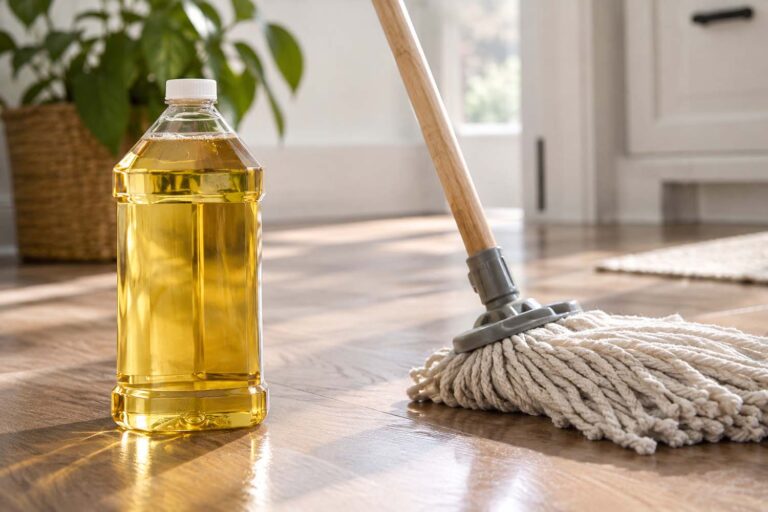
You find a bottle of Murphy Oil Soap under the sink, maybe left over from the last time you cleaned wood floors or kitchen cabinets. Does Murphy Oil Soap go bad?
The short answer: Slowly, yes, and there’s a real surprise in the name itself worth knowing first. Murphy’s own safety page states plainly that despite being called “oil soap,” no actual free oil is left behind on a surface when the product is diluted and used as directed. Murphy Oil Soap doesn’t carry a printed expiration date, but unlike most of the cleaners covered elsewhere in this series, it’s genuinely built around real vegetable oil, which means it can actually oxidize and go rancid over time the way a bottle of cooking oil would, not just lose potency the way a synthetic surfactant formula does.
For more household shelf-life guides, check out our full Household Shelf Life Guide.
Key Takeaways
- Murphy Oil Soap doesn’t carry a printed expiration date, but commonly cited real-world shelf life is several years when stored properly.
- It’s built around real vegetable oil, which is genuinely different from most cleaners in this series; that oil can oxidize and turn rancid over time, the same way cooking oil does, rather than just losing potency.
- Murphy’s own safety page confirms that when diluted and used as directed, no free oil is left behind on the cleaned surface.
- Despite that, oily residue buildup on finished hardwood floors is a real, well-documented concern in the flooring industry, especially with repeated use, over-concentration, or use on floors it isn’t well suited for. Many flooring manufacturers explicitly advise against oil-based soaps on their finished products.
- Rancid Murphy Oil Soap won’t seriously harm you, but it can genuinely smell bad and clean less effectively, and using it on wood surfaces at that point is more likely to leave residue than clean well.
- Never mix Murphy Oil Soap with other cleaning chemicals when disposing of it or using it, the same general precaution that applies to any household cleaner.
A Real Oil Means Real Oxidation, Unlike Most of This Series
This One Actually Can Go Rancid
Most of the household cleaners covered in this series, things like bleach, Windex, and Pine-Sol, are built around synthetic surfactants and active ingredients that lose potency through evaporation or chemical breakdown, not through the kind of oxidation that spoils food. Murphy Oil Soap is a genuine exception. Its formula is built around real vegetable oil combined with water and surfactants, and vegetable oil is chemically capable of oxidizing over time, developing the same rancid smell and darker color that an old bottle of cooking oil would.
This is also why Murphy’s own guidance is specific about dilution and technique. Their safety page states that no free oil remains on a surface when the product is properly diluted and applied as directed; the implication is that under-diluting it, over-applying it, or using it too frequently is what actually leaves oil behind, not the product simply “expiring” in the bottle. Both the age of the soap and how it’s used play a real role in whether you end up with a clean surface or a residue problem.
The Hardwood Floor Question Worth Taking Seriously
This is one of the most actively debated things about this product, and it deserves a straight answer rather than either blind brand loyalty or blanket avoidance. Murphy’s own materials state that properly diluted Oil Soap doesn’t leave free oil behind. At the same time, it’s genuinely well documented in the wood flooring industry that repeated use of oil-based soaps, including Murphy’s, can leave a residue that builds up on polyurethane-finished floors over months or years of use. In more serious cases, professional refinishers report that this residue can penetrate the finish and interfere with the wood’s ability to properly accept a new coat during refinishing, a real and expensive problem. Because of this, many hardwood flooring manufacturers explicitly recommend against using oil-based soaps on their finished products, and doing so can affect a floor’s warranty. If your floors are under a manufacturer’s care instructions, it’s worth checking what they specifically recommend rather than defaulting to Murphy Oil Soap out of habit, even though it remains a reasonable choice for unfinished wood, furniture, and other surfaces where this concern doesn’t apply.
How Long Murphy Oil Soap Actually Lasts
| Condition | Shelf Life |
|---|---|
| Unopened, stored properly | Commonly several years |
| Opened, sealed tightly between uses | Similar window; watch for oxidation signs as it ages |
Murphy doesn’t publish a strict expiration date, so these figures reflect general guidance rather than an official cutoff. Because real vegetable oil is involved, going by smell and appearance is more reliable here than it is for most other household cleaners.
Signs Your Murphy Oil Soap Has Gone Rancid
What to Actually Check
A sour, rancid, or “off” smell distinct from its normal pleasant scent. This is the clearest sign the vegetable oil in the formula has oxidized.
Noticeable darkening compared to its usual pale amber color, another common sign of oil oxidation.
Separation or a change in thickness, where the liquid looks less uniform or pours differently than a fresh bottle.
Reduced cleaning performance or more residue than usual, which can happen even with a bottle that still smells fine, especially if it’s been diluted incorrectly or used heavily on a finished floor.
How to Store Murphy Oil Soap So It Lasts
Storage Best Practices
Store in a cool, dark place away from direct sunlight and heat. Since real vegetable oil is part of the formula, warmth and light accelerate oxidation the same way they do with cooking oil.
Keep the cap tightly sealed between uses to limit air exposure, which is the main driver of oxidation.
Avoid freezing temperatures if you store cleaning supplies somewhere unheated, since freezing can cause the water and oil components to separate. This is worth keeping in mind if you’re the type to stock up before a big push, like a spring cleaning list or getting ready for a Christmas or Thanksgiving deep clean; buy what you’ll realistically use rather than a supply meant to sit for a year or more.
What to Do With Old Murphy Oil Soap
Murphy Oil Soap that’s gone rancid isn’t a hazardous waste concern at typical household quantities, even though it’s unpleasant to use at that point. A bottle that’s genuinely no longer useful can be emptied down the drain with running water, and the empty container recycled according to your local rules. As with any cleaning product, avoid mixing it with other chemicals before disposal.
Frequently Asked Questions
Does Murphy Oil Soap actually contain oil?
Yes, genuinely, unlike some brand names that keep an original ingredient in name only. Murphy Oil Soap’s formula is built around real vegetable oil combined with water and surfactants. Murphy’s own safety materials note that when it’s properly diluted and used as directed, no free oil is left behind on the cleaned surface, but the oil itself is a real, active part of the formula, not just a naming holdover.
Is it safe to use Murphy Oil Soap on hardwood floors?
It depends on the floor. For unfinished or oiled wood, it’s generally a reasonable, traditional choice. For polyurethane-finished hardwood, it’s genuinely more contested: Murphy states properly diluted product leaves no residue, but flooring professionals widely report that repeated or improper use of oil-based soaps can build up a residue that interferes with future refinishing, and many flooring manufacturers advise against oil soaps on their finished products entirely, sometimes as a warranty condition. Checking your specific floor manufacturer’s care instructions is worth doing before making Murphy Oil Soap a routine part of your cleaning.
Can Murphy Oil Soap actually go rancid?
Yes, and this is a genuine difference from most other household cleaners. Because the formula contains real vegetable oil, it can oxidize over time the same way cooking oil does, developing a sour or off smell and a darker color. This isn’t dangerous to be around, but a rancid bottle won’t clean as effectively and is more likely to leave residue behind, so it’s worth replacing rather than continuing to use.
Is Murphy Oil Soap safe to use around pets?
Murphy’s own safety materials specifically instruct keeping the product out of reach of pets and children, and note that ingestion or prolonged skin contact can cause irritation, nausea, or diarrhea. In practice, a properly diluted application that’s allowed to dry completely before pets have access again is generally considered low-risk, but undiluted product, or a pet walking on a still-wet floor and later licking its paws, is where real problems can occur, including irritation to the mouth, throat, and stomach if ingested in any meaningful amount. Keep pets out of the room while cleaning, let the surface dry fully, and contact a veterinarian if a pet shows drooling, vomiting, or other symptoms after exposure.
Further Reading
- Does Pine-Sol Go Bad?
- Does Windex Go Bad?
- Eco-Friendly Cleaning
- 18 DIY Natural, Non-Toxic Cleaning Recipes
- Natural Spring Cleaning DIYs
- How to Use Apple Cider Vinegar to Clean Your Kitchen

Better Living may earn commissions through affiliate links and may occasionally feature sponsored or partner content. If you make a purchase through our links, we may receive a small commission at no cost to you.