
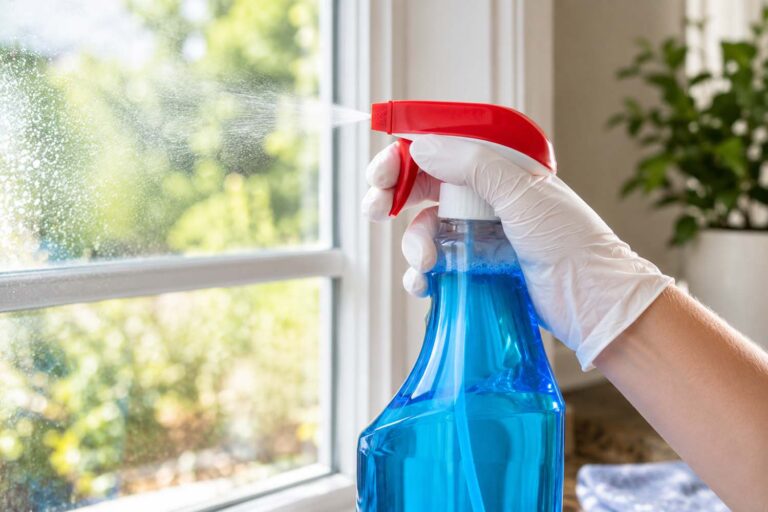
You find a bottle of Windex under the sink, maybe left over from the last time you tackled a streaky mirror or a smudged glass door. Does Windex go bad?
The short answer: Slowly, yes. Windex doesn’t carry a strict legal expiration date, and Windex’s own FAQ page confirms that most formulas rely on a mix of detergents, solvents, fragrance, and in some formulas, ammonia. Those volatile components, especially the ammonia and alcohol, are exactly what makes Windex cut through grease and grime, and they’re also the first things to evaporate over time, particularly if the trigger sprayer or cap isn’t sealed tightly. Commonly cited shelf life is around 2 years. The bottle doesn’t become dangerous when it’s old, it just stops doing the job as well, and the streaking that results can actually make you use more product trying to compensate.
For more household shelf-life guides, check out our full Household Shelf Life Guide.
Key Takeaways
- Windex doesn’t carry a strict expiration date, but commonly cited real-world shelf life is around 2 years unopened, shorter once opened depending on storage.
- Ammonia and alcohol are volatile and evaporate over time, especially if the sprayer is left loose or the bottle sits somewhere warm. This is the main driver of reduced cleaning power, not the formula breaking down chemically.
- Evaporation can leave the remaining liquid imbalanced, not just weaker, which is why old Windex often causes more streaking and residue rather than simply cleaning less thoroughly.
- Not all Windex is the same formula. The classic blue cleaner contains ammonia; Windex also makes ammonia-free versions specifically for tinted car windows, where ammonia can damage the tint film.
- Never mix ammonia-based Windex with bleach. This combination produces toxic chloramine gas and is dangerous regardless of how old either product is.
- Standard blue Windex glass cleaner isn’t a disinfectant, but the brand does make one: Windex Disinfectant Multi-Surface Cleaner is a separate, EPA-registered yellow formula built specifically for killing germs, distinct from the everyday glass cleaner.
Why Evaporation, Not Chemical Breakdown, Is the Real Story Here
The Volatile Ingredients Are Doing the Real Work
Windex’s cleaning power comes from a balance of surfactants, solvents, and, in classic formulas, ammonia. Windex’s own FAQ notes that most Glass and Multi-Surface Cleaners are built around this combination, with ammonia-free versions available specifically for surfaces like tinted car windows where ammonia isn’t recommended. The ammonia and alcohol components are volatile by nature, meaning they evaporate readily into the air, which is exactly why they’re so effective at cutting through grease and drying without residue in the first place.
That same volatility is the reason Windex gradually loses effectiveness. Every time the bottle sits open, or the cap isn’t sealed tightly between uses, a small amount of those active components escapes. Over a long enough period, or in a bottle exposed to heat, this can leave behind a liquid that’s out of balance rather than simply diluted, with the water and less volatile ingredients remaining while the components that actually do the cleaning have thinned out. That’s part of why old Windex tends to leave more streaks and residue rather than just cleaning a little less well.
How Long Windex Actually Lasts
| Condition | Shelf Life |
|---|---|
| Unopened, stored properly | Commonly around 2 years |
| Opened, sealed tightly between uses | Similar window; real life depends heavily on storage |
| Opened, trigger left loose or stored warm | Noticeably shorter due to faster evaporation |
Windex doesn’t publish a strict legal expiration date, so these figures reflect general industry guidance rather than an official cutoff. A bottle past this window isn’t unsafe, it just won’t clean as effectively as a fresh one.
Signs Your Windex Has Lost Effectiveness
What to Actually Check
A faded or absent ammonia smell in classic blue formulas, compared to the sharp, clean scent of a fresh bottle. This is a direct sign the volatile active ingredients have evaporated.
Noticeable streaking or a hazy residue after cleaning, even when you’re using the same technique that worked fine before. This is often the clearest practical sign of reduced effectiveness.
Little to no foam when the bottle is shaken. Fresh surfactants typically produce some foam that lingers briefly; a bottle that foams weakly or not at all suggests those components have broken down.
Fading color or visible sediment in a bottle that used to be a consistent, vibrant blue. This points to the formula separating or degrading rather than a safety issue.
How to Store Windex So It Lasts
Storage Best Practices
Keep the trigger sprayer or cap sealed tightly between uses. This is the single biggest thing you can do, since evaporation of the volatile ingredients is the main driver of reduced effectiveness.
Store in a cool, dry place away from direct sunlight and heat sources, which accelerate evaporation and can affect the color and clarity of the formula.
Avoid freezing temperatures if you store cleaning supplies somewhere unheated, since a water-based formula like this can separate after a hard freeze and thaw cycle.
If you’re stocking up for a bigger push, like a spring cleaning list or getting ready for a Christmas or Thanksgiving deep clean, buy what you’ll realistically use in that window rather than a supply meant to sit for months between seasonal cleans.

A Safety Note That Has Nothing to Do With Age
Never mix ammonia-based Windex with bleach or bleach-containing cleaners. The combination produces toxic chloramine gas, and this is true whether both products are brand new or years old. If you’re also a fan of natural alternatives like our apple cider vinegar cleaning tips, keep those routines separate from ammonia-based products too, rather than layering different cleaners on the same surface back to back.
What to Do With Old Windex
Windex that’s lost its cleaning power isn’t a hazardous waste concern at typical household quantities. A bottle that’s genuinely past its useful life can be emptied down the drain with running water, and the empty container recycled according to your local rules. Unlike an EPA-registered disinfectant, standard Windex glass cleaner doesn’t require special hazardous waste handling.
Frequently Asked Questions
Does Windex actually expire?
It doesn’t carry a strict legal expiration date, but it does gradually lose effectiveness. Commonly cited shelf life is around 2 years, driven mainly by evaporation of the volatile ammonia and alcohol components that do the actual cleaning work, rather than the formula becoming unsafe.
Is it safe to clean with expired Windex?
Generally, yes. Old Windex isn’t typically a safety hazard to use, it just doesn’t clean as well, often leaving more streaks and residue than a fresh bottle would. The one safety rule that matters regardless of age is never mixing ammonia-based Windex with bleach, since that combination produces toxic gas no matter how old either product is.
Does Windex disinfect surfaces?
Not the standard glass and multi-surface cleaner. The classic blue Windex is formulated to clean, cut through grease, and leave a streak-free finish, not to kill germs the way an EPA-registered disinfectant like Lysol or bleach is. Worth knowing, though: Windex does make a genuinely different product for that purpose, Windex Disinfectant Multi-Surface Cleaner, a separate yellow formula that is registered with the EPA and does make real disinfecting claims. If you’re reaching for a bottle specifically to kill germs rather than just clean a mirror, check the label to make sure you have that formula rather than the standard blue glass cleaner.
Further Reading
- Does Lysol Go Bad?
- Does Bleach Go Bad?
- Does Febreze Go Bad?
- Eco-Friendly Cleaning
- 18 DIY Natural, Non-Toxic Cleaning Recipes
- Natural Spring Cleaning DIYs

Better Living may earn commissions through affiliate links and may occasionally feature sponsored or partner content. If you make a purchase through our links, we may receive a small commission at no cost to you.