
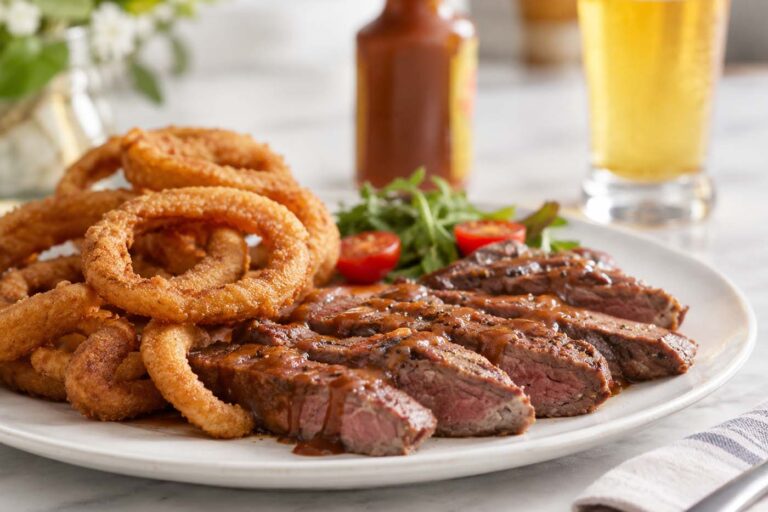
There’s a bottle of Heinz 57 in your pantry that’s been there since the last time you grilled steaks, however long ago that was. Before you toss it or worry about it, it helps to know what’s actually keeping it stable, because a tomato-and-vinegar steak sauce follows a very different set of rules than the mayo or cream-based condiments in your fridge. And while you’re at it: the “57” on the label doesn’t refer to a count of ingredients in the bottle. According to Heinz’s own account, Henry Heinz picked the number by combining his lucky number, 5, with his wife’s lucky number, 7, as a marketing figure for the brand generally, not a literal ingredient tally.
Does Heinz 57 go bad?
The short answer: Yes, eventually, but it’s a slow process. Heinz 57 is built on a tomato puree base with two kinds of vinegar, salt, and two named preservatives, sodium benzoate and potassium sorbate, the same general formulation family as ketchup and A1 sauce. Retailer-published product data lists a shelf life of 1,080 days, about three years, for an unopened bottle. Given normal storage, the real risks are gradual darkening and flavor drift rather than sudden spoilage. Mold and a noticeably off, fermented, or sour smell are the signs that something has actually gone wrong.
For the refrigeration side of this question, see our companion post: does Heinz 57 need to be refrigerated. Since it belongs to the same category as other steak sauces, our guides to does A1 sauce go bad, does steak sauce go bad, and does Worcestershire sauce go bad cover a lot of the same underlying food science. For a complete condiment storage reference, see our Food Storage Guide.
📋 Does Heinz 57 Go Bad: At a Glance
| Unopened, pantry | About 3 years (1,080 days), per product data |
| Opened, refrigerated | No specific published window; go by mold, smell, and taste |
| “With Lea & Perrins” variant | Same general shelf-stable logic; check that bottle’s own label |
| Real spoilage signs | Mold, fermented or sour smell |
| Not spoilage | Darkening color, settling of solids, milder flavor |
🔑 Key Takeaways
- Heinz 57 leads with tomato puree, distilled white vinegar, and malt vinegar, backed by two named preservatives, sodium benzoate and potassium sorbate, the same basic protection system used in ketchup and A1 sauce.
- Retailer-published Kraft Heinz product data lists a shelf life of about three years (1,080 days) for an unopened bottle.
- Kraft Heinz also sells “Heinz 57 Steak Sauce with Lea & Perrins,” a separate current product line. If you have that version, check its own label rather than assuming it matches the classic formulation exactly.
- The malt vinegar in Heinz 57 is made from barley, which means the sauce isn’t gluten-free, even though nothing in the name suggests it.
- The real spoilage signs to watch for are mold and a sour or fermented smell. Darkening color and a milder flavor over time are normal aging, not spoilage.
Why a Steak Sauce Doesn’t Spoil Like a Cream-Based Condiment
Heinz 57 belongs to the same broad family as ketchup, A1, and other vinegar-forward tomato condiments, and that formulation is specifically built to resist spoilage. Vinegar’s acetic acid lowers the sauce’s pH to a level most spoilage bacteria can’t tolerate, and salt limits the moisture those bacteria would otherwise use to grow.
The current Heinz 57 ingredient list leads with tomato puree (water, tomato paste), high fructose corn syrup, distilled white vinegar, and malt vinegar, which contains barley, followed by salt and a small remainder that includes modified food starch, raisin juice concentrate, mustard flour, soybean oil, turmeric, spices, apple puree, caramel color, garlic powder, onion powder, natural flavors, and two named preservatives: sodium benzoate and potassium sorbate. That combination of two acids, concentrated sugar and tomato solids, salt, and dual preservatives is why an unopened bottle holds up for years in a regular pantry rather than needing refrigeration from the start.
Kraft Heinz has been publicly explicit about this exact logic for its ketchup, another tomato-and-vinegar product from the same company: the company has stated that its ketchup’s natural acidity makes it shelf-stable, with refrigeration recommended after opening to maintain quality rather than to prevent it from becoming unsafe. Heinz 57 follows the same basic formulation principle, tomato acidity plus vinegar plus preservatives, even though it’s a distinct product with its own specific recipe.
How Long Does Heinz 57 Last
Unopened
Retailer-published Kraft Heinz product data lists a shelf life of 1,080 days, right around three years, for an unopened bottle of Heinz 57 stored at room temperature. That figure is broadly consistent with A1 sauce, a similar tomato-and-vinegar steak sauce from the same category, which our own research puts in the same multi-year range for unopened storage.
Opened
Kraft Heinz doesn’t publish a specific countdown for how long an opened bottle lasts, which is common for this category of condiment. Rather than inventing a number that doesn’t exist, the more honest and useful approach is to watch the sauce itself: mold, an off smell, or an unusual taste are the signals to act on, not a specific week or month count. A bottle that’s been open for a long stretch may taste a little flatter or look slightly darker, which is a quality shift rather than a reason to toss it.
This matters most for a bottle that doesn’t get used often and sits half-full for months between grilling seasons, rather than one that gets worked through steadily alongside burgers or a weeknight steak.
Other Current Variants
Kraft Heinz sells Heinz 57 in more than one form at retail, including Heinz 57 Steak Sauce with Lea & Perrins, which blends in Worcestershire-style flavor, and a Heinz 57 Hot variant. This article focuses on the classic formulation. The other variants likely follow a similar general tomato-and-vinegar shelf-stability logic, but their exact ingredient lists differ enough that it’s worth checking that specific bottle’s own label rather than assuming it’s identical, particularly since Worcestershire sauce traditionally includes fish-derived ingredients that the classic Heinz 57 recipe doesn’t.
How to Tell If Heinz 57 Has Actually Gone Bad
⚠️ Signs Something Is Actually Wrong
- Visible mold: Rare given the vinegar and preservative content, but possible if the cap has been left loose or the bottle contaminated by a used utensil. Any visible mold means the bottle should be discarded rather than skimmed.
- A sour, fermented, or “off” smell: Fresh Heinz 57 smells tangy and savory, with a noticeable tomato and vinegar presence. A sour, boozy, or otherwise unusual smell, rather than just a milder version of the normal smell, is a reason to throw it out.
- Visible separation into layers or an off color: Some settling of solids is normal and stirs back in easily. A bottle that’s separated into distinct layers that won’t recombine, or that’s developed a color noticeably different from its usual reddish-brown, is worth taking more seriously.
If Heinz 57 already shows any of these signs, don’t taste it to confirm. Rely on sight and smell, and when in doubt, throw it out.

✅ Normal Changes That Are Not Spoilage
- Darkening color: A bottle that’s aged for a long time can deepen slightly in color. This doesn’t by itself mean the sauce is spoiled.
- Settling of solids: Some separation between the liquid and the thicker solids is normal, especially in a bottle that’s been sitting still for a while. A shake or stir brings it back together.
- A milder flavor: Older sauce can taste a bit less punchy than a fresh bottle. It’s still fine to use; it just won’t be at its peak.
How to Store Heinz 57
✅ Storage Rules That Make a Difference
- Keep the cap sealed tightly. Air exposure drives the gradual flavor decline that eventually makes it taste flat.
- Store an unopened bottle in a cool, dry pantry. Away from the stove and out of direct sunlight is better than a spot that gets warm or bright.
- Refrigerate after opening. See our full explanation in does Heinz 57 need to be refrigerated for what that recommendation is actually based on.
- Use a clean utensil. Introducing food particles into a shared bottle adds contamination and moisture that can shorten how long it stays good, the same issue that applies to A1 sauce and other shared condiments.
Heinz 57 Shelf Life: Practical Guidance
| Stage | Practical guidance |
|---|---|
| Unopened, pantry | About 3 years (1,080 days) per product data, stored cool, dry, and sealed. |
| Opened, refrigerated | No specific published window; go by mold, smell, and taste rather than a fixed date. |
| With Lea & Perrins variant | Same general shelf-stable formulation; check that bottle’s specific label. |
| No date visible or very old bottle | Check smell and appearance closely before using; when in doubt, replace it. |
Frequently Asked Questions
Yes, eventually, though it’s a slow process given its tomato, vinegar, and dual-preservative formulation. Product data lists a shelf life of about three years for an unopened bottle. Given normal storage and no signs of contamination, an old bottle typically just tastes flatter or looks a bit darker rather than becoming unsafe.
No. The number 57 has long been associated with the Heinz brand generally as a marketing figure rather than a literal ingredient count, a detail the company has acknowledged for decades. The actual Heinz 57 sauce ingredient list runs to around 20 items, most of them the small “less than 2%” seasonings and spices that give it its flavor.
No. The malt vinegar in the ingredient list is made from barley, which contains gluten. If you’re avoiding gluten, that rules out the classic Heinz 57 formulation, and it’s worth checking the label on the Lea & Perrins version too rather than assuming it’s different.
Kraft Heinz doesn’t publish a specific countdown for an opened bottle stored in the fridge. In practice, mold, an off smell, or an unusual taste are the signals to act on, not a specific week or month count. Flavor gradually mellows over a long stretch of time, which is a quality change rather than a reason to discard it.
The clearest signs are visible mold and a sour, fermented, or otherwise off smell, rather than the tangy, savory smell fresh sauce has. A bottle that’s split into distinct layers that won’t recombine, or that’s shifted to an unusual color, is also worth taking seriously. Darkening and a milder flavor are normal aging and not reasons to throw a bottle out on their own.
There’s generally little reason to freeze it. Since it’s already formulated to be shelf-stable for years unopened and holds up well after opening too, freezing doesn’t solve a problem the sauce actually has, and it risks separating the texture on thawing. This is different from a homemade copycat version made with fresh ingredients, which behaves like any other fresh sauce and does benefit from proper refrigeration or freezing.
They’re close relatives with different bases. Heinz 57 leads with tomato puree and two vinegars; A1 sauce follows a similar tomato-and-vinegar structure with its own distinct spice blend; and Worcestershire sauce is a fermented, anchovy-based liquid condiment with a very different flavor profile and ingredient base, even though Kraft Heinz also owns the Lea & Perrins Worcestershire brand and blends it into the newer “Heinz 57 with Lea & Perrins” variant. All three share the same basic shelf-stability logic: vinegar and salt do most of the work.
Further Reading
- Does Heinz 57 Need to Be Refrigerated?
- Does A1 Sauce Go Bad?
- Does A1 Sauce Need to Be Refrigerated?
- Does Steak Sauce Go Bad?
- Does Steak Sauce Need to Be Refrigerated?
- Does Worcestershire Sauce Go Bad?
- Does Ketchup Go Bad?
- Does Mustard Go Bad?
- Can Expired Condiments Make You Sick?
- Foods You Should Never Refrigerate
- USDA FSIS: Food Product Dating
- Complete Food Storage Guide: 120+ Foods

Better Living may earn commissions through affiliate links and may occasionally feature sponsored or partner content. If you make a purchase through our links, we may receive a small commission at no cost to you.