
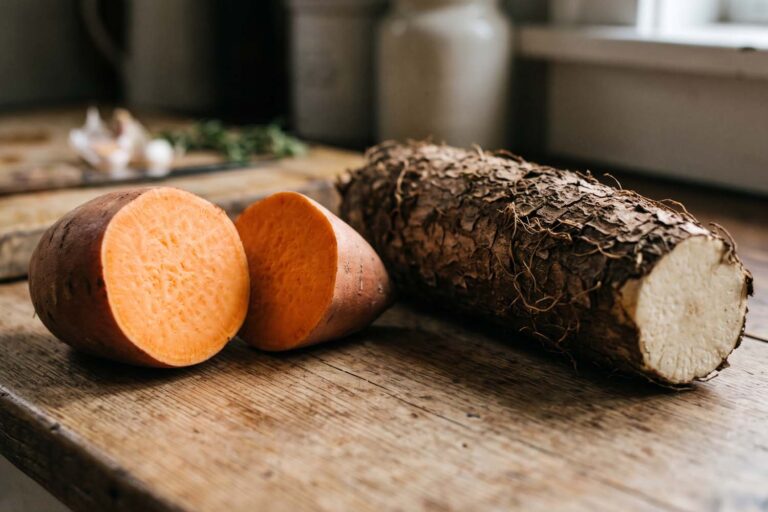
If you have ever stood in the produce aisle wondering about sweet potato vs yam, here is the surprise: in most U.S. supermarkets, the orange “yams” are sweet potatoes. True yams are a different vegetable from a different plant family. Here is how the two differ, why the names got mixed up and what to buy for your recipe, based on the Library of Congress and university Extension sources.
Sweet potato vs yam: the key differences
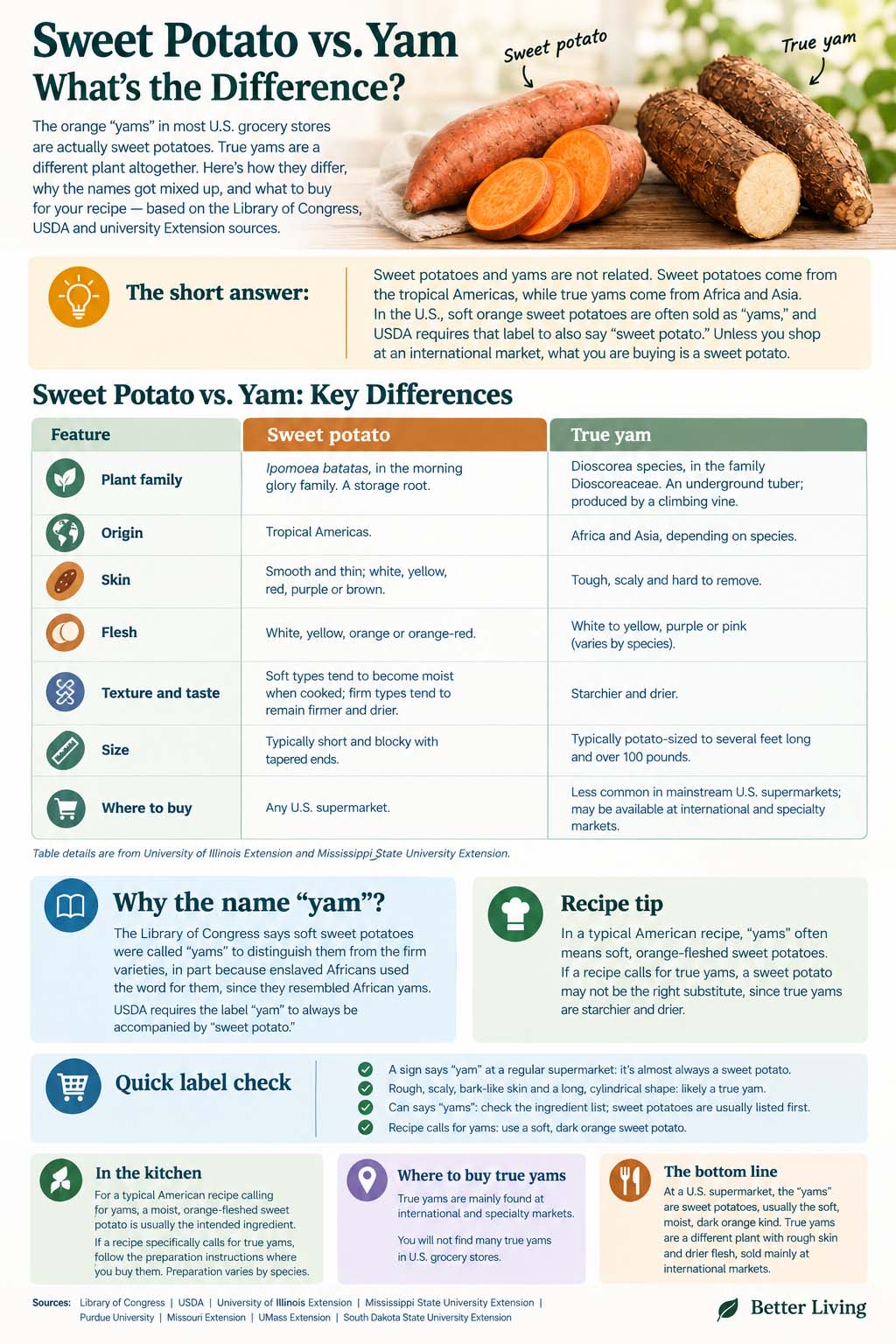
| Sweet potato | True yam | |
|---|---|---|
| Plant | Ipomoea batatas, in the morning glory family. The edible part is a storage root. | Dioscorea species, in the family Dioscoreaceae. The edible part is an underground tuber. |
| Origin | Central and South America | Varies by species; major cultivated yams come from Africa and Asia |
| Typical skin | Thin and smooth; white, yellow, red, purple or brown | Tough and scaly, and hard to remove |
| Flesh | White, yellow, orange, orange-red or purple, depending on variety | White to yellow, purple or pink, depending on species |
| Cooked texture | Soft types become moist and sweet; firm types stay drier and crumbly | Generally starchier and drier than common U.S. sweet potatoes |
| On U.S. labels | Soft orange types are often sold as “yams,” which must also say “sweet potato” | Less common in mainstream supermarkets; more often at specialty and international markets |
Appearance and texture vary by variety and species, so treat these as common traits, not universal rules. Details are from University of Illinois Extension’s sweet potato and yam explainer and Mississippi State University Extension’s sweet potatoes vs. yams article.
They belong to different plant families
The Library of Congress’s Science Reference Section says yams and sweet potatoes are both flowering plants but are not related botanically. Its Everyday Mysteries answer describes yams as monocots in the yam family and sweet potatoes as dicots in the morning glory family. Illinois Extension adds that sweet potatoes are not related to regular potatoes either. A true yam is not a sweeter or starchier sweet potato. It is a different vegetable.
How they look and cook
A sweet potato has thin, smooth skin, while Mississippi State describes a yam’s skin as rough and scaly. Illinois Extension says a yam’s tuber is covered in tough, scaly skin that is difficult to remove, can range from potato-sized to several feet long, and is starchier and drier than the sweet potatoes most commonly grown in the U.S. It says yams are often boiled and mashed, fried, roasted or baked. Smooth, thin skin and tapered ends are typical of sweet potatoes. If you are unsure which one you have, confirm the product name with the label or the seller.
Why U.S. stores call sweet potatoes “yams”
The Library of Congress says sweet potato varieties are classified as either “firm” or “soft,” and that in the U.S. firm varieties were produced before soft ones. To tell the two apart, the soft sweet potatoes were called “yams.” Enslaved Africans had already used the word for them because they resembled the yams of Africa. Illinois Extension says that in the U.S., these soft types are the sweet potatoes we usually call yams, and that USDA requires the word “yam” on sweet potatoes to be accompanied by “sweet potato.” Mississippi State says the same, and notes that canned products marketed as yams list sweet potatoes as the first ingredient.
What to buy for your recipe
Firm versus soft describes how a sweet potato cooks. Missouri Extension’s Plants on Plate sweet potato guide says firm sweet potatoes stay firm when cooked and are dry and crumbly, while soft varieties become soft, moist and sweet. UMass Extension’s produce spotlight lists Garnet, also known as red yam, as having very moist flesh and being well suited to pies, mashing and casseroles. South Dakota State Extension’s grocery store guide says dark orange types are moist and sweeter, while pale yellow types are drier. Garnet is a market name; botanically it is still a sweet potato.
Quick label check:
- American holiday recipe such as candied yams or casserole: use an orange-fleshed sweet potato such as Garnet or Jewel.
- Recipe that specifies true yams, such as an African or Caribbean dish: buy the yam variety it names, and expect a starchier, drier result than a sweet potato gives.
- Sign says “yam” at a mainstream supermarket: it is usually a soft sweet potato. Look for the words “sweet potato” on the sign or bag.
- Can says “yams”: check the ingredient list, where sweet potatoes are often listed first.
Not sure which sweet potato to grab? Our guide to how to pick a good sweet potato covers firmness, skin, varieties and storage.
Yam vs sweet potato questions, answered
Is a yam the same as a sweet potato?
No. Yams and sweet potatoes belong to different plant families, according to the Library of Congress. In U.S. stores, though, the soft orange sweet potatoes sold as “yams” are sweet potatoes.
Why are sweet potatoes called yams?
According to the Library of Congress, soft sweet potatoes were called “yams” to distinguish them from the firm varieties. Illinois Extension says these soft types are the sweet potatoes Americans usually call yams. See the history above.
How can you tell a yam from a sweet potato?
Check the skin, shape and where you are shopping. Sweet potatoes typically have smooth, thin skin and a short, blocky shape with tapered ends. Common market yams often have tough, scaly skin and a more cylindrical shape, per Illinois and Mississippi State Extension. At a mainstream U.S. supermarket, an orange “yam” is usually a sweet potato.
Can I use sweet potatoes instead of yams in a recipe?
For American holiday recipes such as candied yams, yes: orange-fleshed sweet potatoes are the intended ingredient, since Illinois Extension says the soft types are what we usually call yams. If a recipe specifies true yams, do not assume a sweet potato is an equivalent substitute. True yams are generally starchier and drier, so an orange sweet potato will give a sweeter, moister result.

Are canned yams really sweet potatoes?
Usually, yes. Mississippi State University Extension says canned products marketed as yams are also labeled as sweet potatoes, and the first ingredient is sweet potatoes. Check the ingredient list to be sure.
Where can you buy true yams, and how do you prepare them?
Illinois Extension says true yams are mainly found at ethnic markets, and that the yams sold in the U.S. are typically grown in Caribbean countries. Mississippi State says true yams are less common in mainstream U.S. grocery stores. Preparation depends on the species and product, so buy yams intended for food and follow the instructions from the seller or package.
Are Garnet and Jewel sweet potatoes or yams?
Sweet potatoes. UMass Extension lists Garnet as also known as red yam, and describes Jewel as a sweet potato with light orange skin and orange flesh. “Yam” here is a market name, not a botanical one.
Which is healthier, a yam or a sweet potato?
Neither is automatically healthier, because nutrition varies by variety, portion and preparation. Missouri Extension says both firm and soft sweet potatoes are a rich source of vitamin A, potassium, magnesium and fiber.
Related reading for your holiday menu
Soft orange sweet potatoes are the ones used in most holiday casseroles and pies. Round out the menu with our roasted Brussels sprouts with balsamic and bacon, fresh cranberry sauce with orange and cinnamon and maple pumpkin pie. Planning the main course? See how to pick a turkey.
The bottom line
In a mainstream U.S. supermarket, orange “yams” are usually soft sweet potatoes. True yams are a different vegetable with rougher skin and starchier, drier flesh, sold mainly at specialty and international markets. For an American holiday recipe, buy an orange-fleshed sweet potato. For a recipe that names true yams, buy what it calls for.

Better Living may earn commissions through affiliate links and may occasionally feature sponsored or partner content. If you make a purchase through our links, we may receive a small commission at no cost to you.