
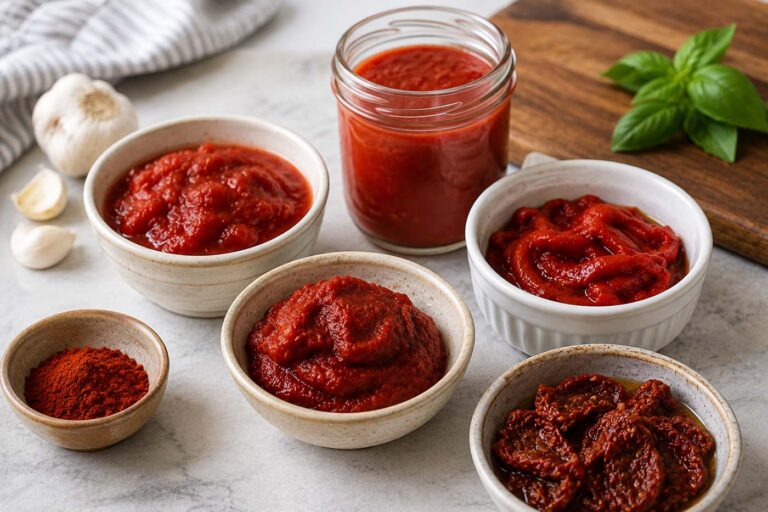
I was three steps into a braise last week, onions softened, wine already reduced, when I reached for the tomato paste and found an empty tube crumpled at the back of the drawer. No time for a grocery run, so I started digging through what I actually had: a can of crushed tomatoes, a bottle of ketchup, half a jar of roasted red peppers. Turns out most of those work, some better than others, and a couple of common suggestions floating around online are not quite as safe or accurate as they sound. Here’s what actually holds up.
What Can You Use Instead of Tomato Paste?
The Short Answer: Tomato sauce or puree, simmered down until thick, is the closest all-purpose substitute for tomato paste. Ketchup works in a pinch for small amounts, though it adds sugar and vinegar. Sun-dried tomatoes blended with a little oil bring a similar concentrated, savory depth. Fresh or canned tomatoes cooked down low and slow can replace it from scratch. For color and mild sweetness without any tomato at all, roasted red peppers work, though they are not nightshade-free. If you need a true nightshade-free option, pumpkin or squash puree with a splash of vinegar handles the thickening job, and a little beet puree can stand in for the color.
Need more pantry swaps? See our what to use instead of heavy cream and what can I use instead of cornstarch guides. If you’re wondering whether the tube or can in your fridge is still good, check out does tomato paste go bad.
📋 Tomato Paste Substitutes: At a Glance |
|
| 🍅 Tomato sauce or puree, reduced | 3 tbsp simmered down to 1 tbsp, best all-purpose sub |
| 🥫 Canned crushed or diced tomatoes, reduced | 3-4 tbsp simmered and blended down to 1 tbsp |
| 🍅 Ketchup | 1:1 ratio, best fast fix for small amounts |
| ☀️ Sun-dried tomatoes, blended | 2 halves blended per 1 tbsp, best for deep flavor |
| 🍅 Fresh tomatoes, cooked down | 1 medium tomato per tbsp, best from-scratch option |
| 🧂 Tomato powder or bouillon, reconstituted | Check package ratio, best shelf-stable pantry option |
| 🫑 Roasted red peppers, pureed | 1:1 ratio, best for color, not nightshade-free |
| 🎃 Pumpkin or squash puree with vinegar | 1:1 ratio, best nightshade-free thickener |
| 🟣 Beet puree | Small amount, best nightshade-free color only |
🔑 Key Takeaways
- The FDA defines tomato paste as containing at least 24 percent tomato soluble solids, while tomato puree and tomato sauce fall in the 8 to 24 percent range. That gap in concentration is why thinner tomato products need to be reduced before they can stand in for paste.
- Roasted red peppers are a popular “substitute” for color and sweetness, but peppers are nightshades too, just like tomatoes. They are not a fit for anyone actually avoiding the nightshade family.
- Ketchup already contains sugar, vinegar, and salt, so it works best in small amounts where those extra flavors won’t throw off the dish.
- Cooking tomato paste (or any tomato substitute) in hot oil for a minute or two before adding liquid deepens its flavor through browning, a step worth keeping even when you’re subbing something else in.
- Tomato paste freezes well in small portions, which is the easiest way to avoid needing a substitute the next time a recipe only calls for a tablespoon or two.
Understanding What Tomato Paste Actually Does
Before reaching for a substitute, it helps to know what job tomato paste is actually doing in the recipe, since a good stand-in needs to cover the right combination of these roles.
🔬 Three Jobs in One Small Can
Tomato paste is tomatoes cooked down until at least 24 percent of the product is tomato solids, under the FDA’s own standard of identity for tomato concentrates. Tomato puree and tomato sauce, by comparison, sit in the 8 to 24 percent range, meaning paste can be two to three times more concentrated than the tomato products sitting right next to it on the shelf. That concentration is what lets a single tablespoon do three things at once: add a deep, savory, almost umami richness that a thin tomato product can’t match; contribute the bright acidity that balances a fatty braise or a rich stew; and thicken a sauce simply by taking up space without adding much water.
Most substitutes are good at one or two of these jobs but not all three. A thinner tomato product like sauce or puree needs to be reduced on the stove to concentrate its flavor and thickening power before it can really stand in for paste. Ketchup already brings concentration and thickness, but its added sugar changes the acidity balance. Non-tomato options like roasted peppers or squash puree can fill in for color and body but won’t bring the same tomato-specific tang. Matching the substitute to the job the paste is doing in your specific recipe, rather than just its color, makes the difference between a dish that tastes right and one that tastes like something is missing.
The Best Tomato Paste Substitutes
1. Tomato Sauce or Puree, Reduced (Best All-Purpose Substitute)
Since tomato sauce and puree are simply less concentrated versions of the same product, simmering either one down on the stove is the most direct way to recreate tomato paste. Pour about 3 tablespoons of sauce or puree into a small pan for every 1 tablespoon of paste the recipe calls for, and simmer over medium-low heat, stirring occasionally, until it reduces down to roughly a third of its original volume and thickens noticeably. This takes about 10 to 15 minutes and gives you a substitute that matches tomato paste in both flavor and texture better than almost anything else on this list.
✅ Best for: Sauces, braises, stews, soups, chili, curries.
Ratio: 3 tablespoons sauce or puree, reduced down to about 1 tablespoon
Note: Reducing takes time, so start this step before the rest of the recipe if possible.
2. Canned Crushed or Diced Tomatoes, Reduced (Best When That’s All You Have)
Canned crushed or diced tomatoes work the same way as sauce or puree, just with more texture to cook out first. Simmer 3 to 4 tablespoons in a small pan until most of the liquid evaporates and the mixture thickens, then blend or mash it smooth if the recipe needs a paste-like consistency rather than a chunky one. This takes a bit longer than reducing sauce since there’s more water to cook off, but it’s the most likely substitute to already be sitting in the pantry.
✅ Best for: Sauces, stews, chili, soups.
Ratio: 3 to 4 tablespoons, reduced and blended down to about 1 tablespoon
Note: Blend after reducing if the recipe needs a smooth paste rather than a chunky texture.
3. Ketchup (Best Fast Fix for Small Amounts)
Ketchup is made from concentrated tomatoes with sugar, vinegar, and salt added, which makes it thick and shelf-stable in a way that’s genuinely similar to tomato paste, just sweeter and more acidic. It works best when a recipe only calls for a tablespoon or two, where the added sugar and vinegar won’t throw off the overall balance, in dishes like a glaze for our quick and easy classic meatloaf, where a little extra sweetness is already welcome. For larger amounts, cut back on any other sugar or vinegar the recipe calls for to compensate.
✅ Best for: Small amounts in sauces, glazes, marinades.
Ratio: 1:1 in place of tomato paste
Note: Reduce other sugar, vinegar, or salt in the recipe slightly to account for what ketchup already brings.
4. Sun-Dried Tomatoes, Blended (Best for Deep, Concentrated Flavor)
Sun-dried tomatoes are already intensely concentrated through drying, which gives them a savory depth that’s genuinely close to what tomato paste contributes to a slow-cooked sauce. Blend about 2 oil-packed sun-dried tomato halves with 1 tablespoon of their packing oil, or a splash of water if using dry-packed, until smooth. The flavor is deeper and slightly more complex than tomato paste, which works especially well in dishes that cook for a long time anyway.
✅ Best for: Braises, long-simmered sauces, marinades.
Ratio: 2 sun-dried tomato halves blended per 1 tablespoon of paste needed
Note: Oil-packed blends more smoothly than dry-packed. Flavor is more intense than plain tomato paste, so start with less.
5. Fresh Tomatoes, Cooked Down (Best From-Scratch Option)
Peeling, seeding, and simmering fresh tomatoes down until they lose most of their water gets you homemade tomato paste, and it’s a genuinely good option if you have ripe tomatoes on hand and a little time. Roughly one medium tomato, peeled and seeded, simmered gently and stirred occasionally for about 20 to 30 minutes, reduces down to about a tablespoon of paste-like concentrate. It takes longer than any other substitute here, but the flavor is fresh and bright rather than the deeper, cooked-down flavor of canned paste.
✅ Best for: Sauces and dishes where a brighter, fresher tomato flavor fits.
Ratio: About 1 medium tomato, peeled and seeded, per 1 tablespoon of paste needed
Note: Takes 20 to 30 minutes of simmering. Best when you actually have fresh, ripe tomatoes to use up.
6. Tomato Powder or Bouillon, Reconstituted (Best Shelf-Stable Pantry Option)
Tomato powder, made from dehydrated tomatoes ground fine, and tomato bouillon both pack concentrated tomato flavor into a shelf-stable form that never spoils the way an opened can does. Mixing either with a small amount of hot water creates a thick, paste-like consistency, though the exact ratio varies quite a bit by brand, so check the package and start with a small amount of water, adding more only if needed. This is a solid option to keep on hand specifically so you’re never caught without a substitute again.
✅ Best for: Pantry emergencies, long-term storage, small batches.
Ratio: Varies by brand, start with about 1 tablespoon powder to 2 teaspoons hot water and adjust
Note: Check the product label, since concentration differs between brands more than with other substitutes here.
7. Roasted Red Peppers, Pureed (Best for Color and Mild Sweetness, Not Nightshade-Free)
Blending jarred or homemade roasted red peppers until smooth gives a thick, deep red puree that mimics tomato paste’s color and adds a mild, smoky sweetness of its own. It doesn’t bring the same acidity or tang, so a small splash of vinegar or lemon juice helps close that gap. One important correction worth making here: roasted red peppers are frequently recommended online as a substitute for people avoiding tomatoes because of a nightshade sensitivity, but peppers are nightshades too, from the same plant family as tomatoes. This is a good substitute for flavor and color, not for anyone actually avoiding nightshades.
✅ Best for: Color, sweetness, dishes where tomato tang isn’t essential.
Ratio: 1:1 in place of tomato paste
Note: Add a splash of vinegar or lemon juice for acidity. Not suitable for a nightshade-free diet.
8. Pumpkin or Butternut Squash Puree Plus Vinegar (Best Nightshade-Free Thickener)
For anyone genuinely avoiding nightshades, plain canned pumpkin or butternut squash puree brings the same thick, smooth consistency as tomato paste without any tomato, pepper, potato, or eggplant in it. On its own it tastes nothing like tomato, so whisking in a small splash of vinegar helps mimic the tang, and a pinch of salt rounds it out. This won’t fool anyone looking for tomato flavor specifically, but it does the thickening and body-building job tomato paste is often used for.
✅ Best for: Nightshade-free cooking, thickening soups and stews.
Ratio: 1:1 in place of tomato paste, plus a splash of vinegar per tablespoon
Note: True nightshade-free option. Tastes nothing like tomato, so pair with other seasonings to compensate.
9. Beet Puree (Best Nightshade-Free Color Booster)
Beet puree brings the deep red color tomato paste contributes to a dish without any nightshade content at all, which makes it a useful pairing with pumpkin or squash puree for anyone building a nightshade-free version of a tomato-based sauce. Use it in small amounts, since beets have a distinct earthy sweetness of their own that can take over a dish quickly if overused. A small steamed or roasted beet, peeled and pureed, goes a long way.
✅ Best for: Color in nightshade-free sauces, paired with pumpkin or squash puree.
Ratio: Start with about 1 teaspoon puree per cup of sauce and adjust
Note: Use sparingly. Best combined with pumpkin or squash puree rather than used alone.
Substitute Comparison by Use Case
| Need | Best Substitute | Ratio | Notes |
|---|---|---|---|
| Closest overall match | Tomato sauce or puree, reduced | 3:1, then reduce | Takes 10-15 minutes to reduce |
| Fastest fix, small amount | Ketchup | 1:1 | Adds sugar and vinegar |
| Deep flavor in a long braise | Sun-dried tomatoes, blended | 2 halves per tbsp | More intense than plain paste |
| Only have fresh tomatoes | Fresh tomatoes, cooked down | 1 tomato per tbsp | 20-30 minutes of simmering |
| Long-term pantry backup | Tomato powder or bouillon | Check package | Never spoils like an opened can |
| Color without tomato tang | Roasted red peppers, pureed | 1:1 | Not nightshade-free |
| Nightshade-free thickening | Pumpkin or squash puree | 1:1 plus vinegar | Genuinely nightshade-free |
| Nightshade-free color | Beet puree | Small amount | Pair with pumpkin puree |
Frequently Asked Questions
What is the best substitute for tomato paste in a pinch?
Ketchup is the fastest fix for small amounts, usually a tablespoon or two, since it’s already thick and concentrated. For anything more than that, simmering down tomato sauce or puree gives a closer flavor match without the added sugar, though it takes about 10 to 15 minutes on the stove.
Can I use ketchup instead of tomato paste?
Yes, at a 1:1 ratio, though ketchup already contains sugar, vinegar, and salt that tomato paste doesn’t have. It works best in small quantities where those extra flavors blend in rather than take over. For larger amounts, cut back on any other sugar or acid the recipe calls for to compensate.
Can I use tomato sauce instead of tomato paste?
Yes, but tomato sauce needs to be reduced first, since it contains far less concentrated tomato solids than paste. Simmer about 3 tablespoons of sauce down to roughly 1 tablespoon before using it in place of paste, which thickens it and concentrates the flavor to match.
What is the difference between tomato paste, tomato puree, and tomato sauce?
The difference comes down to concentration. Under the FDA’s standard of identity, tomato paste must contain at least 24 percent tomato soluble solids, while tomato puree falls in the 8 to 24 percent range. Tomato sauce sits in a similar range to puree but typically has seasonings like onion, garlic, or herbs added. That gap means paste is often two to three times more concentrated than the sauce or puree sitting next to it on the shelf, which is why a small amount of paste goes so much further.
Is tomato puree the same thing as tomato paste?
Not in the United States, but the terminology flips in the UK, Australia, and several other countries. American tomato puree is a thin, pourable product in the 8 to 24 percent solids range, similar to a mild tomato sauce. British “tomato purée,” by contrast, is the same thick, concentrated product Americans call tomato paste, usually sold in a small tube. If you’re following a British recipe and it calls for tomato purée by the tablespoon, treat it as tomato paste. Some tubes, often labeled Italian “doppio concentrato” or double concentrate, are cooked down even further than standard American paste, but the difference is small enough that most tasters can’t tell in a finished sauce.
Is there a nightshade-free substitute for tomato paste?
Pumpkin or butternut squash puree with a splash of vinegar handles the thickening job without any nightshade content. A small amount of beet puree can add back the red color. Roasted red peppers are commonly suggested online for this purpose, but peppers are nightshades too, so they aren’t a fit for anyone actually avoiding the nightshade family.
Can I make tomato paste from fresh tomatoes?
Yes. Peel and seed ripe tomatoes, then simmer them gently, stirring occasionally, until most of the liquid cooks off and the mixture thickens into a paste-like consistency. This takes about 20 to 30 minutes for roughly one medium tomato per tablespoon of paste needed, and it produces a brighter, fresher flavor than canned paste.
How much tomato paste equals one can of tomato sauce?
Going the other direction, one standard 6-ounce can of tomato paste whisked with about 1 cup of water gets you close to a 14 to 15-ounce can of tomato sauce, though exact concentration varies by brand. This ratio is useful if a recipe calls for sauce and all you have on hand is a can or tube of paste. Simmering the mixture for a few minutes afterward helps it taste less like diluted paste and more like a sauce that’s been cooked together.
Does substituting for tomato paste change the color of my dish?
It can. Ketchup, reduced tomato sauce, and reduced fresh tomatoes all land close to tomato paste’s deep red. Sun-dried tomatoes can add a slightly darker, more brownish tone. Pumpkin or squash puree comes out orange rather than red, which is where a small amount of beet puree helps bring the color back in line for a nightshade-free version.
Can I freeze extra tomato paste so I don’t need a substitute next time?
Yes, and it’s the easiest way to avoid this problem altogether. Since most recipes only call for a tablespoon or two, freeze leftover paste in tablespoon-sized portions on a lined tray, then transfer the frozen portions to a freezer bag once solid. Our guide on whether tomato paste goes bad covers this storage method along with how long paste keeps once opened.
What can I use instead of tomato paste for pizza sauce specifically?
Crushed tomatoes, simmered down until thick and well seasoned, make a good pizza sauce base without needing paste at all. If you want a closer match to a paste-based pizza sauce’s concentrated flavor and thickness, reduce canned tomato sauce or puree using the same ratio as other savory dishes, about 3 tablespoons reduced down to 1.
Further Reading
- Does Tomato Paste Go Bad? Shelf Life and Storage Tips
- Does Tomato Sauce Go Bad?
- Do Sun-Dried Tomatoes Go Bad? Shelf Life, Spoilage Signs & Storage Tips
- Does Ketchup Go Bad? Everything You Need to Know
- What to Use Instead of Heavy Cream: 13 Substitutes

Better Living may earn commissions through affiliate links and may occasionally feature sponsored or partner content. If you make a purchase through our links, we may receive a small commission at no cost to you.