
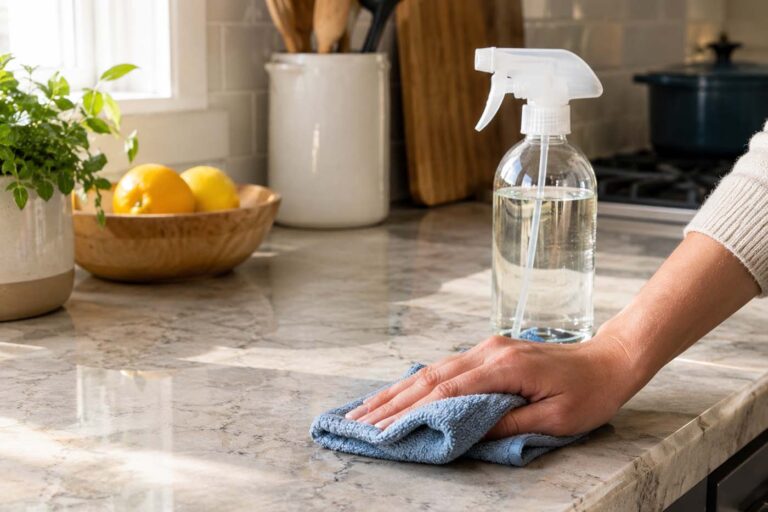
Vinegar has a reputation as the all-purpose natural cleaner, but the list of things you should never clean with vinegar is longer than most people think. The acid that cuts through soap scum can also dull stone, wear down finishes and harm rubber.
Here are six things to keep vinegar away from, what can go wrong, and what to use instead. Three should stay vinegar-free. Three come with a catch, so read it before you reach for the bottle.
Three things to keep vinegar away from
1Marble and granite
Marble is particularly vulnerable to vinegar because it is acid-sensitive. The Natural Stone Institute says products containing lemon, vinegar or other acids may dull or etch calcareous stones, a group that includes marble and limestone. Granite is generally more acid-resistant, but the institute still advises against acidic cleaners because some granite can contain acid-sensitive minerals. If you’re unsure what type of stone you have, skip vinegar and use a stone-safe, non-acidic cleaner.
2Phone, tablet and computer screens
Don’t reach for vinegar unless your device maker specifically says it’s safe. Cleaning instructions vary, and some makers recommend only a soft cloth, water, screen wipes or specified alcohol-based wipes. Most also warn against harsh cleaners and against spraying any liquid directly onto a screen, since it can drip inside and cause damage. A coated electronic display isn’t the place to experiment with an unapproved household cleaner, so check your manual.
3Wood floors and finishes
The National Wood Flooring Association says vinegar’s acidic nature can damage wood floors and their finishes over time, and warns never to leave wood floors wet. Cornell Cooperative Extension says not to wet-mop a wood floor, because standing water can dull the finish, damage the wood and leave a discoloring residue. A vinegar and water mop can bring both problems. The American Cleaning Institute says the same goes for hardwood floors and furniture, and advises checking the manufacturer’s instructions first.
Three that come with a catch
4Cast iron
Vinegar isn’t a routine cleaner for cast iron, but it has one accepted job. Mississippi State University Extension says to soak rust in vinegar for no longer than 15 minutes at a time, and North Carolina Cooperative Extension describes a half-and-half water and vinegar soak for rust removal only. Seasoning is the baked-on oil layer that protects the pan, and removing rust can take some of it with it, so plan to re-season afterward.
5Rubber seals and gaskets
Appliance makers don’t agree, so this is one to check. Some washer manufacturers warn that vinegar’s acidity can wear down rubber seals and hoses, especially on front-loaders, and some say to avoid acidic washer cleaners because they may cause discoloration or corrosion. Other brands take other positions, which is why your manual is the final word.
6Fresh egg spills
Vinegar isn’t the best first choice for a fresh egg spill. Heat and acids can cause egg proteins to coagulate, making the mess harder to remove. The Institute of Food Science and Technology explains that proteins coagulate, changing from liquid to solid or a thicker liquid, when exposed to heat, mechanical action or acids, and egg whites set at around 60°C (140°F). Raw egg is also a food safety issue. FoodSafety.gov says to wash hands and anything that touched raw eggs, including countertops, utensils, dishes and cutting boards, with soap and water.
Two rules for cleaning with vinegar anywhere
Vinegar cleans, but it doesn’t disinfect. The EPA explains that cleaning removes dirt and organic matter, while only products registered with the EPA can claim to sanitize or disinfect. Use vinegar for cleaning jobs, not for killing germs.

Where vinegar does work
None of this means you should toss the bottle. Vinegar is still useful on the right surfaces. Our guide to using apple cider vinegar to clean your kitchen covers where it works and repeats the warnings on stone and wood. You’ll find more ideas in our 18 DIY natural and non-toxic cleaning recipes, and we even use it in a reset wash for smelly towels, with manual-first cautions.
Dish soap has its own no-go list too. See the things you should never clean with dish soap, and for a whole-house refresh, try our spring cleaning tips.
The bottom line
Keep vinegar off marble, screens and waxed floors. Treat cast iron, rubber seals and egg spills as check-first or skip-it jobs. When a maker or a trade group says to avoid an acid, believe them. Most of the damage is slow, and it doesn’t show up until the surface is already dull.

Better Living may earn commissions through affiliate links and may occasionally feature sponsored or partner content. If you make a purchase through our links, we may receive a small commission at no cost to you.