
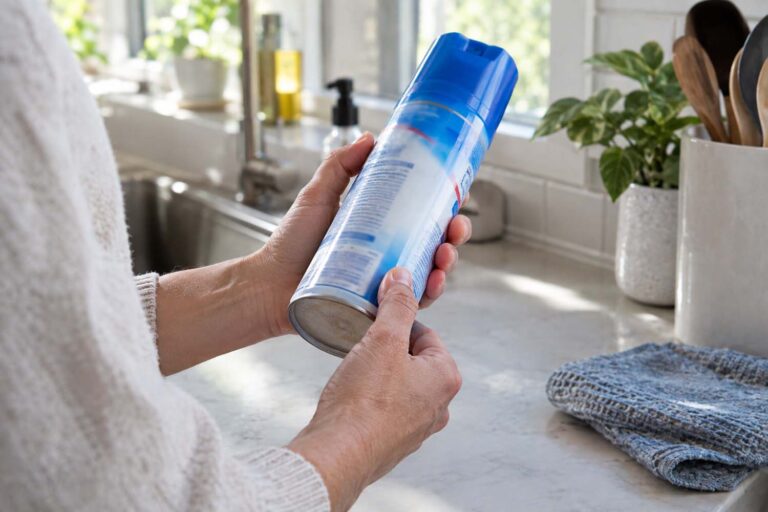
You find a can of Lysol spray or a half-used tub of wipes under the sink, maybe left over from a cold and flu season a couple of years back. Does Lysol go bad?
The short answer: Yes, and the way it fails depends on which product you’re holding. Lysol’s disinfecting products are registered with the EPA as pesticides, each under its own registration number, which Lysol’s own FAQ page confirms. That EPA registration is exactly why these products carry real, tested expiration dates: the active disinfecting ingredients genuinely lose potency over time. Commonly cited shelf life across sprays, wipes, and liquid cleaners is around 2 years from manufacture. Here’s the part most people don’t expect: the fragrance and the disinfecting power are separate systems entirely, so an expired can can still smell perfectly clean while doing almost nothing to actually kill germs.
For more household shelf-life guides, check out our full Household Shelf Life Guide.
Key Takeaways
- Lysol disinfecting products are EPA-registered pesticides, each carrying its own registration number, which is why they’re required to carry a real, tested expiration date, commonly around 2 years from manufacture.
- Fragrance and disinfecting power are unrelated. The scent comes from a separate fragrance system, so an expired can or wipe can smell exactly like it always has while the active germ-killing ingredients have already broken down.
- Each product format fails differently. Aerosol sprays can lose propellant pressure and spray unevenly, wipes dry out and become brittle, and liquid cleaners can separate into visible layers.
- Wipes are the most vulnerable to a much shorter real-world life than the printed date suggests, since every time the lid is left open even briefly, the alcohol or moisture in the wipes evaporates.
- “Expired” Lysol won’t typically hurt you, it just won’t reliably disinfect. The product may still work fine as a basic cleaner or air freshener even after it’s no longer meeting real disinfecting standards.
- Temperature swings, like a garage that gets hot in summer and cold in winter, can cause active ingredients to separate or crystallize faster than stable indoor storage would.
Why Disinfectants Get Real Expiration Dates and Most Cleaners Don’t
This Is Pesticide Regulation, Not Cosmetics Regulation
Lysol’s disinfecting products aren’t regulated like a household cleaner or a cosmetic; they’re registered with the EPA under the Federal Insecticide, Fungicide, and Rodenticide Act, the same framework that governs pesticides. Depending on the specific product, the active disinfecting ingredient is typically ethanol, a quaternary ammonium compound (often listed as things like alkyl dimethyl benzyl ammonium chloride), or hydrogen peroxide. All three are genuinely reactive compounds that degrade with time, heat, and light exposure, in the same general way bleach’s sodium hypochlorite does.
Because these are registered pesticide products, not just cosmetics, the EPA requires the manufacturer to establish and test a real shelf life for the active ingredient’s disinfecting claims to hold up. That’s a fundamentally different regulatory bar than something like nail polish remover or plain Vaseline, which face no such requirement.
Why the Smell Doesn’t Tell You Anything
This is the detail that trips up almost everyone. The pleasant scent in Lysol products comes from a fragrance system that’s formulated separately from the active disinfecting ingredients. Fragrance compounds and disinfecting compounds don’t necessarily degrade at the same rate or on the same timeline, which means a can or wipe container can smell exactly as fresh and “clean” as the day you bought it while the actual germ-killing chemistry underneath has already fallen well below the EPA-tested effective concentration. If you’re relying on Lysol specifically to disinfect, not just to make a room smell nice, the smell test that works for so many other household products in this series simply doesn’t apply here.
How Each Product Format Actually Fails
| Format | Typical Shelf Life | How It Fails |
|---|---|---|
| Aerosol spray | ~2 years | Propellant loses pressure; spray pattern becomes uneven or weak |
| Disinfecting wipes | ~2 years unopened; much shorter once opened | Dry out and become brittle, especially if the lid isn’t resealed tightly |
| Liquid cleaner / pourable | ~2 years | Formula can separate into visible layers, especially after temperature swings |
These figures describe disinfecting effectiveness specifically, not a safety cutoff. A product past this window generally isn’t harmful to use, it’s just no longer reliable for actual disinfection.
Signs Your Lysol Has Lost Its Disinfecting Power
What to Actually Check
Don’t rely on smell. As covered above, fragrance and disinfecting power aren’t linked, so this is the one household product in this series where a normal scent tells you nothing about whether it’s still working.
Check the printed expiration date or lot code on the bottom of the can or the wipes container. This is the single most reliable indicator, since it reflects the manufacturer’s actual stability testing.
Weak, sputtering, or inconsistent aerosol spray is a physical sign the propellant has degraded, separate from whether the disinfecting chemistry itself is still intact.
Dry, brittle, or crumbling wipes mean the moisture and active ingredient the wipe depends on to transfer disinfectant to a surface has evaporated. A dried-out wipe isn’t disinfecting anything, no matter how vigorously you scrub with it.
Visible separation or an unusual texture in liquid cleaners. This points to the formula breaking down, most often from temperature swings during storage.
How to Store Lysol So It Lasts
Storage Best Practices
Keep wipes containers tightly sealed between uses. This matters more than almost anything else on this list; every extra second the lid sits open lets moisture and alcohol evaporate, shortening the real-world life of the wipes still inside well below the printed date.
Store at stable indoor room temperature, not in a garage, shed, or car that swings between hot and cold. Those temperature cycles are a major driver of separation and crystallization in the active ingredients. This is worth keeping in mind if you’re the type to stock up before a big push, like working through a spring cleaning list, a natural spring cleaning routine, or a Christmas or Thanksgiving cleaning checklist; buy what you’ll actually use in that window rather than a supply meant to sit in storage for months between seasonal cleans.
Keep aerosol cans away from heat sources entirely, both for shelf life and basic safety, since they’re pressurized containers.
Avoid direct sunlight, which accelerates the breakdown of the active disinfecting ingredients the same way it does with bleach.
What to Do With Expired Lysol
Because these are EPA-registered pesticide products rather than plain household cleaners, it’s worth treating disposal a little more carefully than something like old shampoo or nail polish remover. A can or bottle that’s genuinely empty can go in regular trash or recycling depending on your local rules. A significant amount of unused, expired product is best taken to a household hazardous waste collection site rather than poured down the drain, since local wastewater treatment isn’t necessarily equipped to handle concentrated pesticide-registered chemicals the way it handles more common household products.
Where Fresh Disinfecting Actually Matters
A genuinely fresh can or wipes container earns its keep most when travel is involved; if you’ve ever wondered how to know if your hotel room is really clean, packing a small container of disinfecting wipes to handle remote controls, light switches, and door handles yourself is a common and reasonable precaution, and it only works if the wipes you’re packing are actually still potent. If you’d rather lean on a gentler, non-EPA-registered option for everyday surface cleaning that isn’t about disinfecting specifically, our post on house cleaning with Powerizer covers a plant-based alternative worth knowing about.
Frequently Asked Questions
Does Lysol actually expire?
Yes. Lysol’s disinfecting products are registered with the EPA as pesticides, and that registration requires the manufacturer to establish a genuine, tested expiration date for how long the active ingredient remains effective. Commonly cited shelf life is around 2 years from manufacture, though this varies somewhat by specific product and format.
Is it dangerous to use expired Lysol?
Generally, no. Expired Lysol isn’t typically a safety hazard to use, it’s simply less reliable at actually disinfecting a surface. The real risk isn’t harm from using it, it’s false confidence: trusting an expired product to kill germs on a surface when it may no longer be doing that job effectively.
Why does my expired Lysol still smell clean?
Because the fragrance and the disinfecting chemistry are separate systems within the formula. The pleasant scent can remain fully intact long after the active disinfecting ingredient has degraded past the point of reliably killing germs, which means smell is not a useful way to judge whether a Lysol product is still doing its job.
Do Lysol wipes dry out faster than the spray?
In practical, real-world use, generally yes. While both formats carry a similar printed shelf life of around 2 years unopened, wipes are much more exposed to air every time the container is opened, and repeated exposure evaporates the moisture and active ingredient the wipes depend on. A container of wipes that’s opened and closed loosely, or left open for a while, can dry out noticeably faster than its printed date would suggest, while an aerosol can stays sealed between each individual spray.
Further Reading
- Does Bleach Go Bad?
- Does Hydrogen Peroxide Go Bad?
- Does Rubbing Alcohol Go Bad?
- 18 DIY Natural, Non-Toxic Cleaning Recipes
- Eco-Friendly Cleaning
- How to Use Apple Cider Vinegar to Clean Your Kitchen
- How to Remove Stains From Clothes

Better Living may earn commissions through affiliate links and may occasionally feature sponsored or partner content. If you make a purchase through our links, we may receive a small commission at no cost to you.