
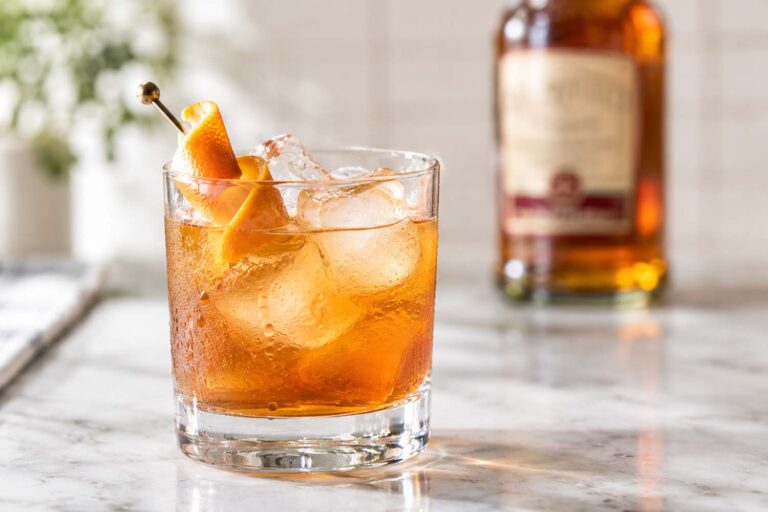
You find a bottle of Southern Comfort in the back of the cabinet, maybe left over from a hurricane cocktail or a New Orleans-themed party. Does Southern Comfort go bad?
The short answer: Barely, though there’s a genuinely surprising story behind what’s actually in the bottle that’s worth knowing before we get to shelf life. Despite looking and being marketed like a whiskey, Southern Comfort is legally classified as a liqueur, not a straight whiskey, and its relationship with whiskey itself has had a strange history: at one point the brand’s formula didn’t contain any real whiskey at all, something that drew enough consumer disappointment that current owner Sazerac publicly brought whiskey back into the recipe during a 2017 relaunch. Southern Comfort’s own FAQ page confirms the original bottling sits at 70 proof, or 35% ABV, with a lower-proof 42 Proof (21% ABV) version also available. That combination of real spirit strength plus added sugar and fruit flavoring is exactly why it behaves more like a liqueur than a pure spirit once opened.
For more shelf-life guides across the rest of your bar cart, check out our full Bar & Spirits Guide.
Key Takeaways
- Southern Comfort is legally a liqueur, not a whiskey, even though it’s flavored and marketed with whiskey in mind. Its own label describes it as a “spirit whiskey with natural flavors,” a distinct legal category from straight bourbon or Tennessee whiskey.
- Whether it actually contains whiskey has changed over time. The brand’s formula went through a stretch without any real whiskey in it, and Sazerac, the current owner, has publicly stated they brought whiskey back into the recipe during a 2017 relaunch after fans noticed and pushed back.
- Unopened Southern Comfort: Effectively indefinite when stored properly, thanks to its alcohol content.
- Opened Southern Comfort: Commonly good for about 1 to 2 years, shorter than a pure spirit because of its added sugar and fruit flavoring, similar to other liqueurs in this cluster.
- Store the bottle upright, not on its side. The higher sugar content in a liqueur like this can affect a cap or cork seal over long periods of contact.
- Past its prime, it turns syrupy and loses its fruit notes rather than becoming unsafe, the same general pattern as other flavored liqueurs.
The Strange History of Whether “Whiskey” Is Actually in the Bottle
A Recipe That’s Changed More Than Most Brands Admit
Southern Comfort was created in New Orleans in the 1870s, and its exact recipe has always been kept a closely guarded secret. What’s not a secret is that the brand has changed hands and formulas several times. By the time Brown-Forman, the company behind Jack Daniel’s, bought Southern Comfort in 1979, the alcohol in the bottle was coming from grain neutral spirit, not real whiskey, and that stayed true for decades under Brown-Forman’s ownership. Sazerac bought the brand in 2016, and it was Sazerac’s own team that brought real whiskey back into the recipe as part of a 2017 relaunch, something the company has publicly credited to fans noticing and pushing back on the absence.
Sazerac’s own marketing team has publicly acknowledged this gap and stated they reintroduced real whiskey into the recipe as part of a 2017 relaunch, specifically to win back drinkers who’d noticed its absence. Whatever the exact current blend is, and the company doesn’t disclose precise proportions, the bigger point for anyone checking a label stands regardless: Southern Comfort’s added sugar content is high enough that it’s classified as a liqueur under alcohol labeling rules, not a straight whiskey, the same reason a bottle of Baileys or amaretto isn’t labeled as whiskey or brandy even when whiskey or brandy is part of the base.
How Long Southern Comfort Actually Lasts
| Condition | Shelf Life |
|---|---|
| Unopened, stored properly | Indefinite |
| Opened, 70 Proof original | Commonly 1 to 2 years for best flavor |
| Opened, 42 Proof (21% ABV) version | Shorter window; lower alcohol content means less natural preservation |
These figures describe flavor quality, not a safety cutoff. A mostly-full, tightly-sealed bottle will hold its character longer than a nearly-empty one exposed to more air over time.
Signs Your Southern Comfort Has Lost Quality
When It’s Past Its Best
An unpleasantly syrupy texture in place of its usual smooth pour. This is one of the more distinctive signs with this particular liqueur, more noticeable than in most straight spirits.
Muted peach, orange, and spice notes, the fruit flavoring fading well before the alcohol itself becomes an issue.
A flat, one-dimensional sweetness without the balancing warmth and spice that make it taste like Southern Comfort rather than just sugar water with alcohol in it.
How to Store Southern Comfort So It Lasts
Storage Best Practices
Store the bottle upright, not on its side. The sugar content in a liqueur like this can affect a cap or cork seal with prolonged contact, the same general concern that applies to whiskey stored the wrong way.
Keep it in a cool, dark cabinet away from direct sunlight and heat, ideally between about 55°F and 70°F.
Reseal it tightly after every pour, and consider a smaller bottle for a nearly-empty one to reduce how much air sits in contact with the remaining liqueur.

A New Orleans Original, Still Tied to the City
Southern Comfort’s roots in 1870s New Orleans are still part of its identity today, and it shows up regularly in the city’s cocktail and party culture, including as a common pour during Mardi Gras season; our Mardi Gras facts and Mardi Gras recipes roundups are worth a look if that’s the occasion you’re stocking for. It’s also a fairly common bottle to turn up in a Father’s Day gift basket, so it’s worth knowing it holds up well if Dad doesn’t finish it right away. For general hosting help beyond that, our summer entertaining tips and holiday pizza party guides cover the broader side of planning a gathering.
Frequently Asked Questions
Is Southern Comfort actually a whiskey?
No, not legally. It’s classified as a liqueur, labeled by the brand itself as a “spirit whiskey with natural flavors,” because its sugar content is too high to qualify as a straight whiskey under alcohol labeling rules. Whether real whiskey is blended into the base has actually changed over the brand’s history; the recipe went without any at one point, and current owner Sazerac has stated they added it back during a 2017 relaunch. Either way, the liqueur classification itself doesn’t depend on that detail.
Does Southern Comfort expire?
Unopened, it’s effectively indefinite when stored properly, the same as most spirits in this cluster. Opened, it’s shorter-lived than a pure spirit like vodka or whiskey, commonly good for about 1 to 2 years, since the added sugar and fruit flavoring have more to lose to oxidation than alcohol alone.
What’s the difference between the 70 Proof and 42 Proof versions?
According to Southern Comfort’s own FAQ, the 42 Proof (21% ABV) version is a lower-alcohol addition to the lineup, not a replacement for the original 70 Proof (35% ABV) bottling, which remains available. The lower-proof version follows the same general shelf-life logic, but its reduced alcohol content means it has somewhat less natural preservation working in its favor once opened.
Further Reading

Better Living may earn commissions through affiliate links and may occasionally feature sponsored or partner content. If you make a purchase through our links, we may receive a small commission at no cost to you.