
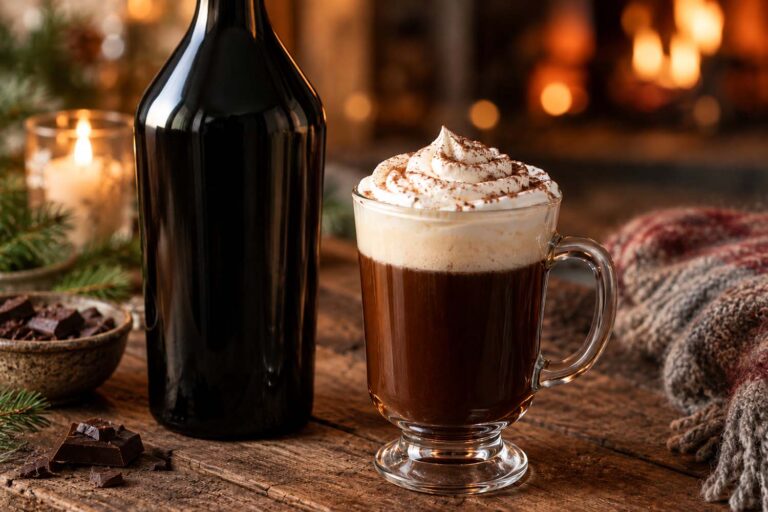
You find a bottle of Baileys in the back of the fridge, or maybe it’s been sitting in the liquor cabinet since last Christmas. Does Baileys go bad?
The short answer: Unlike every other spirit in this cluster, the answer here is genuinely yes, eventually, though not nearly as fast as you’d expect from a dairy product. Baileys’ own stated policy is that it guarantees its taste for 2 years from the date it was made, whether the bottle is opened or unopened, refrigerated or not. That’s a real, unusual claim for something made with real cream, and it comes down to how the product is manufactured. But once a bottle is genuinely past its prime, curdled, separated, or off-smelling, this is one of the few spirits in this cluster where “expired” can actually mean unsafe, not just less enjoyable.
If you’re working through a bottle, our St. Patrick’s Day cocktail roundup has a couple of Irish cream-based recipes worth trying, including the Luck of the Irish Shots and Lucky Charms Pudding Shots. For more shelf-life guides across the rest of your bar cart, check out our full Bar & Spirits Guide.
Key Takeaways
- Baileys’ own guidance: 2 years from the date of manufacture, whether the bottle is opened or unopened, refrigerated or not, as long as it’s kept between roughly 32°F and 77°F and away from direct sunlight.
- Unlike vodka or whiskey, this isn’t just about flavor. Baileys contains real dairy cream, so genuine spoilage, not just dulled taste, is possible if the seal fails or it’s stored badly for a long time.
- Refrigeration isn’t required, but it helps. Baileys’ roughly 17% alcohol content acts as the preservative that lets it skip refrigeration, something lower-proof cream liqueurs generally can’t do.
- Not all cream liqueurs behave the same way. Some competing Irish cream brands sit at a lower ABV and do require refrigeration after opening; check the label rather than assuming Baileys’ rules apply universally.
- Curdling, separation that won’t shake back together, or a sour smell mean discard it, not just “it’s past its best.” This is a real food-safety signal, not a flavor complaint.
- Don’t freeze it. The dairy component separates and turns grainy when frozen and thawed, unlike straight spirits, which just get cold.
Why Cream Changes Everything About This One
A Genuine Emulsion, Not Just Flavored Alcohol
Every other post in this cluster covers a spirit that’s essentially just ethanol and flavor compounds, all comfortably above the concentration where bacteria and mold can survive. Baileys is different: it’s a stable emulsion of real dairy cream, Irish whiskey, and other spirits, blended so the fat in the cream stays suspended in the alcohol rather than separating out. Diageo, the company behind Baileys, has said the process is specifically engineered to let the roughly 17% alcohol content act as a preservative for the cream without needing added preservatives, which is how they can make the 2-year, no-refrigeration-required claim in the first place.
That emulsion is also the thing that eventually fails. Given enough time, heat, or a compromised seal, the fat and water components of the cream can separate from each other and from the alcohol. Once that happens, you’re looking at an actual spoiled dairy product with alcohol in it, not just a spirit that’s lost some aroma. This is the key reason Baileys gets real storage guidance with real consequences, where the pure spirits in this cluster mostly just get vague “it’ll taste a bit flatter” warnings.
How Long Baileys Actually Lasts
| Condition | Shelf Life |
|---|---|
| Unopened, any storage temp in range | 2 years from manufacture date (printed on bottle) |
| Opened, refrigerated | Same 2-year window per Baileys; best flavor within 6 months |
| Opened, room temperature | Technically covered by the same guarantee, but refrigeration is worth doing anyway |
The 2-year, no-refrigeration-required figure reflects Baileys’ own long-stated company policy, confirmed on the record by a Diageo brand director. It applies specifically to Baileys Original; flavored variants and other brands of Irish cream may carry shorter windows or explicit refrigeration requirements, so check the label.
Signs Your Baileys Has Actually Gone Bad
When to Actually Throw It Out
Curdling or visible separation that doesn’t recombine when you shake the bottle. A little separation that shakes back into a smooth liquid is normal. Lumps, chunks, or a layer that won’t re-blend is not.
A sour, cheesy, or otherwise “off” dairy smell. Fresh Baileys smells sweet, creamy, and faintly of whiskey and chocolate. Anything that smells like spoiled milk is a genuine spoilage sign, not just a quality dip.
Visible mold, especially around the neck or cap if the bottle has been open a very long time. Discard immediately without tasting.
A noticeably thicker, grainy, or gritty texture compared to the smooth pour you remember. This usually points to the emulsion breaking down.
Unlike the straight spirits in this cluster, these signs mean you should actually discard the bottle rather than just expect a duller flavor. This is the one entry here where “past its prime” and “unsafe” can genuinely overlap.
How to Store Baileys So It Lasts
Storage Best Practices
Unopened bottles don’t need the fridge. A cool cabinet or pantry away from direct sunlight, between roughly 32°F and 77°F, is exactly what Baileys’ own guidance calls for.
Refrigerate after opening anyway. It’s not strictly required by the manufacturer’s own claim, but cold temperatures slow down any gradual separation and most people simply prefer it chilled.
Keep the cap on tightly between pours, and use a clean pour spout or clean glass rather than dipping anything into the bottle.
Don’t put it in the freezer. The water and fat in the cream will separate as it freezes, and thawing won’t bring the smooth texture back, unlike a straight spirit that just gets cold and stays liquid.

What to Do With a Bottle You’re Not Sure About
If a bottle is within the printed date and shows none of the spoilage signs above, it’s fine to use. If it’s questionable but not obviously spoiled, a small taste test is a reasonable way to check, since unlike a straight spirit, this is a case where trusting your senses genuinely matters. If it’s curdled, moldy, or smells sour, don’t cook with it either; heat won’t make spoiled dairy safe. A bottle you’re discarding can generally go down the drain with plenty of water, the same as you’d handle spoiled milk or cream, since the alcohol content is too low at that point to be a meaningful disposal concern.
Frequently Asked Questions
Does Baileys need to be refrigerated?
Not according to Baileys’ own guidance, either before or after opening. A Diageo brand director has stated on the record that Baileys guarantees its taste for 2 years, opened or unopened, refrigerated or not, as long as it’s kept within a normal room-temperature range and out of direct sunlight. Refrigeration isn’t required, but it’s commonly recommended anyway since it helps preserve flavor and most people prefer it served cold.
Is it safe to drink Baileys past the date on the bottle?
It depends entirely on how it looks and smells, which is different from the pure spirits in this cluster. A bottle that’s slightly past its date but shows no curdling, separation, or off smell is likely still fine. But because this product contains real dairy, past-date Baileys that’s actually showing spoilage signs should be treated like spoiled dairy, not like an old bottle of vodka that’s simply lost some flavor.
Do all Irish cream liqueurs last as long as Baileys?
No, and this is worth knowing before you assume every cream liqueur behaves the same way. Baileys’ ability to skip refrigeration comes specifically from its roughly 17% alcohol content combined with its particular manufacturing process. Some other cream liqueurs are bottled at a lower proof and explicitly require refrigeration after opening on their own labels. Always check the specific bottle rather than assuming Baileys’ rules apply across the board.
Why did my Baileys curdle when I mixed it into coffee or a cocktail, even though the bottle seems fine?
This is almost always chemistry, not spoilage. Cream curdles on contact with acid or high heat, so mixing Baileys with something citrusy, with tonic water, or with very hot coffee can cause it to curdle right in the glass even from a perfectly good bottle. This is exactly how novelty shots like the Cement Mixer, which deliberately combines Baileys with lime juice, get their curdled effect on purpose. The simple test: pour a small amount straight from the bottle with nothing else added. If that’s smooth and tastes normal, your bottle is fine, and the curdling was caused by whatever you mixed it with, not the Baileys itself.
Further Reading

Better Living may earn commissions through affiliate links and may occasionally feature sponsored or partner content. If you make a purchase through our links, we may receive a small commission at no cost to you.