
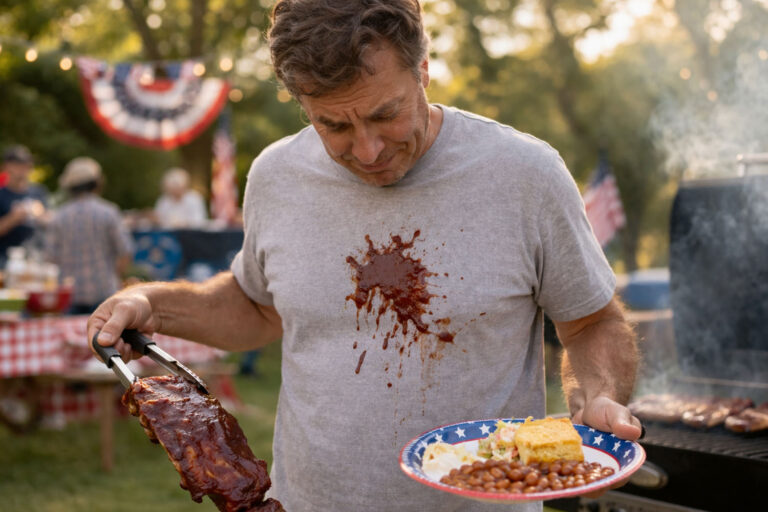
How to get BBQ sauce out of clothes is a question I never expected to test systematically. Then came the Fourth of July.
I was pulling ribs off the grill, tongs in one hand, plate in the other, when the rack shifted. The plate tilted. And a full rack of sauced ribs made contact with my white linen shirt in a way that I can only describe as thorough.
I did what anyone does: grabbed a paper towel, made it worse, then stood at the sink for ten minutes achieving nothing while the sauce dried into the fabric. By the time I actually treated it properly I’d already lost ground I didn’t need to lose.
BBQ sauce isn’t a single stain. That’s the thing nobody tells you and the reason most treatments fail. It’s four stains layered on top of each other, each with different chemistry, each requiring a different approach. Treat one and ignore the others and you’ll end up with a shirt that looks better but still isn’t clean, or worse, a shirt that develops a mysterious brown shadow after washing that you can’t explain.
I’ve now tested this the same way I tested tomato sauce, ketchup, and mustard: deliberately stained shirts, tested every method, documented what actually worked and what didn’t. Here’s the full picture.
Why BBQ Sauce Is Harder to Remove Than Ketchup or Tomato Sauce
A lot of guides treat BBQ sauce as a tomato-based stain and call it a day. That’s why a lot of treatments fail. BBQ sauce shares the lycopene pigment with ketchup and tomato sauce, but it has three additional stain-forming components that those sauces don’t, and each one behaves differently on fabric.
Layer 1: Lycopene (the red pigment). Same as ketchup and tomato sauce. Fat-soluble, water-resistant, requires a surfactant like dish soap and an oxidizer like OxiClean or hydrogen peroxide to break down. This is the visible red stain.
Layer 2: Caramelized sugars. BBQ sauce contains molasses, brown sugar, honey, or corn syrup, often all four. When these hit hot fabric or sit on the surface of any fabric for more than a few minutes, the sugars begin to caramelize and bond to the fibers. This is the sticky, darkening component that makes BBQ sauce behave differently from plain ketchup. It’s also the source of the brown shadow stain that remains after the red color clears. Enzyme cleaners that contain amylase specifically target this layer.
Layer 3: Tannins. Tannins occur naturally in tomatoes and are also present in vinegar-based sauces, Worcestershire, and smoke flavorings. They’re the same compounds that stain teeth and wine glasses. On fabric, tannins create a brown-yellow discoloration that persists after the red lycopene is gone. This is the other component of the brown shadow. Tannins respond to OxiClean and vinegar but require longer soak times than lycopene alone.
Layer 4: Grease and oil. Most BBQ sauces contain oil directly. Sauced ribs and pulled pork add meat drippings on top of that. This grease layer creates a hydrophobic barrier that repels water-based treatments and traps the other pigments in place. It must be broken down first with dish soap before any other treatment can penetrate properly.
The American Cleaning Institute recommends multiple pre-treatment approaches for complex food stains, targeting different components rather than applying a single product and hoping for the best. Starting with the wrong treatment doesn’t just fail. It can lock in the layers you haven’t addressed yet.
Scrape First: The Rule That Applies to Every BBQ Stain
BBQ sauce is viscous. It sits on top of fabric rather than immediately soaking through, which actually gives you a brief advantage over thinner sauces. If you act within the first minute or two, a significant amount can be removed before it penetrates the fibers.
The instinct is to blot or wipe. Don’t. BBQ sauce’s viscosity means wiping spreads it sideways across a much larger area. Instead, scrape. Use a spoon, the dull edge of a butter knife, or a credit card. Work from the outside edge inward, lifting the sauce off the fabric surface without pressing it in.
Then run cold water through the back of the stain immediately. This flushes the soluble components, sugars and some acids, before they have time to bond. It won’t touch the grease or lycopene layers, but it buys you time and reduces the total volume of stain chemistry you’re dealing with.
My time test: I stained five white cotton shirts and treated them at 2 minutes, 15 minutes, 1 hour, 4 hours, and 8 hours. The 2-minute shirt came out completely clean. The 15-minute shirt had a faint brown shadow after the first treatment round, clearing on the second pass. The 8-hour shirt still had a visible brown tinge after three full treatment cycles. Act fast, but don’t panic. Even older stains are largely treatable if you use the right sequence.
How to Get BBQ Sauce Out of Clothes: 5 Methods Tested and Ranked
How to Fix the Brown Shadow Stain
This gets its own section because it’s the most common reason people think a BBQ sauce stain is gone when it isn’t, and why it seems to “come back” after washing.
Here’s what’s happening. The initial treatment cleared the lycopene (the red layer) but left behind the caramelized sugar and tannin residue. When wet, this residue is nearly invisible. When the garment dries, it appears as a brown, yellow-brown, or amber shadow where the stain was. It isn’t a new stain and it isn’t the original stain resetting. It’s simply the layers that weren’t addressed.
The fix is specific: an enzyme soak targeting the sugar layer, followed by an OxiClean soak for the tannins.
Step 1: Rewet the affected area with cold water.
Step 2: Apply an enzyme stain remover spray directly to the shadow. Work it in gently. Let it sit for 30 minutes. This is longer than the usual 15 minutes because you’re targeting dried, set sugar residue rather than fresh.
Step 3: Without rinsing, submerge in an OxiClean warm water soak for two to four hours.
Step 4: Launder normally in the warmest water the fabric allows.
Step 5: Check before drying. For white fabrics, if a faint shadow remains after laundering, hang the garment damp in direct sunlight for two to four hours. UV oxidation works on tannin residue the same way it works on lycopene.
In my testing this sequence cleared the brown shadow on every shirt where the original red stain had already been removed. It failed only on two shirts where the stain had gone through the dryer before the shadow was addressed. At that point the sugar caramelization was heat-set into the fabric.
How to Get Dried BBQ Sauce Out of Clothes
Dried BBQ sauce is significantly harder than fresh because the sugar layer has had time to caramelize further and the grease has oxidized. But the same sequence works, extended.
Step 1: Scrape off any dried crust carefully. Dried BBQ sauce flakes off differently from dried ketchup. It tends to be sticky rather than brittle. Use a credit card rather than a knife to avoid scratching fabric.
Step 2: Soak the stained area in cold water for 15 to 20 minutes to rehydrate the stain. This is especially important with BBQ sauce because the sugar layer has effectively glued itself to the fabric and needs to soften before any treatment can penetrate.
Step 3: Apply dish soap and work it in firmly for two to three minutes. Rinse.
Step 4: Apply enzyme spray and let it sit for 30 minutes.
Step 5: OxiClean soak overnight in warm water.
Step 6: Launder in the warmest water the fabric allows. Check before drying. Repeat the enzyme and OxiClean steps if any brown shadow remains.
For stains more than 24 hours old, I’ve consistently gotten better results doing the first treatment round, air drying, then doing a completely fresh enzyme plus OxiClean round the following day. The two-session approach lets each phase of the treatment do its full work before the next begins.
What If It Already Went Through the Dryer?
The dryer is particularly damaging for BBQ sauce because heat caramelizes the sugar layer further and sets all four stain components simultaneously. This is the scenario with the lowest removal rate in my testing, around 55% for full removal, worse for thick molasses-heavy sauces on natural fibers.
It’s still worth trying. The approach is the same as dried stains but more aggressive and more patient.
Step 1: Rehydrate with a 20-minute cold water soak.
Step 2: Apply dish soap firmly, work it in for three to five minutes. Let sit 15 minutes. Rinse.
Step 3: Apply enzyme spray. Let sit for 45 minutes to an hour. Don’t rush this step. The enzyme needs maximum time to break through the heat-set sugar layer.
Step 4: OxiClean soak in hot water, 12 hours minimum. For white fabrics, follow with the hydrogen peroxide and dish soap mixture before washing.
Step 5: Air dry only. Inspect carefully in good light before any heat. Expect three to five treatment rounds for heat-set stains.
How to Get BBQ Sauce Out of White Clothes
White fabrics give you access to the full arsenal and are the easiest scenario for BBQ sauce, with one caveat: the brown shadow shows up more visibly on white than on any other fabric color.
The hydrogen peroxide and dish soap combination (3 parts peroxide to 1 part Dawn) is your primary weapon. Apply after the dish soap pre-treatment and enzyme spray, let sit 20 to 30 minutes, rinse and launder. On white cotton this sequence handled every fresh stain completely in testing.
For the brown shadow on white fabrics: hydrogen peroxide is more effective than OxiClean at clearing tannin residue. Apply it directly to the shadow area, let it sit for 30 minutes, then hang the damp garment in direct sunlight for two to four hours. This combination cleared every brown shadow I encountered on white fabric.
The one thing to avoid on whites: chlorine bleach. It can interact with the iron in tomato solids to create rust-colored rings that are worse than the original stain. Hydrogen peroxide gets you the same result without the risk.
Does the Type of BBQ Sauce Matter?
It does, and nobody else covers this. The regional style of your BBQ sauce changes the treatment priority because the dominant stain layer differs.
How to Remove BBQ Sauce Stains by Fabric Type
The method sequence above works for most fabrics, but the details change.
Cotton and cotton blends: The most forgiving. Handles all treatments including hot water OxiClean soaks, hydrogen peroxide, and multiple treatment rounds without damage.
Jeans and denim: Dish soap and enzyme spray first, then an OxiClean warm water soak rather than hot to avoid uneven fading. Avoid hydrogen peroxide on colored denim. The tight weave keeps BBQ sauce closer to the surface, which helps initial removal.
Linen: Act immediately. The open weave allows the sugar and oil layers to penetrate fast. Extended OxiClean soaks work well. Hydrogen peroxide and sunlight for white linen.
Polyester and synthetics: Grease and oil actually bond more aggressively to synthetic fibers than to natural ones. Give the dish soap pre-treatment extra time, three to four minutes of working it in rather than two. Enzyme spray after. OxiClean soak works well on synthetics.
Silk: Avoid OxiClean, hydrogen peroxide, and hot water. Blot as much as possible, cold water rinse, then professional dry cleaning. Point out all components of the stain (red, brown, and grease) so they can treat each layer appropriately.
Wool and cashmere: Professional cleaning. Cold water and wool-specific detergent only at home. No agitation, air dry flat. Never the dryer.
What Definitely Doesn’t Work
- Skipping the dish soap pre-treatment: Applying OxiClean or enzyme spray to a grease-coated stain significantly reduces their effectiveness. The grease barrier has to come off first.
- Hot water before treating: Heat caramelizes the sugar layer and locks it into fabric before you’ve applied any treatment. Cold water for the initial flush, always.
- Treating the red stain and ignoring the brown shadow: The brown shadow is a separate layer. It won’t clear on its own and it won’t respond to the same treatment as lycopene. Address it specifically with an enzyme soak.
- Dryer before the stain is fully gone: Dryer heat sets all four layers simultaneously. A stain that was 90% gone becomes permanent. Check carefully in good light before drying.
- Chlorine bleach on tomato-based sauces: Can react with iron in tomato solids to create rust-colored rings that are harder to remove than the original stain. Use oxygen bleach instead.
- Treating only once and giving up: BBQ sauce almost always requires multiple treatment rounds. A fresh stain that doesn’t fully clear on the first pass will often clear completely on the second. Don’t give up after one try.
My Step-by-Step Emergency Protocol
Based on everything I tested, here’s the exact sequence I follow now. This is the one I wished I’d had that Fourth of July.
Step 1: Scrape off as much sauce as possible with a spoon or card edge. Don’t rub. If you’re away from home, blot carefully with a napkin from the outside edge inward.
Step 2: Run cold water through the back of the stain immediately. This flushes the soluble sugar and acid components before they bond.
Step 3: Apply blue Dawn directly to the stain. Work it in firmly with fingertips for two minutes. This is longer and more aggressive than for other stains because of the grease layer. Rinse with cold water.
Step 4: Apply enzyme spray directly to the stain. Work it in gently. Let it sit for 15 to 20 minutes. Don’t rinse.
Step 5: White fabrics get the hydrogen peroxide and dish soap mixture (3:1 ratio), applied over the enzyme spray, left to sit 20 to 30 minutes, then rinsed. Colored fabrics go straight to an OxiClean warm water soak for two to four hours.
Step 6: Launder in the warmest water the fabric allows.
Step 7: Check in good light before drying. Red stain gone but brown shadow present? Go back to Step 4 with an extended enzyme soak. Everything clear? Then and only then, dry normally.
The Stain-Fighting Kit Worth Keeping Stocked
The same kit that handles red wine, tomato sauce, ketchup, and mustard handles BBQ sauce too. The one addition worth making specifically for BBQ sauce is a dedicated enzyme spray rather than relying on whatever’s under the sink.
- Enzyme-based stain remover spray (more important for BBQ sauce than any other stain in this series)
- OxiClean Versatile Stain Remover powder
- Hydrogen peroxide (3%, standard drugstore bottle)
- Blue Dawn dish soap
- White vinegar (spray bottle)
- Clean white cloths for blotting
- A dull-edged spatula or credit card for scraping
Total cost: under $25. And if you’re building out a full natural cleaning approach for your home, this kit covers almost every food and beverage stain you’ll encounter.
Frequently Asked Questions
Does BBQ sauce stain permanently?
Not if you treat it quickly and use the right sequence. It has four layers and each needs to be addressed. Fresh stains caught within the first few minutes are very removable. The greatest risk of permanence comes from heat: either putting it through the dryer before the stain is fully cleared, or using hot water in the initial flush.
Why does a brown stain appear after I wash out the BBQ sauce?
The red lycopene cleared but the caramelized sugar and tannin layers didn’t. These turn brown or amber as they dry and are invisible when wet, which is why the stain seems to “come back.” The fix is a specific enzyme soak followed by an OxiClean treatment. See the brown shadow section above.
Does the type of BBQ sauce affect how I treat it?
Yes. Thick, sweet Kansas City-style sauces with high molasses content are the hardest because the sugar layer is thicker and caramelizes faster. Vinegar-forward Carolina-style sauces are easier because the acidity partially pre-treats the tannin layer. White BBQ sauce (mayo-based) is an entirely different stain with no lycopene.
How do I get BBQ sauce out of a white shirt?
White shirts are actually the easiest BBQ sauce scenario because you have the full arsenal available. After scraping and the cold water flush, apply dish soap firmly, follow with an enzyme spray for 15 minutes, then apply the hydrogen peroxide and dish soap mixture (3 parts peroxide to 1 part Dawn) and let it sit 20 to 30 minutes. Rinse and launder. If a brown shadow remains after washing, hang the shirt damp in direct sunlight for two to four hours. The UV bleaching effect clears tannin residue that chemical treatments leave behind. See the full white clothes section above for the complete walkthrough.
Can I use the same method for BBQ sauce on a shirt and on upholstery?
The chemistry is the same but the approach differs for upholstery. Don’t soak upholstery. Oversaturation causes water rings and can damage padding. Use dish soap and enzyme spray applied carefully with a cloth, blot rather than rinse, and repeat as needed. For carpets, the same principle applies.
Is it safe to use OxiClean on dark or colored fabrics?
OxiClean is labeled as color-safe, but test a hidden seam before soaking any dark garment. Extended soaks on very dark fabrics can cause slight fading over multiple treatments. Act fast on dark fabrics so you need fewer treatment rounds.
What about BBQ sauce from ribs or pulled pork that also has meat fat in it?
The meat fat adds to the grease layer. Give the dish soap pre-treatment extra time, three to four minutes, and consider applying it twice before moving to the enzyme step. Meat fat is thicker than oil and takes longer to break down.
Final Thoughts
BBQ sauce earns its reputation as one of the hardest food stains to remove, but the difficulty is manageable once you understand why it’s hard. Four layers, not one. Each layer needs a specific treatment. The brown shadow that appears after washing isn’t failure. It’s just a layer you haven’t addressed yet.
The sequence that works: dish soap for the grease, enzyme spray for the sugars and proteins, OxiClean for the pigments and tannins, hydrogen peroxide for white fabrics. Do them in order and don’t skip steps.
And most importantly: check before you dry. A BBQ sauce stain that’s 90% gone will be fully gone after one more treatment. Put it in the dryer and it’s potentially permanent. The dryer is where BBQ sauce stains go to win.
Have a method that worked, or a sauce that beat everything you threw at it? Drop it in the comments.
- How to Get Mustard Out of Clothes (And Why Everything You’ve Tried Has Failed)
- How to Get Ketchup Out of Clothes (What Actually Works)
- How to Get Tomato Sauce Out of Clothes: What Actually Works
- How to Get Red Wine Out of Clothes: 4 Methods That Work
- 18 DIY Natural Non-Toxic Cleaning Recipes for Your Home
Better Living may earn commissions through affiliate links and may occasionally feature sponsored or partner content. If you make a purchase through our links, we may receive a small commission at no cost to you.