
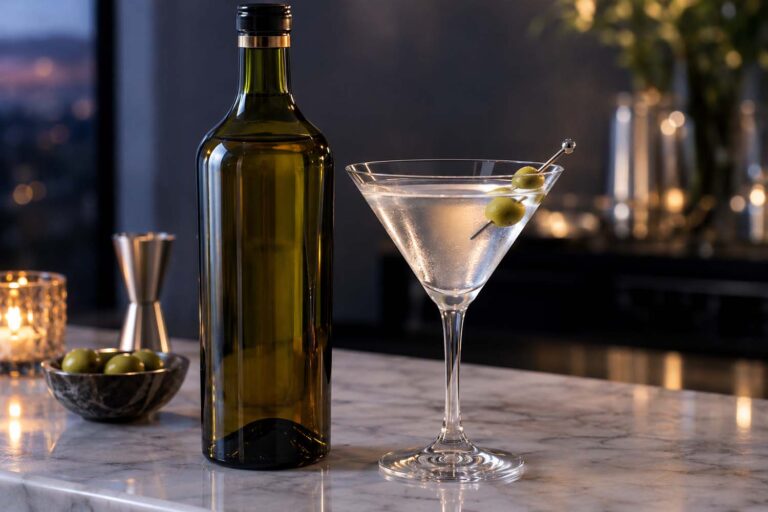
You find a bottle of vermouth in the back of the liquor cabinet, the same place it’s been sitting since you made martinis for a party months, maybe years, ago. Does vermouth go bad?
The short answer: Yes, and much faster than the rest of your bar cart. Vermouth is fundamentally a wine, fortified and flavored with botanicals, not a distilled spirit, and it oxidizes the same way an opened bottle of wine does, just somewhat more slowly thanks to the added alcohol. Unopened, it holds up well for a year or more in a cool, dark spot. Opened, most producers recommend the refrigerator and a window of roughly 1 to 3 months for dry vermouth, a bit longer for sweet, not the years you’d get away with from vodka or whiskey. If your martinis have been tasting flat and you’ve been blaming the gin, the vermouth is worth checking first.
For more shelf-life guides across the rest of your bar cart, check out our full Bar & Spirits Guide.
Key Takeaways
- Vermouth is wine, not a spirit. At roughly 15% to 18% ABV, it’s fortified above regular table wine but well below the ~40% of vodka, gin, or whiskey, and that difference is the whole story here.
- Unopened: Commonly good for 1 to 3 years in a cool, dark place, noticeably shorter than the indefinite shelf life of the spirits in this cluster.
- Opened, refrigerated: Dry vermouth is typically at its best for about 1 to 3 months; sweet vermouth holds up a bit longer, sometimes to around 4 to 6 months. A Martini & Rossi brand ambassador has put it at roughly 8 weeks for peak freshness, still drinkable for a couple of months after that.
- Refrigerate it after opening, full stop. This is the opposite of the advice in every other post in this cluster; vermouth genuinely needs the fridge once the seal is broken.
- Old vermouth won’t make you sick, but it will taste flat, dull, and vaguely like cheap sherry, and it will drag down any cocktail you use it in.
- The label itself often says so: Noilly Prat’s own product label reads “ideally keep refrigerated after opening,” which is a genuinely unusual instruction to find on a bar cart bottle.
Why Vermouth Doesn’t Play by Spirit Rules
It’s Wine With Extra Steps, Not a Neutral Spirit
Every other bottle in this cluster is a distilled spirit at roughly 40% alcohol by volume, a concentration well past the point where oxidation and bacterial growth are practical concerns. Vermouth starts as wine, gets fortified with additional alcohol and infused with a proprietary blend of botanicals, and ends up somewhere around 15% to 18% ABV. That’s meaningfully higher than a bottle of table wine, which is exactly why vermouth outlasts an open bottle of Chardonnay, but it’s nowhere near the self-preserving territory of a 40% spirit.
Once the seal is broken, oxygen gets in and starts doing to vermouth roughly what it does to any wine, just more slowly. The aromatic compounds and botanical brightness that make a good vermouth taste alive are the first things to fade, followed by a gradual shift toward flat, dull, and eventually vinegary as oxidation continues. Noilly Prat itself, when asked directly, has said an opened bottle should go in the fridge and be used within about three months, guidance that simply doesn’t exist for the pure spirits elsewhere in this cluster because they don’t need it.
How Long Vermouth Actually Lasts
| Condition | Shelf Life |
|---|---|
| Unopened, cool and dark | 1 to 3 years |
| Opened dry vermouth, refrigerated | About 1 to 3 months |
| Opened sweet vermouth, refrigerated | About 2 to 4 months, sometimes longer |
| Opened, left at room temperature | Just a few weeks before noticeable decline |
These figures vary by brand and are best treated as a range rather than a hard cutoff. Dry vermouth’s lower sugar content means it shows oxidation sooner than sweet vermouth, whose sugar and darker flavor compounds mask the change for longer. None of these numbers describe a safety cutoff, only a quality one.
Signs Your Vermouth Has Gone Bad
When It’s Past Its Best
A darker or browner color than when you first opened it. This is a direct visual sign of oxidation, the same way a glass of white wine left out overnight turns golden.
A flat, muted aroma where the herbal, citrusy, or botanical brightness used to be. This is usually the very first thing to go, often before the taste changes much at all.
A sour, bitter, or medicinal taste in place of the balanced flavor you remember. Vermouth that’s tipped fully into spoiled will start to taste sharp and vinegary, the same direction any old wine goes.
None of this will make you sick. Vermouth that’s oxidized is unpleasant, not dangerous, so the worst outcome of using an old bottle is a disappointing cocktail, not a health risk.
How to Store Vermouth So It Lasts
Storage Best Practices
Refrigerate it once it’s open, no exceptions. This is the single biggest thing that separates vermouth from every other bottle in this cluster, and it’s printed right on the label of major brands like Noilly Prat.
Store an unopened bottle in a cool, dark place like a pantry or cabinet, away from direct light and heat, the same basic rule as wine.
Recap it tightly after every pour, and consider a smaller bottle if you only use vermouth occasionally, since a nearly-empty large bottle has much more headspace and oxidizes faster than a smaller bottle kept fuller.
For serious use, inert gas wine preservers like the sprays bartenders use on opened wine can meaningfully extend vermouth’s life by displacing the oxygen sitting on top of the liquid. It’s a legitimate step up from just recapping if you go through vermouth slowly.

What to Do With a Bottle That’s Past Its Best
Vermouth that’s lost its brightness but isn’t sour or vinegary is still fine for cooking, where its flavor gets diluted into a sauce or braise anyway and a little flatness won’t be noticeable. It’s also a reasonable candidate for a more forgiving cocktail with bold other ingredients rather than something like a classic dry Martini, where the vermouth’s freshness is front and center. If it’s genuinely gone, sour and vinegary, it can be poured down the drain like any old wine; there’s no special disposal concern at this alcohol content.
Frequently Asked Questions
Does vermouth need to be refrigerated?
Yes, once it’s opened. This is different from every straight spirit in this cluster, which never require refrigeration. Vermouth is a fortified wine, and like any wine, it starts oxidizing as soon as air gets into the bottle. Refrigeration slows that process down considerably, and major producers print this instruction directly on the label.
Is vermouth a wine or a liquor?
It’s a fortified, aromatized wine, not a distilled spirit. It starts as a wine base, gets extra alcohol added along with a proprietary blend of herbs, roots, and other botanicals, and typically ends up around 15% to 18% ABV. That puts it above regular table wine but well below the roughly 40% of vodka, gin, whiskey, or the other spirits covered in this cluster, which is exactly why it behaves so differently once opened.
Can drinking old vermouth make you sick?
No. Old, oxidized vermouth is unpleasant, not unsafe. It’ll taste flat, dull, or sour rather than bright and herbal, and it can genuinely wreck a cocktail that depends on it, but it isn’t a food-safety risk the way spoiled dairy or contaminated food would be. Worst case, you get a disappointing drink.
Can you freeze vermouth?
Not usefully, and this is another way vermouth breaks from the spirits elsewhere in this cluster. Vodka, gin, and the other 40%-ABV spirits won’t freeze solid in a home freezer because their alcohol content is too high. Vermouth, at only 15% to 18% ABV, doesn’t have that same protection: it will turn slushy or partially freeze, and the texture and flavor suffer once it thaws. The refrigerator, not the freezer, is the right tool for storing vermouth.
Further Reading

Better Living may earn commissions through affiliate links and may occasionally feature sponsored or partner content. If you make a purchase through our links, we may receive a small commission at no cost to you.