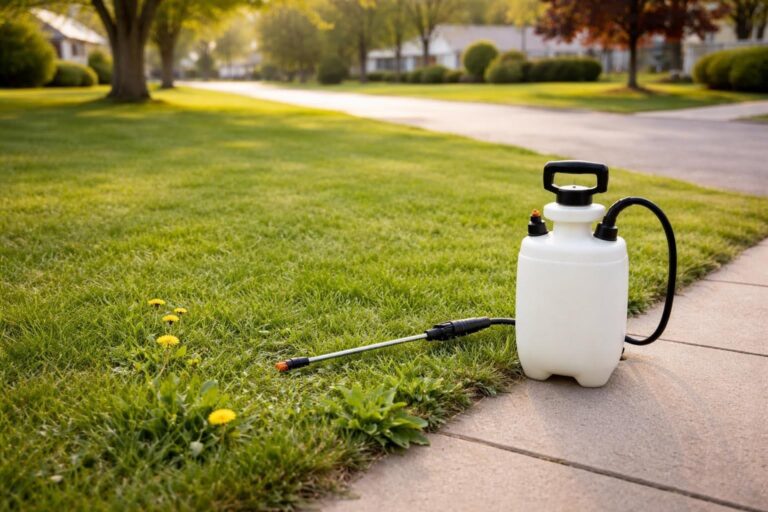
For most lawn weed killers, the best time to spray is after morning dew has dried or in early evening on a calm, dry day, with temperatures roughly 65°F to 85°F and no rain expected. Use post-emergent sprays when weeds are young and actively growing, use pre-emergents before weed seeds sprout, and never use regular Roundup or weed-and-grass killer inside a lawn unless you are willing to kill the grass too.
Quick answer: best timing by product type
The right timing depends less on the words “weed killer” and more on the product type. A selective lawn spray, a weed-and-feed granule, a crabgrass preventer, and a nonselective weed-and-grass killer all behave differently and require different approaches.
| Product type | Best for | Best timing | Rain or water rule | Big caution |
|---|---|---|---|---|
| Selective liquid lawn weed killer | Existing broadleaf weeds, and some products also target crabgrass | Morning after dew dries or early evening, weeds actively growing, usually 65°F to 85°F | No rain for the label’s rainfast window, often 1 to 24 hours | Safe only on grass species listed on the label |
| Granular weed-and-feed | Existing broadleaf weeds plus fertilizer | Apply when weed leaves are wet from dew or light watering, temperatures commonly 60°F to 90°F depending on label | Keep rain and irrigation off for about 24 hours so granules stick | Not ideal during heat, drought, or if fertilizer timing is wrong |
| Pre-emergent crabgrass preventer | Crabgrass and other annual weeds before they sprout | Early spring before soil warms enough for germination, often before the 3rd or 4th mowing | Water in after application, commonly within 1 to 3 days | Does not kill most established weeds |
| Fall pre-emergent | Winter annual weeds like annual bluegrass, chickweed, henbit | Late summer to early fall, before fall germination | Water in after application | Can interfere with fall seeding unless label allows it |
| Roundup, glyphosate, and weed-and-grass killer | Existing weeds in beds, cracks, edging, gravel, or lawn renovation areas | Calm, dry weather when target weeds are actively growing | Rainfast timing varies, often 15 minutes to several hours | Kills desirable lawn grass unless it is a lawn-specific selective product |
If you are treating a normal lawn and want the grass to survive, look for “for lawns” on the label and confirm your grass type is listed. If the product says “weed and grass killer,” “nonselective,” “kills to the root,” or lists glyphosate as the active ingredient, assume it can kill your lawn.
Best time of day and weather conditions
The best time of day to spray liquid weed killer is usually midmorning after dew has dried, or early evening if the label allows it and the grass will have time to dry before heavy dew settles. You want dry leaves for most liquid post-emergent sprays because the herbicide needs to sit on the weed long enough to be absorbed.
Aim for moderate temperatures. Most post-emergent broadleaf herbicides work best around 65°F to 85°F. Many labels allow wider ranges, such as 45°F to 90°F, but control can slow down in cool weather and turf injury risk rises in hot weather. If the forecast will top 85°F within 24 hours, be careful with broadleaf sprays, especially near flowers, shrubs, vegetables, and sensitive trees. Above 90°F, skip most lawn herbicide work unless the label specifically says otherwise.
Wind matters as much as temperature. A gentle, steady breeze around 3 to 10 mph blowing away from gardens, trees, patios, cars, and neighboring yards is usually easier to manage than gusty wind or dead-calm conditions. Do not spray when wind is pushing mist toward plants you care about. Also avoid spraying during temperature inversions, which often happen near dawn or dusk when air is very still and mist can hang and move unpredictably.
Conditions to avoid when spraying weed killer:
- Right before or immediately after mowing. Wait a couple of days on each side
- During drought stress. Wilted weeds do not absorb herbicide well
- Above 85°F to 90°F. Turf injury risk increases significantly
- Gusty wind or dead-calm conditions with temperature inversions
- When rain is expected before the product’s rainfast window closes
Do not spray right before mowing or immediately after mowing. For post-emergent weed killers, more leaf surface means better herbicide contact. A practical rule is to stop mowing a couple of days before treatment and wait a couple of days after treatment before mowing again, unless the label gives a different interval.
Skip spraying when the lawn or weeds are drought-stressed. Wilted weeds do not absorb herbicide well, and stressed turf is easier to injure. If the soil is dry, water the lawn a day or two before spraying, or wait until after a soaking rain and then treat once the leaves are dry and the weeds are actively growing again.
Best month and season by weed life cycle
The best month to apply weed killer depends on whether you are killing weeds you can see or preventing weeds that have not sprouted yet. Post-emergent products work on visible weeds. Pre-emergent products create a soil barrier before annual weed seeds germinate.
For many cool-season lawns in the northern half of the U.S., including Kentucky bluegrass, tall fescue, fine fescue, and perennial ryegrass, fall is the best season for broadleaf weeds. A strong window is mid-September through mid-October, when dandelions, clover, plantain, and similar perennial weeds are moving energy down into their roots. Spring can also work, typically late April through early June, but fall usually gives cleaner control with less risk to gardens and landscape plants.
For warm-season lawns in the South, including bermudagrass, zoysiagrass, centipedegrass, St. Augustinegrass, and bahiagrass, post-emergent timing often runs from spring into early summer for many broadleaf weeds, with winter annual weeds treated during mild winter windows when temperatures are above about 50°F. Avoid treating warm-season lawns when they are under summer heat or drought stress.
Crabgrass is different because the easiest control is prevention. In much of the North and transition zone, spring pre-emergent timing often falls somewhere from March into May, depending on your location and weather that year. In southern areas, the window can be much earlier. North Georgia, for example, commonly targets early March for summer annual weed prevention, while northern Indiana may be closer to mid-April.
A simple seasonal weed control guide:
- Late winter to early spring: apply crabgrass pre-emergent before germination, earlier in the South, later in the North
- Mid to late spring: spot-spray young broadleaf weeds and small post-emergent crabgrass if your product is labeled for it
- Summer: avoid most broadleaf sprays during heat and drought. Spot-treat only when the label allows and conditions are mild
- Late summer to early fall: apply pre-emergent for winter annual weeds, especially in warm-season lawns with annual bluegrass, henbit, and chickweed problems
- Early fall: spray perennial broadleaf weeds in cool-season lawns for some of the best root-level control of the year
- Winter: treat only during mild windows and only on weeds and turf types listed on the label
Applying weed killer on lawns without harming grass
Yes, you can apply weed killer on grass, but only if it is a selective lawn herbicide labeled for your exact grass species. “Lawn-safe” does not mean safe on every lawn. A product that is fine on tall fescue may injure St. Augustinegrass, and a product labeled for centipedegrass may need lower rates or extra caution.
Start by identifying your turf. Common cool-season grasses include tall fescue, fine fescue, Kentucky bluegrass, and perennial ryegrass. Common warm-season grasses include bermudagrass, zoysiagrass, centipedegrass, St. Augustinegrass, and bahiagrass. Then read the label’s turf list before you spray or spread anything.
For broadleaf weeds, many lawn products use combinations such as 2,4-D, dicamba, MCPP, MCPA, triclopyr, or fluroxypyr. These work well on weeds like dandelion, clover, chickweed, oxalis, plantain, and spurge, but they are not automatically safe for every grass or every temperature. Centipedegrass can be sensitive to some herbicides including 2,4-D. Atrazine may be labeled for some centipedegrass, St. Augustinegrass, zoysiagrass, and dormant bermudagrass uses, but should not be used on tall fescue or Kentucky bluegrass and can injure actively growing bermudagrass depending on the product and timing.
Spot-spraying is usually the smartest move when weeds are scattered. Spray the weed leaves until they are evenly wet, not dripping. Drowning the weed does not improve control, and runoff wastes product while increasing the chance of turf injury. Broadcast applications make sense when weeds are widespread, but only at the labeled rate and only under the labeled conditions.
For granular weed-and-feed products, timing is different from liquid sprays. Many granular broadleaf products need moist weed leaves so particles stick. That is why labels often tell you to apply when the lawn is wet from dew or a light sprinkling, then keep water off for about 24 hours. This is the opposite of many liquid sprays, which usually go onto dry foliage.
Wet grass, rain, watering, and drying time
For liquid post-emergent sprays, do not spray wet grass unless the label specifically says to. Water on the leaves can dilute the spray, cause uneven coverage, and make herbicide run off the weed before it is absorbed. Wait until dew or rain has dried from the foliage.
Rain timing depends on the product. Some lawn sprays are rainproof in 1 hour, some need 3 to 6 hours, and some general turf recommendations call for no rain for at least 24 hours. If you are not sure, choose a dry 24-hour window. That gives most post-emergent products time to work and reduces the chance of a wasted application.
If the soil is dry before spraying, water 1 to 2 days ahead of time, then spray after the leaves dry. This helps weeds resume active growth, which improves herbicide uptake. Do not water immediately after a liquid post-emergent unless the label tells you to, because watering too soon can reduce performance.
Granular post-emergent weed products are the big exception. Many weed-and-feed labels want wet leaves at application so the granules stick to weeds, followed by no rain or irrigation for 24 hours. Some products prefer 24 to 48 hours without rain. Combination products may then tell you to water after 24 hours to move the remaining material into the soil, so follow that sequence exactly.
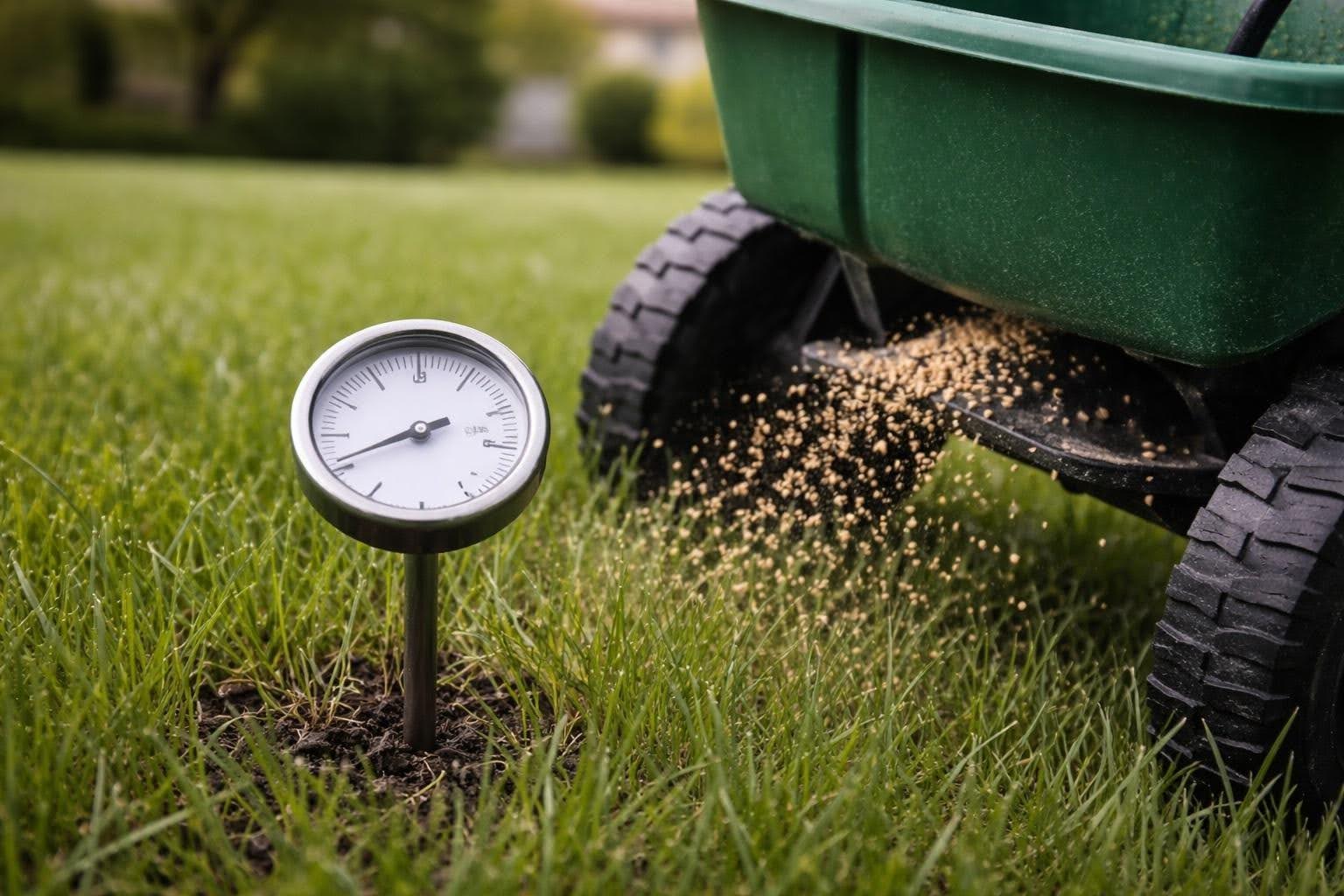
Pre-emergents are different again. They need to move off the granule or spray deposit and into the top layer of soil to form a weed-prevention barrier. After applying a crabgrass preventer, water it in if rain is not coming soon. A common target is about 0.5 inch of water within 1 to 3 days, unless the label gives different directions.
New grass, new seed, and reseeded lawns
Be extra cautious with weed killer on new grass. Newly seeded, sprigged, or sodded turf is less tolerant of herbicides than an established lawn. In most cases, wait until the new grass has been mowed at least 2 to 4 times before applying a post-emergent broadleaf herbicide. A safe homeowner rule is 3 to 4 mowings, with the grass actively growing and rooted well.
If you sprayed a broadleaf weed killer and now want to seed, wait before putting seed down. A practical waiting period is 3 to 4 weeks, and many recommendations use at least 30 days after broadleaf herbicide treatment before seeding treated areas. Always check the label because some products require longer.
Pre-emergent herbicides are even trickier around seeding because many of them prevent grass seed from establishing. Prodiamine, pendimethalin, and dithiopyr products generally belong on established turf, not freshly seeded areas, unless the label specifically allows the use. Some labels require 60 days after seeding, the second mowing, four mowings, or a well-established root system before use.
There is one important exception: mesotrione products labeled for seeding, such as Tenacity-type uses, can be applied at seeding for certain tolerant turfgrass species. That does not mean every new lawn can take it. Fine fescue and other grasses may have restrictions, so read the exact label before using it as a seed-safe weed control option.
Pre-emergent weed control timing
Pre-emergent weed killer should be applied before weed seeds germinate, not after you see the weeds. For crabgrass, the key trigger is soil temperature. Crabgrass begins germinating when the upper soil layer reaches around 55°F to 58°F at daybreak for several days, or when the 24-hour mean soil temperature averages about 55°F for 3 to 4 days. The best application is usually 10 to 14 days before that happens.
Calendar dates help, but soil temperature is better. In the Southeast, crabgrass pre-emergent timing may be late February to mid-March. In the transition zone, March into April is common. In the Upper Midwest and Northeast, April into mid-May is often more realistic. A warm spring can move everything earlier, so do not rely only on last year’s date.
Forsythia bloom is a useful visual reminder in many regions, but it is not perfect. If the yellow forsythia shrubs in your area are blooming, it is usually time to check soil temperatures and get crabgrass preventer down soon if you have not already done so.
For winter annual weeds, apply pre-emergent in late summer or early fall before seeds sprout. In warm-season lawn regions, a good trigger is when nighttime lows drop into the 55°F to 60°F range for several nights. In some southern calendars, that means around mid-August through mid-October, with local windows such as September 1 to 15 in parts of North Georgia for winter annual prevention.
Uniform coverage matters with pre-emergents. Use a spreader or sprayer that gives even distribution, apply the label rate, and water the product into the soil. A pre-emergent left sitting on leaves, thatch, or dry granules will not build the protective barrier where weed seeds are germinating.
Roundup, grass killer, and nonselective products
Regular Roundup-style glyphosate products and other nonselective weed-and-grass killers are not lawn weed killers. They can kill desirable grass along with the weeds. Use them for cracks in driveways, gravel, fence lines, bed edges, empty mulch areas, or killing an entire area before renovation, not for spot-treating dandelions in the middle of a lawn.

Product names can be confusing. “Roundup For Lawns” is a completely different product from nonselective Roundup weed-and-grass killer. Lawn-specific Roundup products are selective herbicide blends labeled for certain grasses. Nonselective Roundup products, glyphosate products, and many Spectracide-style weed-and-grass killers are designed to kill whatever green plant tissue they contact.
If you use a nonselective product near lawn edges or landscape beds, spray only in calm weather and shield desirable plants from drift. Even a small amount of mist can brown grass or injure ornamentals. Many nonselective products are rainfast quickly, sometimes in 15 to 30 minutes, and visible wilting may show within hours, but complete kill can take 1 to 2 weeks.
Be especially careful with long-lasting “365” or extended-control weed-and-grass killers. These products are meant for hardscapes, gravel, and other non-lawn areas where you do not want plants growing for months. Do not use them in lawns, future lawn renovation areas, vegetable gardens, or any place you plan to seed or plant within the restricted period, which can be up to a year on some labels.
A simple plan for getting it right
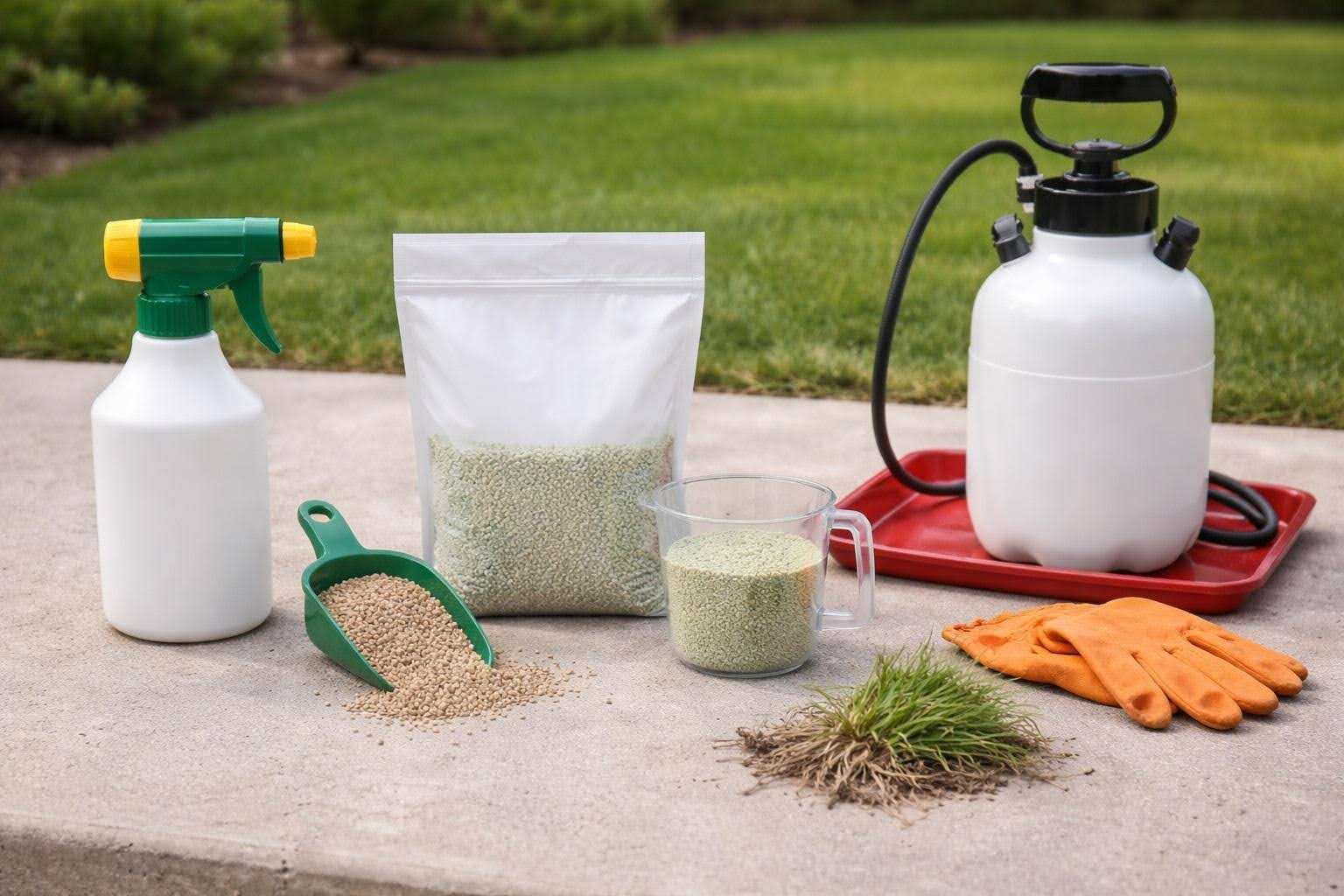
If you are staring at weeds today and trying to decide what to do, slow down for two minutes and match the product to the job. The wrong product at the right time can still wreck a lawn.
A well-maintained lawn is one of the most visible parts of your home’s exterior. If you are working on broader yard improvements alongside your weed control routine, easy ways to improve the appearance of your yard covers complementary steps that make a real difference. And for keeping the wider property in good shape, tips for staying on top of home maintenance and simple observations that help catch problems in your house are useful companion reads for any homeowner who wants to stay ahead of issues before they compound.
FAQ
How long should kids and pets stay off the lawn after spraying weed killer?
Keep people and pets off treated areas until the spray has fully dried, unless the label requires a longer wait. For extra caution, especially with children or dogs that roll in grass, wait 24 hours and remove toys, bowls, and anything else from the treatment area before applying.
What should I do if it rains sooner than expected after I spray?
Do not immediately spray again. Wait long enough to see whether the weeds respond, often 7 to 14 days for many lawn herbicides, then check the label for the minimum retreatment interval and yearly maximum rate before making another application.
Can I fertilize around the same time I apply weed killer?
Usually yes, but separate applications by a few days when possible to reduce lawn stress and avoid accidentally exceeding nitrogen or herbicide limits. If you use a weed-and-feed, do not also apply a separate broadleaf weed killer unless both labels explicitly allow it.
Is it better to pull weeds before or after spraying them?
Do not pull weeds right before spraying because you remove the leaf surface the product needs to contact. After spraying, wait until the weeds are clearly dying, then remove dead clumps and patch bare spots so new weeds do not move into the open soil.

Better Living may earn commissions through affiliate links and may occasionally feature sponsored or partner content. If you make a purchase through our links, we may receive a small commission at no cost to you.