
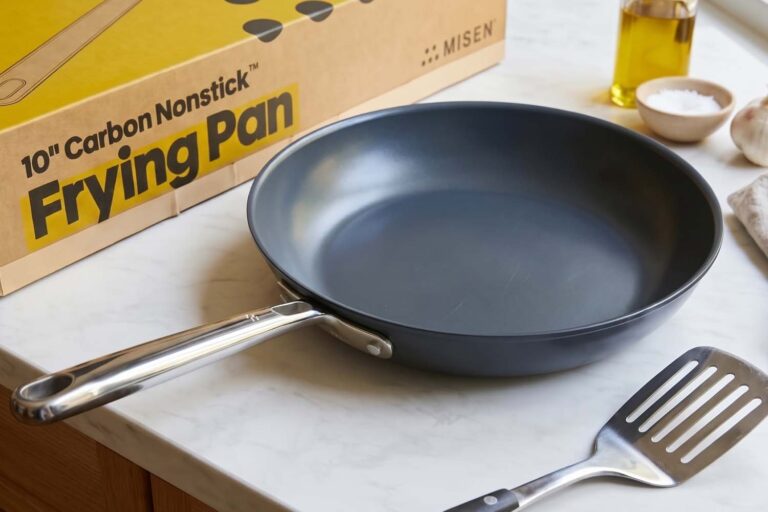
The Misen Carbon Nonstick pan is a coating-free carbon steel frying pan with a nitrided surface and an aluminum core, built to release food without a PTFE or ceramic nonstick coating. This Misen Carbon Nonstick pan review covers how it handled eggs, pancakes, searing, and tomato sauce, where it falls short, how it compares with traditional nonstick, carbon steel, and cast iron, and whether it’s worth $129.
Misen Carbon Nonstick pan review: at a glance
- Quick Verdict: Worth it if you want a coating-free pan and don’t mind a preheat and a little oil. Skip it if you want completely oil-free cooking or a dishwasher-safe pan.
- What It Is: A 3-ply frying pan with a nitrided carbon steel surface and an aluminum core. Misen says it’s free of PFAS, PTFE, and PFOA.
- Size Tested: 10-inch Deeper pan with 2-inch sidewalls, about 2.5 pounds. Misen also makes 8- and 12-inch sizes.
- Works On: Misen lists it for gas, electric, and induction stovetops. Oven and grill safe to 1100°F, and safe for metal utensils. Hand wash only.
- Price: $129 for the 10-inch pan, or $159 with the glass lid
- BFCM Sale: GET 25% OFF Misen Products with coupon code “EARLY25“
- Risk-Free: A 60-day test drive with free returns, plus a lifetime warranty against defects
Shop the 10-Inch Deeper Carbon Nonstick Pan — $129 →
Specs and prices checked against Misen’s site on November 12, 2026.
If you’ve spent any time scrolling food videos lately, you’ve probably seen it: an egg sliding effortlessly across a sleek black skillet with no butter, no oil, and no traditional nonstick coating.
That’s what first caught my attention about Misen’s Carbon Nonstick™ cookware. After learning the collection generated more than $2 million in Kickstarter preorders, I wanted to find out if it was as impressive as it looked. Does it really deliver, or is it just carbon steel with great marketing?
As someone trying to move away from PFAS-coated cookware, the idea of a nonstick-style pan with no synthetic coating is hard to ignore.
To find out, I tested Misen’s updated 10-Inch Deeper Carbon Nonstick™ Frying Pan with everything from eggs and pancakes to weeknight dinners and high-heat searing.
This is part of my hands-on testing of Misen’s lineup. I’ve also tested its stainless steel food storage, so see my Misenware review if your container drawer needs a rethink too.
Here’s what’s impressed me so far, where I think there’s room for improvement, and whether it’s worth the investment.
Key takeaways from my testing
- Eggs release cleanly with a little fat. With a quick preheat and about a teaspoon of oil, fried eggs, scrambled eggs, and omelets slid right out. A cold start or oil-free cooking can make them stick.
- It isn’t a Teflon clone. Expect easy-release cooking, not the glide of a brand-new PTFE pan.
- It responds fast. I could sear over medium-high heat, then drop the burner and start a sauce without waiting for the pan to catch up.
- It handled tomatoes. A full 28-ounce can of crushed tomatoes simmered without any problems, though Misen suggests waiting about 30 days before cooking acidic foods heavily.
- Metal utensils are fine. Misen says the surface is safe for metal utensils, and I use them on it all the time.
- The glass lid is great for eggs. It gently sets the tops for tender whites and jammy yolks.
- It’s light for carbon steel. At about 2.5 pounds, it’s far easier to lift and pour than cast iron.
- Hand wash only. Misen doesn’t recommend the dishwasher for the pan.
What makes Misen Carbon Nonstick different?
Misen Carbon Nonstick is nitrided carbon steel with an aluminum core, built to release food without a PTFE or ceramic coating. Before we get into how this pan actually cooks, it helps to understand why it’s getting so much attention.
Traditional carbon steel has long been a favorite among chefs because it heats quickly, handles high temperatures, and can last for decades. The catch? It requires regular seasoning to maintain its naturally nonstick surface and prevent rust.
Cooking tip: Seasoning is the process of baking thin layers of oil onto cookware to create a natural nonstick coating.
That’s where Misen takes a different approach.
Instead of relying on seasoning or a synthetic nonstick coating, Misen uses a process called nitriding. During manufacturing, the carbon steel is heated in a nitrogen-rich environment, which hardens the surface of the metal itself.
According to Misen, the result is a pan that’s free of PFAS, PTFE, and PFOA and doesn’t need seasoning before you cook.
Here’s how the pan is built:
- 3-ply nitrided carbon steel: The cooking surface is hardened through nitriding, creating a naturally slick surface without a synthetic coating.
- No seasoning required: Misen says the pan is ready to cook with right out of the box.
- Aluminum core: Sandwiched between the carbon steel layers, it helps even out hot spots, improve heat distribution, and speed up preheating.
- Built for high heat: Misen says the pan is oven and grill safe to 1100°F, and lists it for gas, electric, and induction stovetops.
What this pan is not:
- It’s not a PTFE-coated nonstick pan.
- It’s not a ceramic-coated pan that can wear down over time.
- It’s not traditional carbon steel that needs seasoning before you cook.
- It’s not heavy cast iron.
Misen has combined the easy-release cooking people love about nonstick with the durability and high-heat performance of carbon steel. Does it deliver in everyday cooking?
Want the pan I tested? The 10-Inch Deeper Carbon Nonstick Frying Pan is $129.
GET 25% OFF Misen Products with coupon code “EARLY25“
Misen backs it with a 60-day test drive and free returns.
Misen Carbon Nonstick pan specs
Here are the Misen 10-Inch Deeper Carbon Nonstick Frying Pan’s key specs, taken from Misen’s product pages and care guide.
| Price | $129 for the 10-inch Deeper pan; $159 with the glass lid |
| Size tested | 10-inch Deeper pan (about 10.8 inches overall) |
| Weight | About 2.5 lb (Misen lists 2.54 lb) |
| Wall height | 2.0 inches (the original 10-inch pan has 1.75 inches) |
| Construction | 3-ply nitrided carbon steel with an aluminum core |
| Heat limit | Oven safe to 1100°F; grill safe, per Misen’s care guide |
| Cooktops | Gas, electric, and induction, per Misen |
| Utensils | Safe for metal utensils, per Misen |
| Care | Hand wash only; Misen recommends conditioning after cleaning |
| Coatings | Misen says free of PFAS, PTFE, and PFOA |
| Lid (optional) | Tempered glass, oven safe to 450°F, dishwasher safe |
| Warranty and returns | Lifetime warranty against defects; 60-day test drive with free returns |
| Other sizes | 8-inch and 12-inch |
Specs are from Misen as of November 12, 2026, and can change. Everything else in this review comes from my testing.
Where the Misen Carbon Nonstick frying pan shines
How I tested
- Pan tested: the 10-Inch Deeper Carbon Nonstick Frying Pan with the fitted glass lid, from Misen
- How long: several weeks of daily cooking, starting in October 2026
- Foods: fried and scrambled eggs, omelets, pancakes, breakfast potatoes, grilled cheese, shrimp in red sauce, chicken, burgers, steak, and stovetop popcorn
- What I watched: how cleanly food released, how evenly it cooked, how fast the pan responded to burner changes, how it handled acidic sauces, and whether performance dropped over time
- What I haven’t tested: long-term durability beyond these first weeks, and the dishwasher, since Misen says to hand wash the pan
- Specs: ratings and limits come from Misen’s product page
First impressions
My first impression was that the pan feels substantial without being heavy. It’s noticeably sturdier than traditional nonstick cookware but much easier to maneuver than cast iron.
The finish also feels different from both traditional carbon steel and conventional nonstick. Rather than a slick coated surface, the pan has a smooth, durable feel that inspires confidence right out of the box.
After cooking with it, these were the standout benefits that set it apart from the traditional nonstick cookware I’ve owned:
- No synthetic nonstick coating to worry about: The cooking surface is hardened steel, not PTFE or ceramic. There’s no coating to scratch, peel, or flake.
- You can use metal utensils: Unlike most nonstick pans, you don’t have to baby this one. Misen says metal utensils are safe, and I use them on it all the time. Metal spatulas, whisks, and everyday scraping won’t ruin the surface.
- It handles acidic foods: Misen says acidic foods are fine, and I simmered a full 28-ounce can of crushed tomatoes in it without any problems. Its FAQ does suggest waiting about 30 days before going heavy on acid, so the surface has time to build up.
- Lightweight and easy to maneuver: At about 2.5 pounds, according to Misen, the 10-inch skillet feels noticeably lighter than cast iron, making it easier to lift, pour, and cook with one-handed.
- Fast, responsive heating: Thanks to its aluminum core, the pan heats up quickly and responds fast when you adjust the burner, giving you more control while cooking.
- Low maintenance: There’s no initial seasoning, and cleanup is just soap and water. Misen recommends conditioning the pan after cleaning, every time you use it or whenever you notice a dip in nonstick performance.
- Built to outlast coated pans: Most nonstick pans need replacing once the coating wears out. Because Misen’s cooking surface is part of the metal itself, it has the potential to last longer, though only time will tell.
It feels built for everyday cooking without the extra maintenance that often comes with traditional carbon steel cookware.
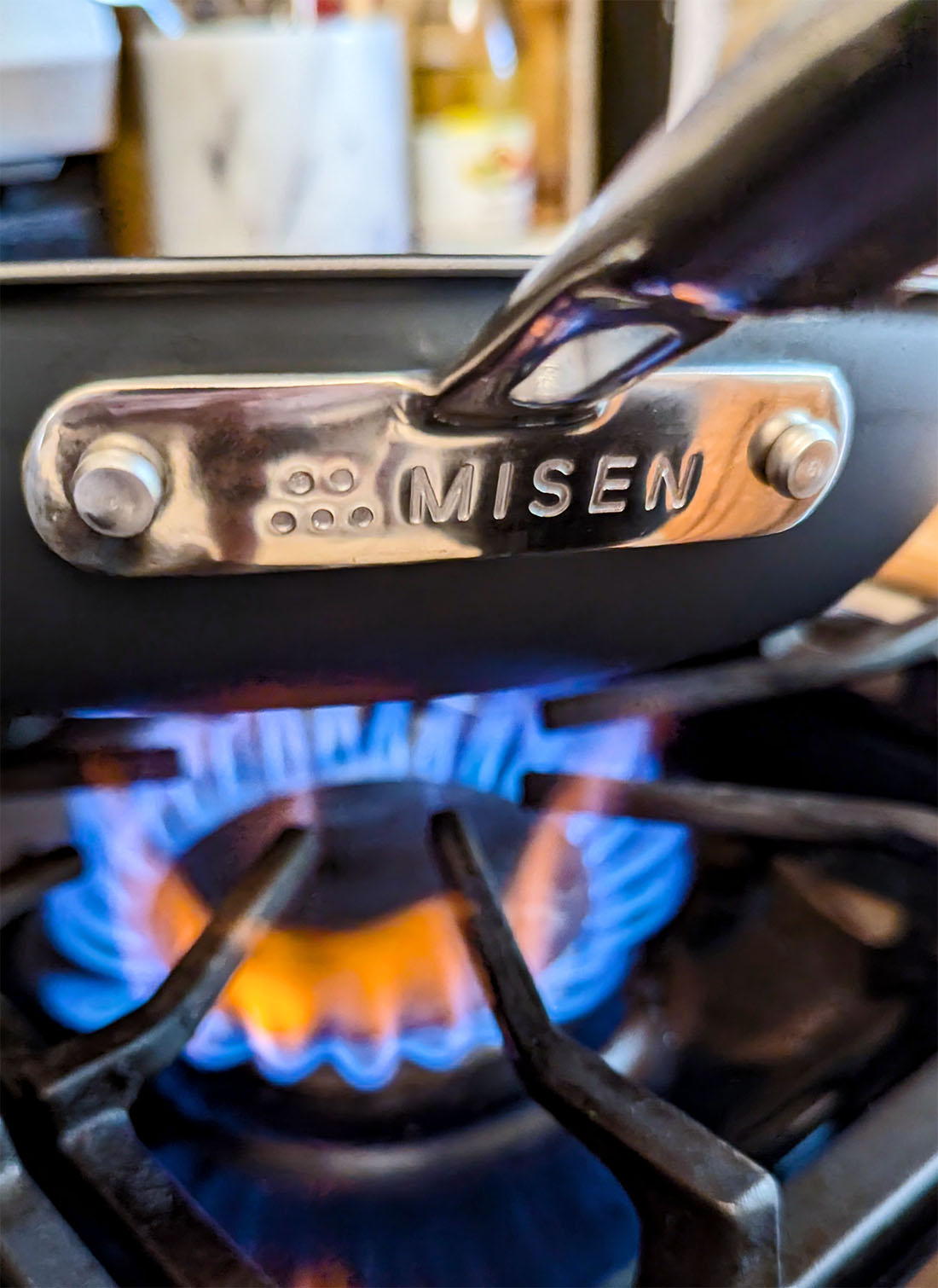 The aluminum core helps the pan heat up quickly and respond fast when you adjust the burner.
How does the Misen Carbon Nonstick pan perform?
In my testing, the pan released eggs, pancakes, and potatoes cleanly with a preheat and a little fat, and it handled acidic sauces and high-heat searing.
How does it cook eggs?
Eggs are usually the ultimate nonstick test, and this pan handled them surprisingly well.
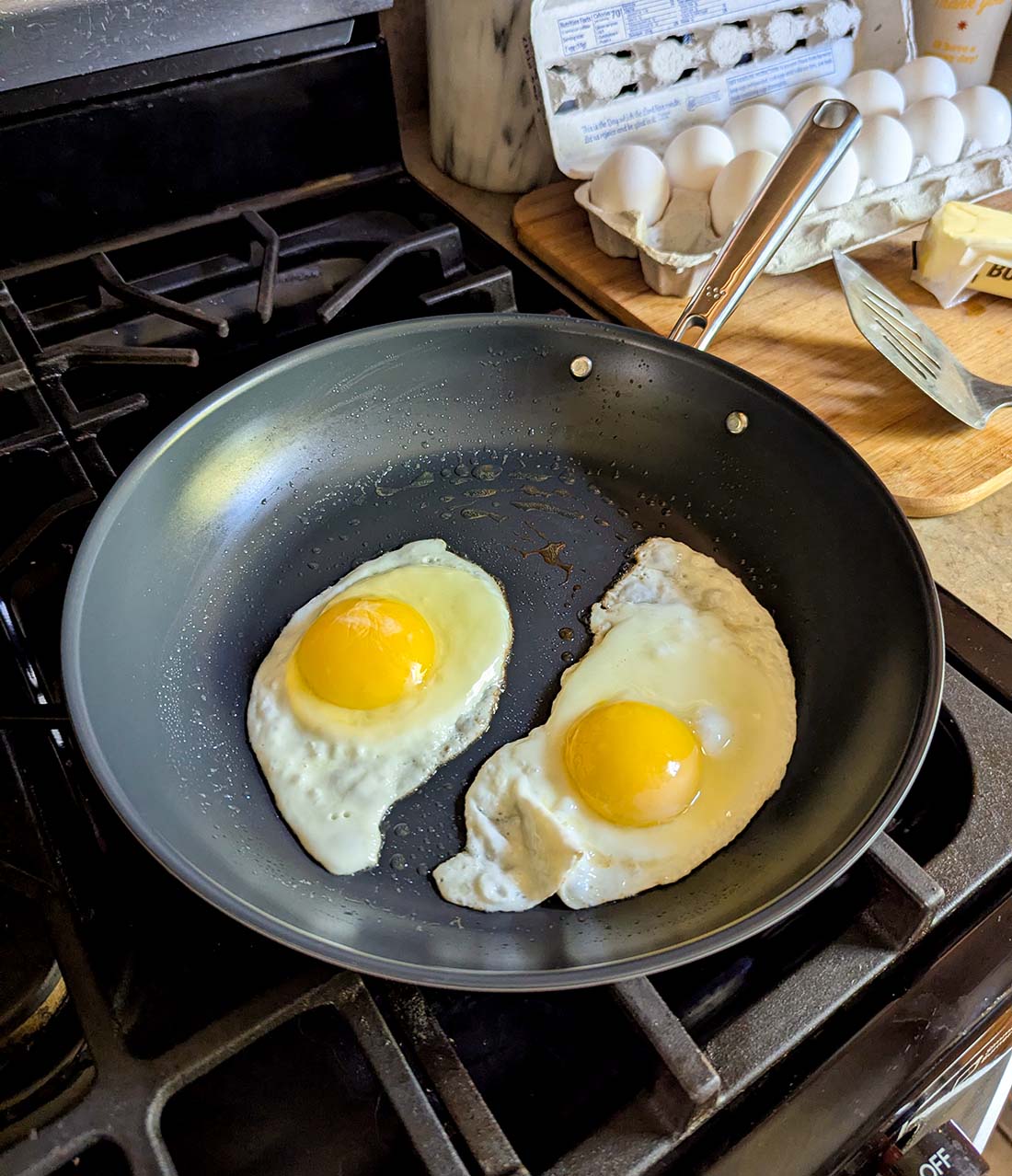 Eggs released cleanly with a quick preheat and a little oil.
With a quick preheat and about a teaspoon of oil, fried eggs, scrambled eggs, and omelets released cleanly and cooked evenly. Is it identical to a brand-new PTFE-coated nonstick pan? No. But for a PFAS-free cooking surface, the performance was impressive. If you want technique tips for the omelets, see our guide to making restaurant-quality omelettes at home.
The catch: if you drop an egg into this pan cold or try to cook completely oil-free, it can stick. With a small amount of fat, I found it far more forgiving than stainless steel and easier to use right out of the box than traditional carbon steel. Misen says to always preheat the pan and cook with a small amount of oil.
How does it do beyond eggs?
I found this pan performed consistently well across the rest of my testing.
Pancakes developed an even golden-brown crust and flipped easily. Breakfast potatoes crisped nicely without sticking, and grilled cheese sandwiches toasted evenly edge to edge.
The deeper design also proved valuable during dinner prep. While making shrimp in red sauce with a full 28-ounce can of crushed tomatoes, the 2-inch sidewalls provided plenty of room for stirring and simmering without feeling cramped. The pan also handled the acidic ingredients without issue.
I was equally impressed by how quickly it responded to temperature changes. Thanks to the aluminum core, I could sear shrimp, chicken, burgers, and steak over medium-high heat, then immediately reduce the burner and transition into sauce-making without waiting for the pan to catch up.
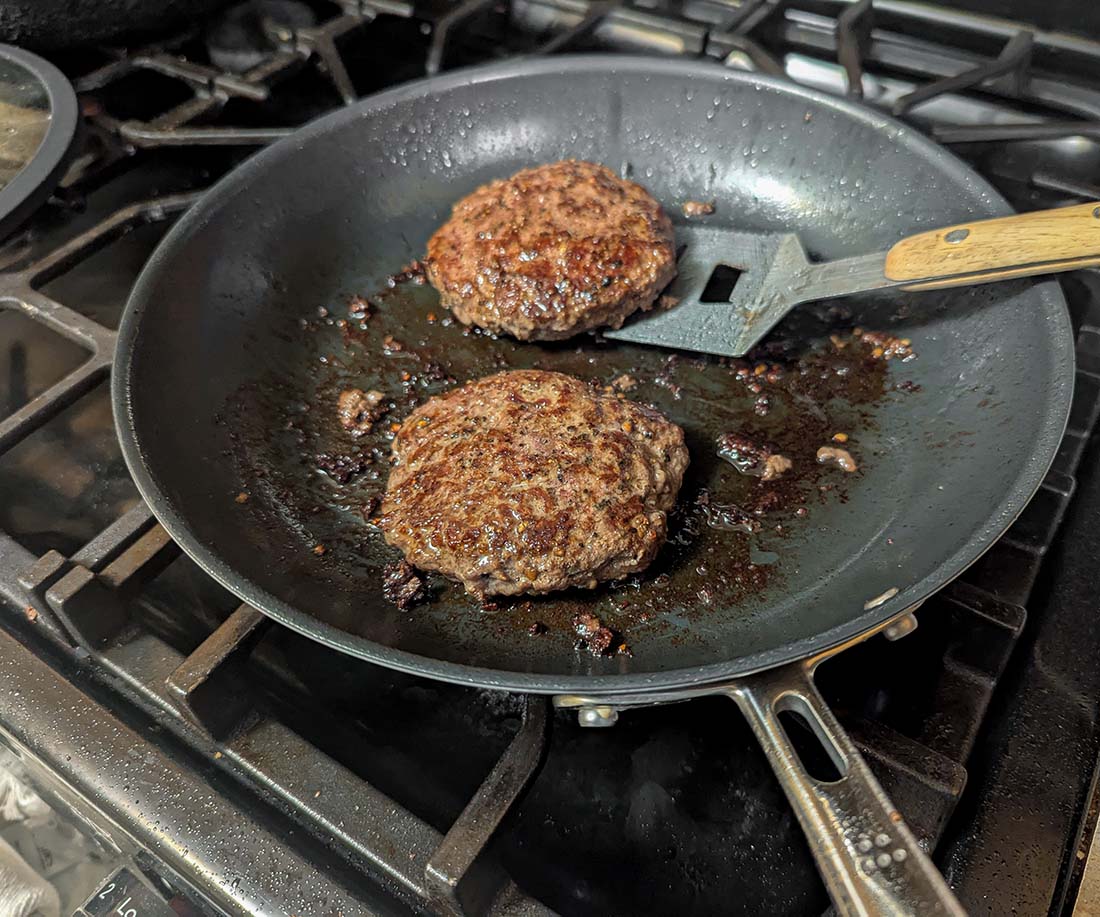 Burgers brown well in the pan, and the patty lifts cleanly with a spatula.
Does performance hold up?
One thing many cookware reviews never address is what happens after the initial excitement wears off.
- Does food start sticking?
- Does performance noticeably decline?
After weeks of daily use, the answer has been no.
The biggest adjustment wasn’t the pan. It was me.
As I became used to how quickly it heats and responds to temperature, my results became even more consistent. Throughout testing, I found this pan surprisingly reliable, which is exactly what you want from a piece of everyday cookware.
Pan version note: This review covers Misen’s newer 10-Inch Deeper Carbon Nonstick™ Frying Pan. Misen also offers the pan in 8-inch and 12-inch sizes. I chose the 10-inch because it’s the size most home cooks are likely to reach for every day. Compared to the original version, the updated Deeper model raises the sidewalls from 1.75 inches to 2 inches, adding more room for one-pan meals, sauces, and tossing ingredients while cooking.
Want more cooking surface? If you love big weekend breakfasts or batch cooking, Misen also offers the 11-Inch Carbon Nonstick Square Griddle. It’s built with the same nitrided carbon steel and aluminum core as this skillet, and the flat-top design maximizes surface area for edge-to-edge cooking. Read my Misen Carbon Nonstick griddle review.
Should you get the Misen Carbon Nonstick pan with a lid?
Yes, I think the glass lid is worth adding. It’s great for eggs, melting cheese, and cutting splatter.
You can bundle any size Carbon Nonstick frying pan with a fitted tempered glass lid. For the 10-inch Deeper pan, that takes the price from $129 to $159. I honestly didn’t think much about the lid add-on before testing, but it’s become one of my favorite features.
It makes the pan noticeably more versatile by allowing you to:
- Cook food faster: Trapped heat helps foods cook through more quickly and evenly.
- Make restaurant-style over-easy eggs: The lid gently cooks the tops of the eggs, creating tender whites and jammy yolks that stay soft inside.
- Melt cheese perfectly: Great for burgers, sandwiches, and other dishes where you want gentle top-down heat.
- Retain moisture: Helpful for proteins, vegetables, and saucy dishes that can quickly dry out.
- Reduce splatter: Especially useful for bacon, sausage, and tomato-based sauces.
- Steam, braise, and finish dishes: Add a splash of liquid, cover, and let the lid do the work.
One unexpected use I’ve loved is stovetop popcorn. Add a little oil and kernels, cover the pan, and a few minutes later you have fresh popcorn with almost no cleanup. For flavor ideas, see our gourmet popcorn recipes.
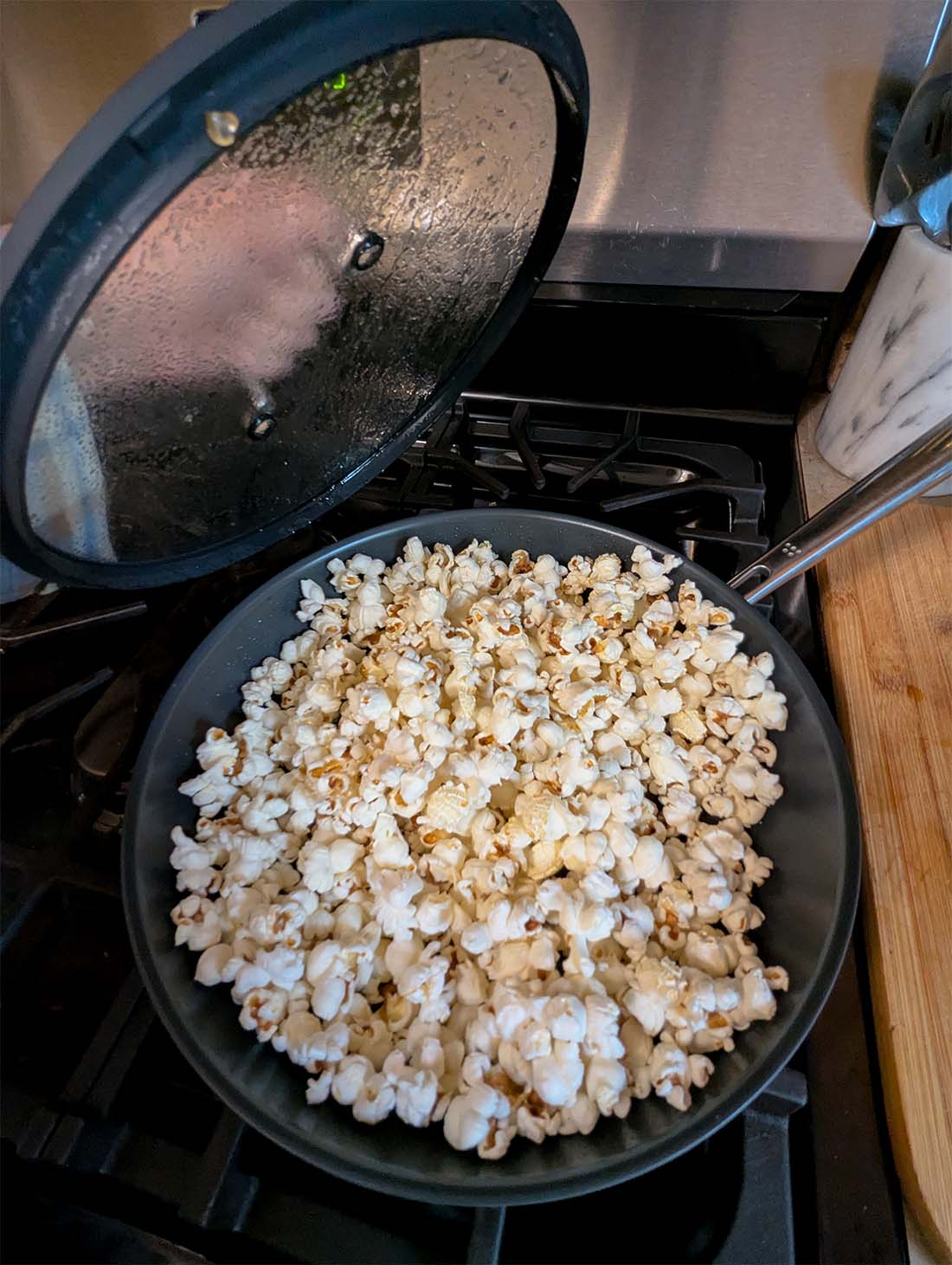 Stovetop popcorn is one of my favorite uses for the glass lid.
Another nice bonus is that Misen says the glass lid also fits several of its other pans, including its pre-seasoned carbon steel frying pans. Misen rates the lid to 450°F, and it’s dishwasher safe.
My take: I originally viewed the lid as an optional add-on, but after using it regularly, I think it increases the pan’s versatility and is a must-have.
Find the Right Carbon Nonstick Pan →
The reality check: 4 trade-offs to know before buying
No pan is perfect, and there are a few things worth knowing before you buy.
- It isn’t nonstick in the traditional sense. The biggest misconception is expecting it to behave exactly like a brand-new PTFE-coated skillet. A short preheat and a small amount of cooking fat deliver the best results.
- The rounded handle can feel slippery. I noticed this mostly when my hands were wet or soapy.
- It favors responsiveness over heat retention. Because the aluminum core heats quickly, the pan can also cool quickly. You’ll still get a great crust on burgers and weeknight steaks.
- The cooking surface will darken over time. Expect spotting and color changes with regular use. It hasn’t affected performance for me so far, but the pan won’t keep that fresh-out-of-the-box look forever.
None of these were dealbreakers for me. In fact, most are simply characteristics of the materials and design choices that make the pan unique. The benefits still outweigh the drawbacks, and I’m looking forward to seeing how the pan performs with longer-term use.
4 tips for best results from Carbon Nonstick
The biggest lesson I learned during testing is this: don’t think of this pan as a Teflon replacement.
Think of it as an exceptionally easy-to-use carbon steel pan. Once I adjusted my expectations and cooked accordingly, the results were consistently excellent.
A few simple habits made the biggest difference:
- Give it a quick preheat. Misen’s care guide says to preheat for about 45 seconds over medium heat, and I found that 30 to 60 seconds before adding oil or butter was the single biggest factor in getting food to release cleanly.
- Use less heat than you think you need. Thanks to the aluminum core, the pan heats quickly and efficiently. For eggs, pancakes, fish, and vegetables, medium or even medium-low heat worked best.
- Don’t skip the fat. You don’t need much, but this pan performs best with a light coating of oil or butter. Misen recommends ½ to 1 tablespoon of a high-smoke-point oil and says to skip aerosol cooking sprays. Think of it as a naturally slick cooking surface rather than a completely oil-free nonstick pan.
- Let proteins release naturally. If chicken, shrimp, steak, or burgers seem stuck at first, give them another minute. Once a crust develops, they’ll usually release on their own without forcing them.
Treat it this way, and you’ll get many of the benefits people love about carbon steel without the seasoning, maintenance, or learning curve that traditionally comes with it.
Misen Carbon Nonstick vs. PTFE nonstick, carbon steel, and cast iron
To help you decide if this fits your kitchen, here’s how the Carbon Nonstick frying pan stacks up against the pans that are probably in your cabinet right now.
Scroll sideways to see the full chart.
| Misen Deeper Carbon Nonstick | Typical PTFE nonstick | Typical carbon steel | Typical cast iron | |
|---|---|---|---|---|
| Chemical coating | None; Misen says free of PFAS, PTFE, and PFOA | PTFE or ceramic coating | None; needs seasoning | None; needs seasoning |
| Low-fat food release | Good with a preheat and a small amount of fat | Easiest out of the box | Moderate; depends on seasoning | Moderate; depends on seasoning |
| Acidic foods | Fine; Misen suggests waiting about 30 days before heavy acid | Fine | Can strip seasoning | Can strip seasoning |
| Metal utensils | Yes, per Misen | Not recommended; can scratch the coating | Yes | Yes |
| Heat-up speed and weight (10″) | Fast; about 2.5 lbs | Fast; lightweight | Medium; moderate weight | Slow to heat; about 5 lbs |
| Heat retention for searing | Moderate | Low; not meant for high heat | High | Exceptional |
| Care and cleaning | Hand wash; no seasoning required | Hand wash; coating wears over time | Hand wash, dry right away, re-season | Hand wash, dry right away, re-season |
Misen specs are from Misen; all other Misen results come from my testing. The other columns describe typical pans, not a specific brand.
Misen Carbon Nonstick pan pros and cons
Pros
- No PFAS, PTFE, or PFOA. Misen says the pan is free of all three, with no coating to wear off.
- Metal-utensil safe. Misen says the nitrided surface can take metal utensils.
- Lightweight for carbon steel. A friendlier alternative to heavy cast iron.
- Fast, even, responsive heating. The aluminum core let me change heat quickly.
- Handled tomatoes. A full 28-ounce can of crushed tomatoes went fine.
- Oven and grill safe to 1100°F. Misen lists it for gas, electric, and induction stovetops.
- 60-day test drive, free returns, and a lifetime warranty. Misen’s warranty covers defects.
Cons
- Not a true oil-free Teflon replacement. It needs a preheat and a little fat.
- The rounded handle can feel slippery. Mostly when wet or soapy.
- Doesn’t retain heat like cast iron. Great for responsiveness, less so for a heavy-duty sear.
- Hand wash only. Misen doesn’t recommend the dishwasher for the pan.
- The surface darkens over time. Expect spotting and color changes.
- Upfront cost. $129 for the 10-inch pan, or $159 with the lid.
Who is the Misen Carbon Nonstick frying pan best for?
The Misen Carbon Nonstick frying pan is best for home cooks who want coating-free, nonstick-style cooking and don’t mind a preheat and a little oil.
After testing the updated 10-Inch Deeper Carbon Nonstick™ Pan, I think the biggest misconception is expecting it to behave exactly like a disposable PTFE nonstick pan.
That’s not what this pan is trying to be.
Instead, it’s designed for home cooks who want the easy maintenance and food release of nonstick without worrying about synthetic coatings, rust, or constant seasoning.
Buy this pan if you:
- Want to move away from PFAS-coated nonstick cookware
- Are tired of replacing scratched nonstick pans every few years
- Want a lighter, easier-to-handle alternative to cast iron
- Need a pan that can handle metal utensils and high heat
- Don’t mind using a small amount of oil or butter
Skip this pan if you:
- Want completely oil-free cooking
- Expect food to slide around like a brand-new PTFE pan
- Prefer dishwasher-safe cookware
- Want your cookware to always look out-of-the-box new
Misen Carbon Nonstick pan final verdict
This pan doesn’t replace every pan in my kitchen.
But that also misses the point.
What Misen has created is a coating-free carbon steel pan that’s remarkably easy to live with. It combines many of the best qualities of nonstick, carbon steel, and cast iron into a single piece of cookware while eliminating much of the maintenance that traditionally comes with those materials.
If you’re willing to give it a quick preheat and a small amount of cooking fat, the Misen Carbon Nonstick delivers reliable everyday performance without a synthetic coating.
For most home cooks, that’s a trade-off worth making. For a broader look at what to look for in cookware, see our guide to the importance of quality cookware.
Bottom line: the Misen Carbon Nonstick pan is best for home cooks who want a durable, low-maintenance alternative to traditional coated nonstick cookware.
Enjoy nonstick convenience without the coating. Misen offers a 60-day test drive with free returns.
Want the pan I tested? The Misen 10″ Carbon Nonstick Frying Pan + Lid is $159.
GET 25% OFF Misen Products with coupon code “EARLY25“
Misen Carbon Nonstick pan FAQs
Is the Misen Carbon Nonstick pan worth it?
Yes, for me. The Misen Carbon Nonstick pan is worth $129 if you want a coating-free pan that releases food well with a little fat, handles metal utensils and high heat, and weighs far less than cast iron. If you want a completely oil-free pan that feels exactly like new PTFE nonstick, it’s probably not the right fit. Misen’s 60-day test drive and free returns make it easy to find out.
Does the Misen Carbon Nonstick pan need seasoning?
The Misen Carbon Nonstick pan doesn’t need traditional seasoning, according to Misen. It’s ready to cook with right out of the box and self-seasons as you cook. Misen recommends conditioning the pan after cleaning, every time you use it or whenever you notice a dip in nonstick performance, and says it starts out less nonstick than coated pans and improves with use.
How do you condition a Misen Carbon Nonstick pan?
To condition a Misen Carbon Nonstick pan, Misen’s care guide says to heat the clean, dry pan over medium-high heat for 30 to 60 seconds, turn off the heat, add 2 to 3 drops (about ¼ teaspoon) of high-smoke-point oil, and rub it in with a dry paper towel until no oil is visible. Let it cool for about 10 minutes.
Is Misen Carbon Nonstick really nonstick?
With a preheat and a small amount of oil, yes. Fried eggs, scrambled eggs, omelets, and pancakes all released cleanly in my testing. Cooking completely oil-free or dropping an egg into a cold pan can make food stick. Misen’s care guide says to always preheat (about 45 seconds over medium heat) and cook with a small amount of high-smoke-point oil, and its product page recommends ½ to 1 tablespoon.
Is the Misen Carbon Nonstick pan PFAS-free?
Misen says Carbon Nonstick is free of PFAS, PTFE, and PFOA. The pan has no synthetic coating, and the nonstick surface comes from nitriding the carbon steel itself.
Can you use metal utensils on the Misen Carbon Nonstick pan?
Yes. Misen says the pan is safe to use with metal utensils, because the surface is hardened steel and not a coating that can chip or scratch off. I use metal utensils on mine all the time.
Is the Misen Carbon Nonstick pan dishwasher safe?
No. Misen’s care guide says to hand wash the pan and keep it out of the dishwasher. The glass lid is the exception, and Misen lists it as dishwasher safe.
Does the Misen Carbon Nonstick pan work on induction cooktops?
Misen lists the pan as induction compatible, and says the Carbon Nonstick line works on gas, electric, and induction stovetops. I didn’t test it on induction. The pan is oven and grill safe to 1100°F, and the glass lid is oven safe to 450°F.
Can the Misen Carbon Nonstick pan be used on a grill?
Yes. Misen’s care guide says Carbon Nonstick is heat safe to 1100°F, so it works in the oven and on the grill.
Can you cook tomato sauce and other acidic foods in the Misen Carbon Nonstick pan?
Yes. Misen says acidic foods are fine, and I simmered shrimp in a full 28-ounce can of crushed tomatoes without any problems. Misen’s FAQ suggests waiting about 30 days before going heavy on acid so the surface can build up.
Will the Misen Carbon Nonstick pan darken over time?
Yes, expect spotting and color changes with regular use. Misen says discoloration is the pan’s natural seasoning building up, and that dark spots are fine as long as the surface stays smooth to the touch. It hasn’t affected performance for me so far.
What’s the difference between the original and Deeper Misen Carbon Nonstick pan?
The Deeper version has 2-inch sidewalls, compared with 1.75 inches on the original. That adds room for sauces, one-pan meals, and tossing ingredients. Both 10-inch pans are $129.
Does the Misen Carbon Nonstick pan come with a lid?
Not by default. The glass lid is an add-on. For the 10-inch Deeper pan, the pan and glass lid together are $159, compared with $129 for the pan alone.
Does Misen make a Carbon Nonstick griddle?
Yes. Misen makes an 11-inch Carbon Nonstick Square Griddle for $139, plus larger 13-inch and 18-inch griddles. I reviewed the 11-inch version in a separate review.
What’s Misen’s warranty and trial policy for the Carbon Nonstick pan?
Misen offers a 60-day test drive with free returns, so you can try the pan in your own kitchen. It’s also covered by a lifetime warranty against defects, and Misen says it will replace any defective products.
More from my Misen testing
- Misen Carbon Nonstick Griddle Review: the 11-inch square griddle, tested for weeks
- Misenware Review: Misen’s microwave-safe stainless steel food storage, tested

Better Living may earn commissions through affiliate links and may occasionally feature sponsored or partner content. If you make a purchase through our links, we may receive a small commission at no cost to you.