
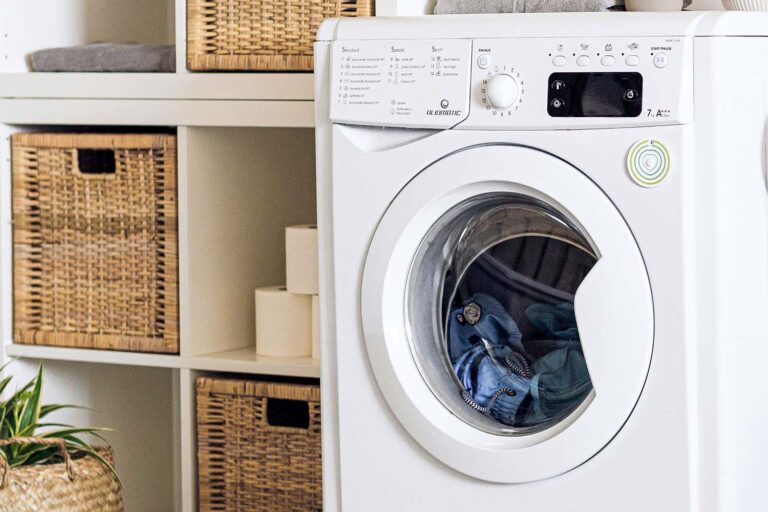
You open the washer to start a load and a sour, musty smell comes out first. Here is how to get rid of washing machine smell and keep it gone: clean the door seal, the detergent drawer and the drain filter, run a monthly cleaning cycle and let the machine dry out between loads. Top-loaders are covered too.
Why a washing machine smells
A 2025 study in Frontiers in Microbiology swabbed ten household washers, five front-loaders and five top-loaders. On the front-loaders, bacteria collected most on the door seals and the water spray port in the detergent drawer, likely because moisture lingers there. The front-loaders carried more bacteria than the top-loaders, though ten machines is a small sample. A review in Applied and Environmental Microbiology says bacteria and fungi are the main cause of laundry odors, and it notes that water left sitting in front-loaders may affect how clothes smell. In short, moisture is a big part of the problem: it gives bacteria and fungi the conditions they need to persist, while residue and trapped debris can add to the smell. That is why the fixes below focus on cleaning the damp spots and drying them out.
Five fixes for washing machine smell
1Wipe and dry the door seal
Verdict: do this first on a front-loader. The rubber seal was one of the spots with the highest bacterial counts in the Frontiers study. Pull back the folds and look for dark spots, slime or trapped lint, which our guide to whether your washing machine is growing mold recommends checking. Wipe the folds with a cloth and warm, soapy water, then dry them with a clean towel. This step is our practical advice, not a tested method.
2Clean the detergent drawer
Verdict: pull it out and scrub it. The water spray port in the detergent drawer was another hot spot in the study, and soap and softener residue can build up in the drawer too. Check your manual for how the drawer comes out, soak it in warm water, scrub off the residue, and wipe the cavity behind it. Leave the drawer open afterward so everything dries.
3Check the drain filter
Verdict: check it, but follow your manual. Many washers have a small filter near the bottom front that can collect lint, coins and hair. We found no study on drain filters, so the steps and how often to check come from your owner’s manual. Set down a towel and a shallow dish before you open it, because residual water may come out. Rinse the filter and put it back snugly.
4Run a monthly cleaning cycle
Verdict: follow your machine’s cleaning schedule; monthly is a reasonable habit. Our washer mold guide recommends a monthly deep-cleaning routine, and our guide to staying on top of home maintenance suggests descaling the washer monthly. Many machines have a built-in cleaning cycle, and your manual will say how often to run it. Manufacturers disagree about the cleaner, though. Some recommend a bleach-based solution and others advise against chlorine, so use what your manual allows.
Vinegar is debated too. As our guide to things you should never clean with vinegar explains, some washer makers warn that its acidity can wear down rubber seals and hoses, especially on front-loaders.
5Top-loaders: lift the lid and look under it
Verdict: same idea, different spots. The top-loaders in the Frontiers study carried fewer bacteria than the front-loaders, but they were not clean, and the spot with the highest bacterial counts on them was what the study calls the drum gasket, the rubber area around the top rim of the drum. Wipe that rim, the underside of the lid and the dispenser cups, which is where our washer mold guide suggests looking for dark spots. Then run the cleaning or tub-clean cycle your manual recommends, with a cleaner it approves, and leave the lid propped open afterward.
Keep the smell from coming back
- Leave the door or lid open. The EPA says the key to mold control is moisture control, and recommends increasing air movement where practical. An open door lets the drum and seal dry between loads, which is our practical application of that principle, not EPA advice about washers.
- Unload promptly. Damp laundry sitting in a closed drum is the same problem behind towels that smell after washing.
- Dry the seal after the last load. One quick wipe takes seconds and removes the water the seal would otherwise hold.
- Check the room too. Humid, low-airflow spots help musty smells build up, as our guide to removing odors from your home explains.
Washing machine smell questions, answered
Why does my washer still smell after I cleaned it?
Moisture and trapped residue are likely contributors. The Frontiers researchers found that user-related factors appeared to influence the microbial communities more than washer type did, which may point to habits such as how long loads sit damp and whether the door stays closed. Dry the seal, leave the door open and clean the drawer and filter again.

Do front-loaders smell worse than top-loaders?
They carried more bacteria in the Frontiers study, and the review notes that water remaining in front-loaders may affect odors. The study was small, so treat it as a pattern, not a rule. Either type can smell if it stays damp.
Why do my clothes smell musty even though the washer is clean?
The clothes may not be drying fully, or the item may need its own treatment. Our guides to washing bath mats and getting mildew out of clothes cover the most common culprits.
Can I use vinegar to clean my washing machine?
Check your manual first. Some manufacturers warn that vinegar can wear down rubber seals and hoses, and vinegar should never be mixed with bleach.
The bottom line
Washer smell comes from moisture and the residue that collects in the seal, the drawer and the filter. Clean those spots, run a monthly cleaning cycle with a product your manual approves, and leave the door or lid open so the machine can dry. The habit that matters most is the cheapest one: let it breathe.

Better Living may earn commissions through affiliate links and may occasionally feature sponsored or partner content. If you make a purchase through our links, we may receive a small commission at no cost to you.