
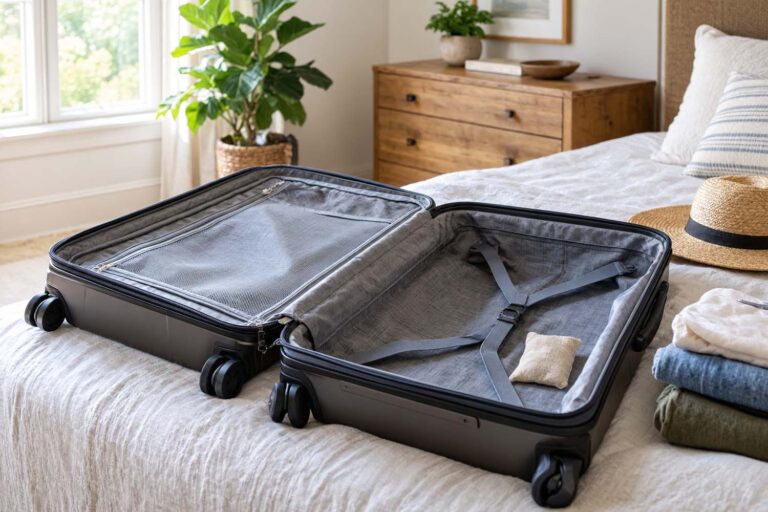
You unzip your suitcase for the next trip and the smell hits before the clothes do. Here is how to keep a suitcase from smelling musty between trips: dry it out, wipe it down, give it something to absorb odors and put it somewhere that stays dry. Each step takes a few minutes, and the last one matters most.
Four steps to keep a suitcase from smelling musty
1Air it out before you store it
Verdict: do this every time. A musty smell usually means moisture got trapped. The EPA says the key to mold control is moisture control, and that mold generally won’t grow if wet or damp materials are dried within 24 to 48 hours. Unzip every pocket, open the suitcase fully and leave it in a room with moving air for a day or two, using a fan if you have one. The EPA suggests more ventilation and air movement, such as open windows or fans, where practical.
Empty it first, including damp swimwear, used towels and sandy shoes. It is the same damp-fabric problem behind musty-smelling towels. When you pack for the next trip, our packing tips cover packing cubes, which help keep worn clothes apart from clean ones.
2Wipe the lining
Verdict: yes, and dry it completely. For hard surfaces, the EPA says to scrub with detergent and water and then dry completely. That fits a hard-shell interior, zipper tracks and the frame. For a fabric lining, our approach is to wipe it with a lightly damp cloth, then let it dry fully before you close the case. That fabric step is our own suggestion, not something the EPA specifies for luggage.
If a lining looks fuzzy or spotted, treat it as a mold problem, not an odor problem. The EPA notes that absorbent materials may have to be thrown away if they become moldy, and that mold needs to be removed, not just killed. Wash anything that was packed inside using the steps in our guide to getting mildew out of clothes.
3Add a baking soda or charcoal sachet
Verdict: a helpful extra, not a fix. A University of Kentucky Cooperative Extension fact sheet lists baking soda and activated charcoal among its dry household deodorizers, and it suggests sachets of cat box filler for trunks and suitcases, along with fabric softener sheets or wrapped bars of soap. Oklahoma State University Extension calls baking soda an inexpensive, natural odor absorber and says activated charcoal can be used the same way. Spoon baking soda into a breathable pouch, or use activated charcoal in a mesh bag, and keep it in the suitcase while it is stored.
Remember that a sachet absorbs smell, not moisture, so it works best after steps one and two. Fresh matters too: baking soda loses its odor-absorbing strength as it sits, which our guide to whether baking soda goes bad explains, so refresh the sachet between trips. The Kentucky fact sheet dates from 1997, so treat it as classic household advice rather than lab-tested guidance.
4Don’t store it in a damp basement
Verdict: pick a drier spot. The EPA says to keep indoor humidity below 60 percent, ideally between 30 and 50 percent, and to use air conditioners or dehumidifiers when needed. Its own mold guide includes a photo of mold growing on a suitcase stored in a humid basement. A closet shelf or the top of a wardrobe in the living space is usually a safer bet than a basement, a garage or an attic.
If a basement is your only storage, a dehumidifier is the fix to try. Our guide to removing odors from your home covers the humid, low-airflow spots where musty smells tend to build up.
If your suitcase already smells musty
- Empty it and dry it. Open it fully in a ventilated room until it is completely dry, as in step one.
- Wipe it down. Clean hard surfaces with detergent and water, then dry them completely.
- Seal in a deodorizer. For small items, the Kentucky fact sheet suggests a sealed bag with a dry deodorizer, left for a week. With a suitcase, zipping in a sachet for several days is the same idea, though that is our adaptation.
- Know when to stop. If you see mold on a fabric lining, the EPA says porous materials may have to be thrown away, so consider replacing the suitcase.

Suitcase smell questions, answered
Why does my suitcase smell musty?
Usually moisture. Damp items, humid storage or a case closed up before it dried can all leave the lining smelling stale. The EPA notes that in a building, a moldy smell can point to hidden mold you can’t see.
Does baking soda really get rid of a musty suitcase smell?
It can help absorb odors, but it does not remove the damp that causes them. Use it after you have dried and wiped the case, and replace it between trips.
What if the smell is smoke, not damp?
Luggage can pick up smoke odor on the road. If it came from a hotel stay, see our guide to cigarette smell in a hotel room.
The bottom line
A musty suitcase is almost always a moisture problem, so the cure is the same each time: dry it fully, wipe it, add a sachet and store it somewhere dry. Do it right after the trip, before the case goes back in the closet, and the smell will not have time to settle in.

Better Living may earn commissions through affiliate links and may occasionally feature sponsored or partner content. If you make a purchase through our links, we may receive a small commission at no cost to you.