
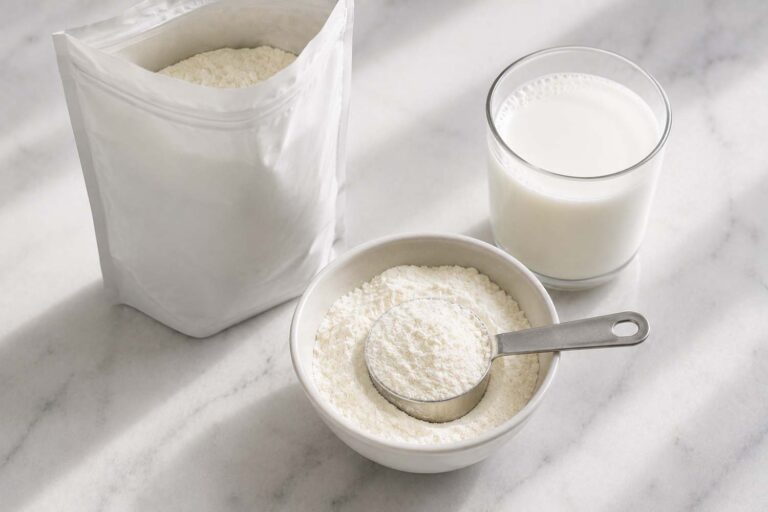
You find a box of powdered milk in the pantry with a date from two years ago, or you have a large bag you bought for emergency food storage and are not sure it is still good. Does powdered milk go bad?
The short answer: Yes, powdered milk can go bad, but the timeline varies significantly by type. Nonfat dry milk (NFDM) has an exceptional shelf life: according to the USDA, it can be stored indefinitely when kept dry and below 75°F, and is often still usable 2 to 10 years past its best-by date. Whole milk powder is a very different story: the fat content makes it vulnerable to rancidity, and it is not suitable for long-term storage. USU Extension confirms that once opened, NFDM should be used within 3 months. Reconstituted powdered milk should be refrigerated and used within 5 days.
For a full overview of how pantry staples compare on shelf life, visit our Complete Food Storage Guide.
📋 Powdered Milk: At a Glance
- Nonfat dry milk (NFDM), unopened: indefinite per USDA when stored dry below 75°F. Often good 2 to 10 years past best-by date.
- Nonfat dry milk, opened: 3 months per USU Extension. Transfer to airtight container, keep away from light, moisture, and heat.
- Whole milk powder: much shorter shelf life due to fat content. Not recommended for long-term storage. Use within the best-by window.
- Reconstituted powdered milk: refrigerate immediately and use within 5 days per USU Extension.
- Temperature is the critical variable. At 90°F powdered milk develops off-flavors within 6 months. At 104°F it can go rancid in 30 days.
- Vitamins A and D degrade over time even when the powder is otherwise safe. Long-stored powdered milk is safe to consume but may have reduced nutritional value.
Key Takeaways
- Type matters enormously. Nonfat dry milk and whole milk powder have very different shelf lives because fat is the variable that determines how quickly oxidation and rancidity occur.
- The USDA says NFDM can be stored indefinitely when kept dry below 75°F. This is a genuine indefinite shelf life, not a marketing claim.
- USU Extension and the USDA are the primary sources for shelf life and storage guidance on dried milk. Their guidance: opened NFDM has a 3-month shelf life; unopened NFDM stored below 75°F is safe indefinitely.
- Temperature is more important than time. Powdered milk stored in a hot pantry or above a stove can go bad much faster than the date suggests. A cool, stable temperature below 75°F is the controlling variable.
- Light degrades vitamins A and D. Store in opaque containers or dark cabinets. Transparent containers on sunny counters accelerate nutrient loss even in otherwise stable powdered milk.
- Reconstituted milk is perishable. Once you add water, treat it exactly like fresh milk. Refrigerate immediately and use within 5 days.
How Long Does Powdered Milk Last?
The shelf life of powdered milk depends almost entirely on whether it is nonfat or contains milk fat, and how it is stored. Nonfat dry milk has one of the longest shelf lives of any dairy product because the removal of nearly all water and all fat eliminates the two main drivers of dairy spoilage.
| Type and Status | Shelf Life | Source |
|---|---|---|
| Nonfat dry milk (NFDM), unopened, properly stored | Indefinite (often 2 to 10 years past best-by) | USDA; USU Extension |
| Nonfat dry milk (NFDM), opened | 3 months in airtight container | USU Extension |
| Whole milk powder, unopened | Use by best-by date; not for long-term storage | USU Extension |
| Instant dry milk (nonfat), unopened | Same as NFDM: indefinite when properly stored | USDA; USU Extension |
| Reconstituted powdered milk (liquid) | 5 days refrigerated | USU Extension |
| Emergency/survival NFDM (#10 cans, Mylar) | 20 to 25 years in optimal conditions (55 to 70°F) | USU Extension; manufacturer guidance |
Shelf life guidance per USU Extension and USDA guidelines. USDA states nonfat dry milk can be stored indefinitely at average temperatures below 75°F. USU Extension specifies 3-month shelf life for opened NFDM. Whole milk powder and dried buttermilk contain milk fat and are not suitable for long-term storage per USU Extension. Actual shelf life depends heavily on storage temperature: quality degrades significantly at temperatures above 75°F.
Why Nonfat Powdered Milk Lasts So Long
The Science Behind the Shelf Stability
Fresh milk spoils quickly because it is primarily water with dissolved proteins, fats, and sugars. Water provides the medium for bacterial growth, and the fat provides a substrate for oxidation and rancidity. Removing both changes the spoilage equation entirely.
Nonfat dry milk is made by spraying liquid nonfat milk into hot air or heating it on a drum, removing nearly all moisture. The process leaves behind concentrated milk proteins, carbohydrates (lactose), and minerals, with virtually no fat and almost no available water. Without water, bacteria and mold cannot grow. Without fat, oxidation-driven rancidity cannot occur.
This is why the USDA classifies NFDM as a product that can be stored indefinitely when kept dry and below 75°F. It is not that it never changes: vitamins A and D in fortified powdered milk degrade over time due to light and heat exposure, and very long-stored NFDM may taste slightly less fresh than new powder. But the product remains safe and functional for reconstitution and cooking for years.
Whole milk powder is a completely different case. The fat content (approximately 26 to 28% fat by weight per USDA FoodData Central nutritional data for whole milk powder) undergoes lipid oxidation over time, producing rancid off-flavors and odors. USU Extension is explicit: dried whole milk and dried buttermilk have milk fat and are not suitable for long-term storage. Use whole milk powder by or reasonably close to its best-by date.
Temperature is the controlling variable for all powdered milk. Research cited by USU Extension and food storage studies indicates that at 50°F powdered milk remains good for 4 or more years. At 90°F quality degrades within 6 months. At 104°F the milk can go rancid within 30 days. This is why the pantry location matters enormously: a hot kitchen cabinet above the stove is a very different environment from a cool basement pantry.
How to Tell If Powdered Milk Has Gone Bad
Spoilage Signs to Check
Yellowing or discoloration: Fresh NFDM is white to very pale cream. Yellowing is one of the clearest signs of deterioration, indicating that moisture has entered the package and oxidation or browning reactions have occurred per USU Extension and multiple food storage sources. Yellow powder may also indicate mold risk. Do not use yellowed powdered milk.
Off odor: Fresh powdered milk has a mild, clean, slightly sweet dairy smell. Rancid or degraded powdered milk smells sour, musty, stale, or like old cardboard. Any clearly off odor is a discard signal. Whole milk powder that has gone rancid will smell distinctly bad in a way similar to rancid butter or old cooking oil.
Clumping or hard masses: Light clumping from ambient humidity is common and generally indicates the powder has absorbed some moisture. Small soft clumps can be broken up and the powder used normally. Dense hard clumps, wet areas, or a solid mass indicate significant moisture exposure. Inspect for discoloration or mold within the clumps. If any mold is visible, discard the entire container.
Mold: Mold in properly stored dry powdered milk is rare due to its low water activity. If moisture has entered the container, mold can develop. Any visible fuzzy growth means discard immediately without attempting to use any of the remaining powder.
Off taste when reconstituted: If the powder passes visual and smell checks but you are still unsure, reconstitute a small amount and taste it. Fresh reconstituted NFDM should taste clean and mildly milky. A sour, stale, or off flavor means the powder has degraded and should not be used.
For long-term stored NFDM: reduced nutrition, not necessarily bad flavor. Very old NFDM may still taste and smell acceptable while having lost significant Vitamin A and D content due to photodegradation. It is still safe to use in cooking and baking where nutritional completeness is less critical.
How to Store Powdered Milk Properly
Storage Best Practices
Cool, dry, dark location below 75°F. The USDA specifies below 75°F as the storage temperature for indefinite shelf life of NFDM. A cool basement, interior pantry shelf, or kitchen cabinet away from all heat sources is ideal. Avoid storing above the stove, near the dishwasher, or in any warm spot. USU Extension adds: keep away from light. Vitamins A and D are photosensitive and degrade when the powder is exposed to light.
Airtight, moisture-proof, opaque container. Once opened, transfer powdered milk to a sealed airtight container that blocks light. Glass or metal containers with tight lids are better than plastic for long-term storage. Per USU Extension: keep opened containers away from light, moisture, and warmer temperatures. Label with the opening date. Use within 3 months of opening.
For long-term emergency storage: Mylar bags with oxygen absorbers. Multiple food storage sources confirm that NFDM sealed in Mylar bags with oxygen absorbers can last 15 to 25 years at temperatures between 55 and 70°F. Oxygen absorbers reduce lipid oxidation even in nonfat milk powder. This is the method used by emergency preparedness suppliers. Standard retail cans and boxes are not designed for this level of long-term storage.
Refrigeration is acceptable but not required. Refrigerating powdered milk in an airtight container is fine and can extend freshness, particularly in warm climates. The risk is condensation if the container is moved between cold and warm temperatures. If refrigerating, keep in a dedicated sealed container that stays in the refrigerator and is never brought to room temperature.
Freezing is an option for unopened packages. Freezing NFDM in a sealed airtight container can extend its shelf life indefinitely. The powder itself does not freeze solid and can be used without thawing by scooping directly from the frozen container, though bringing to room temperature first reduces moisture risk.
Reconstituted milk: refrigerate immediately, use within 5 days. Per USU Extension, once NFDM is mixed with water it behaves like fresh nonfat milk and must be refrigerated. Do not leave reconstituted milk at room temperature for more than 2 hours per USDA guidelines.
How to Reconstitute Powdered Milk
The standard ratio per USU Extension is 1/3 cup of dry NFDM powder per 1 cup of water to make one serving of reconstituted milk. Instantized NFDM (labeled “instant”) dissolves more readily in cold or warm water. Non-instantized versions may need blending or can be held overnight in the refrigerator after mixing to improve solubility.
Reconstituted NFDM will taste like nonfat fresh milk, not whole milk. If the lack of fat is noticeable, USU Extension suggests mixing reconstituted NFDM into whole fresh milk to improve the flavor and texture.
Powdered milk can be used dry (without reconstituting) in baking recipes to add dairy solids without adding liquid. In this application, add the powder with the dry ingredients and adjust the liquid in the recipe accordingly.
Recipes and Uses for Powdered Milk
- Banana Bread: dry powdered milk can be added to quick breads for a subtle dairy richness without adding liquid
- Does Milk Go Bad?: the companion post for fresh milk, with its much shorter shelf life
- Does Milk Need to Be Refrigerated?: fresh milk storage companion
- Does Flour Go Bad?: flour and powdered milk are often stored together for emergency food preparation
- Does Sugar Go Bad?: another long-shelf-life pantry staple often stored alongside powdered milk
- Does Cocoa Powder Go Bad?: powdered milk combined with cocoa powder and sugar makes homemade hot cocoa mix
Frequently Asked Questions
Does powdered milk expire?
Nonfat dry milk does not expire in a food safety sense when stored properly. The USDA states it can be stored indefinitely when kept dry below 75°F, and is often usable 2 to 10 years past the printed best-by date. Whole milk powder is different: it contains fat that goes rancid over time and should be used by or near its best-by date. The best-by dates on powdered milk packaging are quality guidelines, not safety cutoffs, for nonfat varieties.
How long does powdered milk last after opening?
Opened nonfat dry milk lasts about 3 months per USU Extension, when stored in an airtight container away from light, moisture, and heat. Write the opening date on the container. Whole milk powder should be used more quickly after opening because its fat content accelerates rancidity on exposure to air.
What is the difference between instant and regular powdered milk?
Both are nonfat dry milk, but instant (also called instantized) powdered milk has been processed to dissolve more quickly in cold or warm water without blending. Regular non-instantized NFDM may need to be blended or held overnight in the refrigerator after mixing to fully dissolve. Both have the same shelf life and the same storage requirements. Instant dry milk is more convenient for drinking purposes; both work equally well in baking and cooking where full dissolution is achieved through heat.
Can I use powdered milk past its expiration date?
Yes, for nonfat dry milk, in most cases. The USDA confirms NFDM can be stored indefinitely when properly stored, meaning the expiration date is a quality guideline, not a safety cutoff. Powdered milk that has been stored correctly in a cool, dry, dark, sealed container is often perfectly usable years past the printed date. Check for yellowing, off odor, and off taste when reconstituted. If it passes all three checks, it is safe to use. Whole milk powder past its date should be checked more carefully for rancidity.
How do I know if powdered milk has gone bad?
Check for yellowing or discoloration, off odor (sour, musty, stale, or rancid), hard dense clumps that indicate moisture exposure, and any visible mold. Reconstitute a small amount and taste it if the smell and appearance are acceptable but you still have doubts. Fresh reconstituted NFDM tastes clean and mildly milky. Sour, stale, or off flavor means discard. Yellow powder is always a discard signal regardless of smell.
Can you freeze powdered milk?
Yes. Freezing NFDM in a sealed airtight container extends its shelf life indefinitely. The powder does not freeze solid and can be scooped directly from the frozen container, though bringing to room temperature in a sealed container before opening reduces condensation risk. Freezing is particularly useful for very large quantities or for very long-term storage in warm climates where pantry temperatures regularly exceed 75°F.
Does powdered milk taste like regular milk?
Reconstituted nonfat dry milk tastes similar to fresh nonfat milk but not identical to whole milk. USU Extension notes it will not taste any better than fresh nonfat milk when reconstituted. If the lack of fat is noticeable, mixing reconstituted NFDM with fresh whole milk produces a better-flavored result. Very old NFDM that is still safe may have a slightly flat or cardboard-like background note. For cooking and baking applications where milk is not the primary flavor, this difference is rarely detectable in the finished product.
Can I substitute powdered milk for fresh milk in baking?
Yes. Reconstituted NFDM substitutes 1:1 for fresh milk in most baking recipes. You can also add the powder dry with the other dry ingredients and add the corresponding amount of water to the wet ingredients, which works particularly well in quick breads, muffins, and pancakes. The standard ratio is 1/3 cup powder plus 1 cup water per cup of milk called for in the recipe. The fat difference between reconstituted NFDM and whole milk is generally not detectable in baked goods.
Does powdered milk need to be refrigerated?
Dry powdered milk does not require refrigeration. The USDA specifies pantry storage below 75°F as the correct method. Refrigeration is acceptable if you live in a warm climate and can maintain an airtight container without condensation issues. Once reconstituted, the milk must be refrigerated immediately and used within 5 days per USU Extension.
Why does powdered milk have a 25-year shelf life in some products?
Emergency preparedness products rated for 25-year shelf life use nonfat dry milk packaged in sealed Mylar bags or #10 cans with oxygen absorbers, stored at optimal temperatures between 55 and 70°F. The oxygen absorbers eliminate the oxidation that gradually degrades flavor and nutrition even in nonfat milk. This is a specific packaging and storage method, not a characteristic of all powdered milk. Standard retail boxes and bags stored in typical home pantries do not achieve this shelf life because they are not packaged to eliminate oxygen and are often stored at warmer temperatures.
How long does powdered milk last after mixing with water?
Once mixed with water, reconstituted powdered milk lasts 5 days refrigerated per USU Extension. Treat it exactly like fresh nonfat milk from that point: refrigerate immediately after mixing, store in a sealed container, and do not leave at room temperature for more than 2 hours per USDA food safety guidelines. Do not return unused reconstituted milk to the powdered milk container as this introduces moisture into the dry powder.
Is powdered milk healthy?
Powdered milk retains most of the nutritional profile of fresh nonfat milk: protein, calcium, B vitamins, and minerals are largely preserved through the drying process. Many brands are also fortified with Vitamins A and D. The main nutritional caveat is that Vitamins A and D are photosensitive and degrade over time with light and heat exposure, meaning very long-stored powdered milk may have reduced vitamin content even when it is otherwise safe and functional. For cooking and baking applications, this nutritional difference is rarely meaningful. For use as a primary drinking milk over extended periods, freshness of the powder matters more.
Can you drink powdered milk without mixing it?
Technically yes, but it is unpleasant and not recommended. Dry powder consumed without water is difficult to swallow and can cause choking. Some people add powdered milk directly to coffee or protein shakes without pre-mixing, allowing the hot or blended liquid to dissolve it. This works reasonably well for instantized (instant) powdered milk which dissolves quickly. Non-instantized NFDM may not dissolve fully in this application. For drinking purposes, always reconstitute with water first at the standard ratio of 1/3 cup powder per 1 cup water.
Further Reading
- Does Milk Go Bad?
- Does Milk Need to Be Refrigerated?
- Does Heavy Cream Go Bad?
- Does Buttermilk Go Bad?
- Does Flour Go Bad?
- Does Sugar Go Bad?
- Does Cocoa Powder Go Bad?
- 23 Foods You Should Never Refrigerate
- Complete Food Storage Guide

Better Living may earn commissions through affiliate links and may occasionally feature sponsored or partner content. If you make a purchase through our links, we may receive a small commission at no cost to you.