
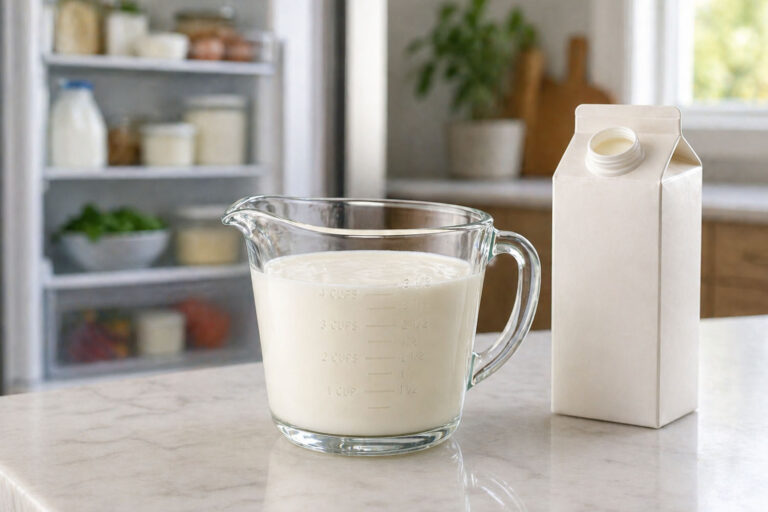
You have been cooking for an hour and the heavy cream has been sitting on the counter the whole time. Or you bought cream at a farmers market and it was not refrigerated in the booth. Or you are wondering whether you even need to put it back in the fridge after pouring a splash into your coffee. Does heavy cream need to be refrigerated?
The short answer: Yes, always, once opened or once it has been refrigerated. Heavy cream is a perishable high-fat dairy product with a strict 2-hour room temperature limit. The only exception is certain ultra-pasteurized shelf-stable cream in aseptic packaging that is sold at room temperature before opening, but even that must be refrigerated once opened.
For a full overview of how perishable foods compare on shelf life, visit our Complete Food Storage Guide.
Key Takeaways
- Standard heavy cream always needs refrigeration. All cream sold from a refrigerated case must stay cold at all times.
- The 2-hour rule applies firmly. Heavy cream left at room temperature for more than 2 hours must be discarded.
- Shelf-stable UHT cream in aseptic cartons can be stored at room temperature before opening but must be refrigerated immediately after opening.
- Once refrigerated, always refrigerated. Do not move cream repeatedly between fridge and counter.
- Opened heavy cream lasts 10 days refrigerated per USDA FoodKeeper. Up to 2 to 3 weeks with careful storage.
- Frozen heavy cream lasts 3 to 4 months and is best for cooking rather than whipping after thawing.
Why Heavy Cream Always Needs Refrigeration
Heavy cream is defined by the FDA as cream containing no less than 36% milk fat. That high fat content gives cream its richness and helps it whip, but it does not make it shelf-stable at room temperature. Like all fluid dairy products, heavy cream contains water, proteins, and lactose alongside the fat, and these components create an environment where bacteria multiply rapidly above 40°F.
The FDA classifies heavy cream as a potentially hazardous food that must be kept at 40°F or below. The USDA temperature danger zone for bacterial growth is 40°F to 140°F. At room temperature, bacteria in cream can double in number every 20 minutes under ideal conditions. Two hours at room temperature is the absolute limit before the bacterial load becomes a food safety concern.
The 2-Hour Rule Is Not Flexible
Two Hours Is the Hard Limit
The FDA 2-hour room temperature rule applies to heavy cream at every stage: the carton on the counter while you cook, a pitcher of cream at the coffee station, a bowl of whipped cream on the table. After 2 hours at ambient temperature, cream must be discarded or returned to the refrigerator immediately if it has been out less than 2 hours.
At outdoor temperatures above 90°F, the window drops to 1 hour. This is particularly relevant for outdoor entertaining where cream-containing dishes or coffee creamers might sit in warm sun.
The 2-hour window applies cumulatively across a day. If cream sat out for 45 minutes while you cooked breakfast, then went back in the fridge, then came out for another 45 minutes for lunch, it has used 90 of its 120 safe minutes. It is not reset by returning to the refrigerator.
The Shelf-Stable Exception
UHT Aseptic Packaging: The One Exception
There is one legitimate exception to always-refrigerated cream: ultra-high temperature (UHT) cream in aseptic packaging. These are the small shelf-stable cartons sometimes found in coffee shops or sold in pantry sections of specialty grocery stores. These products have been heated to 280°F or above, killing all bacteria and spores, then packaged in a sterile sealed environment. This process makes them genuinely shelf-stable at room temperature before opening, sometimes for months.
The key distinction: aseptic shelf-stable cream is sold and stored at room temperature before it is opened. Standard heavy cream cartons in the refrigerator section of the supermarket are NOT shelf-stable even if they are ultra-pasteurized. Ultra-pasteurization extends the refrigerated shelf life dramatically but does not make cream shelf-stable at room temperature without aseptic packaging.
Once any cream, including aseptic shelf-stable cream, is opened, it must be refrigerated immediately and used within the same 10-day window as standard heavy cream.
The Full Refrigeration Guide
| Type and Condition | Refrigerate? | How Long It Lasts |
|---|---|---|
| Standard heavy cream carton (unopened) | Yes — always | Until printed date; longer for ultra-pasteurized |
| Standard heavy cream carton (opened) | Yes — always | 10 days per USDA; up to 2 to 3 weeks carefully stored |
| UHT aseptic carton (unopened) | No — pantry until opened | Until printed date (months) |
| UHT aseptic carton (opened) | Yes — immediately | 10 days refrigerated |
| Heavy cream at room temperature | Return within 2 hours | Discard after 2 hours |
| Frozen heavy cream | Freeze for longer storage | 3 to 4 months (USDA) |
Based on USDA FoodKeeper guidelines and FDA safe food handling guidance for dairy products.
Taking Heavy Cream Out for Cooking: The Safe Approach
When a recipe calls for heavy cream, you do not need to pour it cold directly from the refrigerator in most cases. Room-temperature cream incorporates more smoothly into sauces and batters. The right approach is to remove only what you need for the recipe 10 to 15 minutes before cooking, then return the carton to the refrigerator immediately. Do not leave the entire carton on the counter for an hour while you cook.
For whipping, cream should be very cold and stay cold throughout the process. Cold cream whips faster and holds its peaks more stably. Take it straight from the back of the fridge, whip it in a chilled bowl, and refrigerate the finished whipped cream immediately.
Storage Best Practices
How to Store Heavy Cream Properly
Store at the back of a main shelf, never the door. The door fluctuates in temperature every time it opens. The back of a main shelf is the coldest, most stable location in the refrigerator.
Keep at 40°F or below. Check your refrigerator temperature periodically. Many refrigerators run 2 to 4 degrees warmer than their settings indicate. An inexpensive fridge thermometer confirms you are actually within the safe range.
Keep the original carton tightly sealed. If the carton does not reseal well after opening, transfer to an airtight glass jar or container. Cream absorbs surrounding odors through any unsealed opening.

Never return cream to the carton from a measuring cup that has touched other ingredients. Cross-contamination significantly shortens shelf life. Pour what you need and store the carton separately.
Label with the opening date. A carton with no opening date can look perfectly fine at 5 days or 15 days. A date on the carton removes the guesswork.
Freeze early, not late. If you have more cream than you will use in 7 to 10 days, freeze it now rather than waiting until it is near the end of its life. Fresher cream produces better results after thawing.
Recipes That Use Heavy Cream
- Cauliflower Soup with Scallops: heavy cream transforms this soup from a purée into a restaurant-quality first course
- Clam Corn Chowder: the cream is what makes this chowder thick, rich, and deeply satisfying
- Chocolate Caramel Fondue with Marsala: fresh heavy cream heated gently with chocolate and caramel is the whole recipe
- The Perfect Creamy Caramel Flan: fresh cream is essential to the custard’s smooth, tender set
- Buenavista Irish Coffee: lightly whipped heavy cream gently poured over the back of a spoon is the signature finishing touch
Frequently Asked Questions
I left heavy cream on the counter for 3 hours while I cooked. Is it still safe?
No. Three hours exceeds the FDA 2-hour guideline for dairy at room temperature. Discard it. Bacterial growth at room temperature in cream is real and cannot be reversed by refrigerating it afterward. The cost of replacing a carton of cream is always less than the risk of using cream that has been in the danger zone for too long. This is especially important if you are cooking for children, elderly guests, pregnant people, or anyone with a compromised immune system.
Can I bring heavy cream to room temperature for baking?
Yes, briefly. For applications like ganache, custard, or sauces where room-temperature cream is specified, remove only what you need from the refrigerator and let it sit for no more than 20 to 30 minutes before using. Return any unused cream to the refrigerator immediately. Do not leave the full carton on the counter while you measure and prep. The cumulative 2-hour clock starts the moment the cream leaves the refrigerator.
Does whipped cream need to be refrigerated?
Yes. Freshly whipped heavy cream is still a dairy product and still perishable. Refrigerate whipped cream immediately after making it and use within 1 to 2 days. It will soften and may weep slightly in the refrigerator over time, but a brief re-whipping restores it. Commercially stabilized whipped cream in a can follows the label’s refrigeration guidance after opening. Do not leave whipped cream at room temperature for more than 2 hours.
Further Reading
- Does Heavy Cream Go Bad?
- Does Butter Go Bad?
- Does Sour Cream Go Bad?
- Does Cream Cheese Go Bad?
- Complete Food Storage Guide

Better Living may earn commissions through affiliate links and may occasionally feature sponsored or partner content. If you make a purchase through our links, we may receive a small commission at no cost to you.