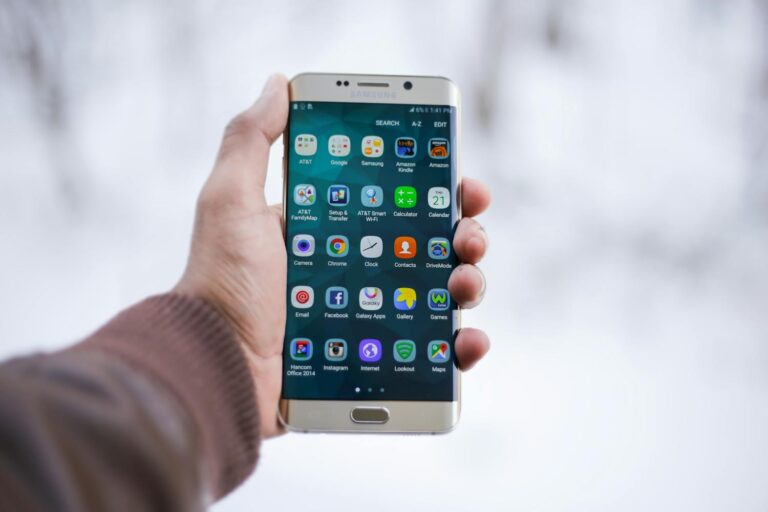
Scrolling, searching, shopping, texting. The average person checks their phone over 90 times a day — which means mobile is no longer just one piece of your marketing strategy. For most small businesses, it is the strategy.
The good news: you don’t need a massive budget or a dedicated marketing team to do this well. Here are 10 strategies explained practically, so you can decide which ones make sense for your business right now.
These are the foundations. Get these right before spending a dollar on advertising — everything else builds on top of them.
1
📲 App Development
Having your own app isn’t just for big brands anymore. For the right type of business, a well-built app can become one of your most powerful retention tools. Think about what your customers do repeatedly: booking appointments, reordering products, tracking deliveries, redeeming loyalty points. If any of that applies to you, an app gives customers a faster, easier way to do it — and keeps your brand on their home screen in the process.
Push notifications are one of the biggest advantages. Unlike email, a push notification lands directly on a customer’s lock screen. You can use them to announce flash sales, remind someone they left items in their cart, or trigger a geo-targeted alert when a customer is physically near your store. That kind of timely, relevant outreach is hard to replicate through any other channel.
💡 Before you invest: Be honest about whether your customers would actually use an app. Repeat purchases and regular bookings? Probably yes. One-time service? The ROI may not be there. Be specific about the features that solve a real problem — a genuinely useful app earns downloads. A basic one that just mirrors your website does not.
2
🌐 Mobile-Friendly Web Design
If someone visits your website on their phone and has to pinch, zoom, or squint to read it, they’re gone within seconds. Over 60% of all web traffic now comes from mobile devices, and Google ranks mobile experience as a direct factor in search results. A website that isn’t built for phones isn’t just frustrating — it’s actively costing you customers and search visibility at the same time.
A mobile-friendly website means text is readable without zooming, buttons are large enough to tap with a thumb, pages load in under three seconds, and your phone number is a tappable call button. Responsive design handles most of this automatically.
💡 Do this today: Pull up your own website on your phone and use it as a customer would. Try finding your contact page, reading a product description, and completing a purchase or booking. Whatever frustrates you will frustrate your customers too.
3
🔍 Mobile Search Optimization
When someone searches “hair salon near me” or “best bakery open now,” they’re almost certainly on their phone. These local, intent-driven searches are some of the highest-converting traffic available to small businesses — and capturing them requires a specific approach.
Start with your Google Business Profile if you haven’t already. It’s free, and it determines whether you show up on Google Maps and in the local results box at the top of search pages. Fill it out completely: hours, photos, services, and a description that uses the words your customers actually search for. Review count and star rating directly influence how high you appear, so make it easy for happy customers to leave one.
💡 On your website: Use location-specific language naturally throughout your pages. “Custom cakes in Austin” outperforms “custom cakes” for local searches. If your site takes more than 3 seconds to load on a phone, you’re losing both visitors and rankings. Google’s free PageSpeed Insights tool shows you exactly what to fix.
4
🏪 App Search Optimization (ASO)
If you have an app or are planning to build one, ASO is how you make sure people can actually find it. The App Store and Google Play both work like search engines — results are ranked based on keyword relevance, download volume, ratings, and how recently the app was updated.
Your app title and description need to include the specific words your target customers would use. If you run a spa booking app, phrases like “spa booking app” and “wellness appointment scheduler” should appear naturally in your listing. Screenshots matter too — most users decide whether to download based on the visuals before reading a single word of description.
💡 On reviews: A steady stream of genuine positive reviews signals credibility to both the algorithm and potential users. The easiest way to get them is to ask at the right moment — right after a customer has had a great experience in the app.
🟣 Paid and Outreach
Reaching people who don’t know you yet — through advertising and direct outreach.
5
📣 In-App Advertising
You don’t need your own app to advertise inside one. Through platforms like Google Ads and Meta, you can place ads inside thousands of popular apps your target customers already use every day. These in-app adverts come in several formats: banner ads, interstitial ads that appear between screens, rewarded video ads, and native ads that blend into the content feed.
The targeting is what makes this channel valuable. You can reach people based on the apps they use, their interests, location, age, and purchase behavior. For a small business, start narrow — define your ideal customer as specifically as you can. A smaller, well-targeted audience will almost always outperform a large, unfocused one.
💡 Test before you spend: Set a modest test budget first, watch which formats and creatives perform, and scale what works. Don’t commit significant spend until you have data telling you what resonates with your specific audience.
10
📞 Cold Calling
Cold calling has changed more than any other strategy on this list. Caller ID means most people screen unfamiliar numbers. Robocall fatigue is real. Consumer protection regulations in many states restrict when and how businesses can call. For B2C outreach to people who have never heard of you, it’s largely an uphill battle.
Where it still works well is in two specific situations: following up with existing customers for renewals or reactivation, and B2B outreach to warm leads — people you’ve already met at an event, exchanged emails with, or who have engaged with your content. This “warm calling” converts meaningfully better because there’s already a thread of recognition to pull on.
💡 Treat it as a relationship tool: Prepare, be brief, lead with value, and always respect the person’s time. Incorporate it thoughtfully into your broader financial planning and growth strategy rather than treating it as a standalone tactic.
🟢 Direct to Customer
The channels where you own the relationship — and the ones most small businesses underuse.
6
💬 SMS Marketing
Text messages have an open rate of around 98%. Email averages closer to 20%. That difference alone explains why SMS marketing has become one of the most effective direct channels available to small businesses. When you send a text, people read it.
📋 SMS Best Practices
Always get explicit permission before texting anyone
Keep messages under 160 characters and lead with the value
Use a bulk SMS platform to manage lists and stay compliant
Include clear opt-out instructions in every message
Send sparingly — frequency kills engagement faster than anything else
Build your list by offering something worth signing up for — a first-purchase discount, early access to sales, or exclusive offers. People are protective of their phone numbers in a way they aren’t with email addresses. Treat that access with respect and you’ll keep a highly engaged list.
7
🖼️ MMS Marketing
MMS is the richer cousin of SMS. Where a text is words only, MMS marketing lets you send images, GIFs, short videos, and audio directly to someone’s messaging app. A photo of a new product. A short video walkthrough. A voucher with a scannable code. An event invitation that actually looks exciting.
MMS works best for moments that benefit from visual context: product launches, seasonal promotions, limited-time offers, and event announcements. The same consent and opt-out rules that apply to SMS apply here.
💡 Use it sparingly: Used occasionally, MMS feels special. Used too often, it feels like spam regardless of how good the visuals are. Protect your list by making each send count.
8
📸 Social Media Marketing
The vast majority of social media is consumed on phones. Every decision you make about content — format, length, visual style — needs to be made with a phone screen in mind first, not a desktop monitor.
Video consistently outperforms static images across every major platform right now. You don’t need professional production. Short, authentic videos filmed on your own phone often outperform polished content because they feel real. Behind-the-scenes clips, quick how-tos, product demonstrations, and customer stories all perform well without a film crew.
💡 Pick your platform deliberately: Instagram and Pinterest skew toward visual products and lifestyle. Facebook still has strong reach with women over 35. TikTok rewards consistency across age groups. Pick one or two and do them well. Part of running your business efficiently is knowing where your time will actually move the needle.
9
✉️ Email Marketing
Email is older than the smartphone, but it’s now primarily read on one. Over half of all emails are opened on mobile devices — if your emails aren’t designed for a small screen, a significant portion of your audience is getting a bad experience without you even knowing it.
Mobile email design comes down to a few non-negotiables: single-column layout, large readable font (at least 14px), tappable buttons, and subject lines that front-load the most important words since many phones cut off after 30 to 40 characters. Preview text — the line that appears below the subject line in the inbox — is valuable real estate that most small businesses ignore entirely.
💡 Consistency beats frequency: A monthly email that genuinely delivers value will outperform weekly emails that feel like noise. Staying on top of your business credit is one thing — staying on top of your sender reputation is equally important. Always get consent and honor opt-outs immediately.
💡 Where to Start
Ten strategies can feel overwhelming when you’re running a business solo or with a small team. The practical move is to audit what you already have and fix the foundations first.
If your website isn’t mobile-friendly yet — start there. Everything else depends on it.
If you don’t have a Google Business Profile — set one up today. It’s free and high impact.
If you want a direct line to customers — SMS is the fastest way to build one.
If you’re ready to grow your audience — pick one social platform and commit to it for 90 days.
The best mobile marketing strategy is the one you actually execute. Start with one thing, do it well, then layer in the next.
Better Living may earn commissions through affiliate links and may occasionally feature sponsored or partner content. If you make a purchase through our links, we may receive a small commission at no cost to you.
Resort Spotlight
Dreams Riviera Cancun Resort & Spa
To learn more about Dreams Riviera Cancun Resort & Spa, please visit DreamsResorts.com