

Last week I spilled an entire glass of pinot noir on my white shirt during movie night. Not a splash. Not a dribble. The entire glass, right down the front, like some kind of dramatic movie scene except I was the only one watching and there was nothing romantic about it.
My first reaction was to panic. My second was to dig the Tide pen out of my purse and scrub at it while frantically Googling “how to get red wine out of clothes emergency.” The pen lightened it a little. The internet gave me about fifteen contradictory answers.
So I did the reasonable thing: I opened another bottle and ruined four more shirts on purpose to find out which methods actually work.
Spoiler: Some methods are absolute magic. Others are overrated. Here’s what I learned from turning my laundry room into a wine stain laboratory.
Quick Answer: How to Get Red Wine Out of Clothes
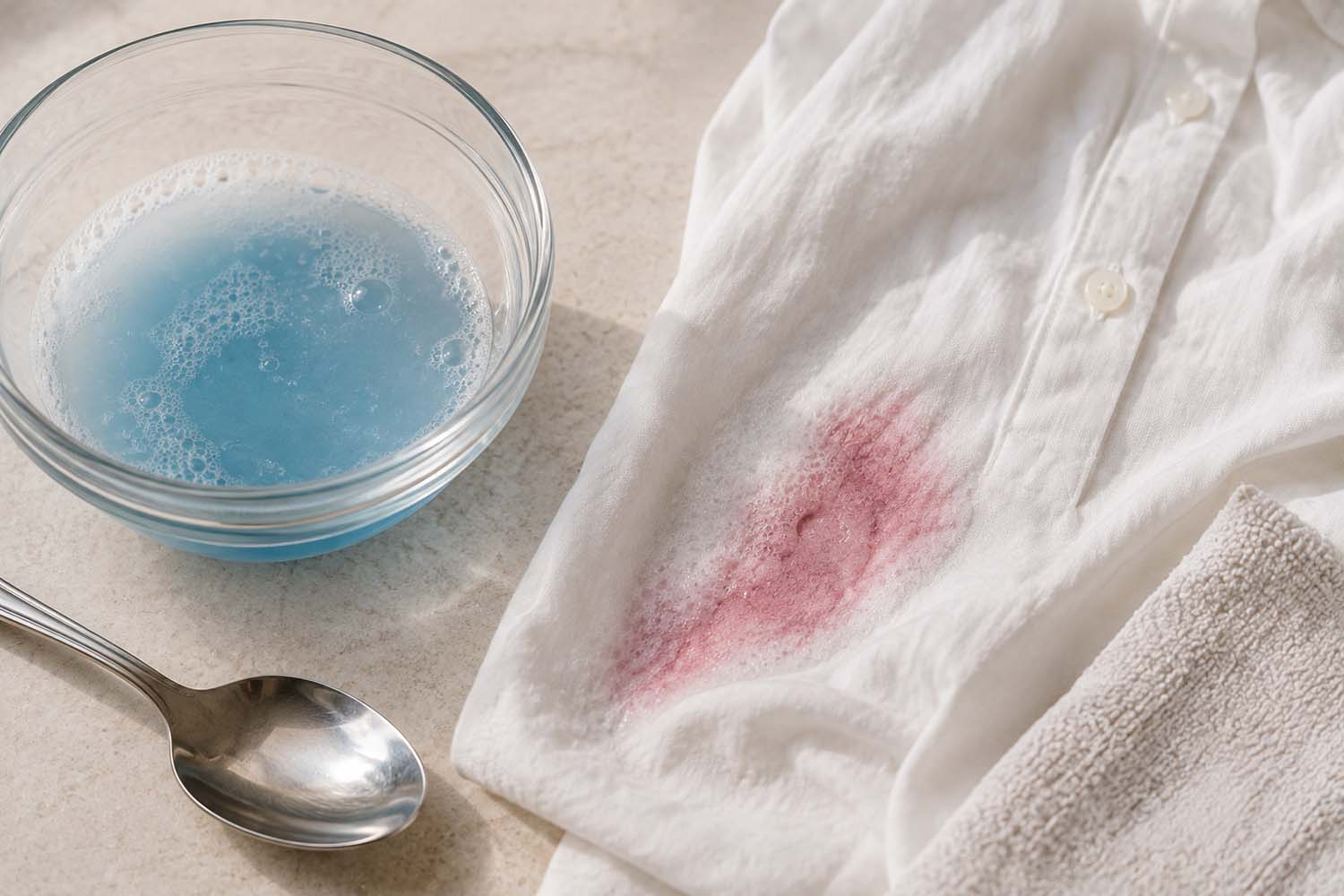
Act as fast as you can. Blot up as much red wine as possible (never rub), then flush the stain with cold water or club soda from the back of the fabric. For white fabrics, apply a mix of hydrogen peroxide and dish soap and let it sit 20 minutes to an hour. For colored clothes, apply white vinegar, then work in a little liquid laundry detergent – test either treatment on a hidden spot first. Wash following the care label, and don’t put the garment in the dryer until the stain is completely gone.
How I Tested
I bought four identical 100% cotton white t-shirts and used the same pinot noir that ruined my original shirt. Each shirt got two same-sized stains – one on the front, one on the back.
Each shirt was assigned one method. I treated the front stain within 5 minutes and left the back stain overnight before treating it with the same method. Everything was rinsed in cold water and washed together in one load with regular detergent, and I checked each stain in daylight before anything went near the dryer.
The percentages below are my own visual estimates of how much each stain faded, not lab measurements – and since I only tested white cotton, your results on other fabrics may differ.
Dealing with a different stain? Our complete guide to removing every type of stain from clothes covers everything from ketchup to candle wax.
Why Red Wine Stains Are So Stubborn
Before we get into solutions, let me tell you why red wine is such a nightmare for clothing. Wine contains natural pigment compounds that bind to fabric fibers much like a dye. Add in tannins (the same compounds that stain your teeth, and the culprit behind stubborn coffee, chocolate, and berry stains), and you’ve got a staining powerhouse that’s designed to stick around. Deep-red beet stains are just as stubborn, for similar reasons.
The longer you wait, the deeper these compounds sink into the fabric. Time is absolutely not on your side here.
The Golden Rule: Act Fast
The clearest result from my testing had nothing to do with which method I used. Every single method worked better on the stains I treated within 5 minutes than on the ones I left overnight.
The fresh stains came out completely or nearly completely with the two best methods. The overnight stains were stubborn across the board – only one method got an overnight stain fully out, and even that took two rounds.
So whatever you do, don’t let that stain sit while you finish the movie. I know it’s tempting, but trust me – future you will regret it.
Pro Tip for Tough Stains
If a stain has dried or survived the first wash, an enzyme-based stain remover is worth a try – these are designed for older, set-in stains. I didn’t have one during my testing, so give it time to work before washing and check the results before drying. For particularly stubborn stains on white fabrics, oxygen bleach powder is another strong option – it’s much gentler on fabric than chlorine bleach while still being effective at lifting tough stains.
What About Commercial Stain Removers?
The only commercial product I tested was the Tide stain remover pen I used on my original shirt the night of the spill. It lightened the stain but didn’t come close to removing it. What finally saved that shirt was the hydrogen peroxide and dish soap method above.
These pens are great for emergencies when you’re out and about – they can keep a stain from setting until you get home and can treat it properly. But don’t expect them to finish the job.
If you want something built specifically for this exact problem, Wine Away is formulated just for red wine and other red stains like tomato sauce and berries. I haven’t tested it yet, so I can’t say how it compares, but it’s made for exactly this emergency.
In my testing, the hydrogen peroxide method beat the Tide pen by a wide margin.
Fabric Matters More Than You Think
All my testing was on 100% cotton shirts because that’s what I ruined. Other fabrics need a different approach – and whatever the fabric, check the care label before you start:
Silk and delicate fabrics: Skip the home treatments. Blot gently with cold water and take it to a dry cleaner as soon as you can. If it’s a dry-clean only piece, don’t even rinse it yourself – just blot as much as you can and get it to the cleaner ASAP.
Rayon and acrylic: These need a gentler touch. Fill a sink with cool water and a bit of mild detergent, then soak the garment and gently work the soapy water through the fabric with your hands. Then wash as the care label directs, and check the stain before drying.
Polyester blends: The hydrogen peroxide method can work on white polyester blends too – just test a hidden spot first.
Wool and cashmere: Cold water and a tiny bit of gentle detergent, then professional cleaning. Don’t experiment with peroxide or bleach on wool – it’s too easy to damage.
My Step-by-Step Emergency Protocol
Based on everything I learned, here’s exactly what I do now when wine meets clothing:
Step 1 – Immediate response (first 60 seconds): Blot frantically with anything absorbent. Don’t rub. If possible, hold the fabric taut (pull it tight) and blot from the back of the stain – this helps push the wine out rather than deeper into the fibers. If I’m out somewhere, I’ll use club soda or plain cold water to dilute and blot some more.
Step 2 – Quick treatment (first 5 minutes): If I have salt available and I’m not at home, I’ll pile it on to prevent spreading while I figure out my next move.
Step 3 – Real treatment (as soon as I get home): Test on a hidden spot first. For white clothes, hydrogen peroxide and dish soap – let it sit 20 minutes to an hour. For colored clothes, white vinegar for about 10 minutes, then work in a little liquid laundry detergent.
Step 4 – Rinse thoroughly with cold water – pour it through the back of the stain if you can to help flush it out. Keep it cold at this stage, since heat can set a stain that’s still in the fabric.
Step 5 – Launder normally at the temperature on the care label, but check the stain before putting it in the dryer. The heat from the dryer will set any remaining stain for good.
Step 6 – If there’s still a stain: Repeat the treatment. Sometimes it takes two rounds for older or larger stains.
Warning: Never Do These Things
These common mistakes can make a wine stain worse or set it permanently:
- Don’t start with hot water – Heat can set a fresh wine stain. Treat and rinse with cold water first; once it’s pretreated, wash at the temperature on the care label.
- Don’t rub or scrub – This pushes the stain deeper and can spread it.
- Don’t put it in the dryer until the stain is completely gone.
- Don’t waste white wine trying to “neutralize” red wine – plain cold water does the job better.
For fabric-by-fabric guidance, the American Cleaning Institute’s stain removal guide is a great reference.
What Definitely Doesn’t Work
While I was researching, I came across some methods that are pure myth:
White wine on red wine: This is supposed to neutralize the stain. There’s no good reason to use it over plain cold water. It just makes you smell like a winery and wastes good white wine.
Rubbing alcohol: Some people swear by it. I found it didn’t do much beyond spreading the stain around.
Hot water as a first step: Hitting a fresh stain with hot water can set it. Start cold, and save warmer water for the wash cycle after the stain has been treated.
Baking soda alone: A baking soda paste can help (mix it with a little water, apply it to the stain, let it dry completely, then brush it off), but the hydrogen peroxide method worked faster and better for clothes.
The One Thing I Wish I’d Known Sooner
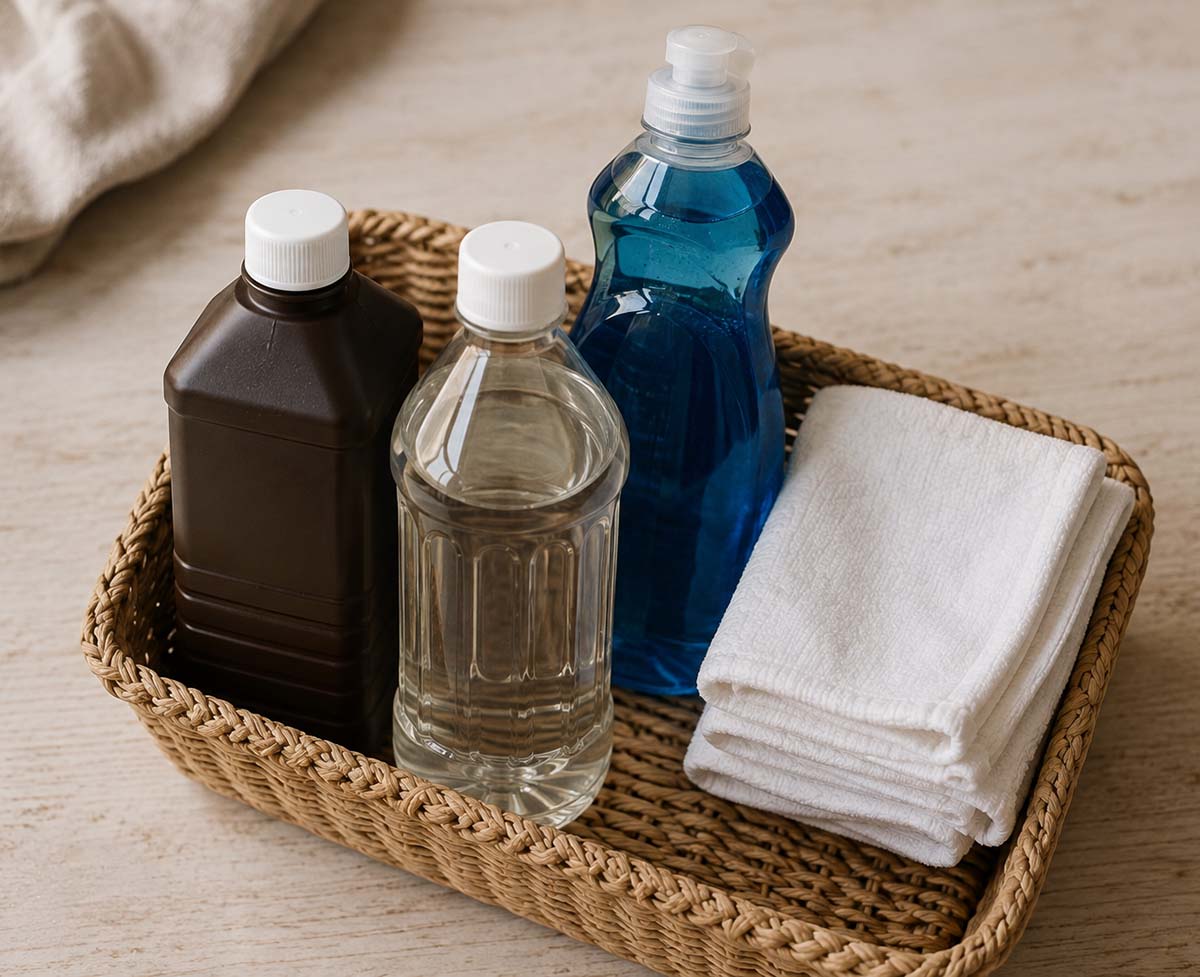
The biggest lesson from my wine stain adventure? Keep a simple stain-fighting kit ready to go. After this experience, I now keep a small container in my laundry room with:
- A bottle of hydrogen peroxide (it loses strength once opened, so here’s how to tell if yours has gone bad)
- A bottle of white vinegar
- Blue Dawn dish soap (great on wine, but there are things you should never clean with dish soap)
- A liquid laundry detergent for pretreating colors
- Clean white cloths for blotting
Having everything in one place means I can tackle spills immediately instead of running around looking for supplies while the stain sets in. If you’re serious about keeping your home clean with natural, non-toxic solutions, this kit is a great start.
Beyond Clothes: Other Wine Stain Scenarios
While this article focuses on clothing, wine spills happen on other surfaces too. The same hydrogen peroxide method works on white tablecloths and linens – and sturdy white tablecloths are where the boiling-water trick from Method 4 really shines. Got wine on a rug or carpet? We’ve got a full guide to getting red wine out of carpet with methods built for that surface specifically. For everything else, these natural spring cleaning tips cover more surfaces broadly.
And if you’re someone who entertains frequently (which probably means more wine stain opportunities), you might find our guide on summer entertaining tips helpful for preventing spills in the first place.
Red Wine Stain FAQ
Does salt actually get red wine out of clothes?
Salt helps as immediate damage control – it absorbs excess liquid before it sets – but in my test it only lightened the stain by about 30-40% on its own. Treat it as a stopgap until you can get to hydrogen peroxide and dish soap (whites) or vinegar and detergent (colors).
Is hydrogen peroxide safe on colored clothes?
Usually not. Hydrogen peroxide can lighten dyes, so stick to white and colorfast fabrics and test a hidden spot first. For colors, white vinegar followed by liquid laundry detergent is the safer option.
Can you get red wine out of clothes after it’s already dried?
Yes, but it’s harder and may take two treatment rounds instead of one. Re-wet the stain, apply hydrogen peroxide and dish soap (whites) or vinegar followed by detergent (colors), and let it sit longer – up to an hour – before rinsing and washing. An enzyme-based stain remover is also worth trying on older stains.
Does club soda actually work on wine stains, or is that a myth?
It helps, but mostly the same way plain cold water does – by diluting and flushing the fresh wine before it sets. That makes it a great quick fix when you’re out, but you’ll still want to treat the stain properly at home.
Final Thoughts
Look, accidents happen. Wine spills. Shirts get stained. It’s part of enjoying life (and wine). But it doesn’t mean your favorite clothes are doomed.
The key takeaways: act immediately, start with cold water, and keep it out of the dryer until it’s gone. For white fabrics, hydrogen peroxide and dish soap is your best friend. For colors, vinegar and a little detergent will get you pretty far.
And maybe, just maybe, consider drinking your wine a little more carefully during movie night. Or at least keep this guide handy the next time you mix up a pitcher of red wine sangria for guests.
But probably not. Because where’s the fun in that?
Have you dealt with wine stains? What methods worked for you? I’d love to hear what’s worked in your experience – drop a comment below and let me know if you’ve found any miracle solutions I haven’t tried yet.
Related Cleaning Guides:
Looking for more cleaning tips and tricks? Check out these helpful resources:

Better Living may earn commissions through affiliate links and may occasionally feature sponsored or partner content. If you make a purchase through our links, we may receive a small commission at no cost to you.