
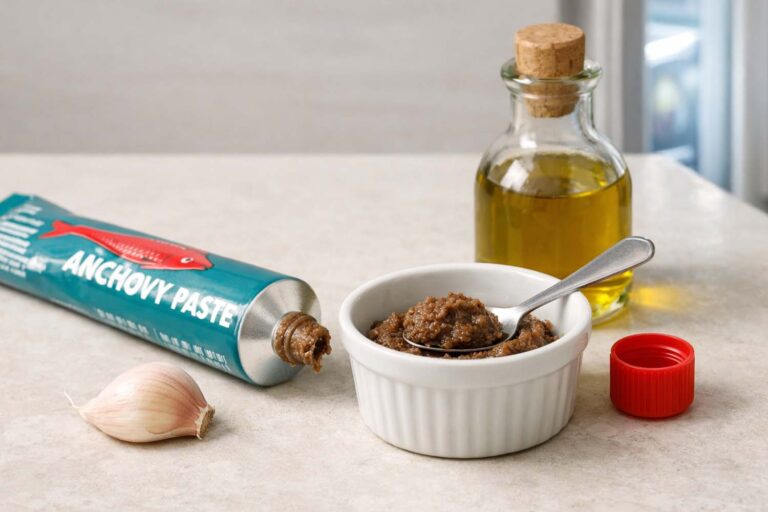
Does anchovy paste need to be refrigerated? Unopened anchovy paste does not need refrigeration. A sealed tube or jar is shelf-stable and keeps well in a cool, dark pantry for 1 to 2 years. Once you open it, refrigeration is strongly recommended. The high salt content still offers protection at room temperature, but consistent cold temperatures keep quality significantly better for longer and slow the oxidation that degrades both flavor and color.
How you store it after opening also depends on whether you have a tube or a jar — the two formats have different air exposure profiles and slightly different best practices.
For full spoilage signs and a complete shelf life breakdown, see: Does Anchovy Paste Go Bad? For the full condiment storage picture, visit the Food Storage Guide.
⚡ Short Answer
Unopened anchovy paste does not need to be refrigerated — pantry storage is fine for up to 1 to 2 years. Once opened, always refrigerate. Cap the tube tightly and squeeze out air before storing. For jars, add a thin layer of olive oil over the surface after each use. Opened and properly stored, anchovy paste stays at good quality for 6 to 12 months in the fridge.
🤔 Why Unopened Anchovy Paste Does Not Need the Fridge
Anchovy paste is a shelf-stable product when sealed. The extremely high salt concentration — typically 700 to 1,000 mg of sodium per tablespoon — creates an environment where spoilage bacteria cannot thrive. The sealed packaging eliminates oxygen exposure, which prevents oxidation. An intact tube or jar in a cool, dark pantry away from heat is well protected for up to 2 years.
This is the same preservation logic behind fish sauce, Worcestershire sauce, and other heavily salted pantry condiments. The salt does the work. Refrigeration before opening adds nothing because the sealed environment is already doing its job.
💡 Tube vs. jar — why it matters for storage
A tube of anchovy paste seals back down after every use. Only the paste at the very tip contacts air, keeping oxidation minimal. A jar exposes the entire surface to air every time you open it — significantly more oxidation risk per use. Both need refrigeration after opening, but jar paste benefits more from the extra step of adding an olive oil layer over the surface to limit air contact.
🧊 How to Store Anchovy Paste — Before and After Opening
🟢 Unopened Tube or Jar
Store in a cool, dark pantry away from the stove, dishwasher, and direct sunlight. Heat and light both degrade quality over time. Check the printed best-by date and use as a general guide — properly stored unopened paste is often fine past that date. Shelf life up to 1 to 2 years.
🧊 Opened Tube
Refrigerate immediately after first use. After each use, roll the empty end of the tube toward the opening and squeeze out as much air as possible before recapping. This minimizes oxygen inside the tube and slows oxidation significantly. Store in the main body of the fridge, not the door. Shelf life 6 to 12 months after opening.
🧊 Opened Jar
Refrigerate after opening. Always use a clean, dry spoon — never a wet utensil or one that has touched other food. After each use, smooth the surface of the paste flat and pour a thin layer of olive oil over it to seal out air before replacing the lid. This dramatically slows oxidation and extends quality. Store in the main body of the fridge. Shelf life 6 to 12 months after opening.
🕓 Anchovy Paste Shelf Life by Storage Method
| Storage Situation | How Long It Lasts |
|---|---|
| Unopened tube or jar — pantry | 1 to 2 years; often good past best-by date |
| Opened tube — refrigerated | 6 to 12 months; squeeze out air before capping |
| Opened jar — refrigerated | 6 to 12 months; add olive oil layer over surface |
| Opened — room temperature pantry | Not recommended; quality degrades significantly faster |
According to the USDA FSIS, best-by dates on shelf-stable products indicate peak quality rather than a safety cutoff. Anchovy paste that is past its printed date but stored properly and shows no spoilage signs is almost certainly still usable.
⚡ The Storage Habits That Actually Matter After Opening
Anchovy paste is used a tiny bit at a time — a teaspoon here, half a teaspoon there. That means a single tube or jar can sit in your fridge for months between uses. These habits are what determine whether it is still good when you reach for it:
- Cap the tube or lid immediately after every use. Air is the enemy. Every second the paste is exposed to air, oxidation is happening. Cap it before doing anything else.
- Squeeze air out of tubes before recapping. Roll the empty end toward the opening and flatten it. This keeps oxygen from sitting against the paste between uses.
- Add an olive oil layer in jars. A thin coating over the flat surface of the paste limits air contact dramatically. Use a clean spoon to smooth the paste flat first, then pour just enough oil to coat.
- Use a clean, dry spoon every time. A wet utensil introduces moisture and bacteria. Cross-contamination from another food can introduce mold even in a high-salt environment.
- Store in the main body of the fridge. The door is the warmest, most temperature-variable part of the fridge. The main shelf keeps a more consistent cold temperature.
- Write the opening date on the tube or lid. Anchovy paste is used infrequently enough that it is easy to lose track. A date written in marker takes two seconds and tells you exactly where you stand.
📋 What Happens If You Leave Opened Anchovy Paste at Room Temperature
Taking the tube or jar out of the fridge to use it, then leaving it on the counter while you cook, is not a problem — the salt concentration protects it during brief room temperature exposure. If a tube was accidentally left out overnight once, it is almost certainly still fine. Check smell and appearance before using.
Consistently storing opened anchovy paste at room temperature for weeks or months is a different matter. The salt inhibits bacterial growth but does not prevent oxidation, and warm temperatures accelerate rancidity in the olive oil component. Quality will decline noticeably, and the window to spoilage shortens. For a product used in small amounts over many months, the fridge is worth it.
❓ Frequently Asked Questions
Does anchovy paste need to be refrigerated after opening?
Yes. Once opened, refrigeration is strongly recommended for both tubes and jars. The salt still provides some protection at room temperature, but consistent refrigeration keeps quality significantly better for longer and slows oxidation. Opened and refrigerated, anchovy paste stays at good quality for 6 to 12 months.

How long does anchovy paste last in the fridge after opening?
6 to 12 months for both tubes and jars when stored with good habits — cap tightly, squeeze air from tubes, add an olive oil layer to jars, and always use a clean dry utensil. Tubes tend to last toward the higher end because they limit air exposure better than jars.
Can anchovy paste be stored at room temperature after opening?
Not recommended for long-term storage. The high salt concentration provides some protection, but oxidation of the olive oil component accelerates at room temperature and degrades flavor over time. Brief room temperature exposure during cooking is fine, but opened paste should go back in the fridge after each use.
Do some anchovy paste tubes say to refrigerate before opening?
Some brands, particularly European imports, are sold refrigerated at the store and may carry a “keep refrigerated” label even before opening. Follow the label in that case. Most standard shelf-stable tubes sold unrefrigerated in grocery stores are fine at pantry temperature until opened.
How do I know if my anchovy paste has gone bad?
Smell it first — fresh anchovy paste smells intensely fishy, briny, and savory. Spoiled paste smells sour, rancid, or outright rotten. Visually look for mold and dramatic darkening throughout (not just at the tip). Oil separation, slight tip discoloration, and salt crystals are all normal and not spoilage signs. Full guide: Does Anchovy Paste Go Bad?
Can you freeze anchovy paste to extend shelf life?
Yes, freezing is an option, though rarely necessary given the long refrigerated shelf life. Portion into small amounts — a silicone ice cube tray works well — so you can thaw only what you need. Frozen anchovy paste may have a slightly altered texture after thawing, making it best suited for cooked applications rather than raw dressings or spreads. Use within a few months of freezing.
What is the best way to store an open tube of anchovy paste?
Cap tightly and roll the empty end toward the opening to squeeze out air before refrigerating. Store in the main body of the fridge rather than the door. Write the opening date on the tube. With these habits, an open tube will hold quality for up to a year.
🍽️ Ways to Use Anchovy Paste More Often
The best storage strategy is a tube you actually reach for. Anchovy paste adds instant depth to far more dishes than most people realize:
- Red Lentil Soup — a half teaspoon stirred into the base makes the whole bowl taste richer and more complex
- Scungilli Salad — classic Italian seafood salad that pairs naturally with the anchovy flavor profile
- Easy Fresh Basil Pesto — anchovy paste is a traditional addition in some regional Italian pesto variations
- Improve Gut Health — fermented and salt-cured fish products like anchovy paste are part of the broader gut-supporting fermented food picture
📚 Related Posts
- Does Anchovy Paste Go Bad?
- Does Fish Sauce Need to Be Refrigerated? — fish sauce and anchovy paste follow very similar storage logic
- Should Worcestershire Sauce Be Refrigerated? — Worcestershire contains anchovies and follows similar storage rules
- Do Capers Need to Be Refrigerated? — capers and anchovy paste are frequently used in the same recipes
- Does Olive Oil Need to Be Refrigerated? — olive oil is a key ingredient in anchovy paste
- Does Miso Paste Need to Be Refrigerated?
- Food Storage Guide
Sources: USDA FSIS — Shelf-Stable Food Safety | USDA FSIS — Food Product Dating
Better Living uses affiliate links. If you make a purchase through them, we may receive a small commission (for which we are deeply grateful) at no cost to you.