
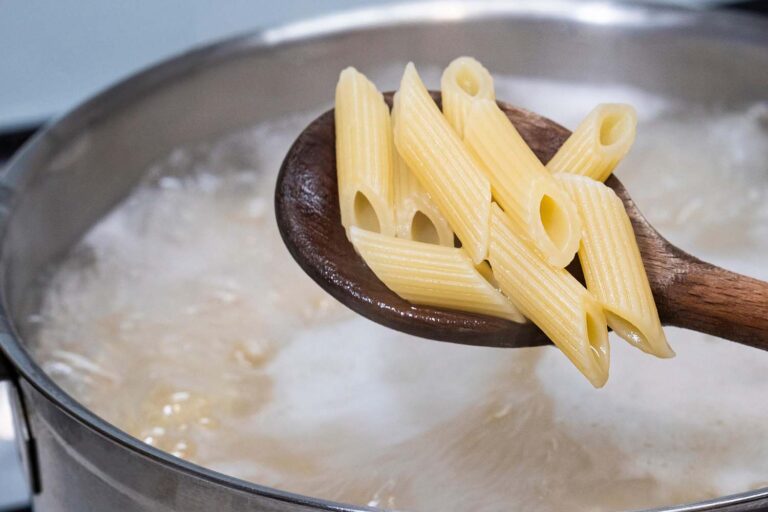
The cloudy water left in the pot after you boil noodles is the most overlooked ingredient in the kitchen. These pasta water uses take about ten seconds of planning: scoop a mug out before you drain, and the starch in it can loosen a sauce, thicken a soup or rescue tomorrow’s leftovers. It’s the same save-the-liquid habit as rice water, with a few rules of its own, mostly about salt.
Seven ways to use pasta water
1Loosen and bind a pasta sauce
Verdict: the best use, and the one to start with. Starch from the pasta clouds the water, and that starch helps fat and liquid hold together instead of separating into a greasy puddle. A 2025 physics study of cacio e pepe in Physics of Fluids (also on arXiv), from researchers at the Max Planck Institute for the Physics of Complex Systems and several universities, found that too little starch lets the cheese clump into one stringy mass. Under 1 percent starch relative to the cheese caused clumping, 2 to 3 percent worked best, and above 4 percent the sauce turned stiff as it cooled.
There is a catch. The researchers found that pasta water alone does not contain enough starch to stabilize a cheese-only sauce like that one, and that concentrating it offers little control over the final starch amount. Their recipe uses 5 grams of potato or corn starch dissolved in 50 grams of water instead. So for a cheese-only sauce, a spoonful of dissolved starch is more reliable. For everyday tomato, garlic and oil, or vegetable sauces, our practical advice is that pasta water still helps: add it a splash at a time, off the boil, and keep stirring until the sauce turns glossy.
2Thicken a thin sauce
Verdict: works for light thickening. When starch is heated in water, it swells and forms a gel, which is why it shows up in sauces. Science Meets Food, from the Institute of Food Technologists’ student association, describes that gel as the basis of many sauces. In practice, a few spoonfuls of pasta water with the sauce simmering gently will add a little body. It won’t replace a roux, and a very watery sauce is better reduced first.
3Add body to soup
Verdict: good, with one salt rule. Use some of the water as part of the liquid in a brothy tomato, bean or vegetable soup. It adds a little starch and a savory edge. If you want a creamier texture, there are ten other ways to thicken soup without cream, and pasta water works best as a gentle boost alongside them, not a main thickener. Taste before you season: salted water plus a long simmer is how soups end up too salty, a mistake covered in our guide to common soup mistakes.
4Mix it into bread dough
Verdict: reasonable, if you adjust the salt. Swapping part of the water in a yeast dough for cooled, lukewarm pasta water is a common home baker’s trick, and the starch can make for a softer, slightly moister crumb. We haven’t found a controlled study showing the effect, so treat it as a kitchen habit, not proven science. Because the water is salted, cut the salt in the recipe and keep the liquid lukewarm so it doesn’t harm the yeast.
5Moisten leftover pasta when you reheat it
Verdict: handy, and safe if the pasta is. Cooked pasta dries out and clumps in the fridge, and a splash of reserved water loosens it as it reheats. The safety rules still apply. The USDA Food Safety and Inspection Service says leftovers should be refrigerated within 2 hours (1 hour above 90°F), kept 3 to 4 days at most, and reheated to 165°F. Our guides to refrigerating cooked pasta and whether pasta goes bad explain why that 2-hour window matters.
6Cook the next thing in it
Verdict: a flavor trick, not a nutrition one. Boil potatoes, simmer a pot of greens or cook a small batch of rice or couscous in leftover pasta water and you get a lightly seasoned cooking liquid for free. Our practical advice is to do it only with a freshly cooked, still hot batch, and to skip any extra salt until you’ve tasted the result.
7Water plants, but only if it was unsalted
Verdict: only if you didn’t salt it, and only once it has cooled completely. Most pasta water is salted, and that matters for plants. Texas A&M AgriLife Extension explains in its guide to soil salinity that as soil gets saltier, plants can’t draw as much water from it, and that high sodium can make soil tight and slow to drain. Oregon State Extension lists brown leaf tips, wilting, dropped lower leaves and stunted growth as signs of salt buildup in houseplants. If you cooked your pasta in unsalted water, a cooled cup is a low-risk occasional treat. Our reading is that the leftover starch can sour in a saucer, so use it the same day and empty the drip plate.
How to save pasta water, and what to watch for
- Scoop before you drain. Dip a mug or measuring cup into the pot just before the colander comes out. About a cup is plenty for most sauces.
- Use it hot. It binds a sauce best when it goes in straight from the pot, a splash at a time.
- Season last. Because the water is salted, taste the finished dish before adding more salt.
- Treat leftovers like leftovers. If you keep some, cool it quickly, refrigerate it and use it within a day or two, well inside the 3 to 4 days the USDA gives for leftovers. That timing is our practical advice, not a rule for pasta water specifically.
- Flush your plants if you slip. If a plant has had salty water, the University of Maryland Extension suggests leaching the soil with at least three times the pot’s volume of fresh water, letting it drain completely, and repeating that every 4 to 6 months if salts keep building up.
Pasta water questions, answered
Why does pasta water make sauce better?
It carries starch from the pasta, and that starch helps a sauce cling to the noodles and keeps fat and liquid from separating. The caveat is that the cacio e pepe researchers found pasta water too weak and unpredictable for a cheese-only sauce and used dissolved potato or corn starch instead. For everyday sauces, a splash of pasta water still helps.
How much pasta water should you save?
About a cup covers most recipes. It’s easy to scoop out more than you need, so add it a splash at a time. That quantity is our practical advice, not a measured standard.

Is pasta water good for plants?
Only if it was cooked without salt and has fully cooled. Salted water can build up in the soil and stress plants, according to Texas A&M and Oregon State extension guidance.
Can you store leftover pasta water?
You can, but it’s starchy and perishable, so refrigerate it promptly and use it within a day or two. The USDA’s 3 to 4 day limit for leftovers is the outer boundary, and sooner is safer.
Does pasta water thicken soup?
A little. It adds light body to brothy soups, but it isn’t a substitute for a real thickener like blended beans, potato or a roux.
The bottom line
Pasta water works best as a finishing touch: a splash to loosen a sauce, a spoonful for body in soup, a drizzle on tomorrow’s leftovers. Scoop it before you drain, use it hot, season last and keep the plants for unsalted batches only. Once you start saving it, pouring that cloudy water down the sink will start to feel like wasting a free ingredient.

Better Living may earn commissions through affiliate links and may occasionally feature sponsored or partner content. If you make a purchase through our links, we may receive a small commission at no cost to you.