
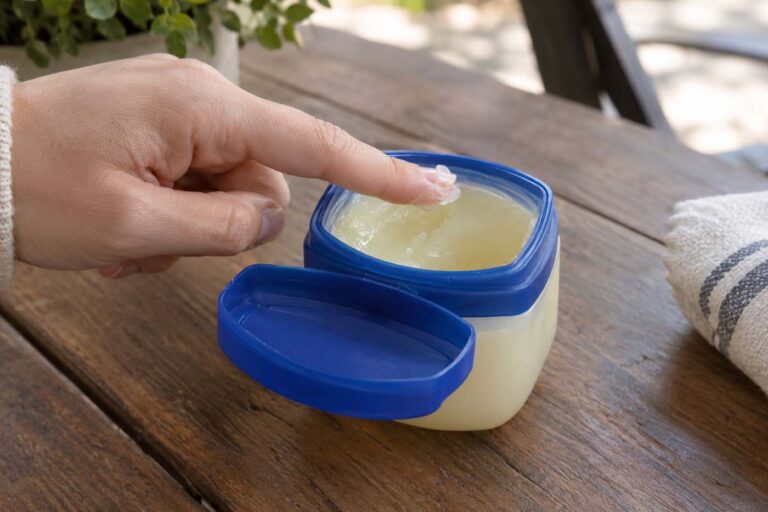
You find a jar of Vaseline in the back of the medicine cabinet, maybe one that’s been there since before you can remember buying it. Does Vaseline go bad?
The short answer: Barely, and for a genuinely different reason than almost anything else in this household series. Petroleum jelly is a mixture of mineral oils and waxes with no water in it at all, which means it doesn’t oxidize and turn rancid the way plant-based oils do, and it can’t support the bacterial growth that spoils water-based products. Vaseline’s own site confirms that its anhydrous nature keeps the product stable over a long shelf life. The expiration date you see printed on some jars exists mostly because of how the product is regulated, not because the jelly itself is quietly breaking down in your cabinet.
For more household shelf-life guides, check out our full Household Shelf Life Guide.
Key Takeaways
- Unopened petroleum jelly: Effectively indefinite. Its hydrocarbon composition has no meaningful chemical decay pathway the way organic oils or water-based products do.
- Opened, properly stored: Commonly good for several years, with manufacturers typically printing a conservative 2 to 3 year recommendation despite the product’s real chemical stability being much longer.
- It’s anhydrous, meaning no water content, which is the whole reason it resists the bacterial and fungal growth that spoils lotions, creams, and other water-based cosmetics.
- The real risk isn’t the jelly breaking down, it’s contamination from use. Dipping fingers into an open jar repeatedly can introduce bacteria over time, the same practical risk the FDA flags for cosmetics generally.
- There are actually two regulatory categories here. Plain petroleum jelly sold as a cosmetic moisturizer isn’t required to carry an expiration date, while petroleum jelly sold as a “skin protectant” for cuts, scrapes, and chapped skin is registered with the FDA as an over-the-counter drug under a specific monograph, and that version does carry real labeling requirements.
- Long-term thickening or firming isn’t spoilage. Over many years, trace volatile components can slowly evaporate, changing the texture slightly without compromising safety.
Why Petroleum Jelly Barely Ages at All
The Chemistry That Makes It the Exception in This Whole Series
Almost everything covered elsewhere in this household series degrades through one of a few familiar paths: oxidation, evaporation of an active ingredient, or bacterial growth in a water-based formula. Petroleum jelly largely sidesteps all three. It’s a semi-solid mixture of saturated hydrocarbons, mineral oils and waxes, refined until it’s chemically inert. Unlike plant-based oils, which contain double bonds that react readily with oxygen and turn rancid, the hydrocarbons in petroleum jelly are saturated and far more resistant to that kind of breakdown.
The anhydrous part matters just as much. Bacteria and mold need water to grow, and petroleum jelly simply doesn’t have any. That’s the mechanism behind Vaseline’s own claim that its formula resists bacterial growth over a long shelf life, and it’s a genuinely different story than something like shampoo or mouthwash, both of which are largely water and need active preservatives to keep microorganisms in check.
Two Products, Two Sets of Rules
This is worth understanding before you decide how seriously to take a printed date. Petroleum jelly sold purely as a cosmetic moisturizer, the kind used in lip balms or as a basic skin softener, isn’t required by the FDA to carry an expiration date at all, the same rule that applies to nail polish remover and most other cosmetics. But petroleum jelly sold specifically as a “skin protectant,” making a claim about helping protect minor cuts, scrapes, or chapped skin, is registered with the FDA as an over-the-counter drug under Skin Protectant Drug Products Monograph M016. That version is held to real labeling and stability standards precisely because it’s making a therapeutic claim, not just a cosmetic one. A lot of major petroleum jelly products, including healing-jelly style formulas, fall into this second category, which is why you’ll often see a genuine printed date on the jar even though the product itself is remarkably stable.
How Long Vaseline Actually Lasts
| Condition | Shelf Life |
|---|---|
| Unopened, stored properly | Effectively indefinite |
| Opened, clean application habits | Several years; often well beyond the printed 2-3 year recommendation |
| Opened, frequent finger contact | Contamination risk rises faster than the product itself degrades |
The printed date is a conservative, regulatory-driven figure rather than a reflection of the product suddenly failing. A sealed jar kept in good conditions can realistically remain fine well past that window.
Signs Something’s Actually Wrong
What to Actually Watch For
A rancid, chemical, smoky, or musty smell in place of the mild, waxy scent it normally has. This is genuinely rare given the formula’s stability, but it’s a real reason to stop using a jar rather than a false alarm.
Visible discoloration, debris, or an obviously contaminated surface, especially in a jar that’s seen a lot of bare-finger use over the years.
Slight thickening or firming over many years is not a sign of spoilage. This is a harmless physical change as trace volatile components slowly evaporate; it may change how the product spreads without affecting its safety or basic function.
How to Store Vaseline So It Lasts
Storage Best Practices
Store in a cool, dry place away from direct sunlight and heat sources. Extreme heat can accelerate the slow physical breakdown of the formula, even though outright spoilage isn’t the real concern.
Use a clean applicator instead of your fingers when possible, especially for a jar you plan to keep around for a long time. Since contamination, not chemical decay, is the real risk here, this single habit matters more than almost anything else on this list.
Keep the lid tightly closed between uses to limit dust and airborne contaminants from settling on the surface.
Wipe the rim clean occasionally if you notice any buildup, which helps maintain a cleaner seal over the jar’s lifetime.
Frequently Asked Questions
Does Vaseline actually expire?
Not in the way most products do. Petroleum jelly’s chemical makeup, mineral oils and waxes with no water content, means it doesn’t oxidize or spoil the way organic oils or water-based products can. Vaseline’s own site attributes its long shelf life to this anhydrous composition. Some jars carry a printed date, which mostly reflects how the product is regulated rather than a genuine breakdown of the formula.
Is it safe to use Vaseline past its printed date?
In most cases, yes, as long as it looks, smells, and feels normal. The printed date is a conservative regulatory figure, not evidence the product has actually degraded. The main thing to check for is contamination from use, not age itself: a jar that’s seen years of bare-finger dipping is a different risk than one that’s simply sat sealed on a shelf.
Why does some Vaseline have an expiration date and some doesn’t?
It comes down to how the specific product is marketed and regulated. Plain petroleum jelly sold as a cosmetic moisturizer isn’t required to carry an FDA expiration date. Petroleum jelly sold as a “skin protectant,” making a claim about protecting cuts, scrapes, or chapped skin, is registered as an over-the-counter drug under FDA’s Skin Protectant Drug Products Monograph, and that version does carry real labeling and stability requirements, which is why you’ll see a genuine date on some jars and not others.
Can bacteria grow in Vaseline?
It’s genuinely difficult, since petroleum jelly contains no water and bacteria need water to grow. This is why it’s meaningfully more resistant to microbial growth than lotions, creams, or other water-based personal care products. That said, it’s not entirely impossible if enough contamination, debris, or moisture from repeated finger contact gets introduced over a long period, which is why clean application habits are worth keeping up even with a product this stable.
What does expired Vaseline look like?
In most cases, not obviously different at all, which is part of why the printed date is more of a regulatory formality than a visual cue. If a jar has genuinely gone off, the signs to look for are a color change, an oily separation or “bleeding” at the surface, visible debris or discoloration from repeated finger contact, or a texture that’s noticeably grittier or less smooth than usual. A slight firming after many years on the shelf is normal and not the same thing as spoilage.
What happens if you use expired Vaseline?
In the vast majority of cases, nothing. Because the base formula doesn’t meaningfully break down, expired Vaseline that still looks, smells, and feels normal continues to work the same way it always did. The realistic risk isn’t the petroleum jelly itself, it’s whatever contamination may have built up in the jar over time from repeated finger use, which could occasionally cause mild skin irritation. This is different from something like expired sunscreen or medicated products, where an active ingredient can genuinely lose effectiveness with age.
Does Vaseline Lip Therapy expire the same way as plain Vaseline?
Not exactly, and this is worth knowing since it’s a genuinely different product. Vaseline Lip Therapy is built on the same petroleum jelly base, but most versions add extra ingredients like shea butter, vitamin E, or flavoring, and some variants include SPF. That base petroleum jelly is just as stable as plain Vaseline, but the added ingredients can have their own, shorter shelf life; SPF in particular is a real active ingredient that genuinely degrades over time, unlike the petroleum jelly itself. A tin or tube of Lip Therapy typically carries its own production code, similar to Vaseline’s jars, and it’s reasonable to treat a sunscreen-containing variant with the same seriousness you’d give any other expired sunscreen product, while a plain, unflavored Lip Therapy behaves much like the original jelly.
How long does Vaseline last once it’s applied to skin or lips?
This is a different question from shelf life, it’s about how long the applied layer keeps working before you’d want to reapply. Vaseline’s own site describes petroleum jelly as staying on the skin and continuing to function as a protective barrier for several hours, since it isn’t absorbed the way a lotion is; it physically sits on top of the skin, reducing water loss by close to 98% according to dermatological research. In practice, that means a single application can reasonably last several hours on skin, lips, or face, though normal activity like eating, drinking, washing, or contact with fabric will wear it away faster than simply leaving it undisturbed.
Further Reading
- Does Nail Polish Remover Go Bad?
- Does Shampoo Go Bad?
- Does Mouthwash Go Bad?
- Summer Skincare Tips
- Nutrients for Healthy Skin, Nails, and Hair

Better Living may earn commissions through affiliate links and may occasionally feature sponsored or partner content. If you make a purchase through our links, we may receive a small commission at no cost to you.