
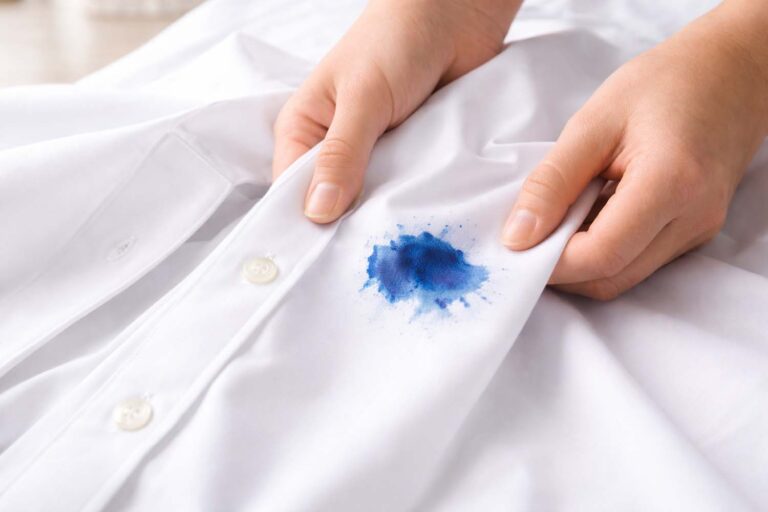
The pen had been in my jacket pocket for weeks. I knew it was there. I just kept forgetting to take it out before laundry.
Then I forgot one too many times.
I pulled my favorite gray cotton jacket out of the washing machine and found a dark blue explosion across the inside pocket, the pocket lining, and a long smear that had transferred to the front panel during the spin cycle. One pen. One forgotten pocket. One ruined jacket, or so I thought.
What followed was two hours of research, four methods tested, and a jacket that is now hanging in my closet looking completely normal. If you’re staring down an ink stain right now wondering how to get ink out of clothes, here’s what I learned about what actually works, what the internet gets completely wrong, and why the advice you’ve probably already found may make things worse.
Quick Answer: How to Get Ink Out of Clothes
Apply rubbing alcohol (70% or 91% isopropyl) directly to the stain from the back of the fabric, letting it push the ink out rather than deeper in. Blot with a clean white cloth, working from the edges inward. Rinse with cold water and repeat until the stain fades, then launder normally with cold water. Never use hot water or the dryer until the stain is completely gone.
The ink type matters too: ballpoint pen ink needs alcohol, water-based gel and marker ink responds to laundry detergent, and permanent marker needs a stronger approach. Read on for the full breakdown.
The Thing Everyone Gets Wrong: Ink Type Matters More Than Method
Most ink stain advice online treats all ink as the same thing. It isn’t, and using the wrong method on the wrong ink can make the stain worse or set it permanently. Before you reach for anything, you need to know what you’re dealing with.
Ballpoint pen ink is oil-based. It’s thick, greasy, and hydrophobic, meaning water alone won’t touch it. You need an alcohol-based solvent to break down the oil and release the dye from the fabric. This is the most common type of ink stain and the one most people encounter when a pen leaks in a pocket.
Gel pen, rollerball, and washable marker ink is water-based. It’s thinner and actually responds well to laundry detergent and cold water without needing alcohol. Many people reach for rubbing alcohol on these unnecessarily.
Fountain pen ink is also water-based but contains dyes that can be very intense. Treat it like gel ink, but act fast. The longer fountain pen ink sits, the more the dye bonds with the fabric.
Permanent marker ink (Sharpie and similar) uses solvent-based chemistry with resin binders designed to bond aggressively to almost any surface. This is the hardest category to remove and sometimes requires multiple treatment rounds or professional help.
Printer ink comes in two types: inkjet (water-based) and laser toner (heat-fused plastic particles). Inkjet responds to alcohol. Laser toner on fabric is a very different problem. The heat from printing has fused plastic to the fiber and needs professional cleaning.
The Hairspray Myth: Why You Should Skip It Entirely
Before we get into methods, let’s settle this once and for all because it’s probably the first thing you Googled.
Hairspray used to work on ink stains. Decades ago, hairspray formulas were loaded with alcohol, typically isopropyl or ethanol, and that alcohol content is what dissolved the ink on contact. The hairspray itself was never the active ingredient. The alcohol was.
Modern hairsprays are formulated completely differently. As Leanne Stapf, chief operating officer at The Cleaning Authority, put it: “many modern hairsprays no longer include alcohol, which means they won’t lift the stain. Instead, this cleaning hack may make the stain harder to remove.” Current formulas use conditioning agents, polymers, and resins that can actually coat the ink and make it more difficult to lift from the fabric.
If you spray today’s hairspray on an ink stain you’re likely adding a sticky polymer residue on top of an ink stain. Now you have two problems.
Skip hairspray entirely. Go straight to rubbing alcohol. It’s cheaper, more effective, and you know exactly what you’re applying.
💡 Pro Tip: Permanent Marker Is a Different Problem Entirely
Permanent marker ink (Sharpie and similar brands) uses solvent-based chemistry with resin binders specifically designed to adhere to any surface. Rubbing alcohol will help and is your first move, but it may not fully remove permanent marker from fabric the way it removes ballpoint. Apply 91% isopropyl alcohol (higher concentration works better here than 70%), let it soak for five minutes, and blot firmly. Repeat multiple times. For white fabrics, following up with a hydrogen peroxide and dish soap paste can help lift residual color.
If the stain is on a valuable garment, take it to a professional dry cleaner and tell them specifically that it’s permanent marker. Some permanent marker stains cannot be fully removed at home without risking fabric damage.
What Happens When Ink Goes Through the Wash Untreated
This is the situation I was in with my jacket, and it’s worth understanding because it changes your approach.
When ink goes through a full wash cycle untreated, two things happen. First, the agitation and water can spread the ink to other areas of the garment or other items in the load. Second, if the water is warm or hot, or if the garment goes through the dryer afterward, the heat begins to set the ink into the fabric.
The good news: a wash cycle alone, especially in cold water, doesn’t necessarily make ink permanent. If you catch it after washing but before the dryer, you still have a very good chance of removing it with rubbing alcohol. The dryer is the point of no return.
If ink has spread to other garments in the load, treat each one individually with rubbing alcohol before washing again. Don’t put anything back in the dryer until every stained piece has been treated and inspected.
Fabric Matters More Than You Think
The right method also depends on what you’re treating:
Cotton and cotton blends: The most forgiving. Handles rubbing alcohol, hand sanitizer, and liquid detergent well. This is where all methods above perform best.
Polyester and synthetics: Rubbing alcohol works but test on a hidden area first. Some synthetic dyes can react to alcohol and cause color fading. Use 70% rather than 91% concentration on synthetics to reduce this risk.
Linen: Responds well to rubbing alcohol and liquid detergent. Use cold water throughout and air dry rather than machine dry.
Denim: Durable and handles rubbing alcohol well. Apply generously, let it soak, and blot firmly. Denim’s tight weave means ink doesn’t always penetrate as deeply, which works in your favor.
Silk and wool: Do not apply rubbing alcohol. Both are protein-based fibers that can be damaged by alcohol. Blot what you can with cold water and a tiny amount of gentle detergent, then take it to a professional dry cleaner immediately.
Dry-clean only: Blot only. No liquids. Take it to a cleaner and tell them what caused the stain so they can choose the appropriate solvent.
My Step-by-Step Protocol for Ink Stains
Here is exactly what I do now when ink meets fabric:
Step 1: Identify the ink type. Ballpoint (oil-based) needs alcohol. Gel, marker, fountain pen (water-based) needs detergent first. Not sure? Start with detergent and escalate.
Step 2: Place a clean cloth underneath the stain. Give the ink somewhere to go. This is non-negotiable.
Step 3: Apply treatment to the back of the stain. Push the ink out, not further in.
Step 4: Blot from the edges inward with a clean white cloth. Move to a clean section of cloth with each blot. Never rub.
Step 5: Rinse with cold water. Cold only until the stain is completely gone.
Step 6: Repeat as needed. Ink stains often need two to three rounds. Each round lifts more.
Step 7: Check before the dryer. Hold the damp garment up to good light. Any shadow means repeat from Step 3. The dryer sets ink permanently.
Warning: Never Do These Things
These common mistakes will make ink stains worse or permanent:
- Don’t use modern hairspray. Current formulas contain polymers and conditioners that can coat the ink and make it harder to remove.
- Don’t rub the stain. Rubbing spreads ink laterally and drives it deeper into fibers. Always blot.
- Don’t use hot water until the stain is completely gone. Heat sets ink permanently.
- Never put it in the dryer until you’re certain the stain is gone. This is the point of no return for ink stains.
- Don’t apply treatment to the front of the stain first. Always treat from the back to push ink out rather than through.
- Don’t mix rubbing alcohol and bleach. This creates chloroform and other toxic compounds. Never combine them.
What Definitely Does Not Work
Modern hairspray: Covered in detail above. The old advice was based on old formulas. Skip it.
Hot water: Hot water sets ink into fabric fibers. Always cold until the stain is fully gone, then wash in whatever temperature the care label recommends.
Milk: An old folk remedy with no chemistry behind it for ink removal on clothing. Milk proteins don’t interact with ink dyes in any useful way. It will just add a smell.
White wine: Same category as the milk suggestion. No mechanism for removing ink. You’re just adding liquid that can spread the stain.
Toothpaste: Some people recommend this for small ink stains. It can work marginally on very fresh, very small water-based ink spots because of the mild abrasives and detergents in the formula. For anything significant it’s not worth the effort compared to rubbing alcohol.
The One Thing I Wish I Had Known Sooner
Check your pockets before every load. I know. You know. We all know. And yet.
But beyond that, the thing I genuinely didn’t know before the jacket incident is that the technique matters as much as the product. Applying rubbing alcohol to the front of the stain, rubbing rather than blotting, using the same section of cloth over and over, not putting anything underneath to catch the ink. I was doing all of it wrong and getting poor results not because the method doesn’t work but because I wasn’t using it correctly.
Apply from the back. Blot from the edges in. Fresh cloth every few blots. Cold water throughout. These four things changed my results completely.
Frequently Asked Questions
Does ink come out of clothes after drying?
Sometimes, but it’s significantly harder after heat exposure. If the garment air dried rather than going through a hot dryer, the ink hasn’t been heat-set and rubbing alcohol still has a reasonable chance of removing it. If it went through a dryer cycle on heat, the ink has begun to bond with the fabric fibers and you may only see partial improvement with treatment. Always try rubbing alcohol first on a dried ink stain, but manage your expectations for anything that’s been through a hot dryer.
Does rubbing alcohol damage clothes?
On most fabrics it doesn’t, but there are exceptions. Always test on a hidden area first, especially with synthetic fabrics and dark colors where there’s a risk of dye fading. Use 70% concentration rather than 91% on synthetics and colored fabrics. Never use rubbing alcohol on silk, wool, or acetate. On cotton, linen, polyester, and most blends it’s generally safe when used as directed and rinsed thoroughly afterward.
What gets permanent marker out of clothes?
Rubbing alcohol at 91% concentration is your best home option for permanent marker. Apply it, let it soak for five minutes, and blot firmly with a clean white cloth. Repeat multiple times. For white fabrics, a hydrogen peroxide and baking soda paste can help with any remaining color. For colored fabrics and valuable garments, professional dry cleaning is the safer choice since the solvents needed for permanent marker are more aggressive than what most home methods can safely deliver.
Can you get ink out of clothes that have already been washed?
Yes, as long as the garment hasn’t been through a hot dryer. A wash cycle in cold water doesn’t permanently set most ink stains. Treat with rubbing alcohol using the back-of-stain technique, blot thoroughly, and launder again in cold water. If the ink spread to other garments in the load, treat each one individually before washing again. Ink that has gone through a hot dryer is much harder to remove and may only partially respond to treatment.
Is there a difference between 70% and 91% rubbing alcohol for ink stains?
Yes. For most ink stains on cotton and durable fabrics, 91% isopropyl alcohol is more effective because the higher concentration dissolves ink more aggressively. For synthetic fabrics and delicate colors, 70% is safer because the lower alcohol concentration reduces the risk of dye fading. For permanent marker specifically, 91% is recommended. If you only have 70% available, it will still work on most ink types, just possibly requiring an extra treatment round.
More Stain Removal Guides:
- How to Get Red Wine Out of Clothes
- How to Get Grease Out of Clothes
- How to Get Oil Out of Clothes
- How to Get Sweat Stains Out of Clothes
- How to Get Blood Out of Clothes
- How to Get Coffee Stains Out of Clothes
- How to Get Grass Stains Out of Clothes
- How to Get Tomato Sauce Out of Clothes
- How to Get Spaghetti Sauce Out of Clothes
- How to Get Ketchup Out of Clothes
- How to Get Mustard Out of Clothes
- How to Get BBQ Sauce Out of Clothes
- How to Get Hot Sauce Out of Clothes
More Cleaning Tips:

Better Living may earn commissions through affiliate links and may occasionally feature sponsored or partner content. If you make a purchase through our links, we may receive a small commission at no cost to you.